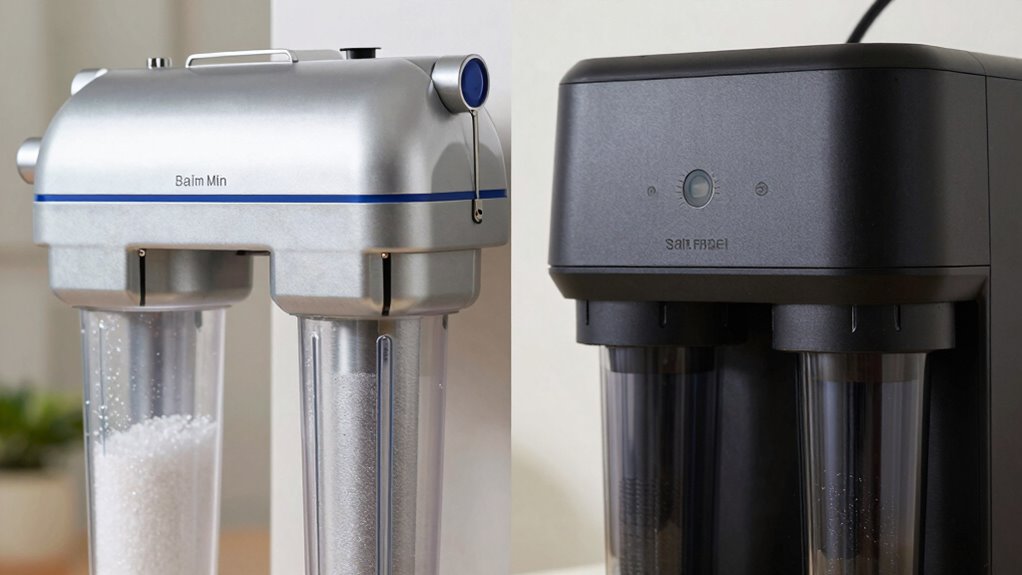

Salt-based systems actively remove calcium and magnesium from your water to soften it, but they require regular salt refills and maintenance. Salt-free systems, on the other hand, don’t remove minerals but change their form to prevent scale buildup, with less upkeep and no salt needed. If you want thorough softening or eco-friendly options, salt-based systems are better. To discover which fits your needs best, keep exploring further for more details.

Prime made for students and young adults
- Fast, free delivery for dorm and study essentials
- Prime Video and Amazon Music included
- Member-only deals
Key Takeaways
- Salt-based systems actively remove minerals to soften water, while salt-free systems change mineral form to prevent scale.
- Salt-based systems require regular salt refilling and maintenance; salt-free systems are low-maintenance with no salt needed.
- Salt-based systems provide comprehensive softening by reducing mineral content; salt-free systems mainly prevent mineral buildup and scale.
- Salt-based systems have higher environmental impact due to salt discharge; salt-free systems are eco-friendly and chemical-free.
- Salt-based systems are suitable for very hard water needing thorough treatment; salt-free systems prevent scale without removing minerals.
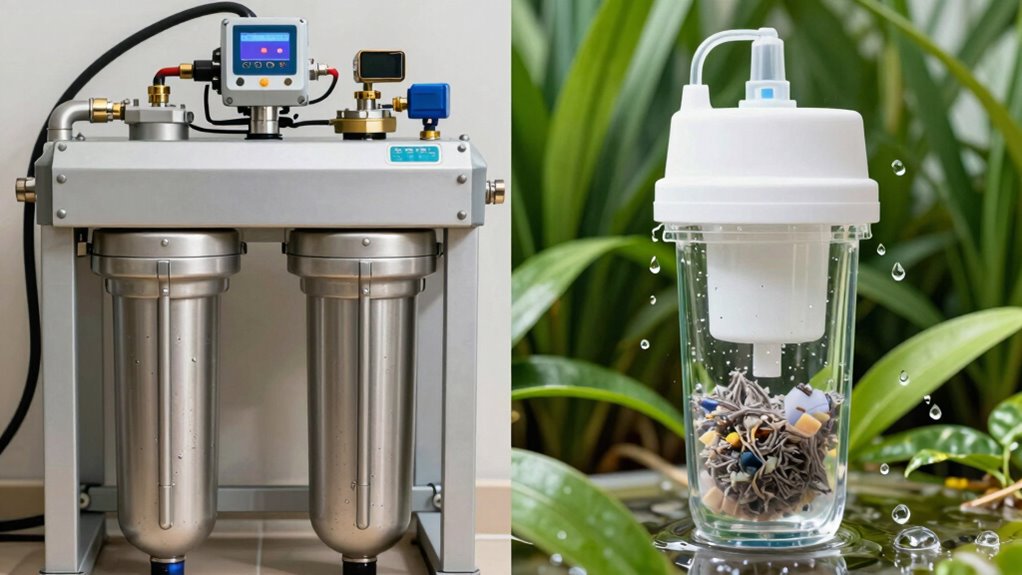
When it comes to choosing a water treatment system, understanding the differences between salt-based and salt-free options is essential. These systems serve different purposes, especially when it comes to water softening and mineral removal. Salt-based systems, often called ion exchange systems, use salt to replace calcium and magnesium ions that cause hard water. As a result, they effectively soften water, preventing scale buildup in pipes and appliances. If you have hard water, a salt-based system can markedly improve water quality by reducing mineral content, making your soap more effective and extending the lifespan of plumbing fixtures. However, these systems require regular salt refilling and maintenance, which can be a downside if you prefer low-maintenance solutions. Additionally, salt-based systems are often considered more effective for comprehensive water softening, especially in areas with very hard water. Salt-free systems, on the other hand, don’t use salt or chemicals. Instead, they typically employ a process called template-assisted crystallization (TAC) or other physical methods to alter minerals. These systems don’t actually remove minerals but change their form, preventing them from sticking to surfaces or forming scale. This makes salt-free systems excellent for mineral removal and scale prevention without the ongoing costs of salt or the need for regeneration. They are often favored by those seeking a more eco-friendly and low-maintenance option. However, keep in mind that salt-free systems are not true water softeners; they don’t reduce calcium and magnesium levels but rather prevent scale formation and mineral buildup. If your primary concern is water softening, especially for appliances and plumbing, a salt-based system might be the better choice. It actively removes minerals, reducing hardness levels and providing a more thorough treatment. Moreover, advancements in water treatment technology have enhanced the effectiveness of salt-free systems in certain applications. Proper understanding of water chemistry is crucial for selecting the right system, as different water qualities demand different approaches. Conversely, if you’re mainly looking to prevent scale and improve water quality without dealing with salt or regeneration cycles, a salt-free system offers a simpler, more environmentally friendly alternative. It’s worth noting that salt-free options tend to be more effective in preventing scale rather than truly softening water, so your specific needs and water quality will determine which system suits you best. Understanding these key water treatment differences will help you select the right system to improve your water quality effectively. Ultimately, your decision hinges on whether you want actual mineral removal through softening or prefer a system that prevents mineral buildup without adding salt. Both have their advantages and limitations, so consider your water chemistry, maintenance preferences, and environmental concerns before making a choice.
salt-based water softener system
As an affiliate, we earn on qualifying purchases.
As an affiliate, we earn on qualifying purchases.
Frequently Asked Questions
How Often Do Salt-Based Systems Require Maintenance?
Salt-based water softening systems typically require maintenance every 3 to 4 weeks. During this time, you need to check and refill the salt to prevent mineral buildup, which can reduce efficiency. Also, regularly inspect the system for any signs of wear or leaks. Proper maintenance guarantees your water softener functions effectively, preventing mineral buildup and keeping your water quality high.
Are Salt-Free Systems Effective Against Hard Water?
Salt-free systems are effective against hard water because they alter water mineralization, preventing scale buildup. They work by conditioning the minerals, which helps maintain a more balanced pH level, reducing issues caused by mineral deposits. While they don’t remove minerals like traditional salt-based systems, they improve water quality without adding salt or chemicals, making them a good choice for maintaining pH balance and minimizing scale without the need for frequent maintenance.
What Are the Long-Term Costs of Each System Type?
Salt-based systems tend to have higher long-term costs due to ongoing salt, maintenance, and energy needs, but they effectively improve pH balance and reduce mineral buildup. Salt-free systems usually cost less over time, requiring minimal maintenance, and help prevent mineral buildup without adding salt. However, they may not considerably alter pH balance. Consider your water quality and budget to choose the system that best meets your needs long-term.
Can Salt-Free Systems Remove All Contaminants?
Salt-free systems can’t remove all contaminants from your water. Instead, they focus on mineral removal and pH adjustment, which helps prevent scale buildup and improves water quality. These systems are effective for reducing hardness and certain minerals but don’t eliminate bacteria, viruses, or chemicals like chlorine. If you need thorough contaminant removal, you might need additional filtration methods alongside a salt-free system.
Do Salt-Based Systems Add Sodium to Drinking Water?
Yes, salt-based systems can add sodium to your drinking water. They use salt to regenerate the water softening process, which increases sodium levels. If you’re concerned about water safety, especially for those on low-sodium diets, this can be a concern. It’s important to test your water regularly to guarantee sodium levels stay within safe limits and consider alternative systems if necessary to maintain overall water safety.
As an affiliate, we earn on qualifying purchases.
Conclusion
Choosing between salt-based and salt-free water systems is like selecting the right key for your home’s melody—each offers a different tune of benefits. Salt-based systems may feel like a powerful drumbeat, delivering deep cleansing, while salt-free systems are a gentle breeze, preserving your water’s natural harmony. Whichever you pick, know it’s a step toward smoother, cleaner water that refreshes your life’s flow. Make the choice that resonates with your heart’s rhythm and enjoy the symphony of pure water.
As an affiliate, we earn on qualifying purchases.
As an affiliate, we earn on qualifying purchases.
Fall Picks
fall essentials
As an affiliate, we earn on qualifying purchases.