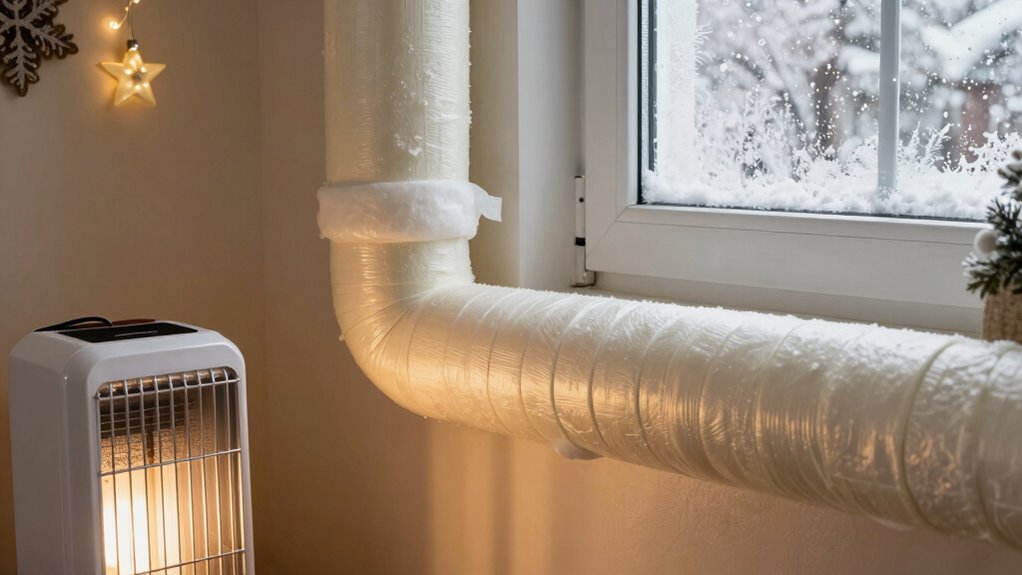

To prevent pipe freezes, insulate pipes in unheated areas like basements and attics using foam or heat tape, especially at bends and joints. Keep your home thermostat no lower than 55°F and allow faucets to drip slightly during cold snaps. Open cabinet doors to circulate warm air around pipes and ask neighbors to check your home. Preparing ahead with emergency supplies and monitoring your plumbing can save you from costly damage—discover more effective strategies as you continue.

Get school and study supplies delivered free — and shop member deals
- Fast, free delivery on millions of items
- Access to Prime Big Deal Days deals on October 6–7
- Prime Video, Amazon Music and more included
Key Takeaways
- Insulate pipes in unheated areas with foam or heat tape, especially near bends and joints.
- Keep home temperatures above 55°F and let faucets drip slightly during cold spells.
- Open cabinet doors under sinks to promote warm air circulation around pipes.
- Shut off water supply promptly if you notice signs of freezing or a burst pipe.
- Use smart thermostats or moisture sensors for early leak detection and temperature monitoring.

When cold temperatures threaten to freeze your pipes, taking proactive steps can save you from costly repairs and water damage. One of the most effective methods is implementing insulation techniques around vulnerable pipes. You should start by insulating pipes in unheated areas like basements, attics, garages, and crawl spaces. Use foam pipe insulation or heat tape to wrap these pipes thoroughly, especially at bends and joints where ice is most likely to form. Proper insulation acts as a barrier against the cold, maintaining a warmer temperature around the pipes and reducing the risk of freezing. Keep in mind that even a small gap in insulation can lead to trouble, so double-check your work and ensure every vulnerable section is covered.
Insulate exposed pipes in unheated areas to prevent freezing and costly damage.
Alongside insulation techniques, emergency preparedness plays an essential role in preventing pipe freezes. Prepare for worst-case scenarios by knowing how to shut off your water supply quickly if a pipe bursts. Keep a plumbing toolkit nearby, including a hairdryer, warm towels, and pipe repair supplies, so you can act swiftly if you notice signs of freezing, such as frost on the pipes or reduced water flow. Additionally, keep a supply of emergency contact numbers handy, such as a plumber or local emergency services, in case you need professional help.
During extreme cold snaps, let your faucets drip slightly to keep water moving through the pipes. Moving water is less likely to freeze, and this simple step can buy you critical extra time. Don’t forget to open cabinet doors under sinks to allow warm air to circulate around pipes, especially in colder rooms. If you plan to be away for an extended period, set your thermostat no lower than 55°F (13°C) to prevent interior temperatures from dropping too low. Ask a neighbor or friend to check on your home periodically, ensuring that your insulation techniques are holding up and that there are no leaks or issues developing. Understanding how insulation works to prevent freezing can help you make more informed choices about your home’s protection.
Finally, consider installing a smart thermostat or moisture sensors that alert you to sudden drops in temperature or leaks. These devices enhance your emergency preparedness and give you peace of mind, knowing you’ll be alerted before a minor problem becomes a major disaster. Taking these steps—using insulation techniques and preparing for emergencies—will dramatically lower your risk of frozen pipes. When you act early and stay vigilant, you’re protecting your home, saving money, and avoiding the frustration of dealing with burst pipes during the coldest months.
As an affiliate, we earn on qualifying purchases.
Frequently Asked Questions
How Do I Detect Hidden Pipe Freezes Behind Walls?
To detect hidden pipe freezes behind walls, you should perform a wall inspection and use pipe detection tools. Look for signs like unusual wall dampness, bulges, or cold spots when you touch the wall. You can also listen for unusual sounds or reduced water flow. Using a thermal imaging camera helps identify cold areas behind the wall, making it easier to spot frozen pipes before they burst.
What Are the Best Temporary Solutions During a Freeze?
Ever wonder what quick fixes can keep your pipes from bursting? You should apply pipe insulation around vulnerable sections and wrap them with heat tape to provide instant warmth. Running a slow drip from faucets also helps prevent freezing. These temporary solutions are effective until you can implement more permanent measures. Keep your pipes warm and protected by acting fast with insulation and heat tape during a freeze.
Can Insulation Alone Prevent All Pipe Freezes?
Insulation alone can’t prevent all pipe freezes, but it markedly improves insulation effectiveness. Pipe insulation helps keep the water inside pipes warmer and reduces heat loss, especially in unheated areas. However, to fully protect your pipes, combine insulation with other measures like heating tape or keeping a consistent heat supply. Relying solely on insulation might not be enough in extremely cold conditions, so consider a multi-layered approach.
How Often Should I Run My Faucets in Winter?
Think of your faucet timing in winter as setting a gentle stream to keep pipes from freezing. You should run your faucets for about 3-5 minutes every few hours during extreme cold. Maintaining a steady winter flow prevents pressure build-up and keeps water moving, reducing freeze risk. Regularly running faucets guarantees your pipes stay warm and safe, especially overnight or during cold snaps, giving you peace of mind.
Are There Any Long-Term Home Upgrades to Prevent Freezes?
Yes, you can make long-term upgrades like installing pipe insulation around vulnerable pipes and outdoor valves. Pipe insulation keeps the pipes warmer during cold weather, reducing the risk of freezing. Additionally, insulating outdoor valves with covers or foam protectors creates a barrier against the cold. These upgrades are effective and cost-efficient, giving you peace of mind that your home stays protected from winter freezes for years to come.
As an affiliate, we earn on qualifying purchases.
Conclusion
By taking simple steps like insulating pipes and allowing faucets to drip, you can effectively prevent freezes. For example, imagine a homeowner who wrapped their outdoor pipes before a cold snap—when temperatures dropped unexpectedly, their pipes stayed thawed, avoiding costly repairs. Don’t wait for problems to happen; proactive measures save you money and stress. Stay vigilant, follow these tips, and you’ll keep your pipes flowing smoothly all winter long.
As an affiliate, we earn on qualifying purchases.
moisture sensors for leak detection
As an affiliate, we earn on qualifying purchases.
As an affiliate, we earn on qualifying purchases.
Fall Picks
fall essentials
As an affiliate, we earn on qualifying purchases.