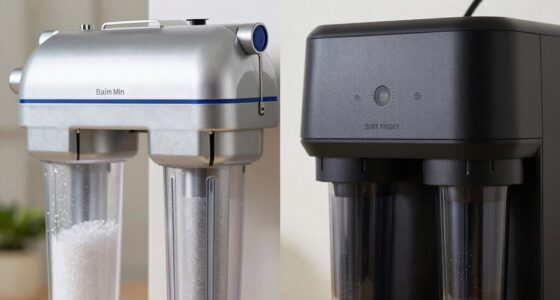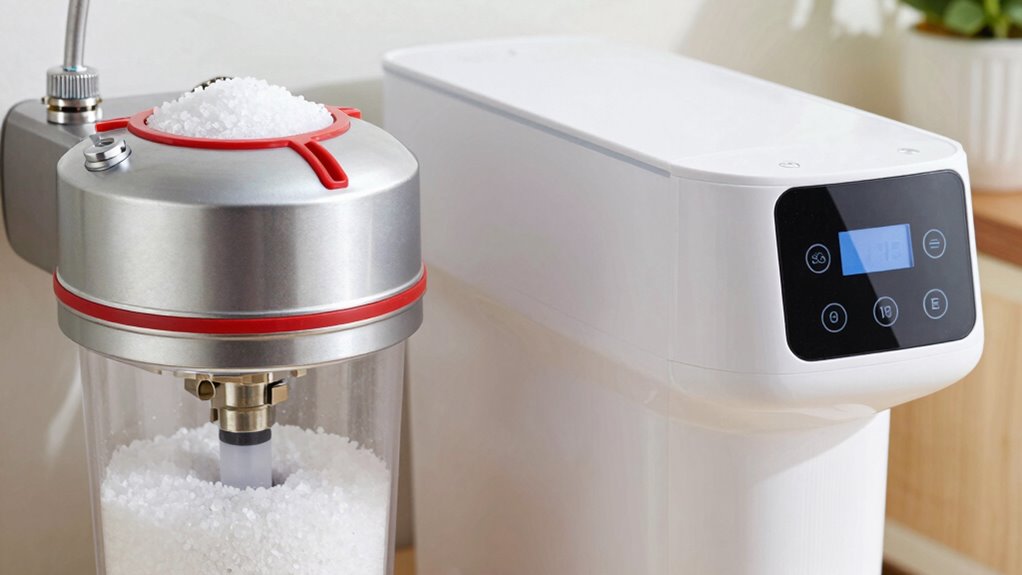

Salt-based softeners remove calcium and magnesium minerals through ion exchange, providing truly softened water but require ongoing salt refills and produce wastewater with higher sodium levels. Salt-free systems, on the other hand, modify mineral properties to prevent scaling without removing minerals or using salt, making them eco-friendly and low maintenance. If you want to understand which option fits your needs and the environmental impact, keep exploring the differences further.
Get ready for Prime Big Deal Days — try Prime free
Exclusive member deals on October 6–7, plus fast free delivery. Cancel anytime.
As an affiliate, we earn on qualifying purchases.
Key Takeaways
- Salt-based softeners remove calcium and magnesium ions, truly softening water; salt-free systems modify mineral properties without removing them.
- Salt-based systems require ongoing salt refills and maintenance; salt-free systems need minimal upkeep and no salt replenishment.
- Salt-based softeners can reduce extreme hardness effectively; salt-free systems prevent scale but are less effective with very hard water.
- Salt-based systems discharge salt into wastewater, impacting the environment; salt-free systems have a lower environmental footprint.
- Choice depends on water hardness levels, environmental considerations, and desired appliance longevity.
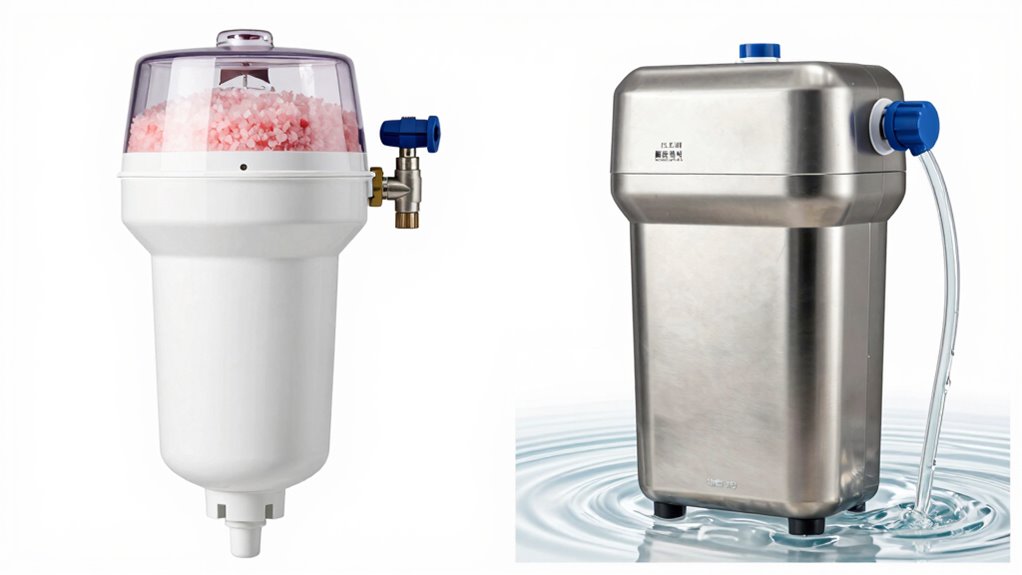
When choosing a water softener, understanding the differences between salt and salt-free systems is essential. Your decision influences how effectively you manage water hardness and can also impact the environment. Water hardness refers to minerals like calcium and magnesium dissolved in your water, which cause scaling, soap scum, and reduced appliance efficiency. Salt-based softeners remove these minerals by exchanging ions, replacing calcium and magnesium with sodium. Salt-free systems, on the other hand, don’t remove the minerals but modify their properties, preventing scale formation without actually softening the water. Additionally, salt-based systems often require specialized water testing to determine proper settings and ensure optimal performance. The environmental impact of your choice is a significant factor. Salt-based softeners use a considerable amount of salt, which can lead to increased sodium levels in wastewater. This runoff might affect local ecosystems and contaminate groundwater, especially in areas with sensitive water sources. Additionally, these systems require ongoing salt refilling and regular maintenance, which contribute to resource consumption and waste. If you’re environmentally conscious, this might steer you toward salt-free options, as they don’t produce brine or require salt replenishment. However, salt-free systems aren’t without their limitations. They don’t technically soften water but instead condition it, meaning they’re less effective at reducing water hardness in areas with very high mineral content. If your water has extreme hardness levels, a salt-based softener might be more practical for achieving the soft water you desire. But keep in mind, these systems are often considered more eco-friendly because they don’t discharge salt-laden wastewater, making them a sustainable choice for eco-conscious households. Another aspect to ponder is maintenance. Salt-based systems demand regular salt refills and periodic resin regeneration, which can be a hassle and incurs ongoing costs. Salt-free systems generally require less maintenance since they don’t involve chemical regeneration processes. This ease of upkeep can be appealing if you prefer a low-maintenance solution and want to reduce your environmental footprint.
As an affiliate, we earn on qualifying purchases.
Frequently Asked Questions
Are Salt-Free Water Softeners as Effective as Traditional Ones?
Salt-free water softeners are generally less effective than traditional ones at reducing water mineral content, especially calcium and magnesium. They don’t rely on a regeneration process like salt-based systems, so they mainly condition water rather than truly soften it. If you have high mineral levels, a salt-based system might be more effective, but if you want a low-maintenance option that still improves water quality, salt-free systems could work well.
How Often Do Salt-Based Softeners Require Maintenance?
Your salt-based softener might need maintenance more often than you think—sometimes every 3 to 4 weeks. You’ll need a regular maintenance schedule that includes salt replenishment to keep it running smoothly. Neglecting this can turn your softener into a hard water nightmare. Be proactive, check the salt levels regularly, and top them off to guarantee your system works efficiently and lasts longer.
Can Salt-Free Softeners Remove Existing Scale Buildup?
Salt-free softeners can’t remove existing scale buildup or mineral deposits. Instead, they work by altering mineral properties to prevent future buildup, effectively acting as a scale prevention system. If you’re dealing with existing mineral deposits, you’ll need to use a descaling solution or professional cleaning to remove the buildup first. Salt-free systems are great for maintenance but don’t reverse scale already accumulated on fixtures or pipes.
Do Salt-Based Systems Add Sodium to the Water?
Yes, salt-based systems do add sodium to your water, like a tiny tide washing in with each cycle. This can impact sodium content and raise water safety concerns, especially for those on low-sodium diets. While the amount is usually minimal, it’s good to be aware if you’re sensitive or require strict control over your water’s mineral levels. Always check your water quality to keep your health in check.
Which Type Is More Environmentally Friendly Long-Term?
You’ll find that salt-free water softeners are generally more environmentally friendly for long-term sustainability. They don’t require salt or chemicals, reducing waste and the environmental impact associated with salt production and disposal. Salt-based systems, on the other hand, can lead to increased sodium levels in wastewater, which may harm ecosystems. For eco-conscious choices, salt-free options support a cleaner environment and promote sustainability over time.
As an affiliate, we earn on qualifying purchases.
Conclusion
Choosing between salt and salt-free softeners depends on your water needs, but did you know that over 85% of households with water softeners notice a significant reduction in mineral buildup? Salt-based systems effectively remove hardness minerals, while salt-free options prevent scale without adding sodium. Consider your health and environmental concerns when deciding. Ultimately, understanding these differences helps you make an informed choice for cleaner appliances and better water quality tailored to your lifestyle.
As an affiliate, we earn on qualifying purchases.
As an affiliate, we earn on qualifying purchases.
NFL season / tailgating Picks
team gear
As an affiliate, we earn on qualifying purchases.