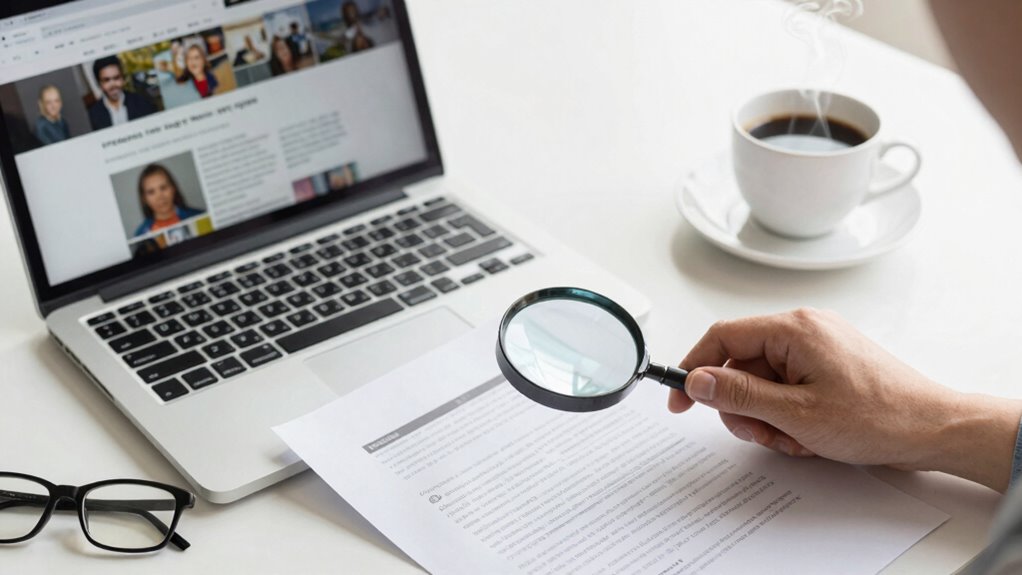

To double-check information before sharing, start by evaluating the source’s credibility and look for signs of bias. Cross-reference the details with multiple reputable outlets and official reports. Avoid relying on just one site or sensational headlines. Don’t forget to verify the evidence and be cautious of emotionally charged language. Developing these habits helps prevent the spread of misinformation. Keep exploring these tips to learn more about sharing responsibly and confidently.

Prime made for students and young adults
- Fast, free delivery for dorm and study essentials
- Prime Video and Amazon Music included
- Member-only deals
Key Takeaways
- Verify the source’s credibility and look for signs of bias or untrustworthiness.
- Cross-check information across multiple reputable outlets or official reports.
- Use fact-checking websites and databases to confirm claims before sharing.
- Examine evidence closely, ensuring it links to original research or primary sources.
- Be cautious of sensational headlines and emotional language that may manipulate perceptions.
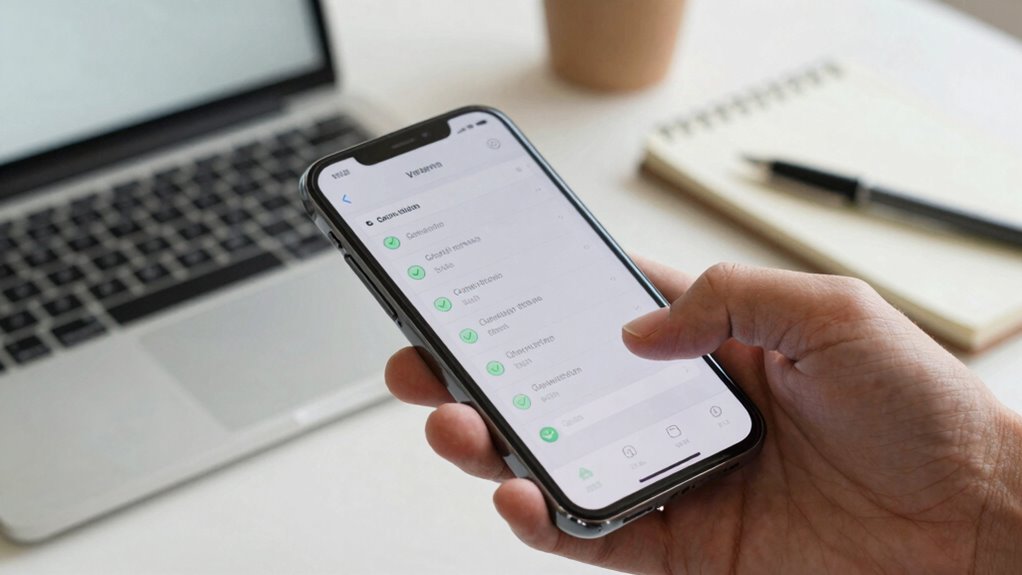
Have you ever shared something online only to realize later that it wasn’t accurate? It’s a frustrating experience, especially when misinformation spreads quickly and others believe what you’ve posted. That’s why developing smarter habits for double-checking before sharing is essential. The key lies in understanding effective fact checking methods and mastering source verification. These tools help you cut through the noise and guarantee you’re spreading reliable information.
When you come across a piece of information that seems important or surprising, don’t jump to share it immediately. Instead, pause and ask yourself if it’s worth verifying. The first step in this process is to identify where the information originated. Is it from a reputable news site, an official organization, or an individual you’ve never heard of? Source verification involves checking the credibility of the source. Look for signs of bias, check the domain name, and see if other trusted outlets have reported similar facts. If the source isn’t trustworthy or is obscure, it’s a red flag that you should dig deeper.
Next, employ fact checking methods. These include cross-referencing the information with multiple reputable sources. Use fact-checking websites or databases that specialize in debunking false claims. When you find a claim, don’t rely on just one source—compare it across several trusted sites. If mainstream outlets, academic institutions, or government agencies confirm the same facts, you can be more confident in sharing. Conversely, if the information is inconsistent or unverified elsewhere, it’s better to hold off. Developing a habit of source evaluation can significantly improve your ability to identify misinformation. Additionally, understanding the credibility of sources can help you distinguish between trustworthy and unreliable information before you decide to share.
Another useful technique is to examine the evidence behind the claim. Are there links to original research, official reports, or primary sources? Avoid sharing content that merely paraphrases or summarizes without providing a direct link or reference. This way, you can verify the evidence yourself and determine how credible it really is. Also, be wary of sensational headlines or emotionally charged language—these are often designed to manipulate perceptions rather than inform. Recognizing the importance of source credibility can significantly improve your ability to discern trustworthy information from falsehoods.
fact checking tools for research
As an affiliate, we earn on qualifying purchases.
As an affiliate, we earn on qualifying purchases.
Frequently Asked Questions
How Can I Verify the Credibility of a Source Quickly?
To verify a source quickly, focus on source evaluation by checking credibility indicators. Look for the author’s expertise, reputable publication, and recent publication date. Cross-reference information with trusted sources to confirm accuracy. Be cautious of sensational language or biased perspectives. If the source is well-known and backed by evidence, it’s more credible. Using these credibility indicators helps you make swift, informed judgments about whether to trust and share the information.
What Tools Are Best for Fact-Checking Online Information?
When verifying online information, rely on fact-checking tools like Snopes, FactCheck.org, or PolitiFact for credible source evaluation. Use Google Scholar for academic validation and CrossRef for citation verification. While social media claims spread rapidly, these tools help you assess credibility by cross-referencing facts. Combining these resources sharpens your ability to quickly evaluate source credibility, ensuring you share accurate, well-supported information instead of spreading misinformation.
How Do I Identify Biased or False Information?
To spot biased or false info, stay aware of confirmation bias, which makes you favor info that supports your beliefs. Watch out for emotional reasoning, where feelings cloud judgment instead of facts. Cross-check details using reputable sources, and question sensational claims. If something feels too good or too terrible to be true, pause and verify before sharing. This helps you avoid spreading misinformation and keeps your perspective balanced.
When Should I Consult a Professional Before Sharing?
You should consult a professional whenever the information involves complex, sensitive, or potentially impactful topics. Did you know that 62% of people trust expert advice over online sources? Seeking expert consultation guarantees you get trusted advice, reducing the risk of sharing misinformation. If you’re unsure about the accuracy or consequences, it’s smarter to double-check with a professional first. Their insights help you share responsibly and confidently.
How Can I Develop a Habit of Double-Checking?
To develop a habit of double-checking, start by practicing source evaluation—question the credibility of your information sources. Use confirmation techniques like cross-referencing data or seeking opinions from trusted individuals. Make it a routine to pause before sharing, asking yourself if the information is accurate and reliable. Over time, these steps become automatic, ensuring you consistently verify details before passing them along, reducing errors and enhancing your credibility.
As an affiliate, we earn on qualifying purchases.
Conclusion
By taking a moment to double-check what you share, you’re not just avoiding mistakes—you’re saving yourself from potential chaos that can spiral faster than a wildfire. Think of it as wielding a mighty shield against misinformation and misunderstandings. Remember, in today’s fast-paced world, a quick verification can be the difference between being a trusted voice and spreading chaos. So, slow down, verify, and share smarter—your reputation depends on it.
reliable information verification apps
As an affiliate, we earn on qualifying purchases.
As an affiliate, we earn on qualifying purchases.
As an affiliate, we earn on qualifying purchases.
Fall Picks
fall essentials
As an affiliate, we earn on qualifying purchases.