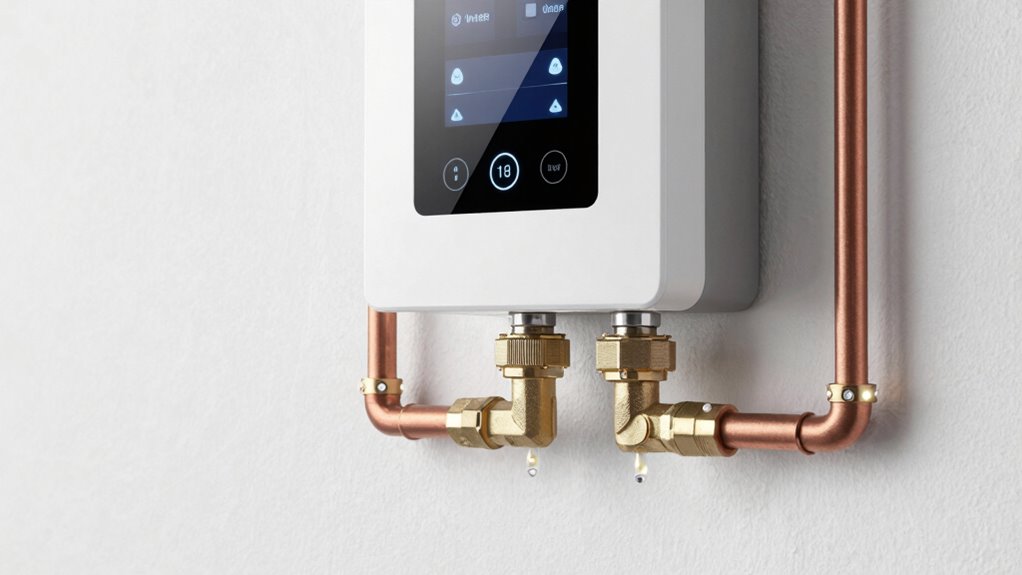

Whole-home water shutoff systems detect leaks using advanced sensors that monitor water flow and moisture levels throughout your plumbing. These sensors are strategically placed in high-risk areas like under sinks, near appliances, or along vulnerable pipes. When a leak is detected, the system automatically triggers an emergency shutoff to stop the water flow instantly. To find out how these systems work seamlessly behind the scenes, keep exploring the details.

Prime made for students and young adults
- Fast, free delivery for dorm and study essentials
- Prime Video and Amazon Music included
- Member-only deals
Key Takeaways
- They utilize leak detection sensors that monitor water flow and moisture levels in critical areas of the home.
- Sensors identify irregularities indicating leaks and trigger automatic emergency shutoff.
- The system continuously tracks water usage to spot unusual activity suggestive of leaks.
- Real-time alerts notify homeowners immediately via smartphones or home automation systems.
- Integration with smart home technology allows remote monitoring and control of leak detection and shutoff functions.
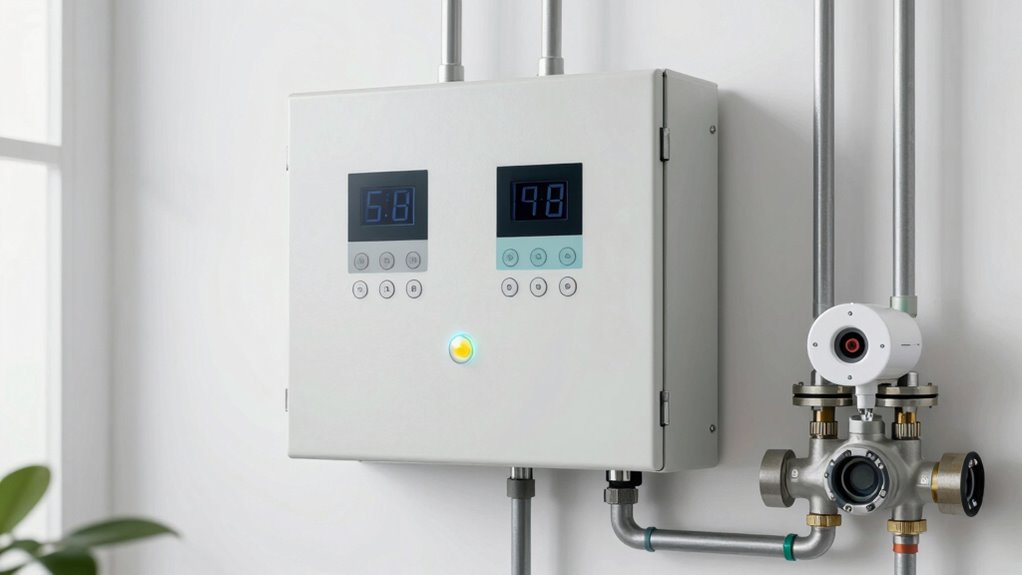
Have you ever considered how a whole-home water shutoff system can protect your property from costly water damage? These systems are designed to detect leaks early and respond automatically, preventing extensive damage and peace of mind. Leak detection technology is at the heart of these systems, allowing them to monitor water flow and identify irregularities that indicate a leak. Sensors are strategically placed throughout your plumbing network, especially in high-risk areas like under sinks, near appliances, or along pipes prone to freezing. When a leak occurs, the sensors immediately detect changes in flow or moisture levels, triggering the emergency shutoff feature. This automatic response cuts off water supply instantly, stopping leaks before they can cause significant damage.
A whole-home water shutoff system detects leaks early, preventing costly damage and providing peace of mind.
The beauty of leak detection in a whole-home water shutoff system lies in its speed and accuracy. Unlike traditional methods that rely on manual checks or waiting for visible signs of water damage, these systems work silently in the background, constantly monitoring your plumbing. As soon as a leak is detected, the system activates the emergency shutoff, which can be connected directly to your main water line or to individual zones, depending on the setup. This quick response minimizes water waste, prevents flooding, and reduces the risk of mold growth, property damage, and expensive repairs.
Furthermore, these systems often come with user-friendly alerts, notifying you immediately through your smartphone or home automation system when a leak is detected. This real-time communication allows you to take additional actions if needed, or simply stay informed even when you’re away from home. The combination of leak detection and emergency shutoff creates a proactive defense against water-related emergencies, giving you confidence that your property is protected around the clock. Smart home technology can enhance these systems by enabling remote control and automation features, providing even greater peace of mind.
Installing a whole-home water shutoff system is a smart investment for homeowners who want to avoid the hassle and expense of water damage repairs. It offers peace of mind, knowing that small leaks won’t escalate into major disasters. Plus, many insurance companies recognize the value of these systems, sometimes offering discounts for their installation. By prioritizing leak detection and automatic emergency shutoff, you’re taking a vital step toward safeguarding your home, your belongings, and your financial well-being. Essentially, these systems work quietly and efficiently in the background, ensuring that when leaks happen, they’re caught early and dealt with swiftly—saving you time, money, and stress.
whole home water leak detection system
As an affiliate, we earn on qualifying purchases.
As an affiliate, we earn on qualifying purchases.
Frequently Asked Questions
How Long Do Leak Detection Sensors Typically Last?
Leak detection sensors usually last around 3 to 5 years, but this can vary depending on the brand and usage. You should expect to replace them every few years to guarantee peak performance. Regularly check your sensor’s lifespan and replace them when needed, as aging sensors may become less accurate. Staying on top of replacement frequency helps keep your whole-home water shutoff system reliable and effective in detecting leaks early.
Can These Systems Be Integrated With Smart Home Devices?
Imagine your home seamlessly responding to leaks with a tap of your finger. Yes, these systems can be integrated with smart home devices, allowing you to monitor and control water flow remotely. They often feature device compatibility with popular platforms like Alexa, Google Home, or Apple HomeKit. This smart integration gives you peace of mind, making leak detection and response effortless, all from your smartphone or voice command.
Are Whole-Home Shutoff Systems Compatible With Well Water?
Yes, whole-home shutoff systems can be compatible with well water, but it depends on the system you’re considering. You should check the system’s compatibility with well water, as some models are designed specifically for municipal water supplies. Make sure the system can handle well water’s unique characteristics, like sediment and pressure variations, to guarantee reliable leak detection and effective shutoff in your home’s plumbing.
What Is the Average Cost of Installation and Maintenance?
The average cost estimate for installing a whole-home water shutoff system ranges from $1,000 to $3,000, depending on your home’s size and the system’s features. Maintenance expenses are generally low, often around $100 annually for inspections and sensor checks. You might also need to budget for occasional repairs or sensor replacements. Overall, investing in these systems can save you money by preventing costly water damage.
Do Systems Require Professional Installation or Can Homeowners DIY?
You can often do DIY installation of whole-home water shutoff systems if you’re comfortable with basic plumbing and electrical work. However, for the safest and most reliable setup, especially with complex systems, you should seek professional assistance. Professionals ensure proper installation, reduce the risk of leaks, and help you avoid voiding warranties. If you’re unsure about your skills, hiring a pro is the best choice for peace of mind.
automatic water shutoff valve for home
As an affiliate, we earn on qualifying purchases.
As an affiliate, we earn on qualifying purchases.
Conclusion
With a whole-home water shutoff system, you’ll never have to imagine a flood turning your house into a swimming pool. It’s like having an invisible superhero watching over every pipe, ready to jump into action at the first sign of a leak. Say goodbye to water damage nightmares and hello to peace of mind. With this system, your home stays dry, safe, and leak-free—like a fortress protected by an unstoppable, leak-busting army!
smart water leak sensor with app
As an affiliate, we earn on qualifying purchases.
As an affiliate, we earn on qualifying purchases.
home water flow monitoring system
As an affiliate, we earn on qualifying purchases.
As an affiliate, we earn on qualifying purchases.
Fall Picks
fall essentials
As an affiliate, we earn on qualifying purchases.