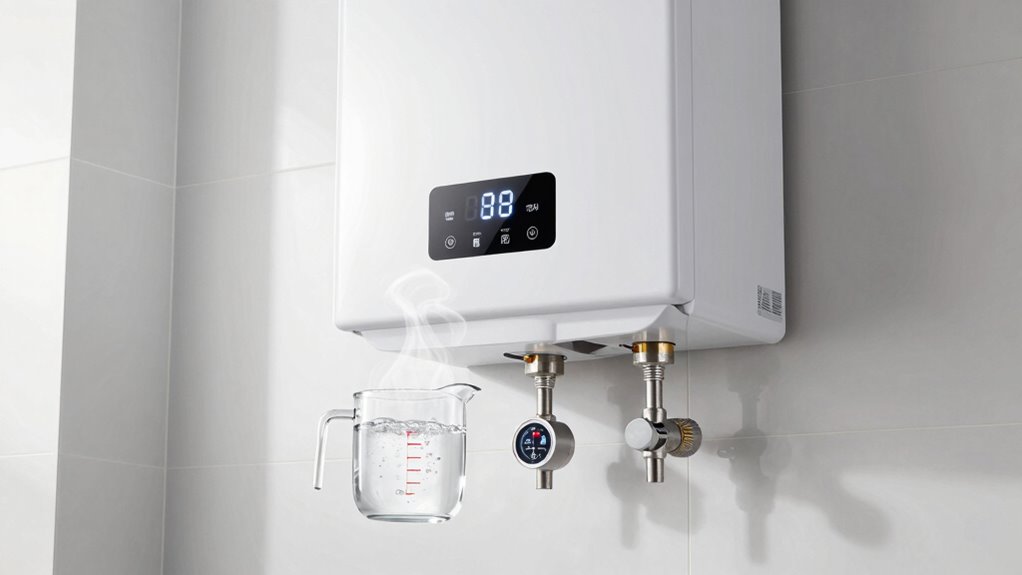

To properly size your tankless water heater, you need to calculate the total flow rate in GPM for all fixtures used at the same time and determine the required temperature rise, which is the difference between incoming cold water and your desired hot water temperature. Avoid undersizing to prevent cold showers or oversizing that wastes energy. Understanding these factors helps ensure efficient performance; learn more to optimize your choice and avoid costly mistakes.
Key Takeaways
- Calculate total simultaneous fixture flow rates to determine maximum GPM needed.
- Measure incoming cold water temperature and desired hot water temperature to find required temperature rise.
- Select a tankless heater capable of delivering the calculated GPM at the necessary temperature increase.
- Consider regional climate factors, like colder incoming water, which may require higher capacity units.
- Balance flow rate and temperature rise to ensure efficient operation without oversizing or undersizing.
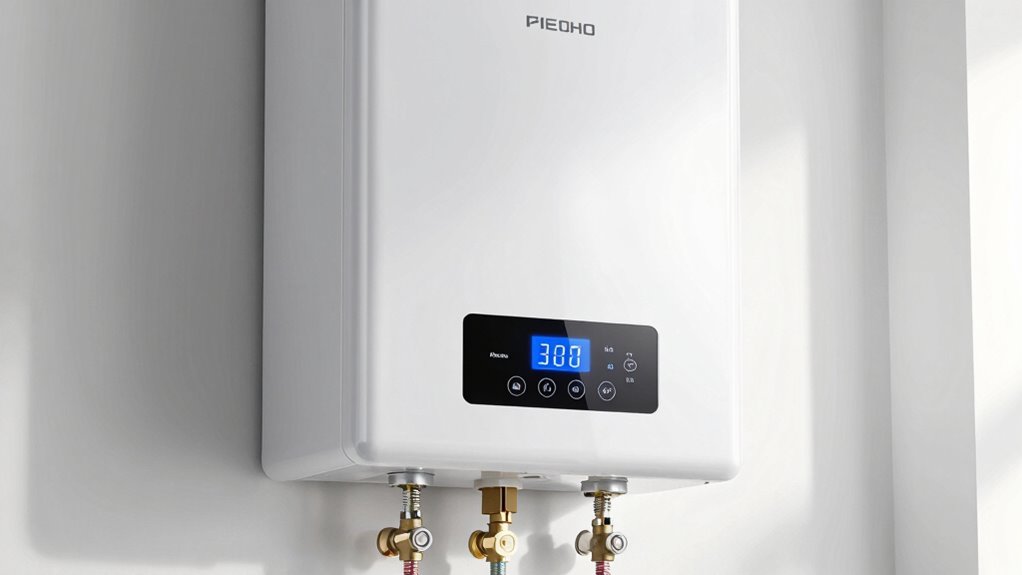
Are you unsure how to choose the right size of a tankless water heater for your home? The key lies in understanding your household’s hot water needs, which directly impact flow rate and temperature rise. A properly sized unit will deliver consistent hot water without wasting energy or overloading your electrical or gas systems. When selecting a tankless heater, you need to consider both the flow rate, measured in gallons per minute (GPM), and the temperature rise required to reach your desired water temperature. If your unit isn’t correctly matched, you might experience cold showers or increased energy consumption due to inefficiency.
Energy efficiency plays a crucial role in sizing because a heater that’s too small will struggle to meet demand, forcing you to run multiple units or accept inconsistent water temperatures. Conversely, an oversized unit can lead to unnecessary energy use, increasing your utility bills. To find the right balance, start by listing all the fixtures and appliances that use hot water in your house—showers, faucets, dishwashers, washing machines—and note their peak usage. For example, a shower typically requires around 2.0 GPM, while a dishwasher might need 1.5 GPM. Add these together to estimate maximum flow rate during simultaneous use.
Once you have your flow rate, consider the temperature rise needed. Your incoming cold water temperature varies based on your location and season, but generally, you should plan for a rise of about 70°F if your cold water is around 50°F and you want hot water at 120°F. To determine the right size, you need a unit that can handle the combined flow rate at that temperature rise efficiently. This means reviewing the specifications of different models to ensure they can deliver the necessary GPM at your required temperature increase.
Installation considerations also influence your choice. A larger unit may require more space, specialized venting, or upgraded electrical systems, which can add to installation costs. It’s important to think about your home’s existing infrastructure and whether it can support the unit you select. Proper sizing not only guarantees energy efficiency but also simplifies installation and maintenance, avoiding costly adjustments later. Additionally, understanding regional climate can help you better estimate the incoming cold water temperature, which impacts the required size of your heater.
tankless water heater flow rate calculator
As an affiliate, we earn on qualifying purchases.
As an affiliate, we earn on qualifying purchases.
Frequently Asked Questions
How Does Altitude Affect Tankless Water Heater Performance?
Altitude effects can diminish your tankless water heater’s performance because higher elevations mean thinner air, which lowers the boiling point of water. This causes the heater to struggle to reach the desired temperature, especially if it’s not designed for high altitudes. You should consider performance considerations like installing an altitude kit or choosing a model rated for your specific elevation to ensure reliable hot water supply.
Can Tankless Heaters Handle Simultaneous Multiple Appliance Uses?
Yes, tankless heaters can handle multiple appliances during simultaneous use, but you need to guarantee the unit’s flow rate matches your household demands. If you run multiple appliances like showers, dishwashers, and laundry simultaneously, choose a heater with a higher flow capacity. Otherwise, you might experience temperature drops or inadequate hot water. Always size your tankless heater appropriately to meet your peak simultaneous use needs.
What Maintenance Is Required for Optimal Sizing Accuracy?
You should perform regular inspections and system calibration to guarantee your tankless water heater maintains ideal sizing accuracy. Check for mineral build-up, sediment, or corrosion that can affect performance. Calibrate the system as needed to match your household’s changing hot water demands. Keeping these maintenance tasks up-to-date helps prevent inefficiencies, prolongs the unit’s lifespan, and ensures you get consistent hot water flow without overworking the heater.
How Do Cold Water Startup Temperatures Influence Sizing Calculations?
Cold water startup temperatures critically influence sizing calculations because colder water requires a higher temperature rise, affecting flow rate needs. Temperature fluctuations, especially in colder climates, mean you must size your tankless heater for the lowest expected inlet temperature. This ensures consistent hot water supply during cold starts, preventing shortfalls. Accurate sizing considers these variations so your system can handle peak demands without running out of hot water.
Are There Specific Models Best Suited for Large Households?
For large households, you should look at high capacity units or large household models designed to handle multiple simultaneous hot water demands. These models offer higher flow rates, ensuring everyone has enough hot water without delays. Choose a unit with a capacity that matches your peak usage, and consider models with advanced heating technology for efficiency and reliability. This way, you’ll keep hot water flowing smoothly for everyone.
best tankless water heater for cold climates
As an affiliate, we earn on qualifying purchases.
As an affiliate, we earn on qualifying purchases.
Conclusion
Choosing the right tankless water heater is like finding the perfect fit for your home’s needs. By understanding flow rates and temperature rise, you can guarantee your shower stays warm and your appliances run smoothly. When you size correctly, it’s like turning on a faucet and having a steady stream of warmth, never running dry. Take your time, plan carefully, and enjoy the comfort of reliable, on-demand hot water whenever you need it.

110V Tankless Water Heater Electric, 3000W Tankless Electric Water Heater Instant, Under Sink Water Heater with Digital Display, On Demand Hot Water Heaters Electric for Kitchen Washin Bathroom.
- Tankless Electric Water Heater: Fast hot water with LED display
- High Power and Rapid Heating: 3000W heats water instantly
- Temperature Adjustable: Fahrenheit or Celsius setting
As an affiliate, we earn on qualifying purchases.
As an affiliate, we earn on qualifying purchases.
tankless water heater size guide
As an affiliate, we earn on qualifying purchases.
As an affiliate, we earn on qualifying purchases.