When comparing projector brightness, you’ll see lumens and ANSI lumens mentioned. Lumens is a general measure of light output, while ANSI lumens are a standardized way to compare brightness across models. Higher values mean a brighter image that can handle well-lit environments. Understanding these terms helps you pick the right projector for your needs. If you want to know how they affect picture quality and which is better, keep exploring further details.

Prime made for students and young adults
- Fast, free delivery for dorm and study essentials
- Prime Video and Amazon Music included
- Member-only deals
Key Takeaways
- Lumens measure overall luminous flux, while ANSI lumens standardize brightness for projectors.
- ANSI lumens provide a consistent way to compare projector brightness across models.
- Higher ANSI lumen ratings indicate a brighter image suitable for well-lit environments.
- Lumens alone may vary by manufacturer; ANSI lumens offer a more reliable comparison.
- Understanding both helps select a projector with appropriate brightness for your needs.
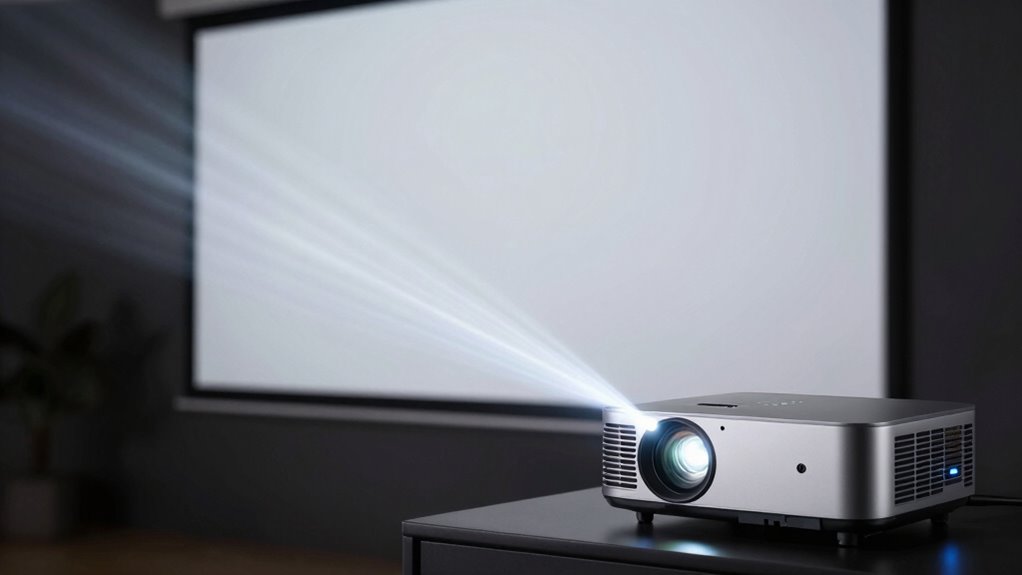
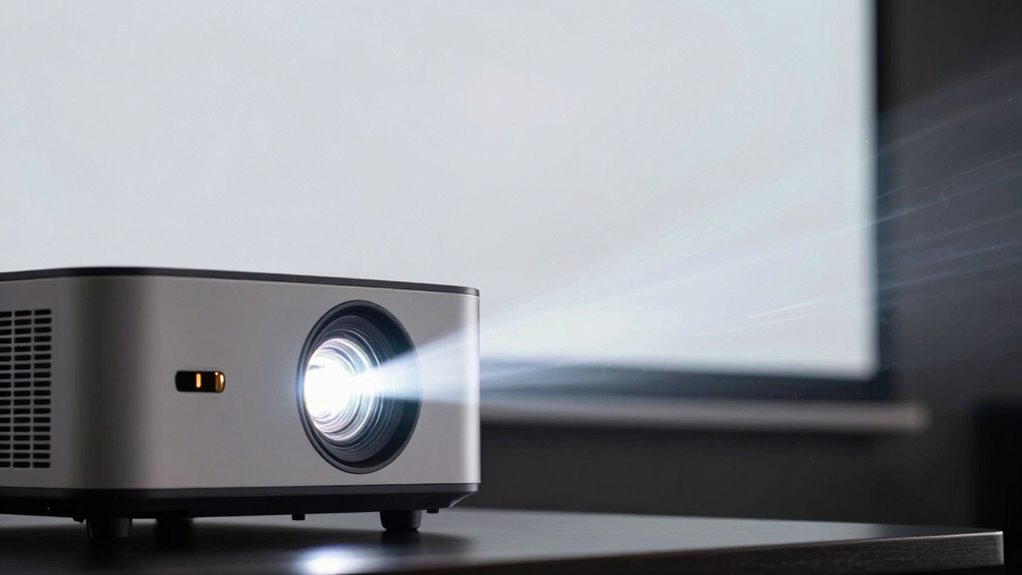
Have you ever wondered why some projectors produce a brighter and clearer image than others? The secret largely lies in understanding projector brightness and how it’s measured. When you’re choosing a projector, you’ll notice terms like lumens and ANSI lumens used to describe brightness. These measurements directly impact the image quality you experience, especially in well-lit environments. A projector with higher lumens generally offers a brighter image, which can make details more visible and colors more vivid. This is vital if you’re using the projector in a room with ambient light or during the daytime. The higher the lumens, the better the image quality tends to be because it overcomes ambient lighting conditions, guaranteeing your visuals stay sharp and vibrant.
However, it’s also essential to take into account how brightness relates to power consumption. Generally, projectors with higher brightness levels tend to consume more power because they need more energy to power brighter lamps or LEDs. If you’re concerned about energy efficiency or running costs, you’ll want to balance brightness needs with power consumption. Some high-brightness projectors are designed to be more energy-efficient, using advanced lamp technology or LED lighting that provides ample brightness without excessive energy use. This balance ensures you get a clear, bright image without unnecessarily increasing your electricity bill or wasting energy.
Additionally, understanding projector brightness specifications helps you select the right device for your specific environment and needs.
As an affiliate, we earn on qualifying purchases.
Frequently Asked Questions
How Does Ambient Light Affect Projector Brightness Visibility?
Ambient light considerably impacts your projector’s brightness visibility, making images harder to see. When there’s a lot of ambient light, your viewing contrast drops, so your images appear washed out and less vibrant. To get the best picture, you should limit ambient light by dimming lights or using blackout curtains. This way, your projector’s brightness can shine through, providing clearer, more vivid images with better contrast.
Are Higher Lumens Always Better for Home Theaters?
Higher lumens aren’t always better for home theaters, like more isn’t always merrier. You should consider calibration techniques and brightness adjustment to find the perfect balance. Too many lumens can cause washed-out images, especially in dark rooms. Focus on matching your projector’s brightness with your room’s lighting and screen size. This way, you get clear, vivid images without unnecessary glare or loss of contrast.
What’s the Difference Between LED and Traditional Lamp Projectors’ Brightness?
LED projectors typically appear brighter for their size because of better LED efficiency, meaning they produce more light per watt. They also offer longer lamp longevity, which reduces maintenance and replacement costs. Traditional lamp projectors may have higher initial brightness but often require more frequent lamp replacements. Your choice depends on whether you prioritize consistent brightness and lower maintenance, making LED projectors ideal for long-term use.
How Does Screen Size Influence Perceived Brightness?
Seeing size and shine, screen size substantially influences perceived brightness. As you increase the screen size, brightness scaling diminishes, making images look duller and less vivid. Larger screens spread the same light over a broader surface, so you might notice a dimmer display despite the projector’s lumens. To keep clarity crisp, consider boosting brightness or choosing a projector with higher lumens for expansive screens, ensuring your visuals remain vibrant and vivid.
Can a Projector’s Brightness Impact Its Lifespan?
Yes, a projector’s brightness can impact its lifespan. Higher brightness levels often mean the bulb works harder, which can reduce projector longevity and increase bulb replacement frequency. If you frequently use a projector at maximum brightness, expect the bulb to wear out faster. To extend your projector’s life, consider lowering brightness when possible, and follow manufacturer recommendations for bulb replacement to avoid unnecessary wear and tear.
As an affiliate, we earn on qualifying purchases.
Conclusion
Understanding projector brightness is like choosing the right flashlight for a dark night—you want enough lumens to light up your space clearly. Remember, ANSI lumens give a more accurate picture of a projector’s true brightness, helping you pick the right one for your needs. So, when shopping, think of brightness as the engine that powers your viewing experience—without it, your images might just be a flicker in the dark.
energy-efficient projector with high lumens
As an affiliate, we earn on qualifying purchases.
As an affiliate, we earn on qualifying purchases.
outdoor projector for daytime use
As an affiliate, we earn on qualifying purchases.
As an affiliate, we earn on qualifying purchases.
Fall Picks
fall essentials
As an affiliate, we earn on qualifying purchases.