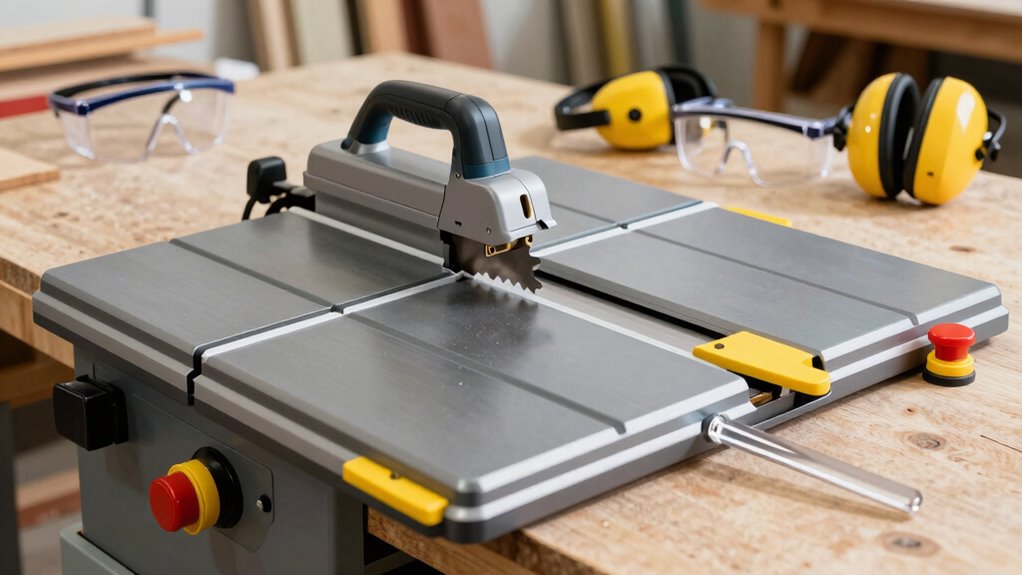

To prevent most accidents on a table saw, always use safety features like blade guards and anti-kickback devices, and double-check that they function properly before starting. Keep your hands away from the blade, use push sticks for narrow cuts, and stand to the side of the blade. Never bypass safety devices or reach over the spinning blade. Following these essential rules will help keep you safe—there’s more to guarantee safe operation if you keep going.
Prime for Young Adults — start your free trial
Fast free delivery, streaming and member deals for eligible 18–24 year olds.
As an affiliate, we earn on qualifying purchases.
Key Takeaways
- Always keep the blade guard in place to prevent accidental contact with the saw blade.
- Use push sticks and proper control techniques to keep hands away from the spinning blade.
- Double-check that safety features like anti-kickback pawls and riving knives are functional before use.
- Wear appropriate personal protective equipment, including safety glasses and hearing protection.
- Turn off the saw and wait for the blade to stop before removing cut pieces or making adjustments.
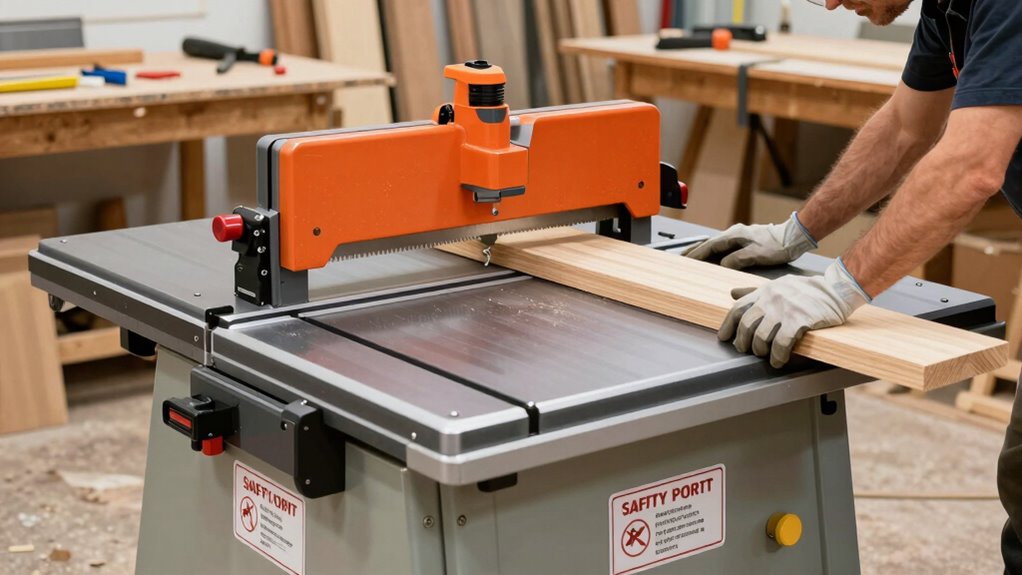
Using a table saw can be dangerous if you don’t prioritize safety, but with proper precautions, you can minimize the risk of injury. One of the most important safety features you should always use is the blade guard. The blade guard covers the saw blade, preventing accidental contact and reducing the chance of serious cuts. Never remove or bypass the blade guard, even if it seems inconvenient; it’s there to protect you. When making cuts, ensure the guard is properly positioned and functioning correctly. If your saw has an anti-kickback pawl or riving knife, keep them in place as they help prevent dangerous kickbacks.
Always keep the blade guard in place to prevent accidents and ensure safe table saw operation.
Another essential safety tool is the push stick. When you’re cutting narrow pieces or making rip cuts, your fingers can easily come too close to the spinning blade. To keep your hands safe, use a push stick to guide the wood through the saw. This small tool gives you better control and keeps your hands at a safe distance from the blade. Always grip the push stick firmly, and never attempt to hold the wood with your fingers while it’s near the blade. Using a push stick reduces the risk of slips or accidental contact, especially during long or repetitive cuts.
Before you start working, double-check that the saw blade is sharp, properly aligned, and set to the correct depth for your cut. A dull or misaligned blade can cause binding or kickback, increasing the danger. Make sure your workspace is clear of clutter, and you have enough lighting to see the cut line clearly. Always wear safety glasses and hearing protection to guard against flying debris and loud noise. Avoid loose clothing, jewelry, or anything that could get caught in the blade. Additionally, understanding your power tool’s safety features and how they function can significantly enhance your safety practices.
When making cuts, stand to the side of the blade, not directly in line with it, to avoid potential kickback or debris hitting you. Keep your hands well away from the blade, and use both hands to stabilize the wood, but never reach over or behind the blade while it’s spinning. When finished, turn off the saw and wait until the blade has completely stopped before removing cut pieces or making adjustments. Regularly inspect safety features like the blade guard and push stick, replacing or repairing them if they’re damaged. Following these safety rules helps you operate the table saw confidently and reduces the risk of accidents, so you can focus on your project instead of worrying about injuries.
As an affiliate, we earn on qualifying purchases.
Frequently Asked Questions
What Personal Protective Equipment Is Essential for Table Saw Use?
You should always wear protective gear and safety apparel when using a table saw. Essential protective gear includes safety glasses or goggles to guard your eyes from debris, and hearing protection to prevent hearing damage. Consider wearing a dust mask or respirator to avoid inhaling sawdust. Additionally, use tight-fitting clothing and avoid jewelry to prevent entanglement. Proper safety apparel and gear help keep you safe and reduce the risk of accidents.
How Often Should I Inspect My Table Saw for Safety Issues?
You should inspect your table saw every time before you use it. Check blade alignment to guarantee cuts are accurate and safe, and examine dust collection systems to prevent buildup that could cause hazards. Regular inspections help catch issues early, reducing the risk of accidents. Don’t forget to also verify that safety guards are in place and functioning properly. Making these checks part of your routine keeps your workspace safe and efficient.
Can Children Operate a Table Saw Safely Under Supervision?
You should never let children operate a table saw, even under close supervision, because the risk is as high as a skyscraper. Youth safety is paramount, and constant child supervision is essential to prevent accidents. While older teens with proper training might handle minor tasks, a full-sized saw is too dangerous for kids. Prioritize their safety and keep the saw out of their reach entirely.
What Are Common Signs of a Malfunctioning Table Saw?
You’ll notice common signs of a malfunctioning table saw, like saw blade wear and unusual vibrations. If the blade looks dull or chipped, it’s a clear sign you need to replace or sharpen it. Unusual vibrations during operation could indicate a misalignment or loose parts. Pay attention to these signs, and always shut off the saw to inspect and address issues before continuing your work.
How Do I Properly Store and Maintain My Table Saw for Safety?
Don’t put all your eggs in one basket—proper storage and maintenance keep your saw safe and efficient. Regularly check blade alignment and tighten all parts to prevent accidents. Keep the area clean and ensure dust collection systems work well to avoid hazards. Store your saw in a dry place, cover it when not in use, and follow the manufacturer’s guidelines. Routine maintenance is your best insurance against mishaps.
As an affiliate, we earn on qualifying purchases.
Conclusion
Remember, your table saw is a powerful tool, but it’s also a symbol of responsibility and respect. Treat it with care, follow safety rules, and stay alert—think of each precaution as a shield protecting your hands and your future. By respecting the saw’s potential for harm, you build a safer workspace where craftsmanship flourishes. Keep safety at the forefront, and let caution be the steady hand guiding your projects to success.
anti-kickback pawls for table saw
As an affiliate, we earn on qualifying purchases.
As an affiliate, we earn on qualifying purchases.
safety glasses and hearing protection for woodworking
As an affiliate, we earn on qualifying purchases.
As an affiliate, we earn on qualifying purchases.
Fall Picks
fall essentials
As an affiliate, we earn on qualifying purchases.