
Wired doorbells offer reliable, consistent performance since they connect directly to your home’s electrical system, but they can be difficult to install and less flexible in placement. Battery-powered doorbells are easy to set up anywhere without wiring, but they require battery maintenance and may occasionally lose power. Both options have pros and cons, and understanding these tradeoffs can help you choose what fits your needs best—continue on to explore the details behind each choice.
Key Takeaways
- Wired doorbells offer consistent power and reliability but require wiring and professional installation.
- Battery doorbells are easy to install and flexible in placement but need regular battery replacements or recharging.
- Wired models tend to be more durable with less ongoing maintenance, whereas battery units depend on battery life and alerts.
- Wireless and battery-powered options provide quick setup and portability, while wired systems are more permanent.
- Power source impacts performance, with wired systems being more stable and battery units offering convenience at the cost of potential power loss.
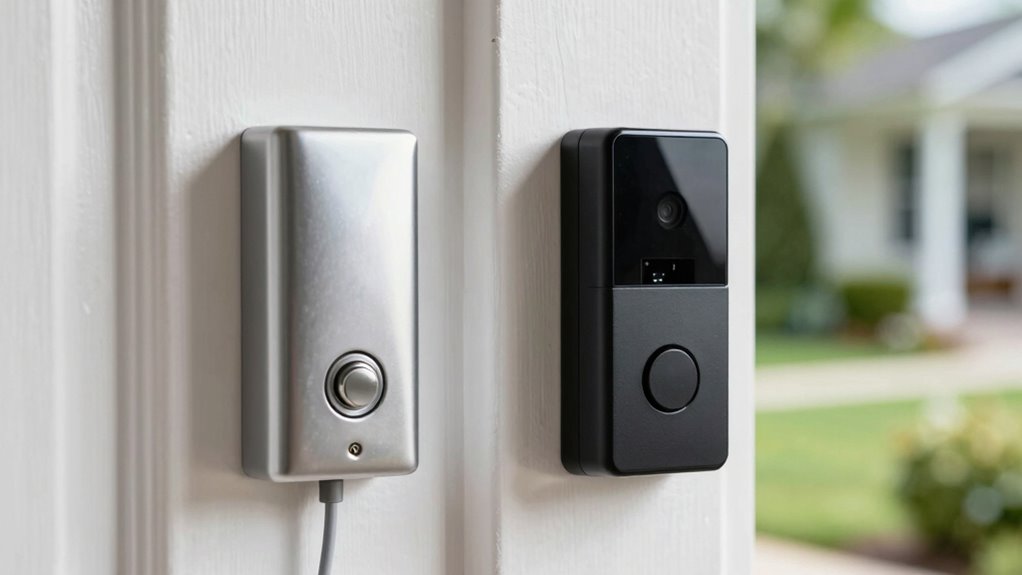
When choosing a doorbell, you’ll notice there are two main options: wired and battery-powered. The decision often comes down to how you want to handle wireless installation and the variety of power source options available. Wired doorbells require you to connect them directly to your home’s electrical system, which means you’ll need to do some wiring or hire an electrician. This setup can be more involved initially, but once installed, it’s typically more reliable and consistent. Battery-powered doorbells, on the other hand, rely on internal batteries, making installation straightforward and quick. They’re perfect if you want to avoid messing with wiring or if your home doesn’t already have the necessary electrical connections.
When considering wireless installation, battery-powered doorbells stand out because they don’t need a physical connection to your home’s wiring. You just mount the unit and insert batteries—no drilling or rewiring required. This flexibility allows you to place the doorbell almost anywhere, even on brick or stone surfaces where wiring can be tricky. Wired doorbells, however, require you to run wires through walls or along the exterior, which can be a hassle but results in a more permanent setup. If you’re renting or prefer easy installation, battery-powered options generally make more sense.
Power source options are a critical factor in your choice. Wired doorbells draw power directly from your home’s electrical system, providing a constant, reliable power supply. This means you won’t have to worry about batteries dying unexpectedly. Some wired models also come with features like chimes integrated into the wiring, making them a seamless part of your home’s infrastructure. Battery-powered units rely solely on batteries, which need to be replaced or recharged periodically. Modern battery doorbells often come with rechargeable batteries and alerts when power is low, but you’ll still need to keep an eye on their charge levels. The advantage is that you can choose different battery types, some with long-lasting life spans, giving you control over maintenance. Additionally, understanding the projector technology involved can help you appreciate how reliability and consistent power contribute to overall performance.
Ultimately, your choice hinges on how much effort you’re willing to put into installation and ongoing maintenance. Wired options demand more initial effort but offer ongoing reliability and fewer worries about power loss. Battery-powered models are quick to set up and flexible in placement, but they require some attention to battery life. Both options have their pros and cons, but understanding these key differences around wireless installation and power source options helps you pick the best doorbell for your home and lifestyle.
Frequently Asked Questions
How Do Wired and Battery Doorbells Affect Home Security?
Wired doorbells tend to be more reliable, reducing security vulnerabilities caused by power loss or dead batteries, and they often offer better privacy since they connect directly to your home’s wiring. Battery doorbells, while easier to install, can pose security risks if their Wi-Fi connections are hacked, and they might have privacy concerns if stored footage is compromised. Both types require proper security measures to keep your home safe.
Are There Differences in Installation Time Between Wired and Battery Doorbells?
Wired doorbells generally take longer to install because of their installation complexity and wiring requirements. You’ll need to run wires to connect the doorbell to your existing electrical system, which may involve some drilling and handling electrical components. Battery doorbells are quicker and easier to install since they don’t require wiring; you simply mount the unit and insert batteries. Overall, battery models save you time and effort during installation.
What Are the Long-Term Maintenance Costs of Each Type?
Think of your doorbell as a garden needing care. Wired doorbells usually have lower maintenance expenses, with less frequent replacement because they’re built to last longer. Battery doorbells, however, demand more attention, as their batteries require regular replacement, increasing maintenance expenses over time. You’ll find that the long-term costs for wired models tend to stay steadier, while battery-powered options might drain your budget more frequently due to their higher replacement frequency.
Can Battery Doorbells Function During Power Outages?
Battery doorbells can generally function during power outages because they don’t rely on your home’s electrical system. Their power outage resilience depends on their battery life, so you might need backup power options like extra batteries or portable chargers. Unlike wired doorbells, which stop working without power, battery doorbells keep you connected, ensuring you won’t miss visitors even when the power’s out.
Do Wired Doorbells Support Smart Home Integration Better?
Wired doorbells are like the backbone of your smart home, supporting seamless integration with other devices. They offer reliable, wired convenience that keeps your system connected without interruptions, unlike wireless options that can sometimes be flaky. While wiring complexity might seem intimidating, it guarantees your smart features work smoothly and consistently. So, if you want a dependable, integrated setup, wired doorbells support smart home integration better than their wireless counterparts.
Conclusion
Choosing between wired and battery doorbells is like picking between a steady heartbeat and a free-spirited breeze. Wired doorbells offer reliability but tie you down with wiring, while battery models give you freedom but might leave you in the lurch. Think about your home’s setup and your lifestyle—after all, the right doorbell should feel like a trusted friend, not a wild card. Make your choice wisely, and enjoy the perfect chime at your doorstep.