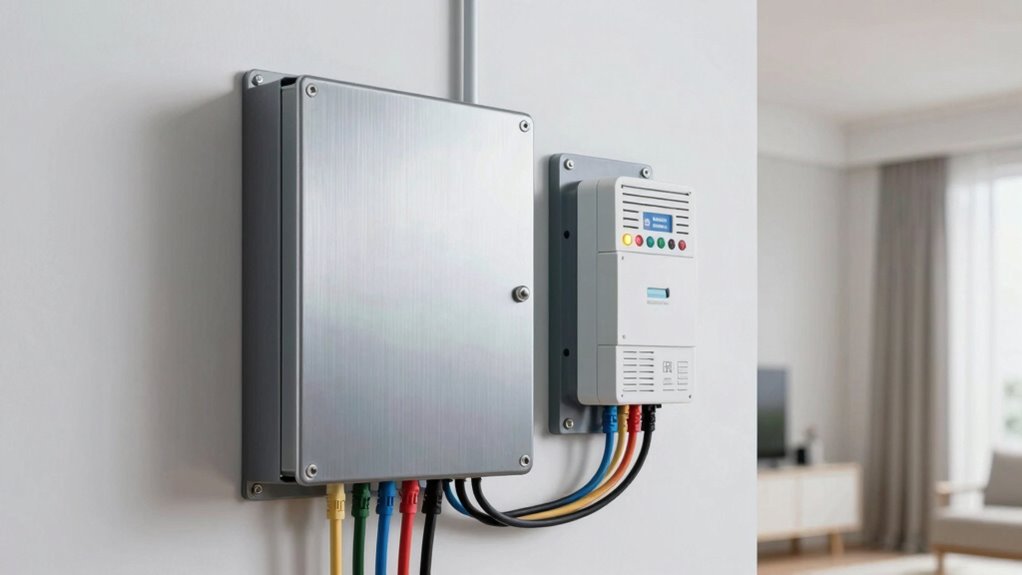

Whole house surge protection helps shield your home’s electrical system and appliances from high-energy voltage spikes caused by lightning, utility switching, or large appliances turning on and off. It’s installed at your main electrical panel to divert excess voltage and prevent damage. However, it doesn’t cover smaller surges, damage from direct lightning strikes, or physical impacts like fires. Understanding what it protects against can help keep your home safe—if you’re interested, more details await.
Key Takeaways
- Whole house surge protectors installed at the main panel shield against high-energy external surges like lightning strikes.
- They prevent damage from power fluctuations and utility switching but do not eliminate small or internal surges.
- These protectors cannot guard against direct lightning strikes hitting the home or physical damage.
- They have a limited lifespan and require regular inspection and replacement after large surges or wear.
- For comprehensive protection, combine whole house surge protectors with portable devices for sensitive electronics.
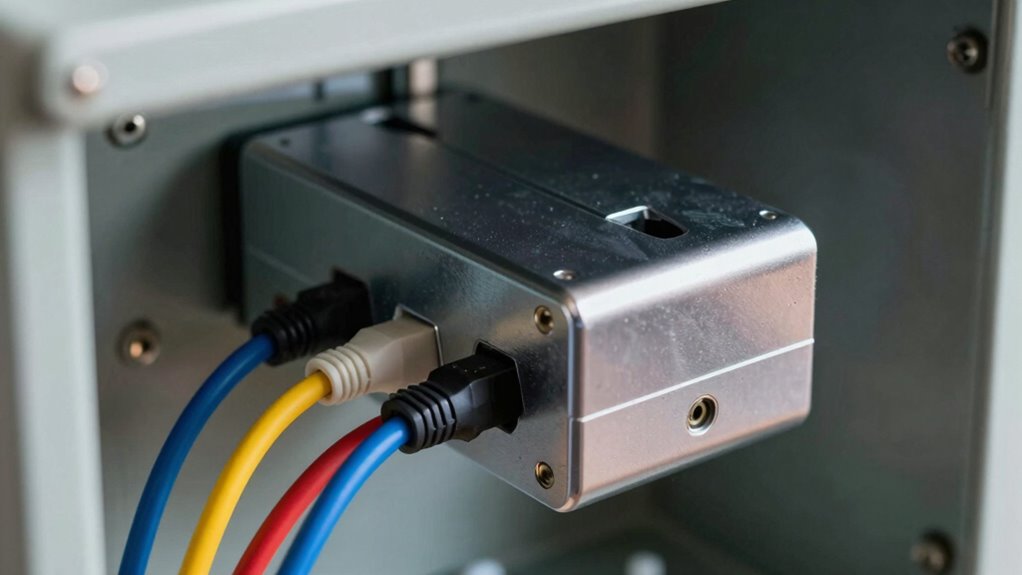
Power surges can strike unexpectedly, damaging your home’s electronics and appliances. These surges often come from lightning strikes or other electrical disturbances that cause a sudden spike in voltage. When lightning hits nearby, it can send a powerful surge through the power lines, overwhelming your home’s electrical system and frying sensitive devices. Even without a thunderstorm, power surges can occur due to utility switching, faulty wiring, or large appliances turning on and off. Protecting your home from these sudden voltage increases is essential to avoid costly repairs and replacements.
Whole house surge protectors act as a first line of defense against these unpredictable events. Installed at your main electrical panel, they monitor incoming electricity and redirect excess voltage away from your wiring system before it reaches your electronics. This prevents the high voltage from damaging your TVs, computers, refrigerators, and other crucial appliances. By blocking most surges at the source, a whole house surge protector reduces the risk of damage from lightning strikes and everyday power fluctuations. However, it’s important to understand what these devices do and do not shield you from.
While whole house surge protectors are quite effective against large-scale surges caused by lightning or utility switching, they don’t eliminate every risk. They primarily handle high-energy surges that originate outside your home or from major internal events. Smaller surges, such as those caused by switching on a lamp or a motor starting up, may still slip through. Additionally, a surge protector installed at the main panel doesn’t provide protection for individual devices plugged directly into outlets or surge strips used on sensitive equipment. For ultimate protection, you should complement your whole house system with portable surge protectors on critical devices.
It’s also worth noting that surge protectors have a limited lifespan. They can become worn out or compromised over time, especially after absorbing several large surges. Regular inspections and replacement are necessary to keep your home adequately protected. Furthermore, a whole house surge protector won’t prevent damage from direct lightning strikes hitting your home physically, which can cause fires or structural damage—these situations require additional safety measures. Understanding surge protection components can help homeowners make informed decisions about their overall electrical safety.
Frequently Asked Questions
Can Whole House Surge Protectors Prevent All Electrical Damage?
Whole house surge protectors can’t prevent all electrical damage, but they substantially reduce risks. They work best when properly grounded, ensuring excess voltage is safely diverted. Check surge protector ratings to ensure adequate protection, especially for sensitive electronics. While they protect your entire home from many surges, lightning strikes or power grid issues can still cause damage, so consider additional safeguards for critical devices. Proper electrical grounding enhances overall effectiveness.
How Often Should a Whole House Surge Protector Be Replaced?
Think of your whole house surge protector as a trusty shield that needs regular polishing. You should replace it every 5 to 10 years, depending on your maintenance schedule and the number of power surges your home faces. Regular inspections help you spot signs of wear or damage. Keeping up with the replacement frequency guarantees your home stays protected and your electrical system remains resilient against unexpected surges.
Do They Protect Against Power Surges Caused by Lightning?
Yes, a whole house surge protector can help shield your home from power surges caused by lightning strikes. When lightning hits, it creates a sudden spike in the power grid, which your surge protector can divert away from your appliances. However, no surge protector can guarantee complete protection during a direct lightning strike, so it’s wise to unplug sensitive electronics during thunderstorms for added safety.
Are Whole House Surge Protectors Compatible With Smart Home Systems?
Did you know that over 60% of smart homeowners want seamless integration? Whole house surge protectors are compatible with smart home systems, supporting smart home integration and wireless connectivity. They can be programmed to alert you of power surges, providing real-time updates. Just confirm your surge protector is compatible with your smart hub or app, making your home both smarter and safer without sacrificing connectivity.
What Is the Average Cost of Installing a Whole House Surge Protector?
You’ll typically spend between $200 and $600 for installation costs of a whole house surge protector. The price depends on your home’s size and existing electrical setup. Maintenance frequency is low; you mainly need to check the device periodically, maybe every few years. Professional installation is recommended to guarantee safety and proper function. Keep in mind, investing in a surge protector can save you money on potential electrical damage in the long run.
Conclusion
While whole house surge protection shields your home from most power surges, it doesn’t guarantee absolute safety. Think of it as a sturdy umbrella during a storm—helpful, yet not foolproof against every drop. By understanding its limits, you can better safeguard your appliances and electronics. Remember, combining surge protection with other precautions ensures you’re not just covered, but truly prepared for unexpected electrical surprises. After all, in the world of power surges, awareness is your best defense.