Smart lock security grades, based on standardized ANSI/BHMA ratings, tell you how resistant the lock is to forced entry and tampering. Grade 1 offers the highest protection, ideal for commercial or high-traffic areas, while Grade 2 is suitable for most homes. Grade 3 provides basic security and is less recommended for exterior doors. Understanding these grades helps you pick a lock that matches your safety needs. Keep exploring to see what fits best for your home.
Prime for Young Adults — start your free trial
Fast free delivery, streaming and member deals for eligible 18–24 year olds.
As an affiliate, we earn on qualifying purchases.
Key Takeaways
- Security grades (1, 2, 3) indicate a lock’s resistance to physical attacks and tampering.
- Grade 1 offers the highest security, suitable for commercial or high-traffic areas.
- Grade 2 is ideal for residential use, balancing security and affordability.
- Grade 3 provides minimal resistance and is generally not recommended for exterior doors.
- Understanding these standards helps choose a smart lock that matches your security needs.
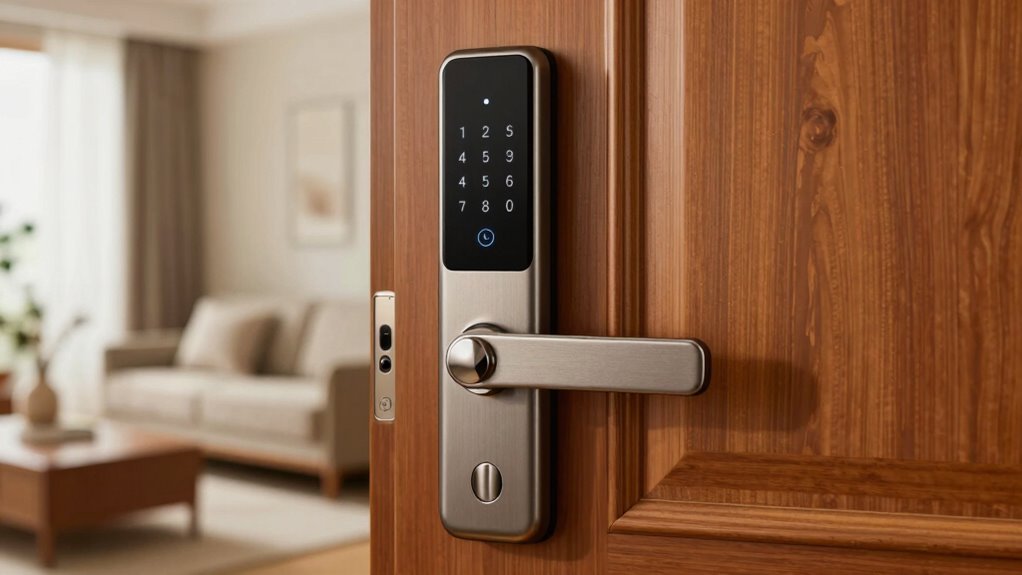
Smart Lock Security Grades
When choosing a smart lock, understanding its security grade is essential to guarantee your home’s safety. The security grade, often based on ANSI/BHMA standards, tells you how well the lock resists physical attack, tampering, and forced entry. Knowing this helps you pick a lock that offers the right level of protection for your home. Higher grades, like Grade 1, are designed for commercial or high-traffic areas, offering maximum durability and security. Grade 2 locks are suitable for residential use, providing a good balance between security and affordability. Grade 3 locks, while still functional, are the least resistant and generally not recommended for exterior doors.
Understanding security grades helps you choose the right smart lock for your home’s protection.
Battery life is another critical factor to consider when evaluating a smart lock’s security. A lock with poor battery life could leave your door vulnerable if the power runs out unexpectedly. Many smart locks have indicators to alert you when the battery is low, but it’s wise to choose models with longer-lasting batteries or easy access to replace them. Some locks use standard batteries, making replacement straightforward, while others may require specific types that could be harder to find. It’s a good idea to keep spare batteries handy and set a reminder to check the battery status regularly. A lock that maintains consistent power ensures continuous security and prevents lockouts caused by dead batteries. Proper installation tips are equally important to maximize your smart lock’s effectiveness and security. Proper installation ensures the lock operates smoothly and resists tampering. Always follow the manufacturer’s guidelines carefully, and make sure the lock is mounted securely with the right tools. Use the correct screws and hardware, and double-check that the latch and deadbolt align properly with your door frame. For added security, consider reinforcing the door itself and installing strike plates that can resist forced entry. If you’re unsure about the installation process, consulting a professional can save you time and ensure your lock is properly set up. Proper installation also involves verifying that the lock’s app and connectivity features work seamlessly, providing you with real-time alerts and remote access. Additionally, understanding the security standards behind your smart lock can help you assess its overall robustness and compliance with industry benchmarks.
Understanding security grades, paying attention to battery life, and following installation tips empower you to make smarter choices when selecting a smart lock. These steps help you enhance your home’s security, giving you peace of mind knowing your family and belongings are protected. Taking the time to research these aspects ensures you choose a lock that’s not only advanced technologically but also robust enough to withstand potential threats.
As an affiliate, we earn on qualifying purchases.
Frequently Asked Questions
How Do Security Grades Impact Smart Lock Pricing?
Security grades directly impact your smart lock’s pricing because higher grades usually mean better durability and security, which can increase costs. You’ll find that the pricing factors include not just the grade but also features and build quality, with some feature trade-offs to stay within budget. If you want top-tier security, be prepared to pay more, but lower grades may save money while offering basic protection.
Can a Lock’s Grade Change Over Time?
Ironically, your lock’s grade can change over time, especially if it endures wear and tear. While a high-grade lock is built for durability, constant use might degrade its security features, potentially lowering its grade. This affects lock durability and warranty implications, as manufacturers may limit coverage if the lock’s condition worsens. Keep an eye on your lock’s performance to make sure it maintains its grade and the protection it promises.
Are Higher Grades Always More Secure in Real-World Use?
Higher grades generally offer better physical durability and hacking resistance, making them more secure in real-world use. However, no lock is completely invulnerable, so you should also consider installation quality and additional security measures. While a higher grade provides a solid foundation, actively maintaining your lock and staying aware of potential vulnerabilities will help guarantee your home stays protected. Remember, security is a combination of grade, upkeep, and smart usage.
How Do I Verify a Lock’s Grade Before Purchase?
You might stumble upon a lock’s grade by checking its packaging or product specifications online. To verify durability, look for ANSI/BHMA ratings, ensuring it meets your security needs. Before installing, follow proper tips to maximize its strength. Remember, higher grades typically mean better durability and security, but always double-check the certification labels and reviews to make sure you’re choosing a reliable lock for your home.
Do Security Grades Apply to All Smart Lock Features?
Security grades primarily assess the durability and strength of a smart lock’s physical components based on grading standards like ANSI/BHMA. They don’t automatically guarantee all smart lock features, such as remote access or app integration, are compatible or secure. You should verify feature compatibility separately, ensuring the lock meets your specific needs, while understanding that a higher grade indicates better resistance to physical attacks but doesn’t cover every feature.
residential smart lock with long battery life
As an affiliate, we earn on qualifying purchases.
As an affiliate, we earn on qualifying purchases.
Conclusion
Remember, when it comes to smart lock security, knowing the grades helps you make smarter choices. Just like they say, “Better safe than sorry,” understanding these ratings guarantees your home stays protected. By choosing a lock with the right security grade, you’re not just investing in technology—you’re investing in peace of mind. So, take the time to compare, understand, and select wisely. Your security depends on it, and a little knowledge goes a long way.
high security smart lock for exterior door
As an affiliate, we earn on qualifying purchases.
As an affiliate, we earn on qualifying purchases.
NFL season / tailgating Picks
team gear
As an affiliate, we earn on qualifying purchases.