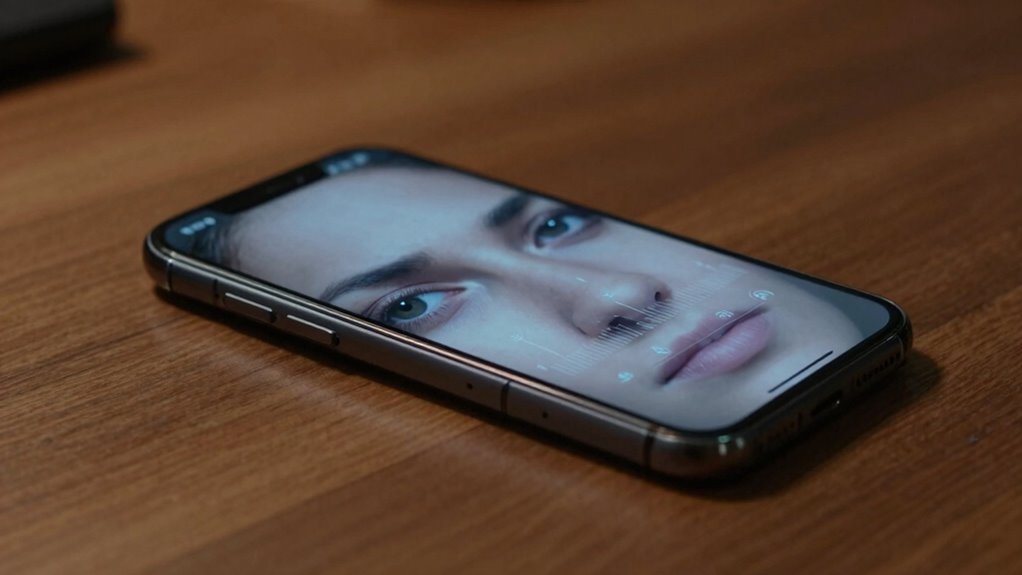

Your phone detects when you’re tired by analyzing movement, sleep patterns, and physiological signals like heart rate and breathing. It uses sensors such as accelerometers and heart rate monitors to track activity levels and stress signs. Advanced algorithms combine this data with behavioral patterns to identify fatigue early. While helpful, these signals aren’t foolproof. To understand how your phone makes these assessments and their limitations, keep exploring the details behind sensor technology and analysis.

Prime made for students and young adults
- Fast, free delivery for dorm and study essentials
- Prime Video and Amazon Music included
- Member-only deals
Key Takeaways
- Phones analyze sleep patterns, app usage, and activity levels to detect signs of fatigue.
- Sensors measure biometric data like heart rate and breathing to identify exhaustion indicators.
- Motion sensors track movement, posture, and activity intensity to assess tiredness.
- Data analysis combines behavioral and physiological signals for real-time fatigue detection.
- External factors and sensor limitations mean phone assessments support but do not replace professional evaluation.
As an affiliate, we earn on qualifying purchases.
How Your Phone Detects When You’re Tired
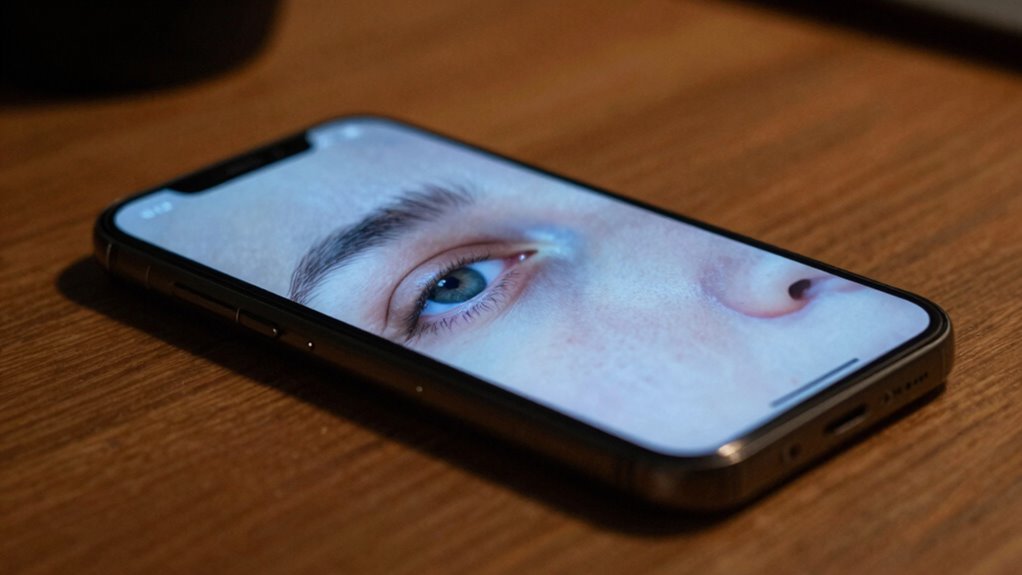
Have you ever wondered how your phone knows when you’re tired? It analyzes your sleep patterns by monitoring your screen time, app usage, and even your resting periods. Your device looks for signs that you’re not getting enough rest, like irregular sleep or late-night activity. Additionally, it assesses stress levels through subtle indicators, such as increased heart rate or changes in your breathing patterns, which can be detected via connected sensors or your behavior. When these factors suggest fatigue, your phone might suggest rest or relaxation activities. This combination of data helps your device build a picture of your overall tiredness, allowing it to offer helpful reminders or adjustments to improve your wellbeing. It’s like having a personal health assistant right in your pocket. Smart sensors play a key role in detecting physiological signs of fatigue, enhancing the accuracy of these assessments. Moreover, advancements in sensor technology have significantly improved the way devices interpret physiological data for better fatigue detection, including real-time monitoring, which enables continuous physiological data collection that captures ongoing changes in your body. These innovations rely on modern sensor design to improve detection precision and user comfort.
As an affiliate, we earn on qualifying purchases.
How Phones Use Movement Sensors to Track Your Activity
Movement sensors in your phone, such as accelerometers and gyroscopes, actively detect your physical activity by measuring changes in position and motion. These sensors help monitor your daily movement, providing insights into your sleep patterns and activity levels. They work alongside environmental sensors to gather contextual data about your surroundings. Here’s how they do it:
Movement sensors like accelerometers and gyroscopes track your activity and rest by measuring motion and orientation changes.
- Detect motion intensity and frequency to distinguish between walking, running, or stillness.
- Track posture and orientation shifts, revealing activity types and rest periods.
- Collect environmental data, like light or noise levels, to refine activity interpretation.
- Understanding sensor technology enables your device to accurately assess activity and fatigue levels. Additionally, the integration of movement detection algorithms enhances the precision of activity monitoring, making it more reliable for health assessments. Recognizing how biomechanical analysis contributes to sensor accuracy further improves the device’s ability to interpret complex movements. This understanding of sensor calibration ensures that data is accurately captured and analyzed for meaningful health insights.
This information helps your phone understand how active you are and when you might be resting or sleeping. It’s a key part of how your device assesses fatigue and overall health without invasive methods.
As an affiliate, we earn on qualifying purchases.
How Heart Rate and Breathing Data Help Spot Fatigue
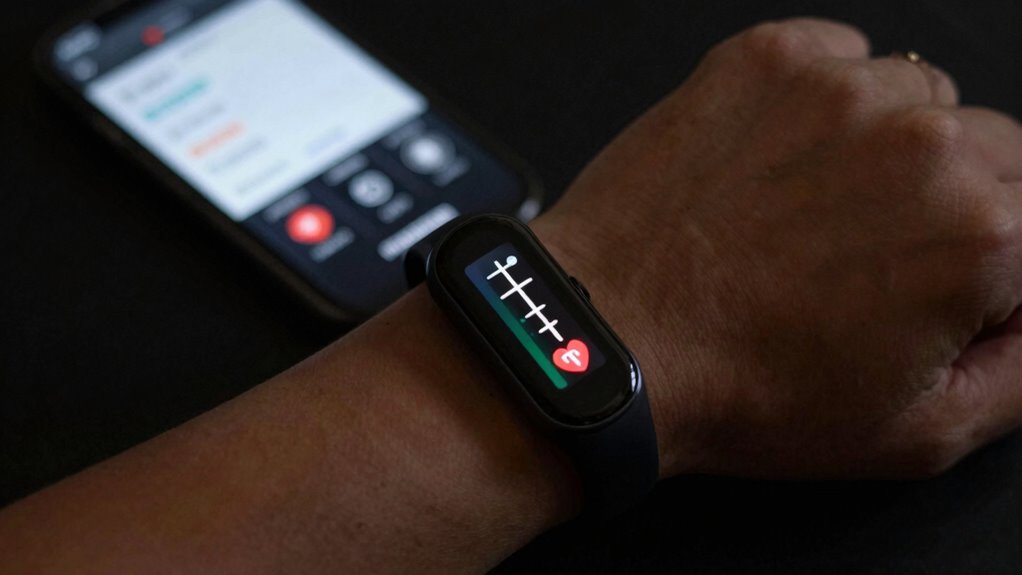
Did you know that your heart rate and breathing patterns can reveal how tired you really are? These biometric markers serve as reliable fatigue indicators, giving insight into your body’s state. When you’re exhausted, your heart rate often increases, and your breathing becomes more rapid or irregular. By monitoring these signals, your phone can detect subtle changes that suggest fatigue before you even notice it yourself. These physiological cues are valuable because they reflect your body’s response to stress and tiredness. Using sensors, your device tracks variations in your biometric data, helping identify when you might need rest. Recognizing these fatigue indicators allows for timely alerts, encouraging you to take a break and recharge, ultimately supporting your overall well-being and health. biometric signals can also be influenced by factors like hydration and stress levels, which further emphasize the importance of comprehensive monitoring. Additionally, understanding how these physiological responses fluctuate can improve the accuracy of fatigue detection systems. Incorporating sensor technology into daily routines enhances the ability to monitor fatigue more effectively. For example, integrating feedback mechanisms can provide real-time insights, prompting proactive rest before fatigue impacts performance. Moreover, advancements in wearable devices have made it easier to track these vital signs continuously and accurately.
As an affiliate, we earn on qualifying purchases.
How Your Phone’s Algorithms Recognize When You’re Tired

Your phone’s algorithms analyze your biometric data in real-time to detect signs of fatigue. They focus on patterns like changes in sleep quality, irregular sleep schedules, and increased screen time. Specifically, the algorithms look for:
Your phone detects fatigue by analyzing sleep, activity, and screen time patterns in real-time.
- Variations in your sleep patterns, such as shorter or disrupted sleep cycles.
- Extended periods of high screen time, which can indicate tiredness or alertness issues.
- Reduced activity levels or inconsistent movement patterns throughout the day.
- Ambient environmental data patterns that may influence fatigue levels.
Additionally, they may monitor biometric signals such as heart rate variability or skin conductance to improve accuracy. These combined data points help create a comprehensive picture of your tiredness levels, utilizing advanced sensor technology to enhance the detection process. The integration of multiple biometric measurements allows for a more accurate assessment of fatigue than any single data point alone.
Can Your Phone Accurately Detect Fatigue?
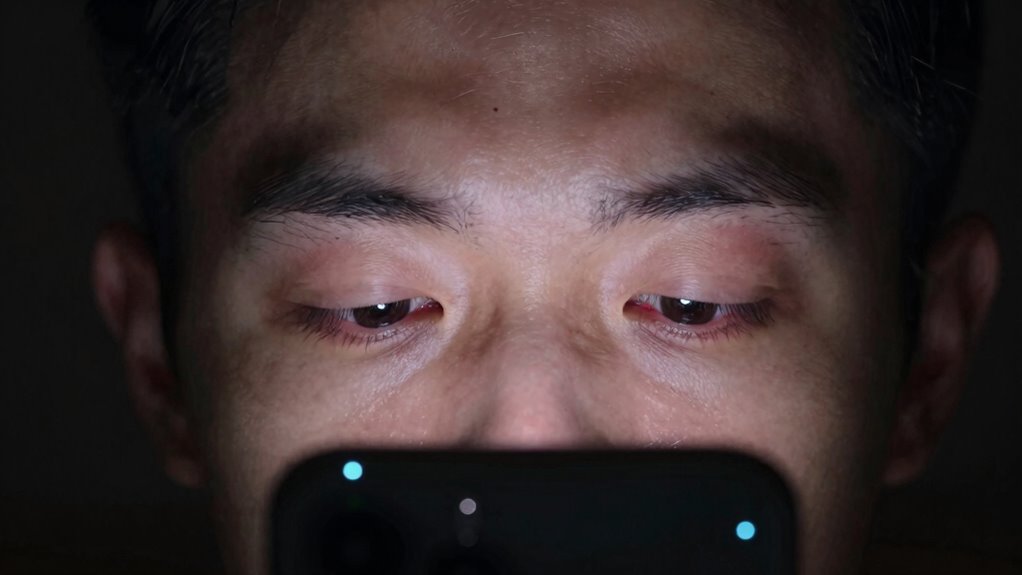
While phones can analyze biometric data to identify signs of fatigue, questions remain about how accurately they can do so. They often monitor sleep patterns through movement or heart rate, seeking irregularities that suggest tiredness. Additionally, stress levels, measured via heart rate variability, can offer clues about mental fatigue. Furthermore, some devices incorporate art care principles to better interpret data in context, but these are still developing. These indicators can be influenced by external factors such as lifestyle choices or environmental conditions, which may skew results. Moreover, the presence of external influences can complicate the interpretation of data, making it harder to determine true fatigue levels. External factors like temperature or noise can further distort sensor readings, adding complexity to accurate assessments. However, these indicators aren’t foolproof; factors like lifestyle, environment, or health conditions can skew results. Your phone might detect you’re tired based on disrupted sleep or elevated stress, but it can’t always distinguish between temporary tiredness and chronic fatigue. Advances in sensor technology and data analysis improve detection but still lack the nuance a healthcare professional provides. So, while your phone gives useful hints, it shouldn’t replace medical advice for accurately diagnosing fatigue.
Frequently Asked Questions
Can These Sensors Distinguish Between Tiredness and Boredom?
Yes, these sensors can distinguish between tiredness and boredom by analyzing facial expressions and voice tone. When you’re tired, your facial expressions show drooping eyelids or yawning, while boredom might be reflected in a lack of engagement or distracted gestures. Voice tone changes, like monotony or slowed speech, help the sensors identify tiredness versus boredom. Combining these cues allows your phone to better understand your emotional state and respond appropriately.
How Secure Is My Health Data Collected by My Phone?
Your health data collected by your phone is surprisingly secure, but it’s not invincible. While companies use data anonymization to protect your privacy, there are still privacy concerns about potential breaches or misuse. Think of your data as a treasure chest—well-guarded but not completely impenetrable. Staying informed about app permissions and privacy policies helps you keep control, ensuring your sensitive health info stays private and secure.
Do All Smartphones Have the Necessary Sensors for Fatigue Detection?
Not all smartphones have the necessary sensors for fatigue detection, but many newer models do. They require proper sensor calibration to guarantee accuracy, and your user consent is essential before any data collection begins. If your phone lacks advanced sensors like heart rate monitors or accelerometers, it can’t reliably track fatigue. Always check your device’s specifications and ensure you’ve given permission for health-related features to work correctly.
How Accurate Are These Fatigue Detection Methods Across Different Age Groups?
These fatigue detection methods vary in accuracy across age groups due to sensor calibration and age variability. You might find them more reliable if you’re younger, as sensors better detect physiological changes. For older adults, calibration issues and natural age-related shifts can reduce accuracy. So, while helpful, these tools aren’t perfectly precise for everyone, especially when age-related factors influence sensor readings.
Can Third-Party Apps Improve the Reliability of Fatigue Detection?
They say “two heads are better than one,” and that applies here too. Third-party apps can improve fatigue detection by integrating with your phone’s sensors and enhancing data analysis. Proper app integration and sensor calibration guarantee more reliable results, adapting to your individual patterns. While they can boost accuracy, always verify findings with rest and proper medical advice. These apps serve as helpful tools, but they shouldn’t replace professional judgment.
Conclusion
Your phone acts like a vigilant friend, constantly listening to your body’s whispers through sensors and algorithms. It weaves together movement, heart rate, and breathing data into a tapestry revealing your fatigue. Though it’s not perfect, this digital detective can catch the subtle signs of tiredness before you even realize you’re worn out. So, next time your phone nudges you to rest, remember—it’s just trying to keep you from burning out before your light flickers.
Fall Picks
fall essentials
As an affiliate, we earn on qualifying purchases.