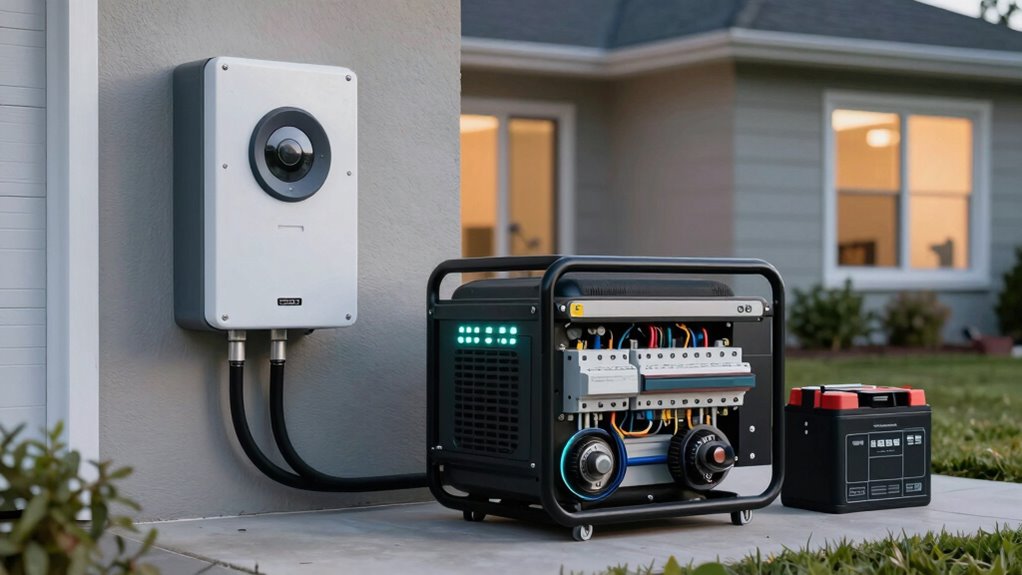

Emergency power solutions give you short-term energy during outages, such as portable generators or battery backups that power essential appliances for a limited time. Whole-home backup systems provide continuous power to your entire house, ensuring everything stays operational longer without interruption. If you want to know how these options differ in capability, cost, and setup, keep exploring to discover the best fit for your household’s needs and lifestyle.

Prime made for students and young adults
- Fast, free delivery for dorm and study essentials
- Prime Video and Amazon Music included
- Member-only deals
Key Takeaways
- Emergency power solutions provide short-term backup, typically for critical appliances, during outages.
- Whole-home backup systems are designed to support the entire household continuously during prolonged power failures.
- Portable generators and battery systems are common emergency power options; whole-home backups often involve integrated systems.
- Emergency power setups usually require manual activation and maintenance, while whole-home backups offer automatic, seamless operation.
- Cost, capacity, and intended duration influence whether a solution is for emergency use or full-home backup.
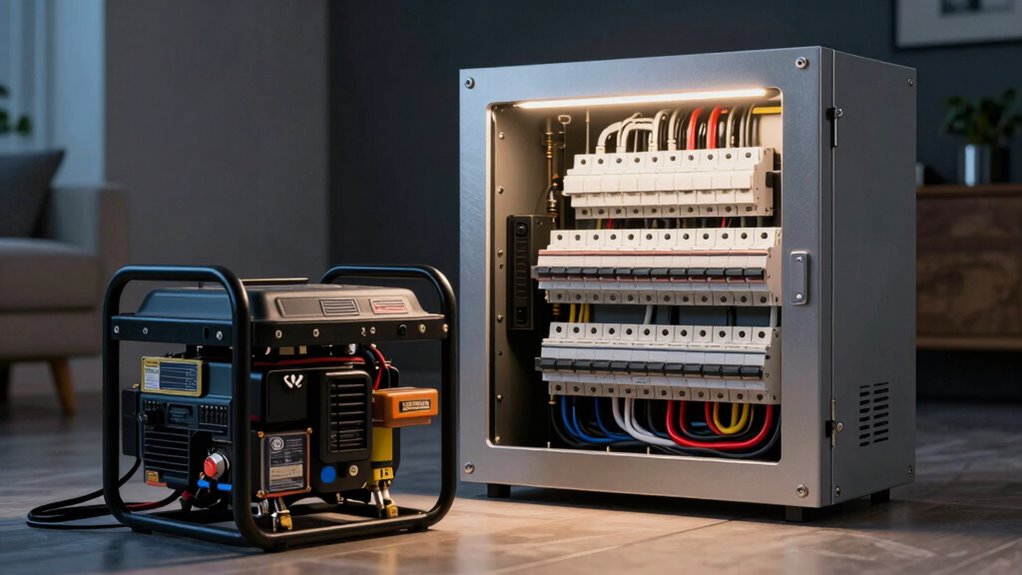
When power outages strike, deciding between emergency power solutions and whole-home backups can be challenging. You need to take into account what level of backup is necessary and how each option fits into your lifestyle and budget. Emergency power solutions typically include portable generators or battery storage systems designed to provide short-term power during outages. These systems are convenient, quick to deploy, and generally less expensive upfront, but they often require regular generator maintenance to guarantee they’re ready when needed. Battery storage, in particular, has gained popularity because it can store excess energy from solar panels or the grid, offering a silent, maintenance-free backup option. You simply need to keep an eye on the battery health, making sure it’s fully charged and ready to step in when the power goes out. Understanding the importance of indoor air quality and proper ventilation can also influence your backup system choices, especially if you want to ensure a healthy environment during extended outages. Additionally, selecting the right system involves understanding power capacity** needs to ensure your household essentials are adequately supported. Incorporating energy management strategies can help optimize your backup system’s effectiveness during prolonged outages. It’s also beneficial to consider how air filtration** can improve your indoor environment during such events.
Popular right now

Dyson V8 Cordless Vacuum

Vitamix Touch & Go Advance 32-Ounce Bar Blender, White

Bose QuietComfort Wireless Noise-Cancelling Headphones, Petal Pink
As an affiliate, we earn on qualifying purchases.
Frequently Asked Questions
How Long Can Emergency Power Last During an Outage?
Emergency power duration depends on your generator capacity and your power needs. If your generator has a high capacity, it can run longer during an outage, providing essential electricity. Typically, emergency generators last between 8 to 24 hours, but this varies based on fuel supply and load. To maximize power duration, you might need to limit the appliances running or consider a larger generator with greater capacity.
Are There Any Legal Restrictions on Installing Backup Systems?
Yes, there are legal regulations and installation requirements you must follow. You need to check local codes, state regulations, and utility company rules before installing backup systems. These laws ensure safety, proper connection, and compliance with standards. Failing to adhere can lead to fines, disconnection, or safety hazards. Always consult a licensed professional, review relevant codes, and obtain necessary permits to guarantee your backup system installation is legal and safe.
What Maintenance Is Required for Emergency Power Systems?
You need to regularly inspect your emergency power system. Check the batteries for corrosion, proper fluid levels, and secure connections, performing battery maintenance as needed. If you have a generator, test it monthly to ensure it starts correctly and runs smoothly under load. Schedule professional maintenance annually to check fuel systems, oil levels, and overall functionality. Keeping up with these tasks assures your system will perform reliably during an outage.
Can Emergency Power Systems Run Non-Essential Appliances?
You can run non-essential appliances with emergency power systems, but it depends on your setup. Portable generators and battery capacity determine what you can power. If your system has enough wattage, you can keep non-essential devices running, but don’t push it too far—know your limits. It’s like biting off more than you can chew; always prioritize critical needs to avoid overloads or draining your power source too quickly.
How Cost-Effective Are Whole-Home Backup Solutions?
Whole-home backup solutions can be cost-effective if you value continuous power, but consider the cost comparison carefully. They often have higher upfront costs due to installation challenges like integrating with your electrical system. Maintenance and fuel expenses also add to the overall cost. If you experience frequent outages, investing in a whole-home backup might save you money and hassle in the long run, providing reliable power when you need it most.
Conclusion
In the end, choosing between emergency power and whole-home backup is about knowing what you need to keep running when the lights go out. If you’re only looking to power essential devices, emergency power is your best bet. But if you want to keep your entire home comfortable and functional, a whole-home backup is worth the investment. Remember, it’s better to be safe than sorry—so pick what suits your needs before trouble hits the fan.