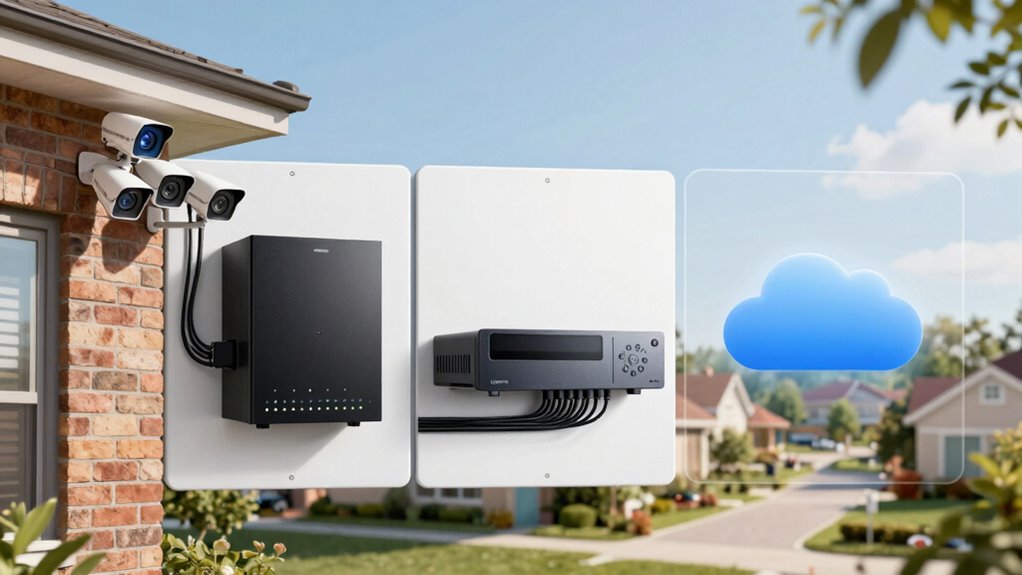

Choosing between NVR, DVR, and cloud for your home security depends on your needs. NVRs connect via your network and handle high-resolution, flexible setups, while DVRs use traditional coax cables with simpler, lower-cost options. Cloud solutions store footage remotely, offering easy access but ongoing fees. Each has benefits and downsides you should consider, so exploring further will help you make the best choice for your home security.

Prime made for students and young adults
- Fast, free delivery for dorm and study essentials
- Prime Video and Amazon Music included
- Member-only deals
Key Takeaways
- NVRs support high-resolution IP cameras and flexible wireless or wired setups, ideal for advanced home security.
- DVRs connect to analog cameras via coaxial cables, offering a simpler, cost-effective option with lower video quality.
- Cloud storage enables remote access and easy scalability but involves ongoing subscription fees and internet dependency.
- NVRs prioritize data encryption during transmission and storage, enhancing security for high-resolution footage.
- DVRs are easier to install physically but less adaptable for remote monitoring compared to NVR and cloud solutions.

When choosing a surveillance system, understanding the differences between NVR, DVR, and cloud solutions can help you make an informed decision. Each option has unique features that cater to different security needs, budgets, and technical preferences. NVR systems, or Network Video Recorders, are designed to work with IP cameras that transmit data over your network using wireless connectivity or wired connections. Because they rely on network infrastructure, they often support high-resolution video and offer flexible placement options. With NVRs, data encryption is a critical feature, ensuring your footage stays secure during transmission and storage. This makes them a popular choice for users concerned about privacy and cyber threats, especially when remotely accessing footage.
DVR systems, or Digital Video Recorders, are traditionally used with analog cameras that connect directly via coaxial cables. These systems are generally more straightforward to set up and are often less expensive upfront. However, because they rely on wired connections, their installation can be more restrictive, especially if you want cameras in remote or hard-to-reach areas. While DVRs do support data encryption, their primary advantage lies in their simplicity and affordability. They tend to have lower resolution capabilities compared to NVR systems, but for basic monitoring needs, they can be effective.
Cloud-based solutions provide a different approach entirely. Instead of relying on local hardware, your footage is stored on remote servers managed by a third-party provider. This setup offers unmatched flexibility—since you can access your footage from anywhere with an internet connection, often via a smartphone app. Cloud systems usually leverage wireless connectivity, making them ideal for homes where wired installations are impractical. Data encryption plays an essential role here, as it protects your footage during upload and storage, giving you peace of mind that your videos are safe from hacking or unauthorized access. However, cloud services typically require ongoing subscription fees, which can add up over time.
As an affiliate, we earn on qualifying purchases.
Frequently Asked Questions
Can I Upgrade My Existing Security System From DVR to NVR?
Yes, you can upgrade your existing security system from DVR to NVR, but it depends on upgrade compatibility and system integration. You’ll need to check if your cameras are compatible with an NVR or if new IP cameras are required. Upgrading involves replacing the DVR with an NVR and connecting compatible cameras, ensuring seamless system integration. Consulting a professional can help you assess your current setup and make a smooth progression.
How Does Internet Speed Affect Cloud Security Recordings?
Your internet speed can make or break your cloud security recordings. If your internet bandwidth is slow, expect choppy footage and delayed uploads due to increased data latency. This means your recordings may not be dependable during critical moments. To guarantee seamless footage, a strong, stable connection is crucial. Otherwise, you risk losing essential security evidence, leaving you vulnerable when you need it most. Don’t let slow internet undermine your home security.
Are There Hybrid Systems Combining NVR, DVR, and Cloud Options?
Yes, hybrid systems combining NVR, DVR, and cloud options do exist. They offer you the benefit of combined storage, allowing you to store footage locally on NVR or DVR devices while simultaneously backing up important clips to the cloud. This setup provides flexibility, enhances security, and guarantees you have access to recordings even if one method fails. You can customize these systems to fit your specific security needs perfectly.
What Are the Long-Term Cost Differences Among NVR, DVR, and Cloud Storage?
You’ll find that NVR and DVR systems often have higher upfront hardware costs but lower ongoing expenses, mainly for maintenance. Cloud storage, on the other hand, typically involves subscription fees that can add up over time, making it more costly long-term. While cloud offers convenience, consider how ongoing fees and potential service changes might impact your budget, compared to the steadier costs of NVR or DVR setups.
How Secure Is My Footage Stored in the Cloud Versus Local Devices?
Your cloud-stored footage is generally secure thanks to data encryption and strict access control protocols, making it difficult for unauthorized users to access. However, it can still be vulnerable to hacking if security measures aren’t strong enough. Local devices, like NVR or DVR, keep footage physically in your home, reducing remote hacking risks but potentially more susceptible to theft or damage. Overall, combining strong encryption and access controls enhances security in both options.
As an affiliate, we earn on qualifying purchases.
Conclusion
In the world of home security, choosing between NVR, DVR, or cloud can feel like trying to pick a star in the sky. Remember, NVRs are perfect for modern, high-definition setups; DVRs are reliable for traditional systems; and cloud offers ultimate convenience, like having a security guard in your pocket. Whichever you pick, know you’re arming your home with protection so powerful it could rival the might of a fortress. Protect smart, sleep sound.
As an affiliate, we earn on qualifying purchases.
As an affiliate, we earn on qualifying purchases.
Fall Picks
fall essentials
As an affiliate, we earn on qualifying purchases.