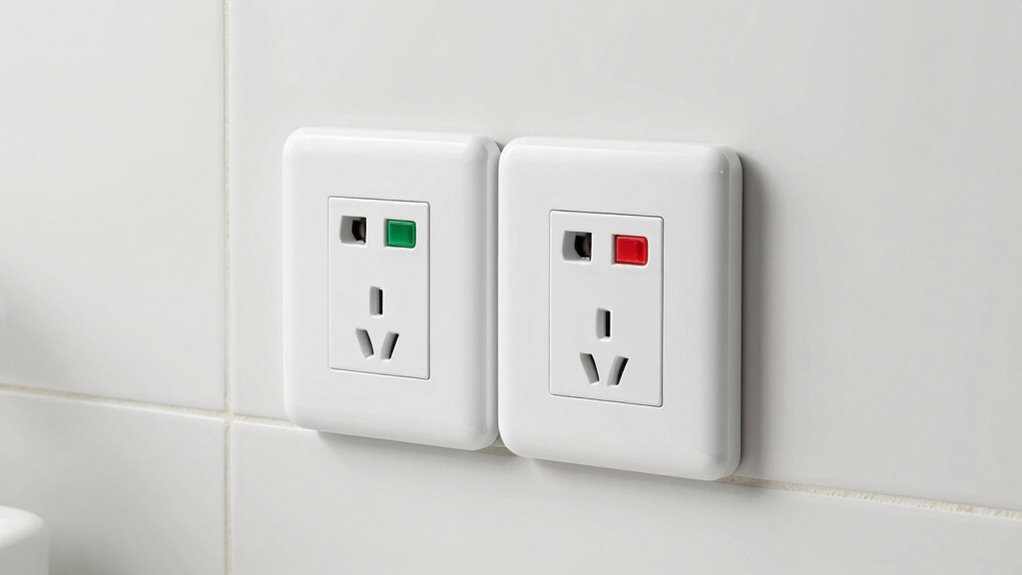

GFCI outlets are a crucial safety feature in bathrooms because they detect ground faults caused by water or dampness that can lead to electrical shocks. When these faults occur, GFCIs trip immediately, cutting off power to protect you from injury. Installing them helps prevent electrical fires and guarantees compliance with safety codes. Understanding how they work and why they’re necessary can give you peace of mind every time you use electrical devices in wet areas.
Prime for Young Adults — start your free trial
Fast free delivery, streaming and member deals for eligible 18–24 year olds.
As an affiliate, we earn on qualifying purchases.
Key Takeaways
- GFCI outlets detect ground faults and cut power instantly to prevent electrical shocks in moisture-prone bathroom environments.
- Bathrooms’ high humidity increases the risk of water contact with electrical devices, making GFCIs essential for safety.
- They continuously monitor current flow, trip quickly when imbalance occurs, and protect users from potential electrocution.
- Installing GFCIs in bathrooms is mandated by electrical codes to reduce injury and fire risks.
- GFCIs enhance overall home safety by preventing electrical hazards caused by moisture, faulty wiring, or damaged appliances.
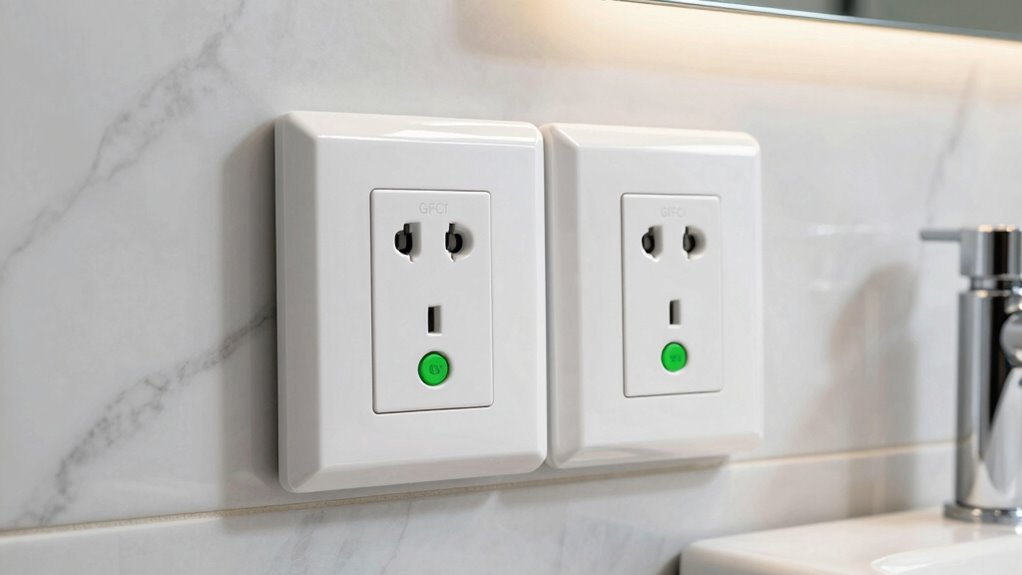
Have you ever wondered how to protect yourself from electrical shocks in areas prone to moisture? Bathrooms are among the most common places where electrical safety should be a top priority. Water and electricity don’t mix well, and even a small mistake can lead to serious injury or worse. That’s where GFCI outlets come into play. These specialized outlets are designed to detect ground faults—unexpected paths that electricity might take to the ground, often through a person’s body. When a ground fault occurs, the GFCI quickly shuts off power, reducing the risk of electrical shock. This rapid response is essential in wet environments, where the chances of accidental contact with water or damp surfaces are higher.
GFCI outlets quickly shut off power to prevent shocks in moisture-prone areas like bathrooms.
Understanding how a ground fault works is key to appreciating why GFCI outlets are indispensable for electrical safety. A ground fault happens when there’s an unintended path for electrical current to flow to the ground, often caused by damaged wiring, faulty appliances, or moisture intrusion. When this happens, the current flowing through the circuit becomes unbalanced. A GFCI detects this imbalance almost instantly—within milliseconds—and trips the circuit, cutting off power before anyone gets hurt. This quick action is critical in bathrooms, where water contact is almost inevitable, and the potential for shock is greatly increased. Additionally, the presence of ground fault protection can significantly reduce the likelihood of electrical fires caused by wiring issues or moisture ingress.
Installing GFCI outlets in your bathroom isn’t just a recommendation; it’s a safety requirement in many regions. These outlets are designed to monitor the electrical current continuously and trip if they sense even minor differences that suggest a ground fault. This proactive approach means you don’t have to worry about whether an appliance or device is safe to use. Whether you’re using a hairdryer, electric razor, or toothbrush, a GFCI outlet provides an added layer of protection that standard outlets can’t offer.
Aside from protecting you from electrical shocks, GFCI outlets also contribute to overall electrical safety in your home. They help prevent electrical fires caused by ground faults and faulty wiring. In bathrooms, where moisture can seep into outlets and wiring, the risk of faults increases, making GFCI protection even more essential. Many codes and standards now require GFCI outlets in bathrooms, kitchens, garages, and outdoor areas, recognizing their importance in maintaining electrical safety.
As an affiliate, we earn on qualifying purchases.
Frequently Asked Questions
How Often Should GFCI Outlets Be Tested for Safety?
You should test your GFCI outlets once a month to guarantee electrical safety. Regular testing is part of your maintenance schedule, helping you catch potential issues early. To test, press the ‘Test’ button on the outlet; it should trip, cutting power. If it doesn’t, or if the reset button doesn’t work, replace the outlet immediately. Consistent testing keeps your bathroom and home safer from electrical hazards.
Can GFCI Outlets Be Installed Outdoors or in Kitchens?
Yes, you can install GFCI outlets outdoors and in kitchens. Look for weather-resistant models to withstand moisture, humidity, and temperature changes. Proper installation locations are vital—outdoors need outdoor-rated, weather-resistant GFCIs, while kitchens benefit from GFCIs near sinks and countertops. Always follow manufacturer instructions and local electrical codes to guarantee safety and durability in these environments.
Are GFCI Outlets Compatible With Smart Home Systems?
You’ll be pleased to know that GFCI outlets can be compatible with smart home systems, though it depends on the model. For seamless outlet integration, look for GFCI outlets featuring smart technology or those that connect via Wi-Fi or Z-Wave. This way, you can control and monitor safety features remotely, effortlessly blending essential protection with modern convenience. Just guarantee your chosen GFCI supports smart home compatibility for ideal integration.
What Is the Lifespan of a Typical GFCI Outlet?
A typical GFCI outlet usually lasts about 10 to 15 years, depending on usage and environmental conditions. You should monitor its outlet durability and test it regularly to confirm it’s functioning properly. Follow replacement guidelines and replace the GFCI promptly if it trips frequently or shows signs of wear. Proper maintenance guarantees safety and keeps your bathroom electrical system reliable over time.
Do GFCI Outlets Require Special Wiring or Professional Installation?
Installing a GFCI outlet is like fitting a puzzle piece—it needs to match your existing wiring. You don’t usually require special wiring, but grounding requirements and circuit compatibility are essential. For safety and code compliance, professional installation is highly recommended because it guarantees proper wiring and testing. A trained electrician can handle the job efficiently, helping you avoid potential hazards and ensuring your bathroom’s electrical system is up to standard.
ground fault circuit interrupter outlet
As an affiliate, we earn on qualifying purchases.
As an affiliate, we earn on qualifying purchases.
Conclusion
Think of GFCI outlets as your home’s vigilant guardians, always ready to catch the tiniest sparks before they turn into flames. They’re like a safety net woven beneath your bathroom’s electrical currents, silently working to protect you and your loved ones. Don’t wait for a shock to remind you of their importance—install them today and let your bathroom’s safety shine brighter than ever, turning potential danger into just a distant memory.
waterproof GFCI outlet for bathroom
As an affiliate, we earn on qualifying purchases.
As an affiliate, we earn on qualifying purchases.
As an affiliate, we earn on qualifying purchases.
Fall yard work Picks
leaf blowers
As an affiliate, we earn on qualifying purchases.