
TL;DR

Get school and study supplies delivered free — and shop member deals
- Fast, free delivery on millions of items
- Access to Prime Big Deal Days deals on October 6–7
- Prime Video, Amazon Music and more included
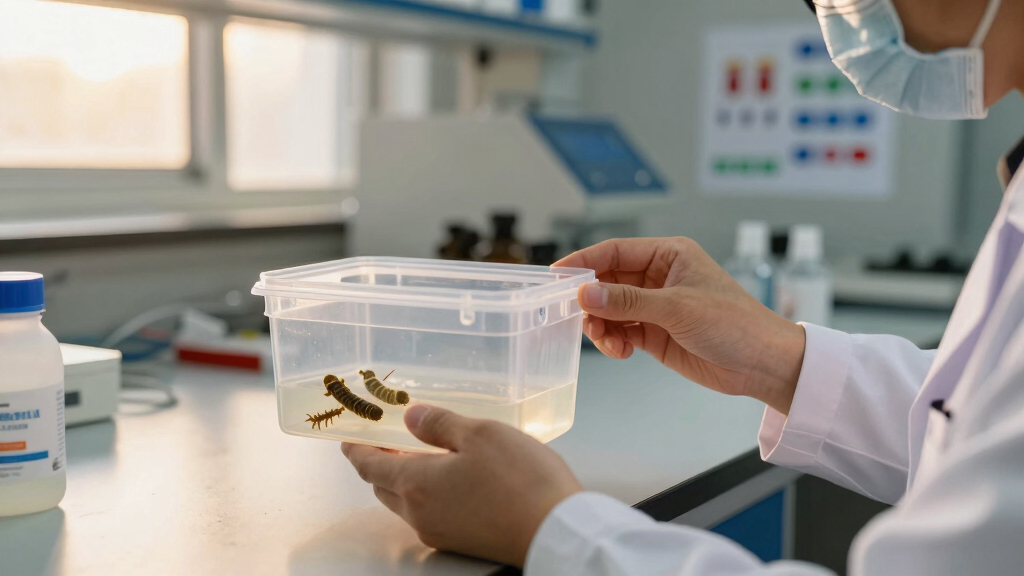
Screwworm infestations, once nearly eradicated in several regions, have recently resurged, prompting renewed control efforts. Authorities confirm the increase, raising concerns over agricultural and livestock impacts.
Authorities have confirmed a significant increase in screwworm infestations across parts of Central America and the southern United States, marking a setback in ongoing eradication efforts. This resurgence raises concerns over potential impacts on livestock health and regional agriculture, as experts warn that the pest’s return could undermine decades of progress.
The screwworm, a parasitic fly whose larvae feed on living tissue, was once nearly eradicated in North and Central America through coordinated control programs, including sterile insect techniques. However, recent reports from regional agricultural agencies indicate a notable rise in cases, particularly in southern Texas, Mexico, and parts of Central America. The USDA confirmed in November 2023 that new outbreaks have been detected, with authorities deploying additional trapping and sterilization measures to contain the spread. The strawberry moon will soon rise. When to look up.
Experts attribute the resurgence partly to climate variability and lapses in surveillance, which allowed the pest to re-establish in some areas. The USDA’s Animal and Plant Health Inspection Service (APHIS) stated that the increase in screwworm cases is still being monitored, and efforts are ongoing to prevent further spread. The pest’s return threatens livestock industries, with potential economic losses if outbreaks are not contained.
Implications of the Screwworm Resurgence for Agriculture
The resurgence of screwworm infestations poses a significant threat to livestock health and regional economies. The pest causes severe tissue damage to animals, leading to decreased productivity and increased veterinary costs. The setback in eradication efforts could require renewed investments in control programs and may challenge regional biosecurity measures. This situation underscores the importance of sustained surveillance and rapid response to prevent widespread outbreaks.
As an affiliate, we earn on qualifying purchases.
Historical Success and Recent Setbacks in Screwworm Control
The screwworm was once a major pest affecting livestock across the southern US, Mexico, and Central America. In the 1960s, the US launched an aggressive eradication program using sterile insect techniques, which successfully eliminated the pest from most regions by the late 1980s. However, in recent years, climate change, border crossings, and lapses in control measures have contributed to the pest’s re-emergence. The recent outbreaks mark a concerning reversal of decades of progress.
Prior to the recent rise, the last major outbreaks were contained in the early 2000s, with ongoing surveillance maintaining low levels of infestation. The current increase signals a need to reassess control strategies and possibly adapt new technologies to sustain eradication efforts.
“The recent spike in screwworm cases indicates that we cannot become complacent; continuous monitoring is essential to prevent full-scale outbreaks.”
— Dr. Maria Lopez, entomologist at the University of Costa Rica
As an affiliate, we earn on qualifying purchases.
Extent and Future Trajectory of the Outbreaks
It is still unclear how widespread the current outbreaks will become or whether existing control measures will be sufficient to contain the resurgence. Experts warn that environmental factors and border crossings could facilitate further spread, but precise data on the full scope of the outbreaks is not yet available.
As an affiliate, we earn on qualifying purchases.
Ongoing Surveillance and Control Strategies
Authorities plan to intensify surveillance, expand sterilization efforts, and monitor environmental conditions closely. Further research into the causes of the resurgence and development of new control technologies are also expected. Regional coordination will be critical to prevent the pest’s re-establishment on a larger scale.
sterile insect technique equipment
As an affiliate, we earn on qualifying purchases.
As an affiliate, we earn on qualifying purchases.
Key Questions
Why did the screwworm re-emerge after decades of control?
The re-emergence is believed to be due to climate variability, lapses in surveillance, and border crossings that reintroduced the pest into previously cleared areas.
What are the economic impacts of screwworm outbreaks?
Outbreaks can cause significant losses in livestock productivity, increase veterinary costs, and threaten regional agricultural economies.
What measures are being taken to control the outbreaks?
Authorities are deploying additional sterilization and trapping efforts, increasing surveillance, and coordinating regional response strategies.
Could the screwworm become a permanent problem again?
It is uncertain; ongoing efforts aim to prevent a full-scale re-establishment, but environmental factors could influence future developments.
Source: hn
Halloween Picks
halloween
As an affiliate, we earn on qualifying purchases.






![Competitive Programmer's Handbook (2018) [Pdf]](https://rottenpanda.com/wp-content/uploads/2026/10/competitive-programmer-s-handbook-2018-pdf-featured-260x140.jpg)