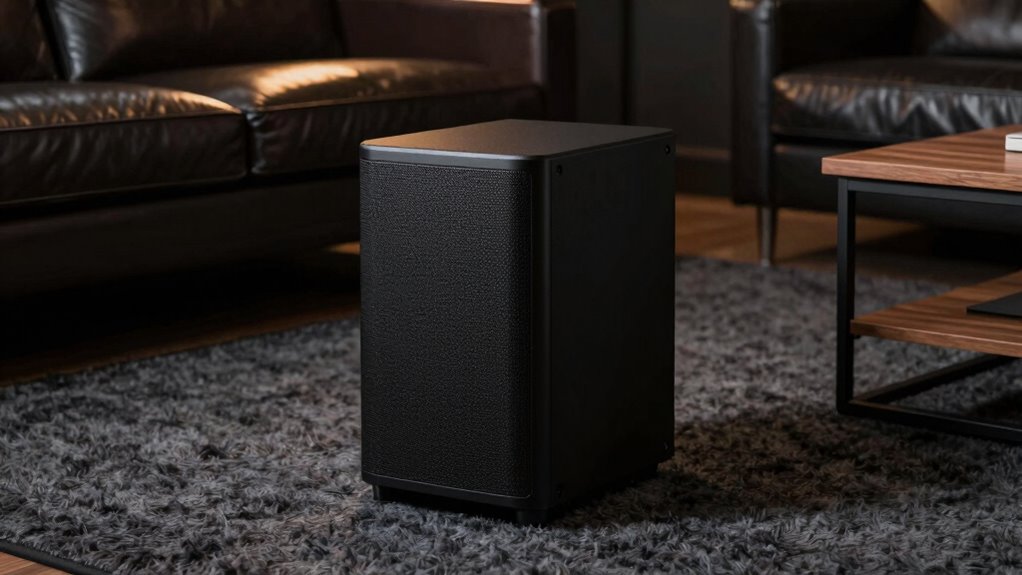

Your subwoofer placement greatly impacts how bass feels in your room. Positioning it near walls or corners can boost bass strength, while placing it too far away or in open spaces can cause weak or boomy sound due to sound wave interactions. Small moves can make a big difference in bass clarity and tightness. By understanding the effects of placement, you can transform your listening experience—if you stay tuned, you’ll discover exactly how to optimize your setup.
Key Takeaways
- Subwoofer placement affects sound wave interactions, causing bass to be reinforced or canceled in different locations.
- Positioning near walls or corners enhances bass due to sound reinforcement, while central spots may weaken it.
- Room acoustics, including reflections and absorption, significantly influence bass quality at various spots.
- Small shifts in subwoofer placement can dramatically change bass response and balance.
- Experimenting and listening carefully helps find the best spot for tight, balanced bass.
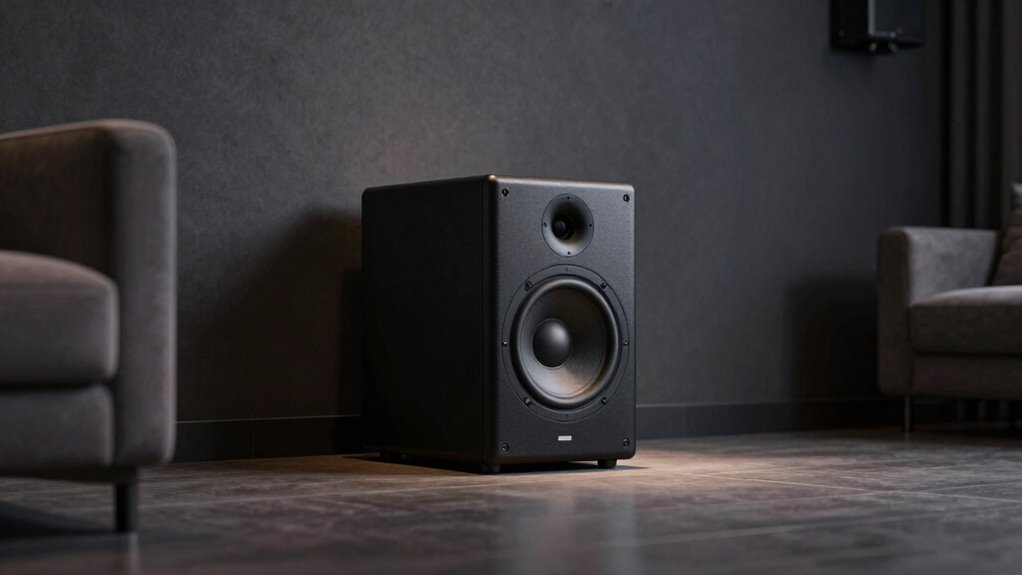
Have you ever wondered how the placement of your subwoofer can dramatically influence the quality of bass in your room? It’s all about how room acoustics and speaker positioning come together to shape the sound you experience. When you place your subwoofer in one spot, the bass might sound punchy and deep, but move it just a few feet, and suddenly it’s weak or boomy. That’s because subwoofer placement directly affects how sound waves interact with your space, creating areas of reinforcement or cancellation.
Your room isn’t just a neutral box; it actively influences sound through reflections, standing waves, and absorption. These acoustic phenomena can make bass feel incredible in certain spots and terrible in others. For example, if you put your subwoofer near a wall or corner, you often get a boost in bass because the sound waves bounce and reinforce each other. But if you position it in a spot where waves cancel each other out—say, in a middle of a room or near certain furniture—you’ll notice a significant dip in bass response. That’s why understanding room acoustics is crucial when choosing where to place your subwoofer.
Speaker positioning plays a key role here. Instead of just sticking the subwoofer in a random corner, you should experiment with different locations. Start by placing it near a wall or corner to maximize the bass output, then move it around gradually, listening carefully. You want to find a spot where the bass feels balanced, tight, and even. Sometimes, a small shift—just a few inches—can make a huge difference because it alters how the sound waves interact with your room’s surfaces. Additionally, the placement of speakers can influence the overall sound quality and bass response, so consider how your entire setup interacts.
It’s also helpful to consider the layout of your space and how furniture or other objects influence acoustics. Soft materials like curtains or plush furniture absorb bass, while hard surfaces reflect it. Balancing these elements through thoughtful speaker positioning can dramatically improve your listening experience. Keep in mind that your ears are your best guide. Play some bass-heavy music, walk around your room, and identify where the sound feels most natural and powerful. Once you find that sweet spot, use calibration tools or your own judgment to fine-tune the placement.
Additionally, understanding room acoustics can help you optimize your setup even further. Using measurement tools or apps can assist in identifying problem areas and tuning your system for the best sound quality. It’s also beneficial to consider the frequency response of your subwoofer, as this can influence how you perceive bass in different parts of the room. In the end, the reason why bass feels amazing in one spot and awful in another comes down to how your room’s acoustics and speaker positioning work together. It’s worth taking the time to experiment, because the payoff is a rich, immersive bass experience that makes your entire listening environment more enjoyable.

The Audiophile's Guide: The Subwoofer
As an affiliate, we earn on qualifying purchases.
As an affiliate, we earn on qualifying purchases.
Frequently Asked Questions
How Do Room Size and Shape Affect Subwoofer Placement?
Room size and shape considerably influence subwoofer placement because they affect room acoustics and sound wave behavior. Larger rooms may require you to position the subwoofer differently to avoid dead spots, while irregular shapes can cause uneven bass distribution. Proper subwoofer calibration helps compensate for these factors, ensuring balanced sound. Experiment with placement, listen carefully, and adjust until you find the spot where bass feels consistently powerful and clear throughout your space.
Can Multiple Subwoofers Improve Bass Consistency?
Yes, using multiple subwoofers can improve bass consistency. They help distribute bass more evenly across your room, reducing dead spots and boomy areas. To maximize this, you should focus on proper subwoofer calibration and set appropriate crossover settings. Calibrating each subwoofer guarantees they work harmoniously, delivering smooth, balanced bass throughout your space. This setup results in a more immersive sound experience with consistent bass quality no matter where you sit.
What Tools Can Help Optimize Subwoofer Positioning?
You can optimize your subwoofer positioning with tools like a sound level meter or room calibration software, which help with subwoofer calibration. Acoustic treatment also plays a key role in controlling reflections and improving bass response. These tools reveal how placement affects sound, making it easier to find that perfect spot where bass feels balanced and immersive. Proper calibration and treatment guarantee consistent, high-quality bass throughout your space.
How Does Furniture Placement Influence Bass Distribution?
Furniture placement can profoundly influence bass distribution by blocking or reflecting sound waves. You might notice bass feels muffled or boomy depending on where furniture sits. To optimize, consider adjusting your furniture layout for better subwoofer aesthetics and sound flow. Customizing furniture placement helps achieve balanced bass, making your listening experience more consistent and immersive. Experiment with different arrangements to find the spot where bass feels just right.
Are There Specific Spots to Avoid Placing a Subwoofer?
Avoid placing your subwoofer against walls or in corners, as these spots act like amplifiers, causing uneven bass and distortion. Keep it away from furniture that may block sound waves, and focus on speaker isolation and acoustic treatment to improve sound quality. Think of these areas as bass killers, disrupting the smooth flow of sound. Proper placement guarantees your bass stays balanced, avoiding “hot spots” and dead zones.

Klipsch R-120SW Subwoofer, Black
- Woofer Size: 12-inch high excursion spun-copper Imp woofer
- Frequency Response: 29Hz – 120Hz ± 3dB
- Power Output: 400 watts
As an affiliate, we earn on qualifying purchases.
As an affiliate, we earn on qualifying purchases.
Conclusion
Remember, finding the perfect spot for your subwoofer is like tending a delicate garden—small adjustments can make a world of difference. When you position it just right, you’ll notice the bass feeling like a gentle whisper or a powerful embrace, filling your space with warmth and clarity. Trust your ears and experiment a little; soon, you’ll discover that the right placement transforms your listening experience into a symphony of subtle perfection.

SVS SoundPath Subwoofer Isolation System, 4-Pack
- Affordable and discreet: Alternative to platforms and risers
- Universal compatibility: Fits any brand with screw-in feet
- Easy installation: Uses tape or adhesive pads if no threads
As an affiliate, we earn on qualifying purchases.
As an affiliate, we earn on qualifying purchases.

TroyStudio Bass Traps – 12 Pcs 4 X 4 X 12 Inches Dense Thick Studio Bass Foam Corner, Acoustic Treatment Panel Absorbing Echo Reverb, Low Frequency Sound Absorber for Music Room Home Recording Studio
- Dimensions: 4 x 4 x 12 inches
- Pack Size: 12 panels per pack
- Material: High-density polyurethane foam
As an affiliate, we earn on qualifying purchases.
As an affiliate, we earn on qualifying purchases.

![Paxos Made Simple (2001) [Pdf]](https://rottenpanda.com/wp-content/uploads/2026/07/paxos-made-simple-2001-pdf-featured-560x300.jpg)