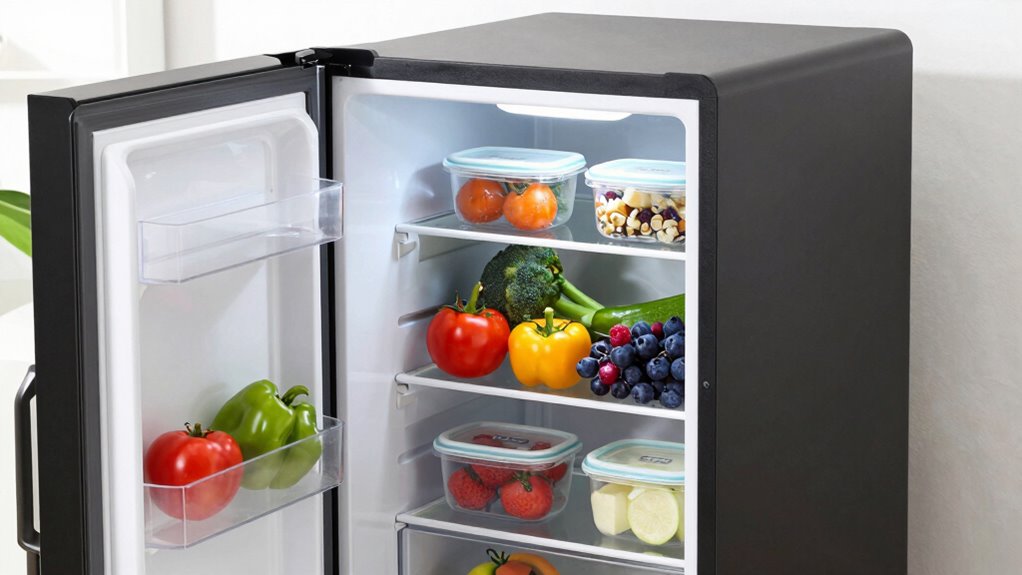

To make your tiny fridge’s food last longer, focus on organizing your storage and controlling the temperature. Use clear, airtight containers and label them with dates to keep track of freshness. Place the most perishable items at the front and raw meats on the bottom to prevent cross-contamination. Keep the fridge at 37-40°F and maintain good airflow for consistent cooling. Master these habits, and you’ll discover even more tips to maximize your fridge’s efficiency and food freshness.

Get school and study supplies delivered free — and shop member deals
- Fast, free delivery on millions of items
- Access to Prime Big Deal Days deals on October 6–7
- Prime Video, Amazon Music and more included
Key Takeaways
- Store perishable items at the front or coldest spots for quick access and optimal freshness.
- Keep raw meats on the bottom shelf to prevent cross-contamination and spoilage.
- Use airtight, labeled containers to reduce oxygen exposure and track expiration dates.
- Maintain fridge temperature between 37-40°F to slow bacterial growth and extend food life.
- Regularly clean and organize the fridge to ensure proper air circulation and food safety.
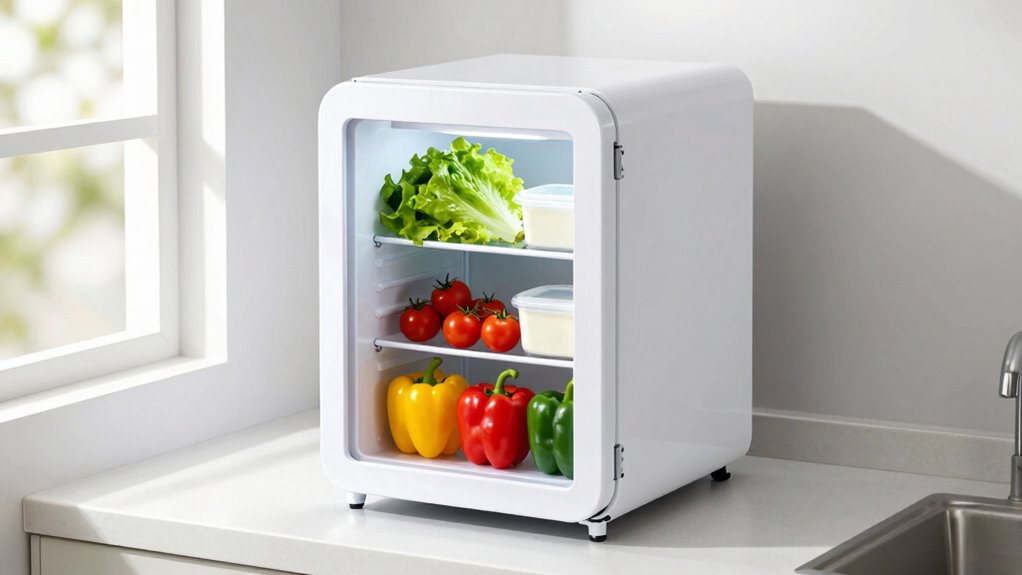
Keeping your food fresh isn’t just about the fridge size; it’s about how you use it. A tiny fridge can still be highly effective if you adopt smart habits. One of the best ways to do this is by focusing on organized storage, especially through meal prep and the right storage containers. When you plan your meals ahead and portion everything out, you avoid leaving leftovers sitting in open bowls or unsealed wrappers, which can quickly spoil. Instead, you’re creating a system that promotes freshness and reduces waste. Meal prep helps you control portion sizes, so you only take out what you need at a time, preventing excess food from lingering and deteriorating.
Using high-quality storage containers makes a significant difference. Clear containers allow you to see what’s inside without opening them, reducing unnecessary exposure to air and temperature fluctuations. When you portion out your food into sealed containers, you minimize the risk of spoilage by keeping oxygen and bacteria out. Plus, these containers often have airtight seals that help maintain the optimal environment for your food, especially important in a smaller fridge where space is limited. Be diligent about labeling your containers with dates so you can prioritize eating older leftovers before they go bad. Proper food preservation techniques can further extend the lifespan of your stored items, ensuring nothing goes to waste. Additionally, understanding indoor air quality can help you maintain a healthier environment, especially if your fridge’s placement impacts overall humidity and airflow. Proper air circulation inside the fridge is essential for maintaining a consistent temperature and preventing cold spots that could compromise food freshness.
Using clear, sealed containers with labels keeps food fresh and organized in small fridges.
Another crucial step is to organize your tiny fridge effectively. Place the most perishable items, like dairy and fresh produce, toward the front or in the coldest spots. Keep raw meats on the bottom shelf to prevent drips from contaminating other foods. Store cooked foods and leftovers in airtight containers, and make sure to use them within a few days. Regularly checking and rotating your stored food not only keeps your fridge tidy but also ensures you’re consuming food at its freshest, reducing waste and saving money. Proper temperature control within your fridge is equally important to keep your food safe and fresh for longer. Maintaining the correct temperature also helps to avoid energy waste, which is especially relevant in small appliances.
You should also consider the temperature of your fridge. Even a small fridge works best when it’s set to the optimal temperature—around 37 to 40 degrees Fahrenheit. Keeping it at the right temperature slows down bacterial growth, meaning your food stays fresh longer. When combined with meal prep and proper storage containers, maintaining this temperature becomes part of a smart, sustainable approach to food storage. Regularly cleaning your fridge also prevents bacteria buildup and keeps everything functioning efficiently, which is essential in a compact space.
In the end, a tiny fridge isn’t a limitation if you adopt these habits. Focus on organizing your space with the right storage containers, prepare your meals ahead of time, and keep a close eye on your fridge’s temperature. These small, intentional steps make a big difference, helping your food last longer and reducing waste while keeping your kitchen efficient.
airtight food storage containers
As an affiliate, we earn on qualifying purchases.
As an affiliate, we earn on qualifying purchases.
Frequently Asked Questions
Does This Habit Work for All Types of Food?
Yes, this habit works for most types of food, but it’s important to take into account food preservation specifics. You should adjust your refrigerator maintenance routine to optimize storage conditions. For example, keep dairy and produce at the right temperature and avoid overcrowding, which can cause spoilage. While this habit helps extend freshness, some foods like bread or certain fruits may need different storage methods to maximize shelf life.
How Often Should I Implement This Tiny Fridge Habit?
You should implement this tiny fridge habit daily to maximize storage improvements and keep your fridge organized. Regularly re-evaluating your food placement prevents spoilage and maintains freshness. Make it a routine to check and adjust your fridge organization, ensuring items are stored correctly and used before their expiration. Staying consistent helps you avoid clutter and wastage, ultimately keeping your food fresher longer and improving your overall fridge management.
Can This Habit Reduce Food Waste Significantly?
Yes, this tiny fridge habit can considerably reduce food waste. By properly storing food and maintaining ideal fridge conditions, you improve food preservation, extending freshness and edibility. When food stays fresh longer, you’re less likely to throw it away prematurely. This habit promotes waste reduction and helps you save money while contributing to a more sustainable lifestyle. Small adjustments in your routine truly make a big impact on reducing waste over time.
Is There a Specific Temperature for the Tiny Fridge?
Yes, there is a specific temperature for your tiny fridge—you should set it around 37°F (3°C) for ideal temperature regulation. This helps keep your food fresh and safe while maintaining energy efficiency. Avoid setting it too cold, which wastes energy, or too warm, which risks spoilage. Regularly check the temperature with a thermometer to guarantee consistency, and you’ll maximize your tiny fridge’s performance and food longevity.
Does This Habit Affect Food Flavor or Texture?
You might wonder if this tiny fridge habit affects your food’s flavor or texture. The good news is, when done correctly, it preserves flavor and minimizes texture changes. However, if you over-pack or set the temperature too low, it can cause moisture buildup, impacting texture and dulling flavors. So, stay mindful of proper packing and temperature settings to enjoy fresh-tasting, well-textured food every time.
As an affiliate, we earn on qualifying purchases.
Conclusion
By adopting this tiny fridge habit, you’ll find your food stays fresher longer, saving you money and reducing waste. Some might worry it’s inconvenient or takes up extra space, but once you get used to it, it becomes second nature. Picture opening your fridge, knowing your leftovers, veggies, and dairy are all more vibrant and last days beyond usual. It’s a simple change that makes a big difference—giving you more value for every grocery dollar.
reusable food storage containers with lids
As an affiliate, we earn on qualifying purchases.
As an affiliate, we earn on qualifying purchases.
fridge thermometer for accurate temperature
As an affiliate, we earn on qualifying purchases.
As an affiliate, we earn on qualifying purchases.
Halloween Picks
halloween
As an affiliate, we earn on qualifying purchases.