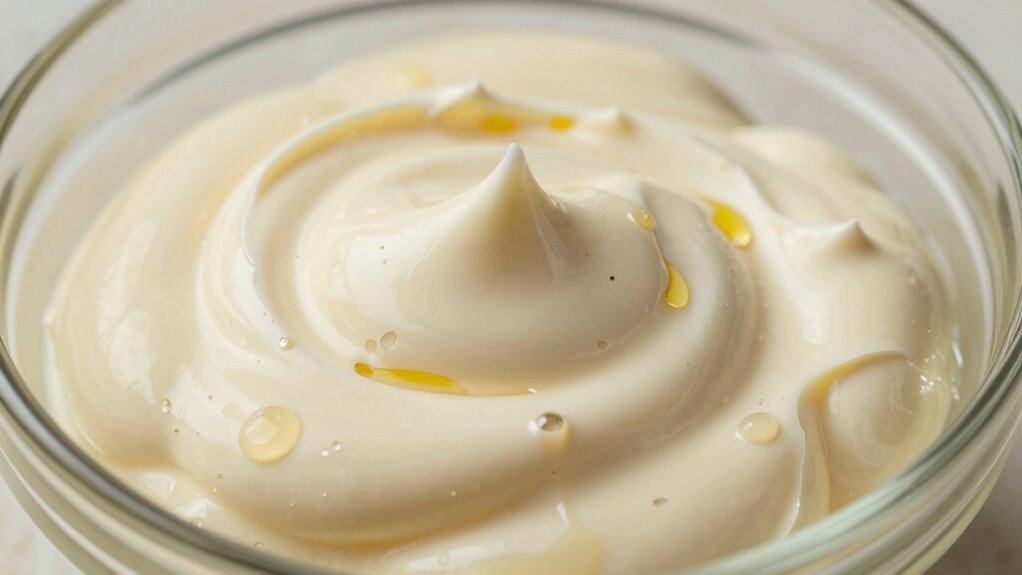

Mayo breaks when its oil droplets fail to stay suspended in the water phase, often caused by adding oil too quickly, cold ingredients, or improper mixing. To fix a broken emulsion, slowly incorporate oil while whisking vigorously and consider adding a teaspoon of water or egg yolk to re-stabilize it. Maintaining proper ratios, temperature, and technique helps prevent breakage. Keep exploring to discover detailed tips for creating perfectly stable, smooth mayo every time.
Prime for Young Adults — start your free trial
Fast free delivery, streaming and member deals for eligible 18–24 year olds.
As an affiliate, we earn on qualifying purchases.
Key Takeaways
- Mayo breaks when oil and water fail to form a stable emulsion due to improper ingredient ratios or temperature.
- Insufficient lecithin from egg yolk and inadequate acid balance weaken emulsion stability.
- Adding oil too quickly or at incorrect temperatures causes separation and destabilizes the mixture.
- Using stabilizers like mustard, water, or xanthan gum early can help recover a broken or thin mayo.
- Consistent slow addition of oil and proper mixing techniques are crucial to maintaining emulsion stability.
egg yolk emulsifier for mayonnaise
As an affiliate, we earn on qualifying purchases.
As an affiliate, we earn on qualifying purchases.
Why Does Mayo Break During Emulsification?
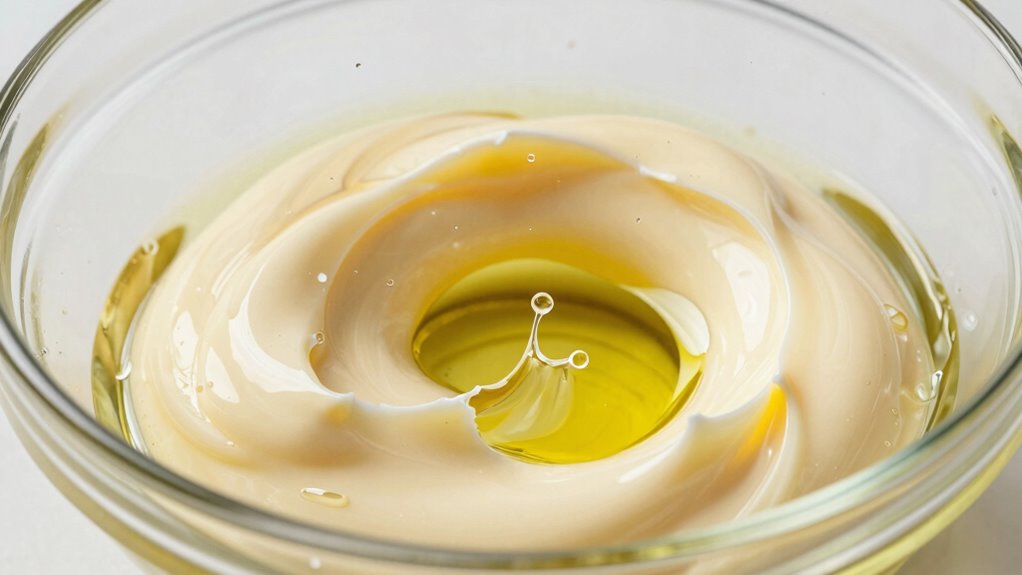
Mayo tends to break during emulsification when the oil and water-based ingredients fail to form a stable mixture. This happens because of emulsion physics—the delicate balance of forces keeping the ingredients combined. When the ingredients don’t interact properly, the oil droplets can coalesce and separate from the water phase. Additionally, biography details such as ingredient interactions are vital; if the egg yolk’s lecithin isn’t enough or the ingredients aren’t added gradually, the emulsion can collapse. Temperature also plays a role, as too much heat can weaken these interactions.
Understanding these dynamics helps you troubleshoot when mayo breaks. Fundamentally, if the oil overwhelms the water phase or the interactions aren’t strong enough, the emulsion destabilizes. Recognizing these factors is key to preventing and fixing broken mayo.
kitchen stabilizer for broken mayo
As an affiliate, we earn on qualifying purchases.
As an affiliate, we earn on qualifying purchases.
How Oil, Egg, and Acid Keep Your Mayo Stable

The stability of your mayo depends on how well the oil, egg, and acid work together to create a strong emulsion. The key is understanding oil interaction and egg chemistry. The egg yolk contains lecithin, a natural emulsifier that helps stabilize the mixture by surrounding oil droplets, preventing them from coalescing. The acid, typically vinegar or lemon juice, not only adds flavor but also contributes to egg chemistry by denaturing proteins, making them more effective at forming a stable network. When you combine these ingredients correctly, the egg’s proteins and lecithin form a resilient structure that traps oil droplets, maintaining emulsion stability. Proper balance and thorough mixing activate these mechanisms, keeping your mayo smooth and preventing separation. Recognizing the chemical interactions involved can help you troubleshoot and improve your mayonnaise every time, especially by understanding how emulsion stability is influenced by ingredient ratios and mixing techniques. Additionally, understanding celestial influences and cultural beliefs about beauty can offer a broader perspective on natural harmony, much like balancing ingredients in a perfect emulsion. Being mindful of ingredient quality can also enhance the overall stability and flavor of your mayo. Moreover, experimenting with different mixing techniques can further optimize the emulsion, leading to a creamier and more consistent result.
As an affiliate, we earn on qualifying purchases.
How Temperature and Ingredient Ratios Affect Mayo’s Texture
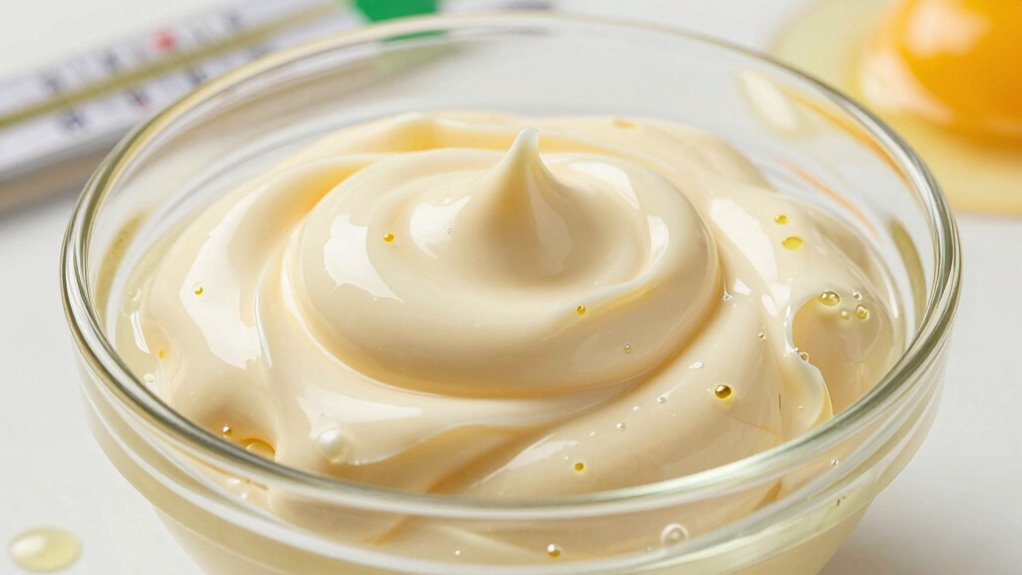
Temperature and ingredient ratios play essential roles in determining the texture of your mayo. Temperature effects are significant because too much heat can cause the emulsion to break, making it thin or lumpy. Keeping ingredients cold helps maintain stability and a smooth, creamy consistency. Understanding emulsion stability principles can help you troubleshoot and prevent separation effectively. Proper temperature control is especially important during the initial mixing stage, as it influences how well the ingredients combine. Maintaining consistent temperatures during preparation minimizes the risk of emulsion breakdown and ensures a uniform texture. When you pay attention to both, you’ll produce mayo with the ideal silky, spreadable consistency. Adjusting these ratios and controlling temperature can prevent separation and improve texture. Additionally, using the correct ingredient ratios is key to achieving a stable emulsion, as improper ratios can lead to instability and separation. Mastering emulsion formation techniques can further enhance your results. Understanding how Temperature effects and ingredient ratios interact allows you to master mayo texture every time.
As an affiliate, we earn on qualifying purchases.
Common Mistakes That Cause Mayo to Break and How to Avoid Them
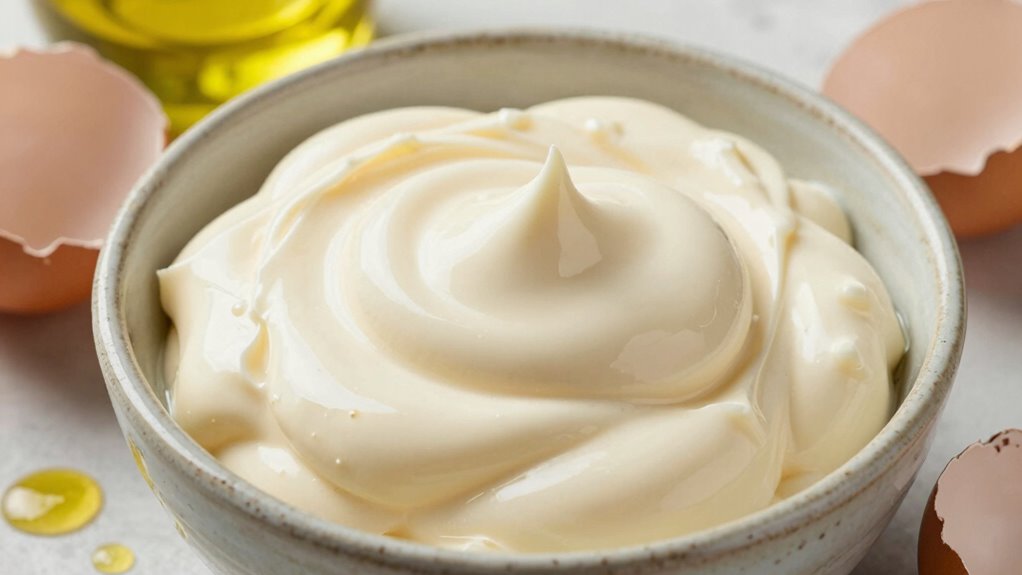
One common mistake that causes mayo to break is adding oil too quickly or all at once, overwhelming the emulsion and causing ingredient separation. This leads to emulsion failure, where your mixture looks broken and chunky. To avoid this, add oil slowly in a thin stream while continuously whisking or blending. Sudden addition can destabilize the emulsion, making it impossible to recover.
| Mistake | Result |
|---|---|
| Adding oil too fast | Ingredient separation, emulsion failure |
| Not whisking enough | Incomplete emulsification |
| Using cold ingredients | Poor emulsion stability |
Focus on patience and gradual addition to maintain a stable mayo.
How to Fix a Broken Mayonnaise Step-by-Step
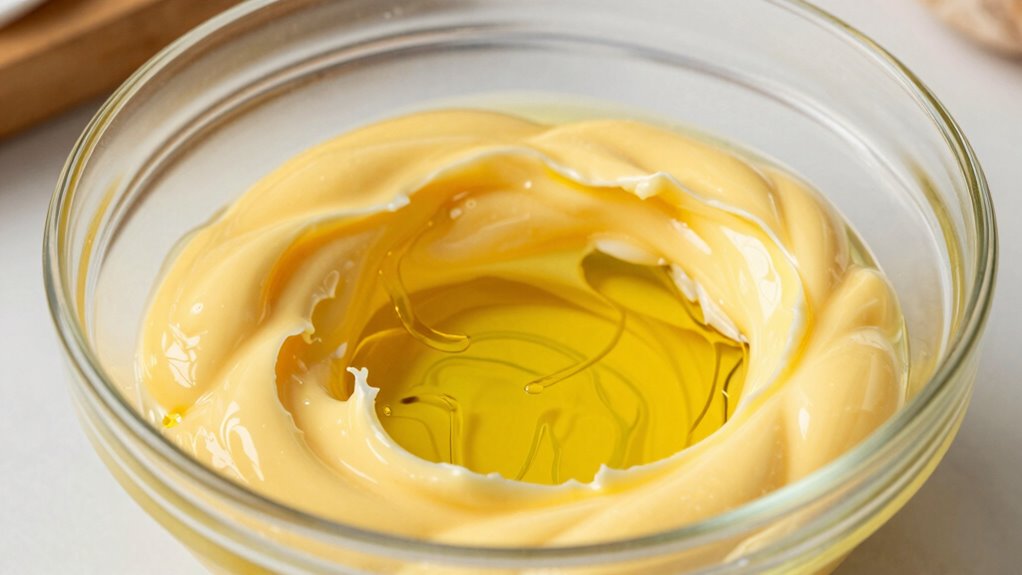
When your mayonnaise breaks, the first step is to gather your ingredients and tools so you’re ready to fix it.
Next, start adding oil very slowly, a few drops at a time, while whisking constantly. This careful process helps rebuild the emulsion and save your sauce.
Gather Ingredients and Tools
To fix a broken mayonnaise, you’ll need to gather a few essential ingredients and tools before you begin. Start with ingredient sourcing: have a fresh egg yolk, a teaspoon of mustard, and a splash of water or lemon juice ready. These help stabilize the emulsion. Using smart gear such as a hand blender or a steady whisk can make the process much easier and more effective. For kitchen tools, a small bowl, a whisk or a hand blender, and a steady spatula are key. Make sure your tools are clean and dry to prevent any contamination or added liquid that could hinder the process. Having everything prepared ensures a smooth repair process. Additionally, maintaining the correct emulsion stability by adding ingredients gradually can prevent further separation. Keep your ingredients at room temperature for best results. Proper ingredient ratios are crucial to achieving a successful emulsion; too much oil or too little acid can cause it to break. Once you’ve gathered everything, you’re ready to start rescuing your mayonnaise and restoring its creamy consistency.
Incorporate Oil Gradually
After gathering your ingredients and tools, the key to rescuing your broken mayonnaise is adding the oil properly. You should start by pouring the oil in a slow, thin stream. This gradual oil incorporation allows the emulsion formation to stabilize, preventing separation. Free Floating techniques can influence how evenly the ingredients combine during emulsification. Keep whisking or blending steadily as you add the oil, ensuring it disperses evenly into the mixture. Rushing this step causes the emulsion to break because the oil can’t integrate smoothly with the egg yolk and other ingredients. If the mayonnaise starts to look curdled or separated, stop and slow down. Consistent, deliberate oil incorporation helps maintain emulsion stability, giving you a smooth, creamy mayo instead of a broken mess. Patience is essential for a successful emulsion formation every time.
Best Practices for Making Stable, Smooth Mayonnaise
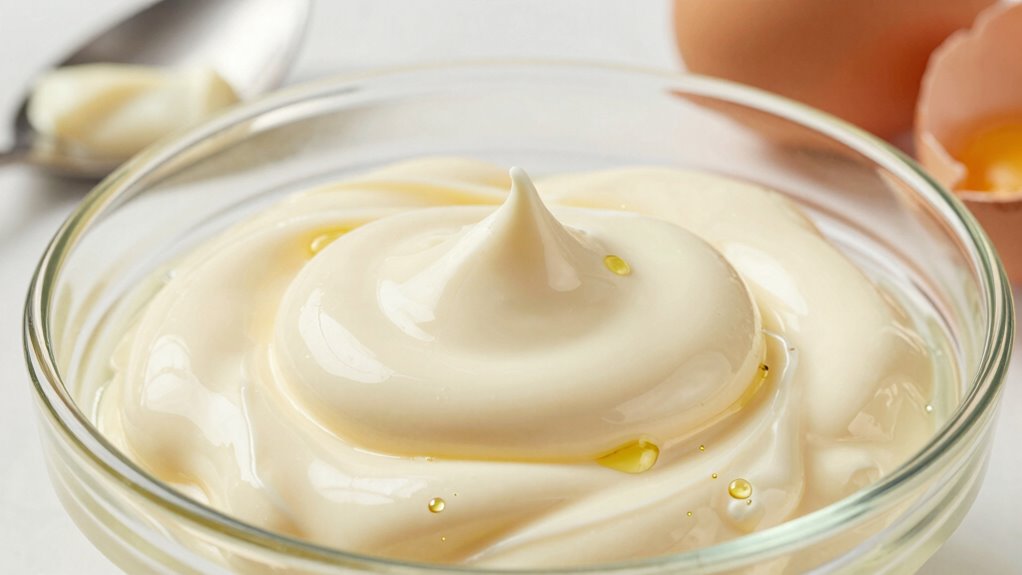
Achieving a stable, smooth mayonnaise hinges on following key practices that guarantee proper emulsion. First, verify you add ingredients in the correct order, starting with egg yolk and acid, which help initiate a strong emulsification process. Use fresh, room-temperature ingredients to promote better ingredient interactions.
When whisking or blending, do so steadily and consistently to encourage uniform emulsification. Incorporate oil slowly, drop by drop at first, to give the emulsion time to form and stabilize. Be attentive to the consistency; if it thickens too quickly, pause and adjust by adding a little warm water.
Maintaining control throughout the process ensures your mayonnaise remains smooth and stable, with the right balance of ingredients interacting seamlessly.
Variations and Additives to Keep Your Mayo Stable
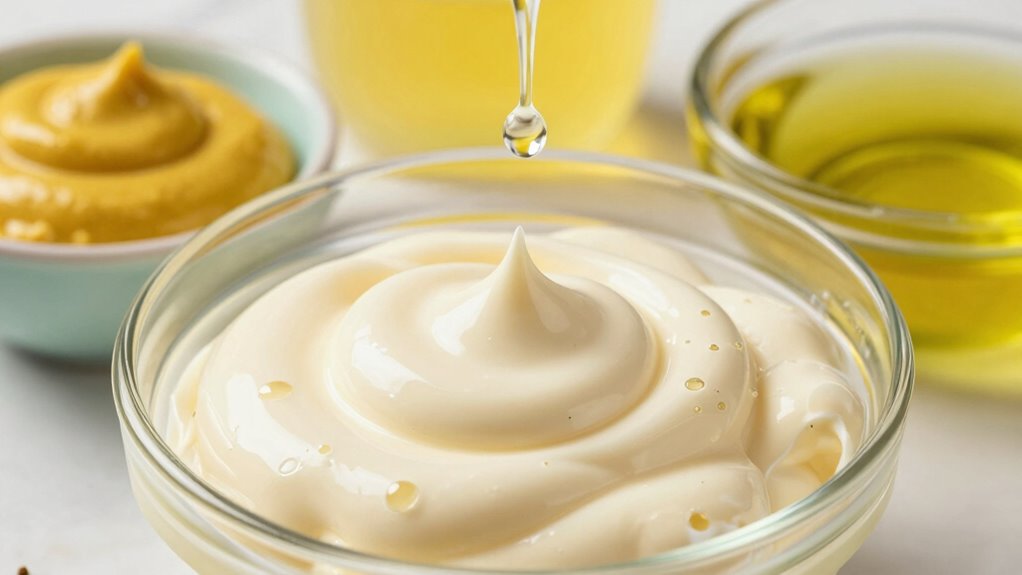
To keep your mayo stable, you can use egg yolks and stabilizers that help maintain the emulsion.
Adjusting the acidity and oil ratios also plays a vital role in preventing separation.
Experimenting with these variations ensures your mayo stays smooth and consistent every time.
Egg Yolks and Stabilizers
Egg yolks are the classic emulsifier in mayonnaise, thanks to their natural lecithin content, which helps blend oil and water-based ingredients seamlessly. They act as egg yolk emulsifiers, binding the mixture and preventing separation. If you want to experiment with stabilizer alternatives, consider adding ingredients like mustard or aquafaba, which can also stabilize emulsions. These options can boost stability without altering flavor appreciably. Here’s a quick comparison:
| Stabilizer | Effectiveness | Usage Tip | Flavor Impact |
|---|---|---|---|
| Egg yolks | High | Standard | Neutral |
| Mustard | Moderate | Small amount | Slight tang |
| Aquafaba | Moderate | Whisk in gradually | Neutral |
In addition, understanding emulsion stability can help you troubleshoot and improve your homemade mayonnaise.
Acidic and Oil Ratios
Maintaining the right balance of acid and oil is essential for a stable and creamy mayonnaise. Your pH balance influences the emulsion’s stability, so adjusting acidity can prevent separation. Using affiliate links to purchase quality ingredients can also ensure freshness and better results. Keep the oil proportion moderate; too much oil overwhelms the emulsion, while too little results in thin mayo. To improve stability, consider these tips: – Use fresh lemon juice or vinegar to fine-tune pH levels – Add a splash of vinegar gradually for better control – Maintain a steady oil addition to prevent breaking – Incorporate stabilizers like mustard or a pinch of salt – Keep ingredients at room temperature to enhance emulsification and stability. Balancing acid and oil ensures your mayo remains smooth and stable, avoiding unwanted separation or breakage. Proper pH and oil ratios are key to achieving that perfect, creamy texture.
When and How to Use Thickeners or Stabilizers to Save Your Mayo
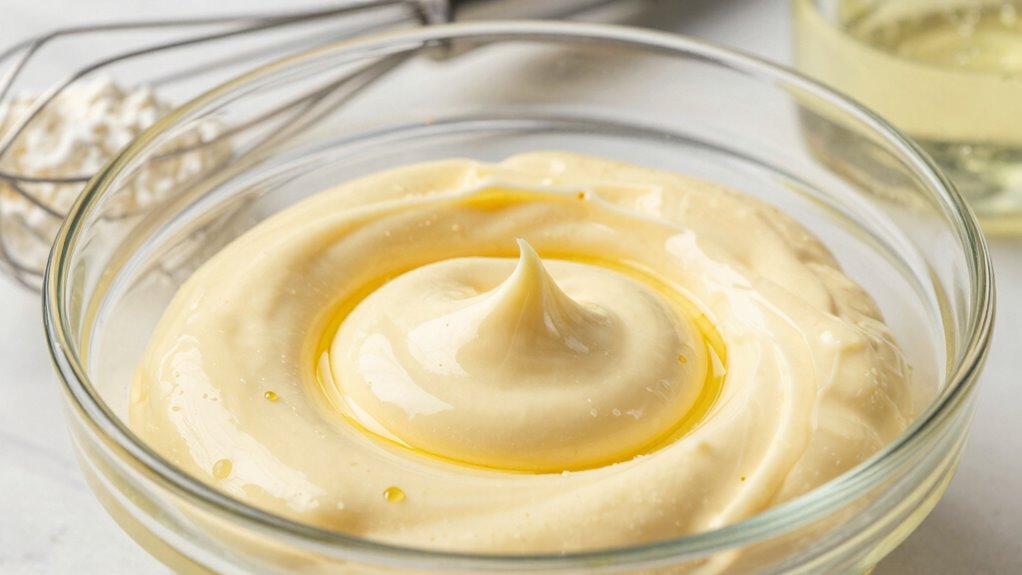
When your mayonnaise starts to separate or thin out, adding thickeners or stabilizers can often save it from becoming unusable. Knowing when to act is key—if you notice the emulsion breaking, introduce a small amount of a suitable thickening agent or stabilizer option. Using emulsion stabilization techniques early can make a significant difference in recovery. Common thickening agents include egg yolk, mustard, or a splash of water, which can help re-emulsify the mixture. Stabilizer options like cornstarch, xanthan gum, or commercial stabilizer powders provide additional support, preventing further separation. To use them effectively, add gradually while whisking vigorously. This quick intervention can restore the mayo’s creaminess and consistency, saving your batch without starting over. Recognizing the signs of emulsion breakdown early allows for timely intervention and better recovery outcomes. Remember, timely use of these agents is vital for a successful recovery. Modern farmhouse decor trends
Frequently Asked Questions
Can Store-Bought Mayo Also Break or Separate?
Yes, store-bought mayo can break or separate, especially if exposed to extreme heat or prolonged storage. Although it contains commercial preservatives and stabilizers to prevent separation, these aren’t foolproof.
If the mayo starts to break, you can try to fix it by stirring vigorously or adding a small amount of fresh oil or lemon juice while whisking gently. Proper storage helps maintain its creamy texture longer.
How Does Sugar or Salt Affect Emulsification Stability?
Did you know that adding just a pinch of salt can strengthen an emulsion by increasing stability? Salt’s influence helps stabilize the oil-in-water mixture, making it less likely to break.
Conversely, sugar’s impact can vary; it may weaken emulsification if added in excess, as it can interfere with the binding of ingredients. So, balancing salt and sugar is key to keeping your mayo smooth and intact.
Does Using Different Types of Oil Impact Mayo’s Stability?
Using different types of oil profoundly impacts mayo’s emulsion stability. Light oils like grapeseed or canola blend well and create a stable emulsion, while thicker oils like olive or sesame can sometimes cause separation.
You should choose oils based on their viscosity and flavor profile to guarantee your mayo stays stable.
Experimenting with oil types helps you achieve the perfect texture and consistency that won’t break or separate.
What Are Natural Stabilizers for Homemade Mayonnaise?
You can use natural stabilizers like honey, mustard, or aquafaba as alternative thickening agents, which help maintain mayo’s consistency. These ingredients also act as flavor enhancing stabilizers, boosting taste while preventing separation.
Adding a small amount gradually guarantees your emulsion stays stable. Incorporating these natural options keeps your homemade mayo smooth and creamy without artificial thickeners, making it more delicious and stable every time.
How Long Can Homemade Mayo Be Safely Stored?
Like a delicate flower, homemade mayo needs careful handling. You can store it safely for about 4 to 7 days in the fridge.
Keep an eye out for spoilage indicators, like a sour smell, discoloration, or separation. After this period, bacteria may grow, making it unsafe.
To extend its freshness, always use clean utensils and store it in an airtight container, ensuring you enjoy it at its best.
Conclusion
Understanding emulsion stability helps you avoid broken mayo, which happens in about 1 in 4 attempts. By controlling ingredients, temperature, and technique, you can guarantee smooth, stable mayo every time. Remember, even experienced cooks face challenges—practice makes perfect. With these tips, you’ll reduce waste and enjoy perfect results. So next time, keep calm, follow the steps, and your mayo will stay beautifully emulsified, making your dishes even more delicious!
NFL season / tailgating Picks
team gear
As an affiliate, we earn on qualifying purchases.



![Paxos Made Simple (2001) [Pdf]](https://rottenpanda.com/wp-content/uploads/2026/07/paxos-made-simple-2001-pdf-featured-560x300.jpg)