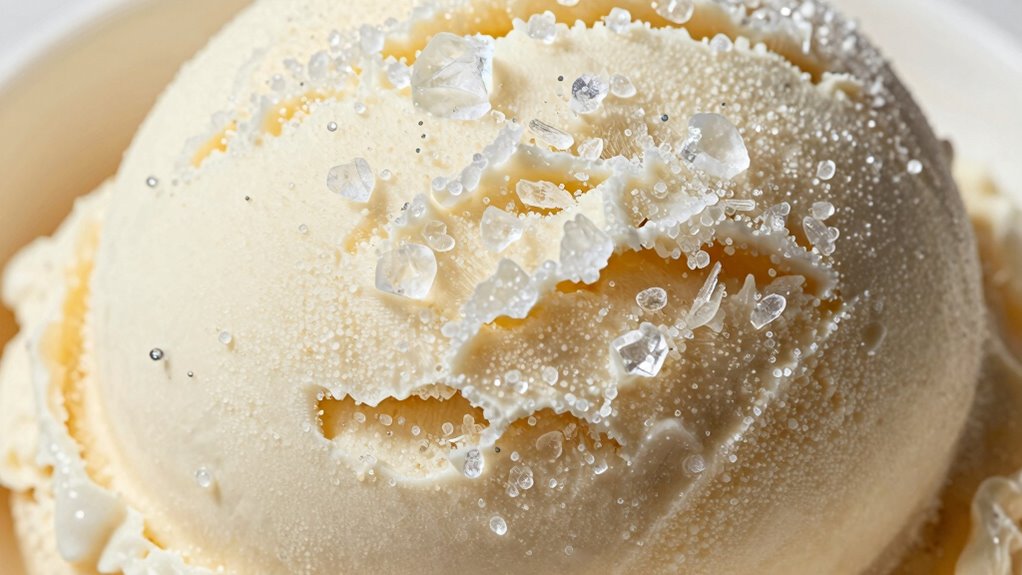

Ice cream gets icy when ice crystals grow too large, leading to a gritty texture instead of smoothness. This happens when water freezes into sizable crystals, often caused by uneven cooling or improper churning. Too much sugar can also interfere with the process, affecting crystallization and freezing points. Properly controlling freezing rates and churning helps keep crystal sizes small, ensuring a creamy texture. Explore further to discover how mastering these factors creates perfect, silky ice cream every time.
Listen free for 30 days with Audible
Thousands of audiobooks and originals — cancel anytime.
As an affiliate, we earn on qualifying purchases.
Key Takeaways
- Large ice crystals form when crystallization is uncontrolled, giving ice cream an icy, gritty texture.
- Proper churning and freezing rates promote small crystal formation, resulting in smooth, creamy ice cream.
- Excessive sugar causes larger crystals by lowering the freezing point too much, leading to iciness.
- Rapid freezing and consistent agitation prevent crystal growth, maintaining a fine, pleasant texture.
- Balancing sugar levels and temperature control is essential to minimize crystal size and prevent ice formation.
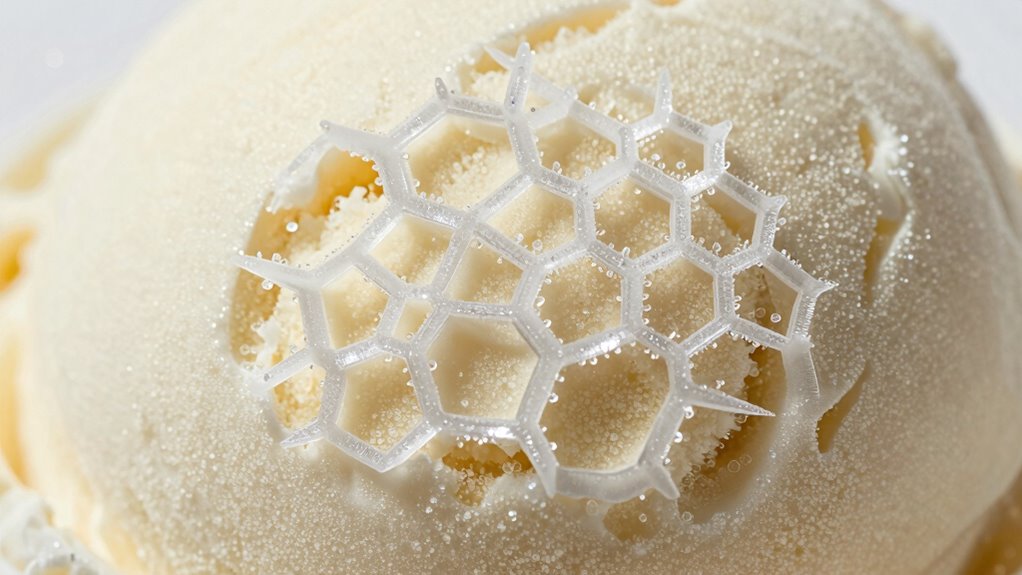
Ice cream becomes icy when tiny ice crystals form within its creamy matrix, and understanding this process helps you appreciate how your favorite treat stays smooth and enjoyable. The formation of these crystals is largely influenced by the principles of sugar crystallization and freezing point depression. When you make ice cream, you mix milk, sugar, and other ingredients, and as the mixture cools, the water begins to turn into ice. However, the presence of sugar plays an essential role in controlling how and when these crystals form.
Sugar crystallization occurs because sugar molecules dissolve in the water, creating a supersaturated solution. As you lower the temperature, the solution reaches a point where it can no longer hold all the dissolved sugar, causing excess sugar to crystallize out. This process is fundamental for the texture of ice cream because it affects how smooth or grainy it feels. Properly managed sugar crystallization helps prevent large, gritty ice crystals from forming, ensuring a creamy consistency. If too much sugar crystallizes out, or if the process is uncontrolled, you’ll notice your ice cream becoming icy and less enjoyable.
Sugar dissolves, creating a supersaturated solution that crystallizes as temperature drops, affecting ice cream’s texture and smoothness.
Freezing point depression is another key factor that influences crystal formation. When you add sugar to your ice cream mixture, it lowers the mixture’s freezing point. This means the mixture stays liquid at temperatures below 0°C, giving you more time to churn and develop a smooth texture before it fully freezes. The more sugar you add, the greater the freezing point depression, which helps control the size of ice crystals. Smaller crystals form when the mixture cools slowly and is churned often, preventing large, icy crystals from taking over. Conversely, if the mixture freezes too quickly or isn’t churned enough, larger crystals develop, making the ice cream feel icy and coarse.
Additionally, controlling the rate of freezing and ensuring consistent churns are necessary to maintain small crystal size and a desirable texture. Balancing sugar crystallization and freezing point depression is key to making perfect ice cream. Too little sugar, and the freezing point isn’t depressed enough, leading to larger crystals and a gritty texture. Too much sugar, and the mixture may stay too soft or not freeze properly, affecting overall quality. Churning also plays an essential role because it physically breaks apart forming crystals, keeping them small and evenly distributed.
In the end, understanding how sugar crystallization and freezing point depression work together helps you appreciate the science behind your favorite frozen treat. It’s not just about flavor but also about precise control of crystal size, which transforms a simple mixture into the smooth, creamy ice cream you love. Recognizing the importance of temperature control and proper mixing techniques can make all the difference in your homemade recipes. By mastering these concepts, you can even experiment with recipes to create your own perfect batch of ice cream.
ice cream maker with churning paddle
As an affiliate, we earn on qualifying purchases.
As an affiliate, we earn on qualifying purchases.
Frequently Asked Questions
How Does Ambient Temperature Affect Ice Crystal Formation?
Ambient temperature influences ice crystal formation by causing temperature fluctuations that can promote crystal growth. When your ice cream is exposed to warm air, it melts slightly and refreezes, leading to larger crystals. Using a well-insulated container helps maintain a consistent temperature, minimizing crystal growth. So, keep your ice cream in a stable, insulated environment to prevent iciness and enjoy that smooth, creamy texture longer.
Can Adding Alcohol Prevent Ice Crystals in Ice Cream?
Think of alcohol’s impact on ice cream like adding a splash of vodka to punch—it’s about reducing unwanted ice crystals. Alcohol inhibits crystal formation, making your ice cream smoother and creamier. Just a small amount can notably slow down crystal growth, preventing it from becoming icy. So, yes, adding alcohol helps inhibit crystal formation, resulting in a more luscious, scoopable treat every time.
What Role Does Fat Content Play in Crystal Size?
Your fat content influences crystal size by affecting fat distribution and emulsifier effects in ice cream. Higher fat levels help coat ice crystals, preventing them from growing large and icy. Well-distributed fat creates a smoother texture, while emulsifiers improve stability, reducing crystal size. So, increasing fat content and ensuring good fat distribution, along with emulsifiers, helps keep your ice cream creamy and prevents icy chunks.
How Does the Type of Sugar Influence Ice Crystal Growth?
Did you know that sucrose, the common table sugar, slows sugar crystallization, leading to smaller ice crystals and creamier texture? The type of sugar you use influences sweetness and how quickly crystals form. For example, glucose and fructose promote faster sugar crystallization, which can result in larger crystals and a grainy texture. So, choosing the right sugar impacts your ice cream’s smoothness and overall deliciousness.
Are There Natural Ways to Control Ice Crystal Size During Freezing?
You can naturally control ice crystal size during freezing by managing sugar crystallization and nucleation control. By adding ingredients like fats, stabilizers, or egg yolks, you slow down nucleation, preventing large crystals from forming. Churning or agitating the mixture also helps distribute crystals evenly, resulting in a smoother texture. These techniques work with natural components and processes, reducing the need for artificial additives while ensuring your ice cream stays creamy and less icy.
As an affiliate, we earn on qualifying purchases.
Conclusion
So, next time you savor that creamy scoop, remember the dance of crystals beneath the surface, like tiny stars frozen in time. Just as Frosty the Snowman is shaped by icy magic, your ice cream’s texture depends on crystal size and formation. By understanding this science, you’re tasting not just flavor, but a carefully crafted frozen symphony. It’s a reminder that even in coldness, there’s artistry—turning icy chaos into sweet delight.
ice cream crystal size control tools
As an affiliate, we earn on qualifying purchases.
As an affiliate, we earn on qualifying purchases.
As an affiliate, we earn on qualifying purchases.
Flea & tick season Picks
flea and tick prevention
As an affiliate, we earn on qualifying purchases.






![Sean Carroll Explains The Biggest Ideas In The Universe – Full Interview [Video] (2025)](https://rottenpanda.com/wp-content/uploads/2026/09/sean-carroll-explains-the-biggest-ideas-in-the-universe-full-interview-video-202-featured-260x140.jpg)