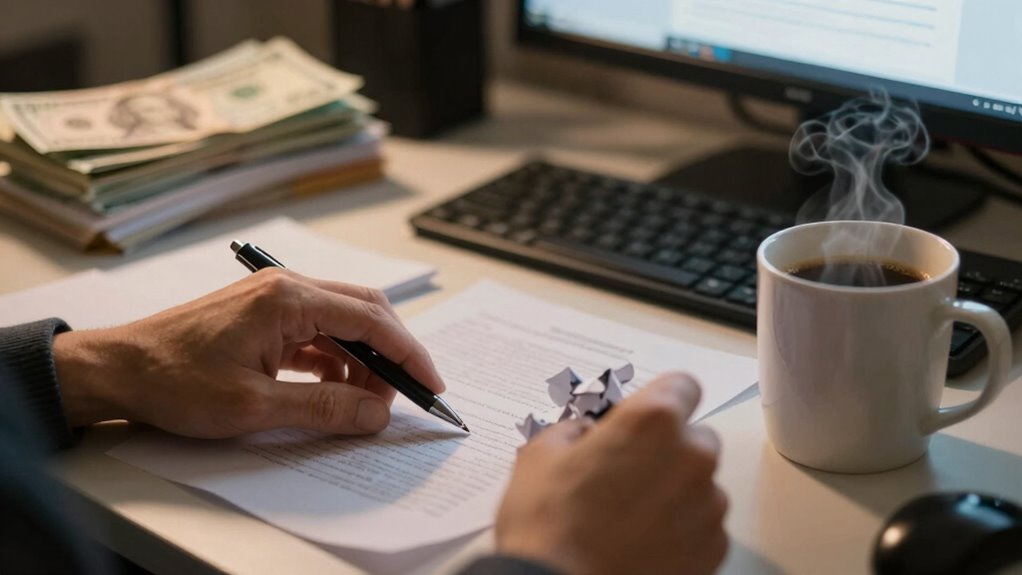

Ignoring physical cues like tension, fatigue, or a rapid heartbeat makes stress feel much bigger and more uncontrollable. When you push through your day without noticing or addressing these signals, stress deepens and overwhelms you. Recognizing and responding to your body’s early signs helps you regain control and manage stress better. If you want to discover how becoming aware of these cues can transform your stress response, there’s more to explore below.
Key Takeaways
- Ignoring physical cues like tension or fatigue can amplify the perception of stress and make it seem uncontrollable.
- Neglecting body signals prevents early intervention, allowing stress to escalate unnoticed.
- Focusing solely on thoughts without tuning into physical sensations can increase feelings of overwhelm.
- Poor awareness of physical cues reduces ability to use mindfulness or movement to manage stress effectively.
- External factors like environmental stressors may intensify physical responses, making stress appear bigger.
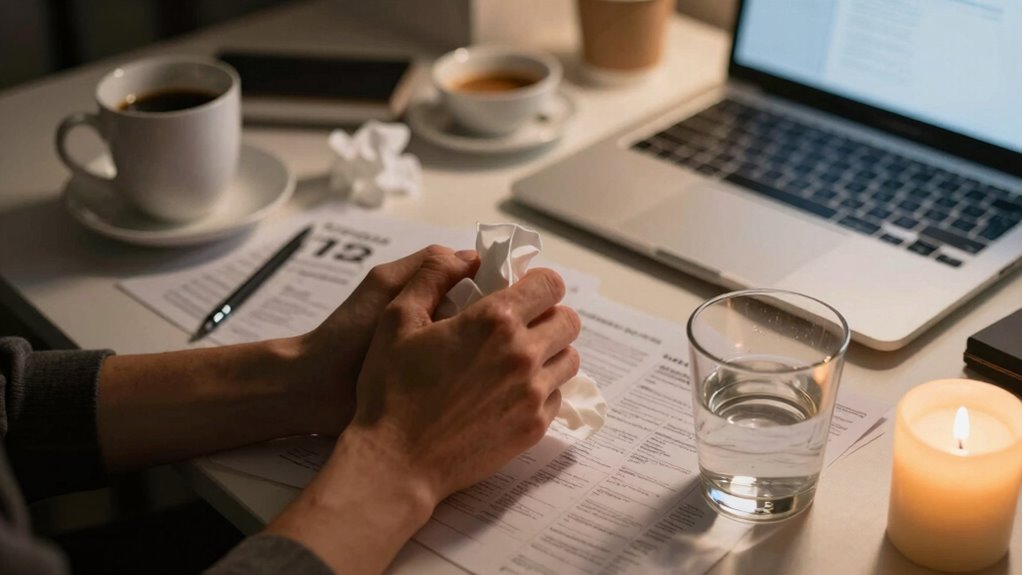
Stress can feel overwhelming when you focus solely on the problem at hand, but what often amplifies these feelings is a hidden habit: neglecting your body’s signals. When you ignore physical cues like tension, fatigue, or rapid heartbeat, stress can seem larger and more uncontrollable. Instead of listening to your body, you might push through your day, hoping stress will just pass. But this approach only deepens the sense of being overwhelmed. Recognizing and responding to your body’s signals isn’t just about comfort; it’s about reclaiming control over your stress.
Ignoring physical cues worsens stress; listening to your body helps regain control and calm.
One effective way to tune into your body is through a mindfulness practice. Mindfulness encourages you to stay present and observe your thoughts and physical sensations without judgment. When you notice tension in your shoulders or a tight jaw, you give yourself the opportunity to address it before stress escalates. Practicing mindfulness regularly can help you become more aware of early signs of stress, allowing you to take proactive steps like deep breathing or gentle stretching. Over time, this awareness rewires your response, making stress feel less like an uncontrollable wave and more like a manageable signal from your body. Developing this mind-body connection can significantly improve your ability to manage stress effectively. Incorporating awareness of physical signals can help you respond more swiftly and effectively to stress before it intensifies. Recognizing these cues early can also help you foster a healthy stress response that supports overall well-being. Additionally, understanding how indoor air quality impacts physical health can make you more attentive to environmental factors that influence your stress levels.
Physical activity is another powerful tool that counters this hidden habit. When you engage in regular movement—whether it’s walking, yoga, or any form of exercise—you send a clear message to your body that it’s safe and supported. Physical activity releases endorphins, which are natural mood lifters, helping reduce the intensity of stress. It also improves circulation and relaxes tense muscles, which can often be a physical manifestation of stress. By incorporating movement into your routine, you’re not just addressing stress in the moment—you’re building resilience against future stressors. Movement also heightens your awareness of physical signals, making it easier to catch early signs of strain before they spiral out of control. Additionally, understanding biodiversity can help you recognize how diverse natural environments support mental well-being, encouraging outdoor activities that promote physical and emotional health. Engaging with nature can further deepen your awareness of physical and emotional cues, enhancing your overall stress management toolkit.

Retrospec Sedona Meditation Cushion, Buckwheat Pillow, Meditation Pillow
- Natural Buckwheat Filling: Supports spine and hips during meditation
- Customizable Firmness: Adjust inner hulls for comfort
- Eco-Friendly Cotton Cover: Machine washable and sustainable
As an affiliate, we earn on qualifying purchases.
As an affiliate, we earn on qualifying purchases.
Frequently Asked Questions
Can Small Daily Habits Significantly Impact Stress Levels?
Yes, small daily habits can considerably impact your stress levels. By practicing mindful awareness, you become more attuned to habit triggers that escalate stress. Recognizing these triggers helps you pause and choose calmer responses instead of reacting automatically. Over time, consistently managing these triggers through simple habits—like deep breathing or short breaks—can reduce your overall stress, making challenges feel more manageable and your mindset more resilient.
How Long Does It Take to Notice Changes After Altering This Habit?
Like waiting for a ship to arrive in the age of sail, you’ll notice changes in your stress levels within a few days to a week of practicing mindful breathing and doing a digital detox. As you consistently pause and breathe deeply, your mind calms, and stress diminishes. Stick with it, and you’ll start feeling more centered and less overwhelmed, even amidst life’s chaos.
Is This Habit Common Among Stressed Individuals?
Yes, this habit is quite common among stressed individuals. When you’re unaware of your habit awareness, you may unknowingly amplify stress triggers, making stress feel more overwhelming. Many people develop these habits as coping mechanisms, but recognizing them can help you control how stress impacts you. By identifying these patterns early, you can take steps to break the cycle and reduce the intensity of your stress.
Are There Specific Signs Indicating This Habit’s Presence?
Think of a shadow stretching longer as the sun sets—that’s how this habit subtly grows unnoticed. To spot it, focus on habit awareness and symptom recognition. Signs include constant overthinking, difficulty relaxing, and feeling overwhelmed even with minor stressors. By paying attention to these signs, you can catch the habit early, understand its impact, and take steps to manage stress more effectively before it becomes overwhelming.
What Are Quick Tips to Break This Habit?
To break this habit quickly, start with mindful breathing—pause, take deep breaths, and focus on your inhale and exhale to ground yourself. Limit screen time with a digital detox, especially during stressful moments, to reduce overwhelm. Set small goals, like dedicating five minutes daily for mindful breathing or unplugging from devices. These simple actions help you regain control, decrease stress, and prevent the habit from escalating.

Massage Lacrosse Balls for Myofascial Release,Yoga Deep Tissue Massage,Trigger Point Therapy and Foot Plantar Fasciitis,Muscle Soreness Massager Ball (2Pack,Deep Blue and Purple)
- Ideal for Massage Therapy: Helps relieve muscle knots and tension
- Relieves Muscle Pain: Eases soreness, neck pain, sciatica, fibromyalgia
- Durable Solid Rubber Construction: Firmer than tennis balls, long-lasting
As an affiliate, we earn on qualifying purchases.
As an affiliate, we earn on qualifying purchases.
Conclusion
So, next time stress starts to feel overwhelming, ask yourself: are you unknowingly feeding it with this hidden habit? Recognizing and changing even small behaviors can make a huge difference in how you handle pressure. Don’t let this silent trick continue to amplify your stress—take control today. After all, aren’t you worth the effort to create a calmer, more balanced life? The power to change is in your hands.

Breathing Exercise Device for Lungs, Deep Breathing Trainer with Flow, Design for Gentle Breathing Training & Recovery Support, Easy to Clean
- Design: Simple 3-ball design for gentle training
- Purpose: Supports lung recovery and respiratory wellness
- Progress Tracking: Visual markings to monitor improvement
As an affiliate, we earn on qualifying purchases.
As an affiliate, we earn on qualifying purchases.

Lumbar Support Pillow for Office Chair, Office Home Essentials,Gifts for Mom,Dad, Back Support Pillow for Car, Chair Cushions,Back Pain Relief Improve Posture,Mesh Cover Double Adjustable Straps
- Extended Adjustable Straps: Fits more chairs securely
- Ergonomic Back Support: Relieves back pain and improves posture
- High-Density Memory Foam: Maintains shape and provides firm support
As an affiliate, we earn on qualifying purchases.
As an affiliate, we earn on qualifying purchases.