

Your brain now prefers familiar lies because repeated exposure strengthens the neural pathways that reinforce them, making these false beliefs feel safe and simple. When you hear or think about something often, it becomes easier to accept, even if it’s false. This process, backed by cognitive biases and emotional attachments, keeps you anchored to old stories. By understanding these brain tricks, you can learn how to confront and challenge your ingrained beliefs and seek the truth more effectively.

Prime made for students and young adults
- Fast, free delivery for dorm and study essentials
- Prime Video and Amazon Music included
- Member-only deals
Key Takeaways
- Repetition strengthens neural pathways, making familiar lies feel more automatic and ingrained in the brain.
- The brain favors cognitive ease, perceiving simple, familiar information as more trustworthy and credible.
- Neural conditioning links beliefs to safety, encouraging the brain to cling to familiar stories for comfort.
- Confirmation bias and cognitive shortcuts reinforce false beliefs by favoring information that aligns with existing views.
- Recognizing these brain tendencies allows us to challenge illusions and seek more accurate, evidence-based understanding.
As an affiliate, we earn on qualifying purchases.
Why Our Brain Prefers Familiar Lies Over Uncomfortable Truths

Your brain naturally gravitates toward familiar lies because they require less mental effort than confronting uncomfortable truths. When you repeat a lie, your neural pathways strengthen, making the false belief more ingrained. This process, called belief reinforcement, solidifies the lie as part of your mental framework. Choosing familiar lies creates a sense of predictability and safety, helping you avoid cognitive dissonance. Your brain prefers these easier options because it conserves energy and reduces stress. Over time, these reinforced neural pathways make it even harder to accept uncomfortable truths, as your brain has already invested in the comfort of familiar falsehoods. neural pathways become more deeply entrenched with each repetition, making it increasingly difficult to change your beliefs. This tendency keeps you anchored in beliefs that feel safe, even if they’re not accurate. Additionally, the role of contrast in perception influences how your brain favors familiar narratives over challenging realities. Recognizing this neural reinforcement can help you become more aware of the falsehoods you hold onto and the ways your brain seeks comfort in familiarity. Moreover, understanding the cognitive load involved in processing new information can shed light on why your brain prefers the comfort of the known. Insights from Patchology.ORG highlight how skin and mental health are interconnected, emphasizing the importance of clarity and truth in overall well-being.
neural pathway strengthening tools
As an affiliate, we earn on qualifying purchases.
As an affiliate, we earn on qualifying purchases.
The Psychology of Comfort: Why Familiar Lies Feel Safer

Familiar lies feel safer because they provide immediate comfort and predictability in an unpredictable world. Your brain relies on neural conditioning to associate certain beliefs with safety, reinforcing these ideas subconsciously. When you accept familiar lies, your mind experiences less cognitive strain, as it doesn’t have to process new or conflicting information. This subconscious reinforcement creates a sense of stability, making you feel secure and in control. Over time, your brain learns to prefer these comforting beliefs because they reduce anxiety and uncertainty. Even if the lies are false, they serve as mental shortcuts that shield you from the chaos of reality. This psychological wiring explains why your mind gravitates toward familiar falsehoods, seeking comfort in the predictability they offer. Additionally, the concept of free floating anxiety can make these familiar stories even more appealing, as they provide a temporary escape from deeper fears. Moreover, understanding the role of neural conditioning can help you recognize why certain false beliefs are so deeply ingrained and resistant to change. A better grasp of cognitive biases can also illuminate how your mind favors familiar narratives over unfamiliar truths, reinforcing these falsehoods even further.
As an affiliate, we earn on qualifying purchases.
How Cognitive Ease Makes Us Accept False Beliefs

When information feels straightforward and easy to understand, your brain perceives it as more trustworthy, making it easier to accept—even if it’s false. Neuroscience insights reveal that cognitive ease influences belief formation, leading you to favor information that requires less mental effort. When ideas are simple and familiar, your brain automatically assigns them credibility because they seem more familiar and less complex. This mental shortcut helps you process information quickly but can also make you vulnerable to false beliefs. Your brain prefers ease over complexity, meaning you might accept misleading or inaccurate ideas simply because they feel clear and effortless. Recognizing this tendency helps you understand why false stories can seem convincing when they are presented in a way that’s cognitively easy to grasp. Additionally, familiarity can reinforce false beliefs because repeated exposure makes information seem more credible. The brain’s preference for cognitive ease can sometimes lead to overlooking critical details that challenge these simple narratives, further entrenching false beliefs. For example, research into biological processes shows how neural pathways adapt to reinforce familiar patterns, making repeated falsehoods more ingrained. Moreover, the brain’s tendency to seek mental shortcuts can lead to oversimplified conclusions that ignore important nuances, increasing susceptibility to misinformation. Understanding the role of cognitive shortcuts can empower you to critically evaluate information rather than accept it at face value.
As an affiliate, we earn on qualifying purchases.
Why Repetition Reinforces Our False Stories

Repetition has a powerful way of making false stories feel true. When you hear or repeat an idea often enough, it strengthens the neural pathways associated with that thought. This process, called belief reinforcement, makes the false story more accessible in your mind. Understanding neural pathways helps clarify how these false stories become so deeply rooted, especially through the process of belief reinforcement that strengthens neural connections over time. Additionally, this phenomenon underscores the importance of being mindful of the information we consume, as it can unintentionally shape our beliefs through repetition. The brain’s plasticity allows these reinforced pathways to become more automatic, leading to automatic belief formation that can persist even when the original story is false.
The Role of Emotional Attachment in Believing Familiar Lies

Your emotional attachment to certain beliefs makes it difficult to let go of familiar lies, even when evidence proves them false. This attachment creates a powerful bond that reinforces your beliefs. Here’s how it works:
- It provides comfort during uncertainty, making you cling to familiar stories.
- It boosts your self-identity, strengthening your sense of who you are.
- It triggers emotional responses that overshadow factual evidence.
- It sustains belief reinforcement, making it harder to accept new or conflicting information.
- Additionally, wave and wind patterns influence how beliefs are maintained and reinforced within your mind. These natural phenomena can subtly sway our perceptions and emotional states, further entrenching familiar lies.
These emotional ties make your brain prefer the comfort of known lies over uncomfortable truths. Recognizing this attachment helps you understand why you resist change, even when facts challenge your beliefs. Your emotional attachment keeps those familiar lies firmly rooted in your mind.
Confirmation Bias: Why We Keep Clinging to Old Stories

Confirmation bias keeps you holding onto old stories even when new evidence suggests they’re no longer accurate. Your brain prefers familiar neural pathways, making it easier to reinforce existing beliefs rather than challenge them. During belief formation, your mind selectively notices information that supports what you already think, ignoring or dismissing contradictory evidence. This process strengthens the mental connections associated with your current beliefs, creating a loop that’s hard to break. As a result, you cling to outdated narratives because they feel safe and familiar. Your brain’s wiring favors confirmation, ensuring that your worldview remains stable—even if it’s based on old, inaccurate stories. Recognizing this bias helps you understand why changing your beliefs often feels so difficult. Additionally, understanding how neural pathways are reinforced can empower you to actively seek out new perspectives and challenge ingrained beliefs, fostering cognitive flexibility that is essential for growth. This awareness can motivate you to deliberately seek disconfirming evidence, which is crucial for updating your worldview and overcoming confirmation bias. Engaging in practices that promote neural plasticity can further support your efforts to break free from these mental loops.
Mental Shortcuts That Make Familiar Lies Easier to Believe

Familiar lies feel easier to believe because your brain relies on mental shortcuts, or heuristics, that simplify decision-making. These heuristic shortcuts help you process information quickly but can also reinforce bias. Here are four ways they do this:
Familiar lies feel easier to accept, as mental shortcuts simplify decisions but can reinforce bias.
- Availability heuristic: You judge the likelihood of something based on how easily examples come to mind, making familiar lies seem more plausible.
- Representativeness: Your brain compares new info to existing stereotypes, reinforcing false beliefs that fit familiar patterns.
- Anchoring: Initial impressions or beliefs act as anchors, biasing you toward accepting familiar lies without question.
- Confirmation bias reinforcement: Once a lie feels familiar, heuristics make it easier to dismiss conflicting evidence, deepening bias reinforcement.
These mental shortcuts keep familiar lies firmly rooted in your thinking.
How to Recognize When Your Brain Is Clinging to a Falsehood

You might notice your beliefs feel unusually comforting or unchallenged, but that’s often a sign of cognitive biases at play. Ask yourself if your emotions are clouding your judgment or if you’re avoiding uncomfortable truths. Recognizing these signs helps you see when your brain is holding onto a falsehood.
Recognizing Cognitive Biases
Recognizing cognitive biases requires being attentive to the subtle ways your mind can distort reality. Your neural pathways reinforce belief systems, making falsehoods feel familiar and true. To spot biases, consider these signs:
- You dismiss evidence that contradicts your beliefs.
- You interpret ambiguous information to fit your existing views.
- You favor information that confirms what you already think.
- You feel uncomfortable or defensive when challenged.
Questioning Emotional Comfort
Emotional comfort can make it difficult to see when you’re holding onto false beliefs. When your brain seeks emotional resilience, it often reinforces familiar ideas because they feel safe. Recognizing this tendency requires questioning your emotional comfort zone. Ask yourself if your beliefs serve your growth or just reinforce your existing worldview. If holding onto certain ideas makes you feel secure, it’s a sign your brain is clinging to falsehoods. Use this table to evaluate your beliefs:
| Belief | Emotional Trigger | Is It Beneficial? |
|---|---|---|
| I’m not good enough | Fear of failure | No |
| Success is luck | Fear of inadequacy | No |
| Change is dangerous | Fear of the unknown | No |
| I must always be right | Ego protection | No |
| Others’ opinions matter | Validation need | No |
Questioning these triggers helps break belief reinforcement.
Strategies to Break Free From the Grip of Familiar Lies

Breaking free from the grip of familiar lies requires intentional effort and practical strategies. Neuroscience insights reveal that belief resilience can be challenged by consciously disrupting thought patterns. To start, you can:
- Question assumptions regularly to weaken automatic beliefs.
- Seek out conflicting information to challenge comfort zones.
- Practice mindfulness to observe thoughts without judgment.
- Build new, evidence-based beliefs through consistent reflection.
These steps help rewire your brain’s resistance to change, making you less susceptible to familiar lies. Remember, belief resilience is strong, but with deliberate effort, you can weaken old patterns and foster more accurate perceptions. The key is persistent awareness and active engagement with your thought processes, enabling you to break free from the comfort of familiar but false narratives.
Understanding These Brain Tricks Can Help You Seek the Truth
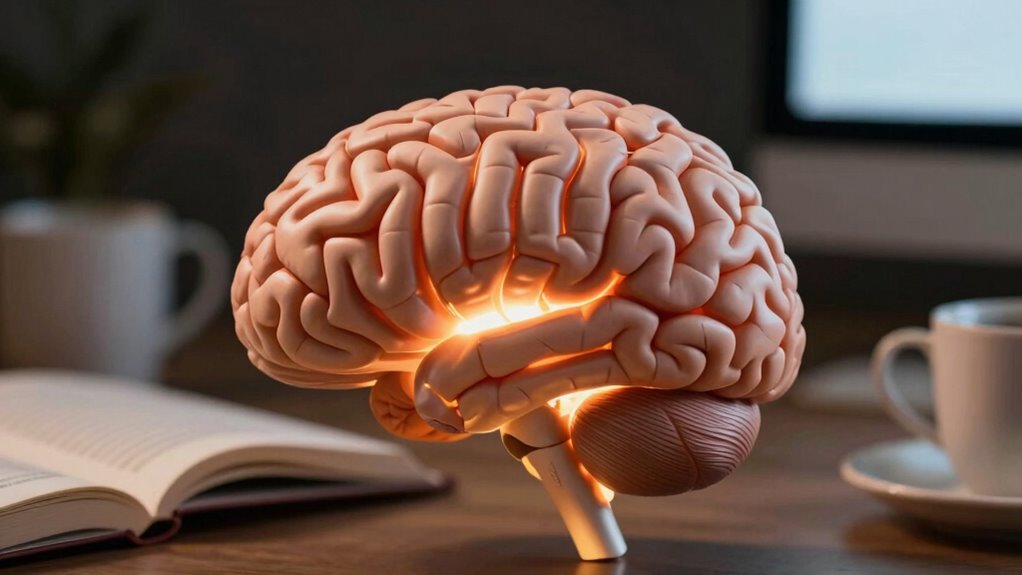
By understanding how your brain favors familiarity and falls prey to cognitive biases, you can better spot when you’re being misled. Recognizing these tricks empowers you to question assumptions and seek out the real truth. With this awareness, you can develop strategies to see beyond the illusions your mind creates.
Brain’s Preference for Familiarity
Your brain naturally favors familiar information because it’s more efficient and less demanding than processing something new. This preference strengthens neural pathways linked to your existing belief systems, making familiar ideas feel safer and more trustworthy. When you encounter new information, your brain often defaults to what it already knows.
Consider these points:
- Familiarity reinforces neural pathways, making thoughts automatic.
- It reduces cognitive effort needed to analyze new data.
- Your belief systems bias you toward familiar ideas.
- The brain seeks comfort in what feels known and predictable.
This tendency explains why your mind gravitates toward familiar lies. Recognizing this bias can help you challenge ingrained beliefs and seek the truth more objectively. Your brain’s love of familiarity isn’t random—it’s a survival mechanism, but one that can hinder clarity.
Cognitive Biases at Play
Cognitive biases are mental shortcuts that shape how you interpret information, often leading you to accept familiar ideas over new or challenging truths. These biases form through the strengthening of neural pathways, making certain thought patterns more automatic over time. When you repeatedly encounter familiar beliefs, your brain reinforces these pathways, making bias formation more likely. This process explains why your mind gravitates toward comforting or familiar narratives, even if they’re false. These biases influence your perceptions, judgments, and decisions, subtly guiding you away from objective truth. Recognizing the role of neural pathways in bias formation helps you understand why your brain prefers familiar lies and how it filters reality. Awareness of these brain tricks is the first step toward seeking more accurate, honest insights.
Strategies to Find Truth
Understanding how your brain tricks you is the first step toward uncovering the truth. To combat memory distortion and perception illusions, try these strategies:
- Question your assumptions—don’t accept what feels familiar as fact.
- Seek out diverse perspectives to challenge your viewpoint.
- Cross-check information from multiple reliable sources.
- Practice mindfulness to become aware of perception illusions influencing your judgment.
These approaches help you recognize when your brain is leaning on familiar lies or distorted memories. By consciously questioning your perceptions and verifying facts, you can bypass cognitive biases and get closer to the truth. Remember, awareness of these brain tricks empowers you to see beyond illusions and uncover reality more clearly.
Frequently Asked Questions
Can Unfamiliar Truths Become Easier to Accept Over Time?
Yes, unfamiliar truths can become easier to accept over time. When you develop cognitive flexibility, you train your mind to adapt and see new perspectives. This reduces emotional resistance, making it less intimidating to embrace unfamiliar ideas. As you consciously practice openness and challenge your biases, your brain gradually rewires, allowing you to accept truths that once felt foreign. Over time, acceptance becomes more natural and less emotionally charged.
How Does Social Influence Reinforce Belief in Familiar Lies?
Imagine you’re caught in a river current, flowing steadily towards a familiar shore. Social influence acts like that current, reinforcing your belief in familiar lies through groupthink conformity and peer pressure. When everyone around you echoes the same idea, it becomes harder to resist. You feel compelled to conform, trusting the group’s consensus over your doubts, which deepens your belief in those familiar, comforting falsehoods.
Are Children More Susceptible to Believing Familiar Lies Than Adults?
Yes, children are more susceptible to believing familiar lies because of childhood gullibility and developmental trust. Your brain is still developing, making you more likely to accept information without question. As you grow, you learn to evaluate and doubt, reducing this susceptibility. During childhood, your trust in familiar sources and routines makes it easier to believe in lies that seem consistent or comforting.
What Role Does Stress Play in Clinging to False Beliefs?
Stress amplifies your tendency to cling to false beliefs by strengthening cognitive bias and emotional attachment. When you’re stressed, your brain seeks familiar, comforting narratives to reduce anxiety. This makes it harder to challenge inaccurate beliefs, as your emotional attachment to these stories grows stronger. As a result, stress can cause you to hold onto falsehoods more tightly, even when evidence suggests they’re wrong.
Can Mindfulness Techniques Help Us See Through Familiar Lies?
Mindfulness techniques can be your ultimate weapon against familiar lies, cutting through the fog of cognitive biases and emotional conditioning. By practicing awareness, you gain clarity, making it easier to recognize false beliefs that seem as stubborn as a mountain. You start questioning automatic thoughts, allowing you to see past illusions and challenge the lies your mind loves to cling to. Regular mindfulness can transform your perception and break free from these mental traps.
Conclusion
Your brain prefers familiar lies because they offer comfort and ease, even if they’re false. While these illusions shield you from discomfort, they also limit growth and understanding. Recognizing these tricks is your first step toward truth. Embrace the discomfort of reality as fiercely as you cling to comforting falsehoods. In choosing awareness over ignorance, you open the door to genuine growth—where truth, however hard, becomes your true sanctuary.
Fall Picks
fall essentials
As an affiliate, we earn on qualifying purchases.