To test your food thermometer at home, start with the ice water method—fill a glass with crushed ice, add cold water, and wait a minute. Insert the thermometer without touching sides or bottom; it should read 32°F (0°C). For boiling water, insert it into boiling water and check the temperature, adjusting if needed. Regular testing guarantees accurate results, so keep exploring how to maintain your thermometer’s precision.

Prime made for students and young adults
- Fast, free delivery for dorm and study essentials
- Prime Video and Amazon Music included
- Member-only deals
Key Takeaways
- Use the ice water test: submerge the thermometer in crushed ice and water, ensuring it reads close to 32°F (0°C).
- Perform the boiling water test: insert the thermometer into boiling water, and verify it reads around 212°F (100°C) at sea level.
- Check for physical damage or corrosion that could affect accuracy before testing or calibration.
- Follow manufacturer instructions for calibration procedures, adjusting settings if available, based on test results.
- Regularly test your thermometer before critical cooking to ensure consistent and reliable temperature readings.
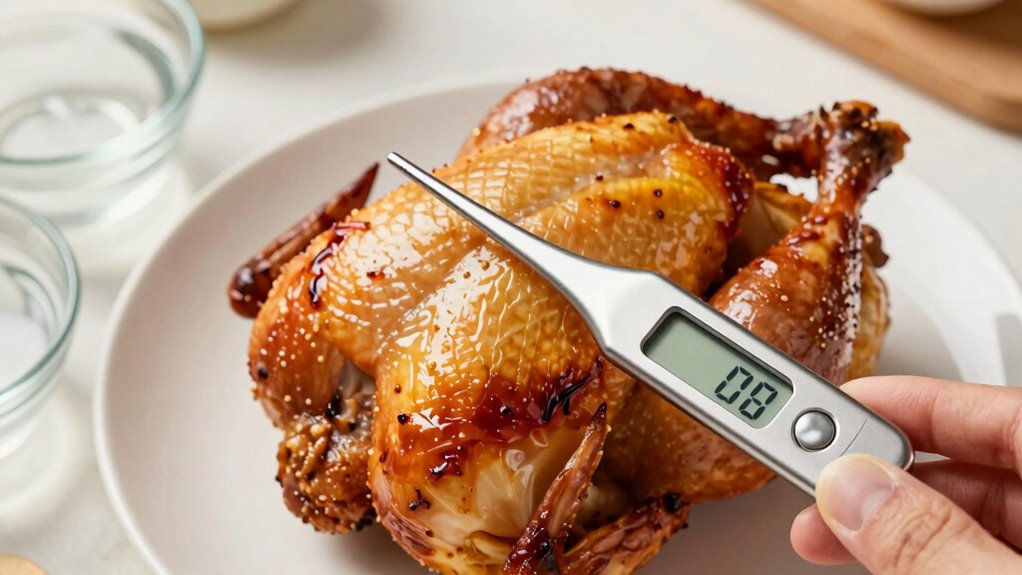
Ensuring your food thermometer provides accurate readings is essential for safe cooking and eating. When your thermometer isn’t properly calibrated, you might think your food is safe when it’s not, or you could be overcooking and wasting energy. To keep your thermometer functioning correctly, it’s important to understand calibration techniques and recognize common malfunction signs. Calibration techniques are straightforward methods you can perform at home to verify and adjust your thermometer’s accuracy. One common approach is the ice water test. Fill a glass with crushed ice and add just enough cold water to fill the gaps, then let it sit for a minute. Insert your thermometer into the ice water, making sure it doesn’t touch the sides or bottom of the glass. If it’s accurate, it should read 32°F (0°C). If it doesn’t, you’ll need to adjust it if your model allows, or note the discrepancy for future reference. Another method is the boiling water test. Boil water and insert the thermometer when the water reaches a rolling boil. The temperature should read 212°F (100°C) at sea level. Keep in mind that altitude affects boiling point, so if you live in a high-altitude area, you’ll need to adjust for that. If the readings are off, some digital thermometers have calibration screws or settings to correct the measurement. For others, you may need to replace or recalibrate the device according to manufacturer instructions. Recognizing common malfunction signs helps prevent inaccurate readings. If your thermometer consistently shows inconsistent or fluctuating temperatures, it’s a red flag. Also, if the display becomes unreadable or if the device no longer responds to temperature changes, it’s time to replace it. Physical damage, such as cracks or corrosion, is another clear sign that your thermometer isn’t functioning properly. Batteries draining quickly or failing to turn on can also lead to inaccurate readings, so check and replace batteries regularly if applicable. Proper maintenance and regular testing ensure your thermometer remains reliable. Keep it clean, store it properly, and perform these calibration checks periodically, especially before cooking meat, poultry, or seafood. Remember that digital and analog thermometers may require different calibration procedures, so always consult the manufacturer’s guidelines. Additionally, understanding ceiling fan efficiency can help you optimize your home energy use. By staying attentive to calibration techniques and common malfunction signs, you can ensure your food thermometer provides precise readings every time. This not only guarantees your food is safe to eat but also helps you cook more efficiently and confidently. Regular checks and prompt replacements when necessary keep your kitchen safe and your meals perfect.
digital food thermometer with calibration screw
As an affiliate, we earn on qualifying purchases.
As an affiliate, we earn on qualifying purchases.
Frequently Asked Questions
How Often Should I Calibrate My Food Thermometer?
You should calibrate your food thermometer at least once a year to guarantee accurate readings, but more often if you use it frequently or notice inconsistent results. Regular thermometer maintenance, including calibration, helps prevent foodborne illness and ensures safe cooking. Always check after dropping it or exposing it to extreme temperatures. Proper calibration frequency keeps your thermometer reliable, so you can confidently cook meat, dairy, and other foods to safe temperatures.
Can I Use a Household Thermometer to Test a Food Thermometer?
You can use a household thermometer to test your food thermometer, but accuracy depends on proper testing techniques. First, verify that your household thermometer is calibrated correctly. Submerge both thermometers in boiling water or ice water to compare readings. This visual check helps determine if your food thermometer is accurate. Keep in mind, some household thermometers aren’t designed for high temperatures, so choose the right one for reliable testing.
What’s the Best Way to Store My Food Thermometer?
To store your food thermometer properly, follow these storage tips to maintain temperature stability. Keep it in a clean, dry place away from direct sunlight and extreme temperatures. Use a protective case or sheath if available, and avoid storing it near strong magnetic fields or chemicals. Proper storage guarantees your thermometer stays accurate and ready for use, extending its lifespan and ensuring safe cooking every time.
How Do I Know if My Thermometer Is Digital or Analog?
You can tell if your thermometer is digital or analog by checking its display. Digital thermometers have a clear digital display showing the temperature, while analog ones feature a dial or needle. Look for the temperature range indicated on the device, as digital models often have a wider range and precision. If it shows numbers electronically, it’s digital. If it has a dial, it’s analog.
Are There Specific Foods Better for Testing Thermometer Accuracy?
You can test your thermometer’s accuracy with foods that have consistent temperatures, like boiling water or ice water. During food testing, make sure you’re using calibration methods such as comparing readings to known temperatures. Boiling water at sea level should read 212°F, and ice water should be around 32°F. These foods help you verify if your thermometer provides precise measurements, ensuring safe cooking and proper calibration.
instant-read meat thermometer for accurate cooking
As an affiliate, we earn on qualifying purchases.
As an affiliate, we earn on qualifying purchases.
Conclusion
Just like a trusty compass guides your journey, a reliable food thermometer guarantees your meals are safe and delicious. Regularly testing its accuracy keeps you on the right path, much like Odysseus navigating treacherous waters. So, take a moment to check yours at home—trust your kitchen’s own hero to lead you to culinary victory. After all, in the domain of safe eating, precision is your most faithful ally.
kitchen food thermometer for boiling and ice water tests
As an affiliate, we earn on qualifying purchases.
As an affiliate, we earn on qualifying purchases.
professional food thermometer for home use
As an affiliate, we earn on qualifying purchases.
As an affiliate, we earn on qualifying purchases.
Fall Picks
fall essentials
As an affiliate, we earn on qualifying purchases.