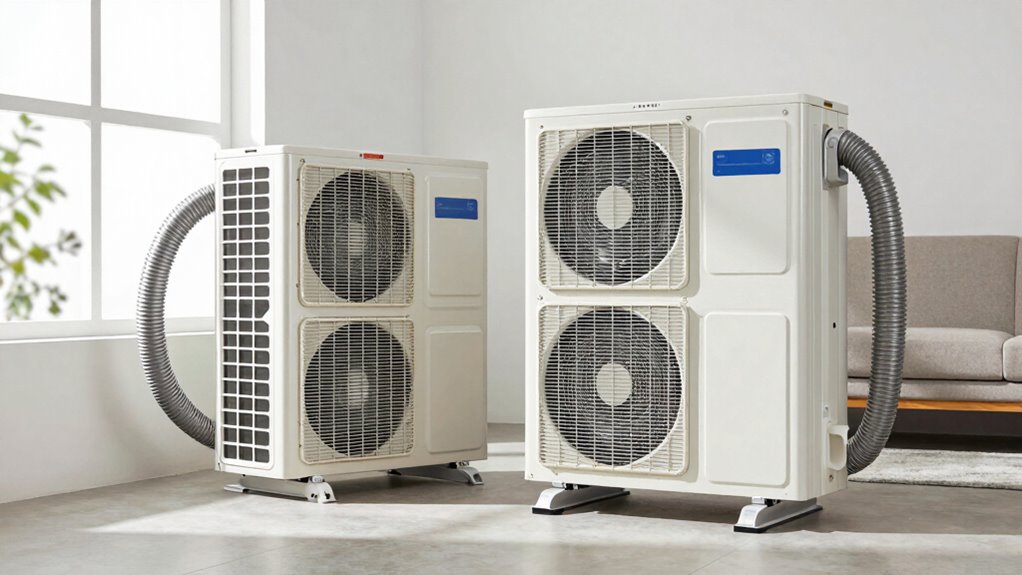

When choosing between single-hose and dual-hose portable AC units, you’ll notice that dual-hose models are more energy-efficient because they separate intake and exhaust, reducing negative pressure. Single-hose units are simpler to set up but may use more energy as they work harder to maintain cooling. Dual-hose units are larger and better for bigger spaces, while single-hose models are more compact. To discover how these differences really impact your cooling experience, keep exploring further.
Prime for Young Adults — start your free trial
Fast free delivery, streaming and member deals for eligible 18–24 year olds.
As an affiliate, we earn on qualifying purchases.
Key Takeaways
- Dual-hose units are more energy-efficient because they prevent negative pressure, reducing workload and energy consumption.
- Single-hose units are simpler to install but may cause higher energy use due to air loss inside the room.
- Dual-hose models typically handle larger spaces better and provide more consistent cooling.
- Single-hose units are more compact and easier to set up, ideal for quick, straightforward cooling needs.
- The main difference lies in airflow management: single-hose recirculates room air, while dual-hose separates intake and exhaust.
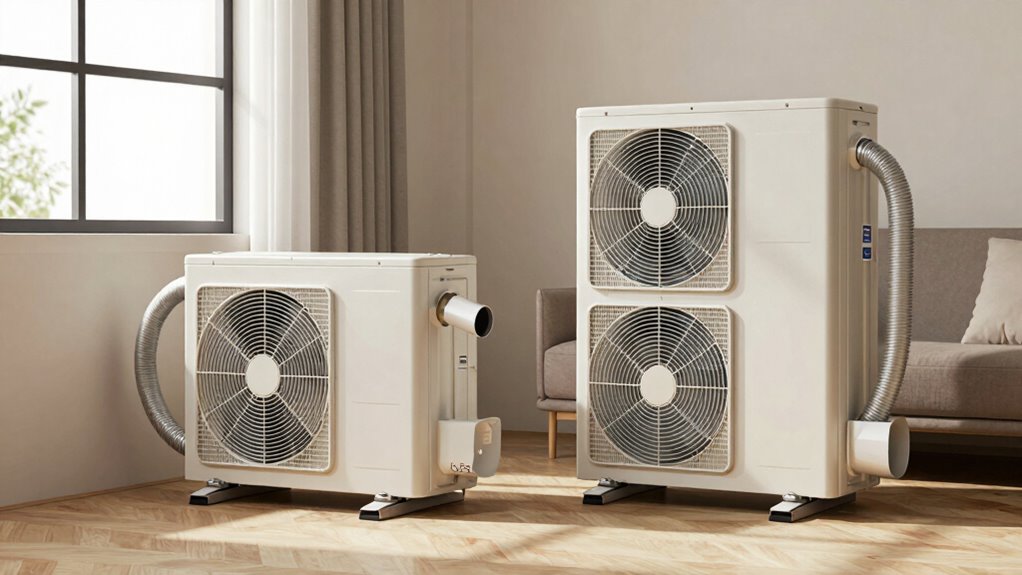
When choosing a portable air conditioner, understanding the difference between single-hose and dual-hose units is essential to find the best option for your needs. The key factors often boil down to energy efficiency and installation complexity, both of which can markedly influence your experience and long-term satisfaction. Single-hose units are generally simpler to set up and are more common, making them an appealing choice if you want quick installation. These units work by drawing air from the room, cooling it, and then venting the hot air outside through a single hose connected to a window or vent. While this setup is straightforward, it’s less energy efficient because the unit has to work harder to compensate for the negative pressure created inside the room. As a result, you might find yourself running the AC longer or using more power, which can increase your energy bills over time. Understanding the air circulation process can help you better evaluate how each type performs in real-world conditions.
In contrast, dual-hose units come with two hoses—one pulls in outside air to cool the condenser, and the other vents hot air outside. This design improves energy efficiency because it isolates the intake and exhaust processes, reducing the internal negative pressure that hampers cooling performance. Since the unit doesn’t have to draw in warm room air to cool the condenser, it can operate more effectively, often cooling larger spaces or maintaining a steady temperature with less energy. Additionally, understanding AC unit design can help you better evaluate which model suits your needs. However, this advantage comes with increased installation complexity. Dual-hose units tend to be bulkier and require more precise setup, including positioning both hoses correctly and ensuring proper venting. If you’re not comfortable with more involved installations, or if space is limited, this extra complexity might be a drawback.
Ultimately, your choice hinges on your priorities. If you want a quick, easy setup and don’t mind slightly higher energy consumption, a single-hose unit could be the way to go. But if you’re aiming for better energy efficiency and don’t mind a more involved installation process, a dual-hose model offers notable advantages. Consider your room size, how often you’ll use the unit, and your comfort with installation when making your decision. Both types have their merits, but understanding these differences helps you choose the portable AC that best fits your lifestyle and budget.
best dual-hose portable air conditioner
As an affiliate, we earn on qualifying purchases.
As an affiliate, we earn on qualifying purchases.
Frequently Asked Questions
Which Type Is More Energy-Efficient in the Long Run?
You’ll find dual-hose portable AC units are more energy-efficient in the long run. They provide better energy savings because they cool more effectively, reducing power consumption. When doing a cost analysis, consider that dual-hose models might cost more upfront but save you money over time with lower energy bills. Overall, for energy efficiency and cost savings, dual-hose units tend to be the smarter choice.
How Noisy Are Each of the Units During Operation?
You might think noise levels are negligible, but brace yourself—the sound comparison reveals differences. Single-hose units tend to be noisier because they work harder to pull in and push out air, creating more noise. Dual-hose models usually operate more quietly, thanks to better airflow. So, if peace and quiet matter, you’ll find that dual-hose units offer a calmer experience, even if they seem less “powerful” at first glance.
Can Dual-Hose Units Cool Larger Spaces Faster?
Yes, dual-hose units can cool larger spaces faster because they handle ventilation requirements more efficiently, drawing in fresh air and venting hot air simultaneously. This improves cooling speed and effectiveness. When considering portability, dual-hose units may be slightly bulkier, but their superior ventilation makes them ideal for bigger rooms. You’ll find they cool more quickly while still maintaining decent portability, especially if space and cooling efficiency are priorities.
Are There Any Maintenance Differences Between the Two Types?
You’ll find that maintenance differences between single-hose and dual-hose units are minimal, but installation can vary. Dual-hose models may be slightly more complex to set up due to extra vents, which could impact portability considerations. Both types require regular filter cleaning and occasional checks for leaks, but dual-hose units might need more attention to guarantee the hoses are properly connected for peak performance.
Do Dual-Hose Units Cost Significantly More Upfront?
Absolutely, dual-hose units tend to cost considerably more upfront than single-hose models. You’ll find the cost comparison leans towards the higher side due to their enhanced efficiency and complexity. Their installation complexity can also be a bit more involved, requiring more setup steps. While the initial investment might be steeper, many find the long-term savings in energy and cooling efficiency well worth the extra expense.
compact single-hose portable AC unit
As an affiliate, we earn on qualifying purchases.
As an affiliate, we earn on qualifying purchases.
Conclusion
So, there you have it—your quick guide to cooling conundrums. Whether you pick a single-hose or dual-hose unit, just remember: one’s like that friend who’s always a little lazy and the other’s the overachiever. Either way, you’re now armed with enough knowledge to outsmart the heat. Just don’t expect these units to turn your living room into the Arctic—unless you’re planning a polar expedition at home. Stay cool, and may your AC be forever efficient!
energy-efficient portable air conditioner
As an affiliate, we earn on qualifying purchases.
As an affiliate, we earn on qualifying purchases.
As an affiliate, we earn on qualifying purchases.
Fall Picks
fall essentials
As an affiliate, we earn on qualifying purchases.