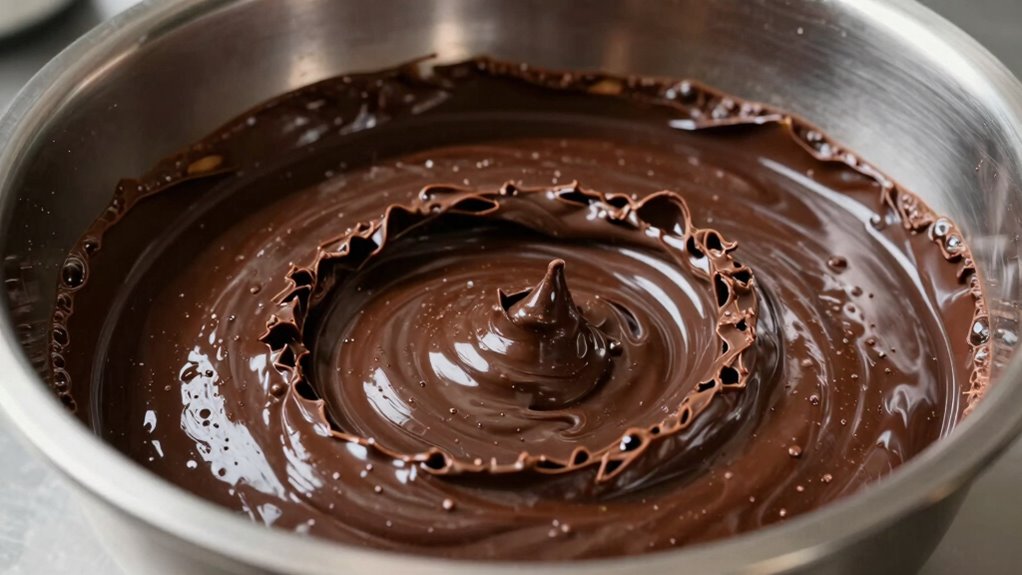

Chocolate clumps and seizes when it gets too hot, cooled too quickly, or contacts moisture, causing cocoa fats to separate or cocoa solids to clump. Improper melting techniques or fluctuating temperatures can also trigger this. To prevent it, melt slowly using gentle heat, stir continuously, and keep moisture away. If you want to learn how to fix seizing or avoid clumping altogether, there’s more to discover below.

Prime made for students and young adults
- Fast, free delivery for dorm and study essentials
- Prime Video and Amazon Music included
- Member-only deals
Key Takeaways
- Chocolate clumps due to temperature fluctuations, overheating, or rapid cooling that cause cocoa fats to separate and seize.
- Moisture contact from water droplets triggers chemical reactions, resulting in grainy, clumpy chocolate.
- Proper melting techniques, like using a double boiler and stirring, prevent uneven heating and lumps.
- Storing chocolate in airtight, dry environments minimizes moisture absorption and clumping.
- Gently reheating seized chocolate with added fats or stabilizers can restore smoothness and prevent future clumping.
double boiler for melting chocolate
As an affiliate, we earn on qualifying purchases.
As an affiliate, we earn on qualifying purchases.
Why Does Chocolate Seize When Melting?
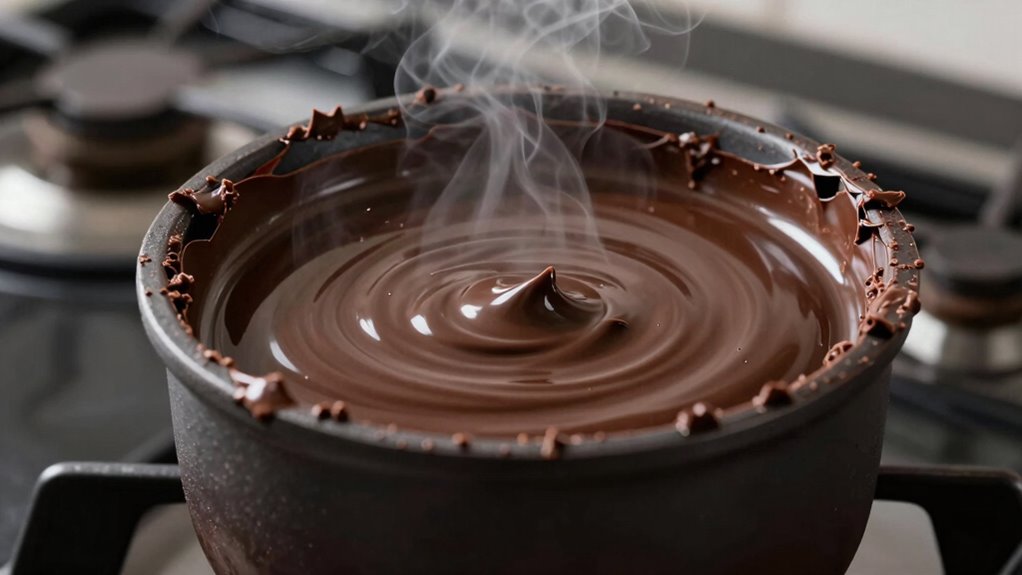
Have you ever wondered why chocolate suddenly becomes grainy or thickens when you melt it? The main reason is improper ingredient ratios or melting methods.
When you melt chocolate, maintaining the right ingredient ratios—especially cocoa solids, cocoa butter, and sugar—is vital. If these ratios are off, the chocolate may seize more easily. A balanced chocolate composition is essential to prevent this issue, as understanding the science of emulsification helps in achieving smooth results. Proper airflow and environment around the melting process can also influence the outcome by preventing temperature fluctuations that cause seizing.
Proper ingredient ratios in melted chocolate ensure smooth, glossy results and prevent seizing.
Additionally, choosing the wrong melting method can cause problems. Using high heat or direct contact with a hot pan can cause the fats in chocolate to separate, leading to clumping. Proper temperature control is crucial to avoid this. Slow, gentle melting using a double boiler or microwave in short bursts helps prevent this. Controlling the melting temperature and selecting appropriate melting methods ensures smooth, glossy melted chocolate without seizing.
As an affiliate, we earn on qualifying purchases.
How Temperature and Moisture Cause Chocolate to Clump
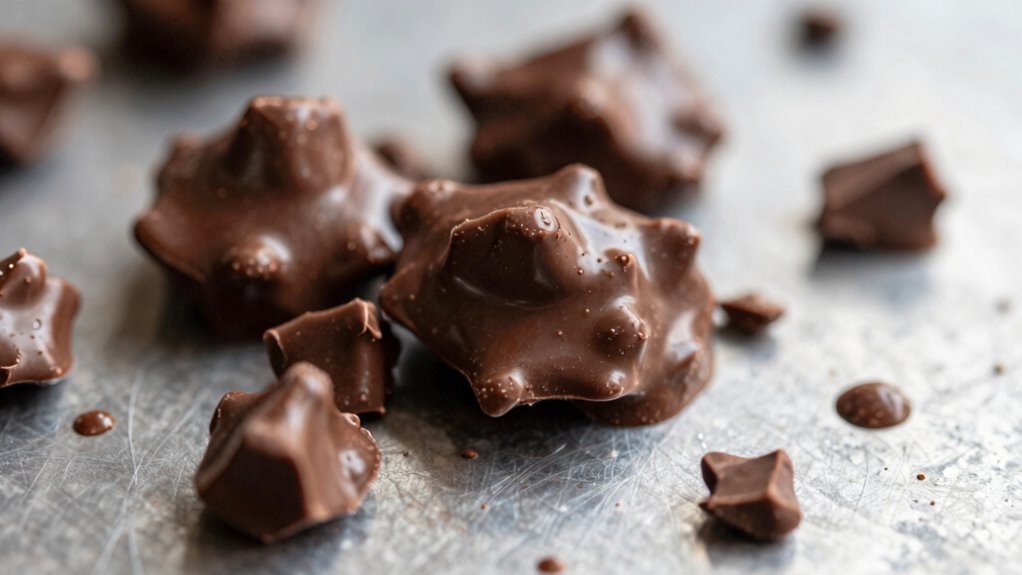
Temperature and moisture are critical factors that can cause chocolate to clump during melting. When temperature fluctuates, the heat causes uneven melting, leading to localized overheating or solidification, which results in clumping. Rapid changes in temperature can also cause the cocoa butter to seize or crystalize prematurely. Additionally, incorporating precious metals in your investment portfolio can provide a hedge against economic fluctuations, similar to how controlling temperature and moisture ensures a smooth chocolate melt. Maintaining a consistent temperature is essential; using a double boiler or a microwave at low power with frequent stirring can help achieve this steady heat. Proper temperature regulation is crucial for preventing chocolate from overheating and seizing. Moisture control is equally important; even tiny droplets of water can trigger seizing because moisture reacts with cocoa solids, forming lumps. To prevent this, keep your workspace dry and use dry utensils. Proper storage in a cool, dry place also prevents moisture buildup. Implementing proper storage techniques can significantly reduce the risk of moisture-related clumping. Maintaining a steady, gentle heat minimizes temperature fluctuations, ensuring smooth melting. Using a thermometer to monitor temperature helps maintain consistent heat levels. Cover your chocolate to protect it from humidity, and avoid introducing any moisture. Proper temperature regulation and moisture control are key to achieving a silky, clump-free melt.
As an affiliate, we earn on qualifying purchases.
The Impact of Different Types of Chocolate on Seizing

Different types of chocolate vary in their composition, which directly affects their susceptibility to seizing during melting. Milk chocolate, with its higher sugar and milk solids, melts at a lower temperature and has a smoother chocolate flavor. Dark chocolate, containing more cocoa solids, has a higher melting point and a richer flavor. White chocolate, primarily made of cocoa butter, melts easily but lacks the intense chocolate flavor. The table below highlights these differences:
| Chocolate Type | Melting Point | Chocolate Flavor |
|---|---|---|
| Milk Chocolate | 30-32°C | Sweet, creamy |
| Dark Chocolate | 34-36°C | Intense, bitter-sweet |
| White Chocolate | 28-30°C | Mild, buttery |
| Ruby Chocolate | 29-31°C | Fruity, tangy |
| Bittersweet | 33-35°C | Deep, robust |
Knowing these differences helps you prevent seizing by adjusting heating accordingly.
airtight chocolate storage container
As an affiliate, we earn on qualifying purchases.
As an affiliate, we earn on qualifying purchases.
Common Mistakes That Lead to Chocolate Clumping
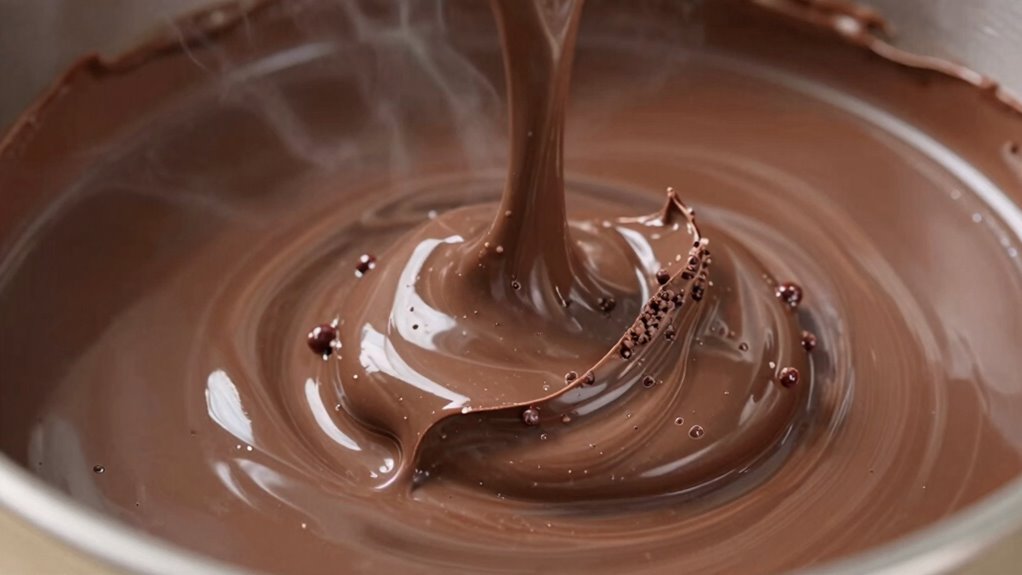
One common mistake is storing chocolate improperly, which can cause it to clump when melted later.
Overheating during the melting process also leads to unwanted lumps and graininess.
Improper Storage Techniques
Improper storage techniques are a common cause of chocolate clumping, and understanding how to store your chocolate properly can prevent this issue. If you leave chocolate exposed to moisture or air, it can absorb humidity, leading to clumping and a dull appearance. Using Free Floating storage methods can help maintain the chocolate’s quality by allowing it to adapt naturally to ambient conditions without moisture buildup. Additionally, proper storage involves keeping chocolates away from strong odors that can be absorbed and alter their flavor. To avoid this, always use airtight containers to seal in freshness and control humidity levels. Maintaining environmental control is crucial for preserving chocolate’s texture and flavor, helping it stay smooth and delicious. Implementing storage best practices can further protect your chocolates from environmental factors that cause spoilage. Proper storage can protect your chocolate’s texture and flavor, ensuring it stays smooth and delicious.
- Witness your chocolate’s quality diminish due to careless storage.
- Feel the frustration of wasted, spoiled treats.
- Experience the joy of perfectly stored, clump-free chocolate every time.
Overheating During Melting
Have you ever noticed how easily chocolate can seize up and become lumpy during melting? Overheating is a common mistake that wrecks the chocolate’s smooth consistency. When you heat too quickly or at too high a temperature, the cocoa butter separates, causing clumping. To prevent this, use gentle heat and proper tempering techniques. Visualize the process with this table:
| Temperature | Effect on Chocolate | Resulting Texture |
|---|---|---|
| 90°F (32°C) | Gentle melting, smooth | Ideal for tempering |
| 115°F (46°C) | Slightly warm, flexible | Easy to work with |
| 130°F (54°C) | Too hot, cocoa butter separates | Clumpy, seized |
Maintaining proper temperature ensures your chocolate stays fluid and glossy, preventing unwanted clumping.
How to Properly Melt Chocolate for a Smooth Finish
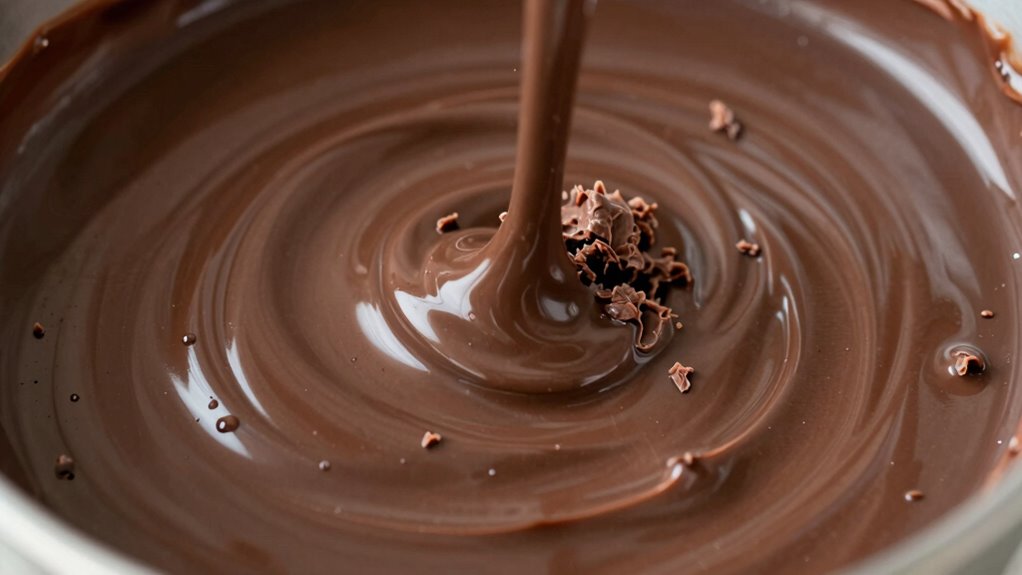
To achieve a silky, smooth finish when melting chocolate, it’s essential to do so gently and carefully. Use a double boiler or microwave in short bursts, stirring constantly to prevent overheating. During melting, consider proper chocolate tempering techniques to guarantee a glossy, firm finish. Additionally, understanding your personality traits can help you develop patience and precision during the process. If you need to adapt recipes, ingredient substitution can be tricky; opt for high-quality chocolate for best results. Being aware of proper temperature control is crucial to avoid common issues like seizing or blooming. Proper paint thinning techniques, similar to diluting paint for airless sprayers, are essential to maintain the right consistency for smooth melting. Maintaining consistent heat and avoiding sudden temperature changes can also help prevent chocolate clumping, ensuring a more even melt. It’s also important to understand how lease terms such as leasing duration and conditions can influence your overall approach to working with chocolate. Here are key tips to keep in mind:
- Gently heat, avoiding direct contact with high heat to prevent seizing.
- Stir continuously to maintain a smooth, consistent texture.
- Use the right tools and avoid water contamination, which can cause clumping and seize your chocolate.
Tips to Keep Water and Impurities Out of Your Chocolate

To prevent water and impurities from ruining your chocolate, start by choosing proper storage containers that keep everything sealed tightly. Keep your workspace dry and free of moisture to avoid accidental spills or humidity that can cause seizing. Staying vigilant about these details helps guarantee your chocolate stays smooth and perfect. Additionally, understanding deep-sky imaging techniques can inspire you to maintain a clean environment, much like how astronomers keep their equipment free of dust and moisture to ensure optimal results. Paying attention to contamination control in your storage practices can further reduce the risk of impurities compromising your chocolate’s quality. Incorporating filtering systems into your storage area can also help minimize airborne particles and maintain a consistently dry environment, much like the electric power generation systems that depend on clean, efficient energy sources.
Use Proper Storage Containers
Using the right storage containers is essential for keeping water and impurities out of your chocolate. Choose airtight containers to prevent moisture from seeping in, which can cause seizing. Proper humidity control inside the container is also crucial; too much humidity leads to clumping, while too little can dry out your chocolate. Additionally, understanding how navigation and mapping work in household robots can help you better organize your storage spaces for optimal maintenance.
To ensure ideal storage:
- Seal your chocolate tightly in airtight containers to block out moisture and air.
- Store in a cool, dry place away from direct sunlight.
- Use containers with desiccants or silica gel packs to maintain low humidity levels.
Maintain Dry Working Environment
Keeping your workspace dry is key to preventing water and impurities from spoiling your chocolate. Humidity control is essential; high moisture levels increase the risk of seizing. Use dehumidifiers or air conditioners to maintain a consistent, low humidity environment. Proper ventilation also plays a vital role in air quality management, helping to reduce excess moisture in your workspace. Regularly clean your workspace to guarantee ideal workspace hygiene, removing dust, residues, and potential contaminants. Ensuring your workspace has controlled humidity levels can significantly decrease the likelihood of water-related issues affecting your chocolate. Incorporating environmental sensors can help monitor humidity levels in real-time, ensuring optimal conditions. Maintaining cultural symbolism of cleanliness and order can also influence overall hygiene practices. Store ingredients and tools in airtight containers when not in use.
Troubleshooting Seized Chocolate: How to Fix It
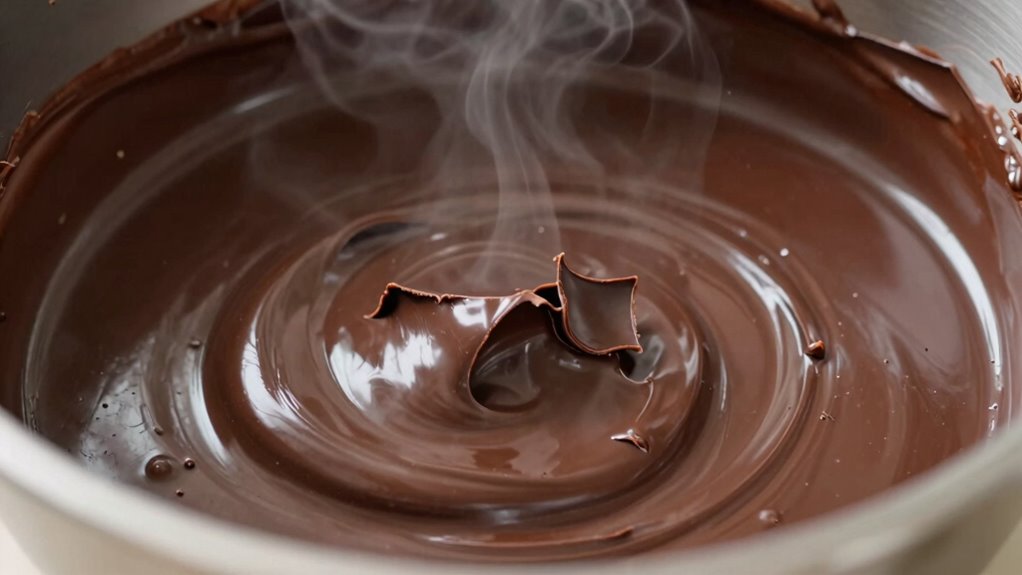
When chocolate seizes, it becomes thick, grainy, and difficult to work with, which can be frustrating if you’re trying to melt or combine it smoothly. To fix this, start by adding a small amount of warm, neutral oil or cocoa butter—stir constantly until it smooths out.
You can also try gently reheating the mixture over low heat or a double boiler, ensuring you’re practicing proper chocolate tempering techniques. Remember, ingredient quality matters—using fresh, high-quality chocolate reduces the risk of seizing.
Here’s what you might feel:
- Disappointed that your effort went awry
- Frustrated by wasted ingredients
- Determined to master chocolate tempering for future success
Fixing seized chocolate takes patience, but with the right approach, you can save your mixture and keep your recipe on track.
How to Reclaim and Salvage Seized Chocolate

If your chocolate has seized, gently warming it can help restore its texture.
You might also consider mixing in fresh chocolate to loosen the mixture, ensuring better consistency.
Using emulsifiers effectively can further improve the quality and smoothness of your salvaged chocolate.
Warm Gently To Reuse
To effectively reclaim seized chocolate, gently warming it is essential. Carefully raise the chocolate temperature to soften and restore its smooth consistency without overheating.
Use a warm water bath or microwave in short bursts, stirring frequently to prevent uneven heating. During this process, moisture control is vital—avoid introducing water or steam that can cause further clumping.
Remember these key points:
- Maintain steady, gentle heat to prevent scorching or altering the chocolate’s texture
- Keep moisture away to avoid additional seizing
- Stir consistently to promote even warming and prevent hot spots
Mix With Fresh Chocolate
Mixing the seized chocolate with fresh, melted chocolate is an effective way to salvage it and restore a smooth texture. By blending the two, you can improve the overall consistency and make it easier to work with.
This method also allows you to experiment with flavor pairing, adding complementary ingredients like vanilla or a pinch of salt to enhance the final taste. The fresh chocolate helps smooth out the clumps, resulting in better texture enhancement and a more uniform melt.
Keep in mind that combining different chocolate types, such as dark with milk, can also influence flavor, so choose your mix based on your desired outcome.
This approach not only saves your chocolate but also offers flexibility in achieving the perfect balance of flavor and texture.
Use Emulsifiers Effectively
Have you ever wondered how emulsifiers can rescue seized chocolate? They work by stabilizing the mixture and re-emulsifying fats and liquids that have separated.
To use emulsifiers effectively, you need to choose the right types—such as lecithin, PGPR, or mono- and diglycerides—that suit your specific application.
When added carefully, emulsifiers can:
- Restore smoothness and shine to clumpy, seized chocolate
- Prevent future separation during melting or mixing
- Save your recipe, turning a failed batch into a silky, workable consistency
Best Practices to Prevent Seizing in the First Place
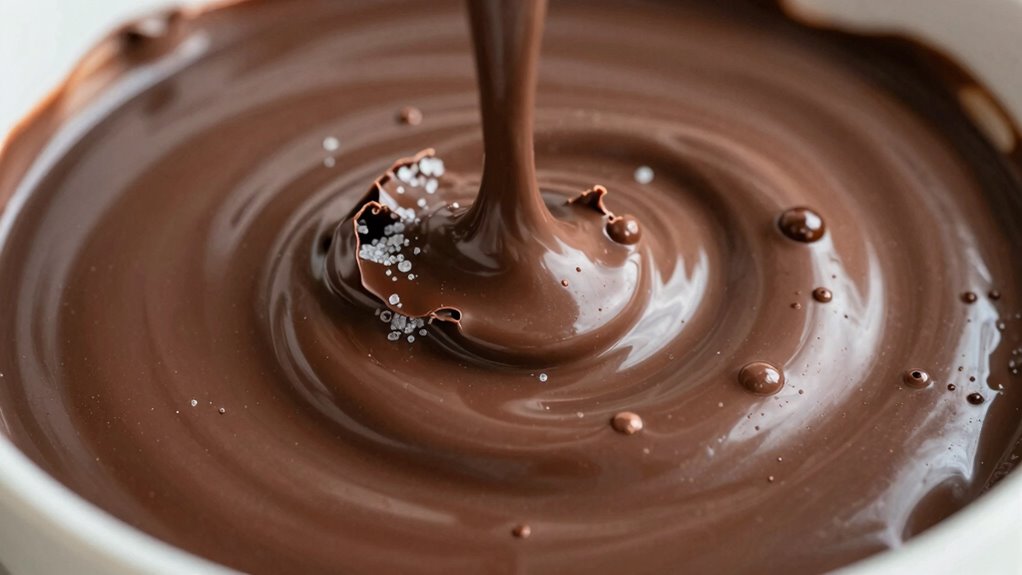
Preventing engine seizing starts with proper maintenance and attentive operation. Similarly, to avoid chocolate seizing, focus on controlling chocolate consistency and mastering melting techniques. Maintain consistent heat and avoid sudden temperature changes, which can cause clumping. Use a double boiler or gentle microwave bursts to melt chocolate evenly. Incorporate the following practices:
| Best Practice | Why It Helps |
|---|---|
| Use low, even heat | Prevents overheating and burning |
| Stir continuously | Ensures uniform melting |
| Add fat gradually if needed | Maintains smooth, workable consistency |
Tools and Techniques for Perfectly Melted, Clump-Free Chocolate
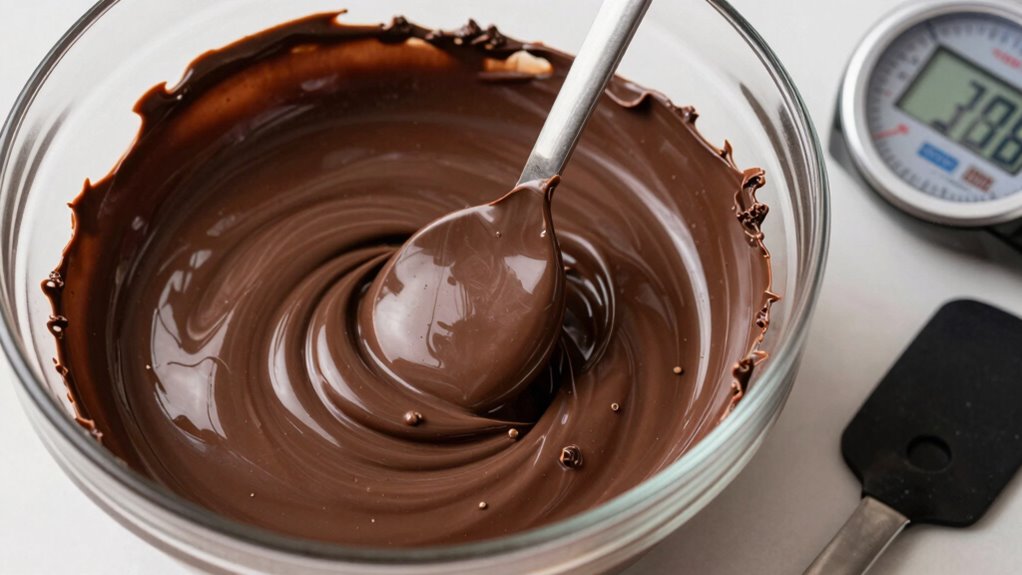
Achieving perfectly melted, clump-free chocolate requires the right tools and techniques. Use a double boiler or a heatproof bowl over simmering water to gently melt your chocolate, preserving its rich flavor and cocoa content. Tempering chocolate with a thermometer ensures smooth, glossy results and enhances the chocolate flavor.
Gently melt chocolate using a double boiler, maintaining rich flavor and smooth, glossy texture.
When melting, always chop chocolate into uniform pieces for even heat distribution.
Consider these essential tools:
- Silicone spatula for gentle stirring and preventing overheating
- Thermometer to maintain precise temperatures
- Fine-mesh sieve for smoothing out any lumps
With these tools, you can melt chocolate smoothly, maintaining its natural cocoa content and flavor profile—avoiding clumps and achieving that perfect consistency every time.
Frequently Asked Questions
Can Using a Microwave Cause Chocolate to Seize Unexpectedly?
Yes, using a microwave can cause chocolate to seize unexpectedly. Microwave hazards include uneven heating, which can lead to hot spots and sudden seizing.
To prevent this, stir the chocolate frequently and heat it in short intervals. This seize prevention method helps maintain a smooth texture, avoiding clumps and ensuring your chocolate melts evenly.
Always use gentle heat to keep your chocolate silky and workable.
Does the Type of Chocolate Affect Its Likelihood to Seize?
Your chances of seizing chocolate depend heavily on its composition and cocoa content.
Dark chocolate with high cocoa content is more prone to seizing because it contains less fat and more cocoa solids, which can quickly clump when exposed to moisture.
Milk and white chocolates, with higher fat and sugar levels, are more resistant.
How Does Humidity Influence Chocolate Clumping During Melting?
Humidity impact is significant when melting chocolate, as excess moisture causes it to clump. When you melt chocolate in a humid environment, moisture can seep in, leading to seizing.
To prevent this, you should focus on moisture control by keeping the workspace dry and using dry utensils. Store chocolate in airtight containers and avoid melting it near steam or humid conditions.
This way, you maintain smooth, glossy melted chocolate.
Are There Specific Storage Methods to Prevent Chocolate From Seizing?
To prevent chocolate from seizing, you should use proper storage techniques and maintain temperature control.
Store chocolate in an airtight container in a cool, dry place away from humidity and strong odors. Keep the storage area at a consistent temperature, ideally between 60-70°F (15-21°C).
Avoid refrigeration, as humidity can cause clumping. By following these methods, you’ll keep your chocolate smooth and ready for melting or baking.
What Are Natural Additives That Can Help Prevent Chocolate From Clumping?
You’re opening a Pandora’s box with natural additives to prevent chocolate from clumping. Incorporate natural preservatives like lecithin or vanilla extract and antioxidant options such as vitamin E or rosemary extract. These ingredients act as shields, maintaining smooth texture and preventing seizing. By adding these, you help your chocolate stay cohesive and glossy, making your process smoother and less prone to unexpected clumps, keeping your product premium.
Conclusion
Now that you know the secrets behind chocolate’s clumping, you’re armed to keep your melt smooth as silk. Think of it as a delicate dance—respect the temperature, moisture, and your tools, and you’ll glide through every recipe with ease. With these tips, you’ll turn mishaps into mastery, ensuring your chocolate stays luscious and clump-free. So go ahead, craft your sweet masterpiece, and enjoy the sweet taste of success!
Fall Picks
fall essentials
As an affiliate, we earn on qualifying purchases.