To control overspray and achieve smooth finishes with a paint sprayer, you should master spray pattern adjustment and maintain steady, controlled movements. Keep the nozzle perpendicular and regulate pressure for even coverage, overlapping each pass by about 50%. Use masking and protective gear to contain overspray. Practice on scrap surfaces to fine-tune your technique and equipment settings. With proper control and consistency, you’ll produce professional-quality results—keep exploring to perfect your spraying skills.

Prime made for students and young adults
- Fast, free delivery for dorm and study essentials
- Prime Video and Amazon Music included
- Member-only deals
Key Takeaways
- Adjust spray pattern width and pressure to minimize overspray near edges and delicate areas.
- Keep a consistent distance and steady speed for even, smooth finishes.
- Overlap passes by about 50% to ensure uniform coverage and reduce streaks.
- Use proper masking and covering to contain overspray and protect surrounding surfaces.
- Practice on scrap surfaces to develop control over spray pattern and achieve professional results.
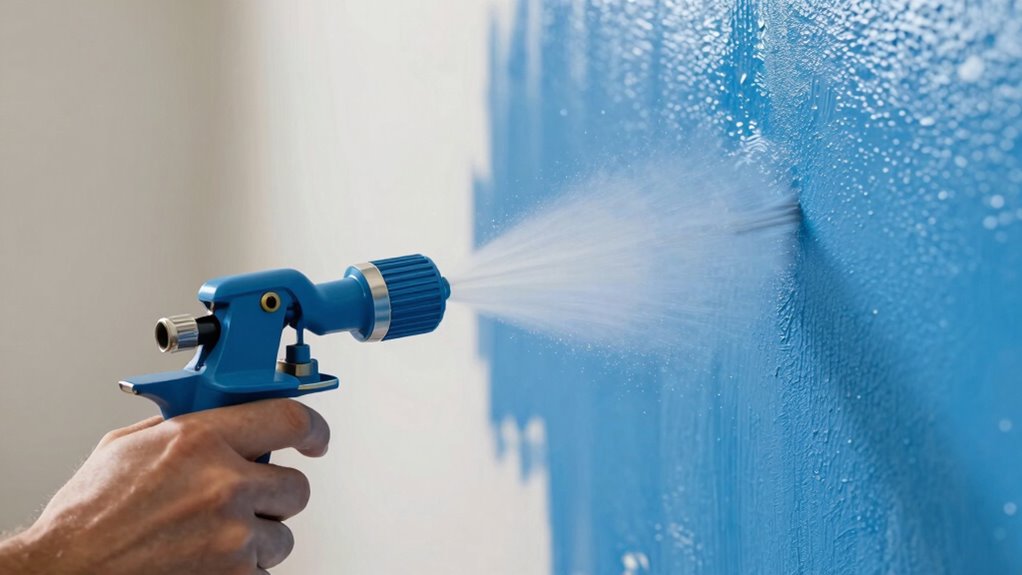
A paint sprayer is a versatile tool that can make your painting projects faster and more even. To get the most out of it, understanding how to control overspray and achieve a smooth finish is vital. One key aspect is mastering your brush techniques and understanding the spray pattern. While traditional brushes require deliberate strokes, using a sprayer involves controlling the spray pattern to ensure even coverage and minimize waste. Your goal should be to maintain a consistent distance from the surface and move steadily to keep the spray pattern uniform. If you notice uneven coverage or drips, it’s often due to inconsistent movement or improper adjustments to the sprayer. Properly adjusting the pressure and nozzle settings is essential for energy-efficient operation and optimal results. Adjusting your spray pattern is essential for precise application. Most sprayers allow you to change the width and shape of the spray, helping you target specific areas or avoid overspray. For instance, a circular or narrow pattern works well for detailed work or tight corners, while a wider pattern covers larger surfaces more efficiently. Before starting your project, it’s wise to practice on a scrap piece to get a feel for how the spray pattern behaves. This practice helps you develop the right brush techniques, such as overlapping each pass by about 50%, to prevent streaks or uneven thickness. Maintaining a steady speed and consistent distance from the surface ensures that your spray pattern remains uniform, resulting in a smooth, professional-looking finish.
Controlling overspray is one of the biggest challenges when using a paint sprayer. To minimize it, you should always wear protective gear and set your sprayer to the appropriate pressure for the material you’re using. Keep the nozzle perpendicular to the surface and move in smooth, controlled strokes. If you’re spraying near edges or delicate areas, reduce the spray pattern width or adjust the spray pressure to prevent excess material from drifting into unwanted spots. Proper masking and covering surrounding areas also help keep overspray contained. Remember, the key is to stay consistent with your technique, adjusting your distance and speed as needed. By practicing good brush techniques and mastering your spray pattern, you’ll achieve an even coating and a flawless finish, with minimal waste and overspray.
As an affiliate, we earn on qualifying purchases.
Frequently Asked Questions
How Do I Choose the Right Tip Size for My Project?
To choose the right tip size for your project, consider your project requirements and the type of finish you want. Smaller tip sizes (like 1.3 or 1.5 mm) work best for detailed work and thin coatings, while larger tips (like 2.0 or 2.5 mm) are ideal for thicker paints and broader surfaces. Match your tip size selection to the material you’re spraying and the desired coverage for a smooth, professional finish.
What Safety Precautions Should I Take When Using a Paint Sprayer?
Before you start spraying, you must prioritize safety. Wear protective gear like masks, goggles, and gloves to shield yourself from harmful fumes and overspray. Confirm proper ventilation—keep windows open or use fans—so fumes don’t build up. Always read the manufacturer’s instructions, and double-check your equipment. Stay alert, and never rush; these precautions can prevent accidents and ensure your project remains safe and successful.
How Do I Clean and Maintain My Paint Sprayer Properly?
To keep your paint sprayer in top shape, follow a regular maintenance schedule and use proper cleaning techniques. After each use, disassemble parts and rinse with the appropriate solvent, then scrub gently to remove residue. Regularly lubricate moving parts and check for clogs or wear. Clear instructions and routine upkeep guarantee smooth operation and extend your sprayer’s lifespan, making your projects easier and more professional-looking.
Can I Use My Sprayer for Different Types of Paint?
Did you know that over 60% of DIYers use their sprayers for multiple projects? Yes, you can use your sprayer for different types of paint, but check the paint compatibility first. Some coatings, like thick latex or oil-based paints, may require thinning or a different nozzle. This enhances coating versatility, letting you tackle various surfaces with ease. Always clean your sprayer thoroughly between uses to prevent clogs and guarantee peak performance.
What Environmental Conditions Affect Spray Painting Quality?
Environmental conditions greatly influence your spray painting quality. High humidity levels can cause paint to dry slowly, leading to runs or uneven finishes. Temperature fluctuations can affect how the paint adheres and cures, resulting in a less smooth surface. To get the best results, spray in stable weather, ideally with moderate humidity and consistent temperatures. Avoid painting in extreme heat, cold, or humid conditions to guarantee a professional-looking finish.
professional paint sprayer for smooth finish
As an affiliate, we earn on qualifying purchases.
As an affiliate, we earn on qualifying purchases.
Conclusion
Now that you’ve learned the essentials of overspray control and achieving those silky smooth finishes, you’re ready to tackle your next painting project like a pro. Remember, patience and proper technique are your best allies—think of it as your own personal Renaissance fair, where every brushstroke counts. With a little practice, you’ll be wielding your sprayer with the precision of a master painter, transforming your space into something truly spectacular. Happy spraying!
adjustable spray pattern paint sprayer
As an affiliate, we earn on qualifying purchases.
As an affiliate, we earn on qualifying purchases.
paint masking tape and protective gear
As an affiliate, we earn on qualifying purchases.
As an affiliate, we earn on qualifying purchases.
Fall Picks
fall essentials
As an affiliate, we earn on qualifying purchases.