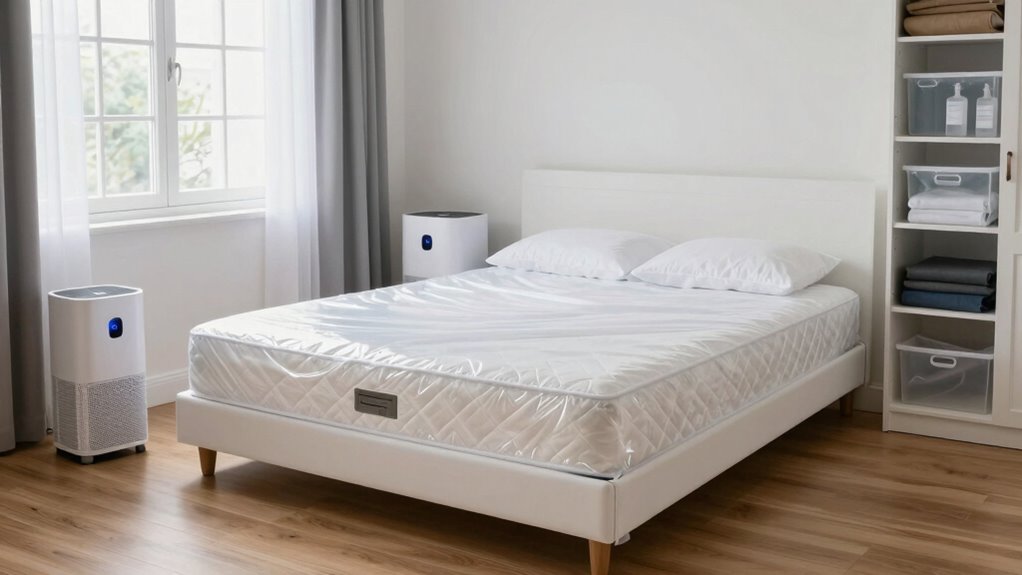

To effectively allergy-proof your bedroom, start by using a HEPA air purifier to filter airborne particles and pair it with hypoallergenic bedding like mattress encasements and pillow covers. Keep the room cool and dry with a dehumidifier, and regularly clean surfaces with a damp cloth. Maintaining a clutter-free space and replacing filters guarantees long-term results. Want to know more simple yet powerful steps? Keep exploring these high-impact allergy-proofing tips.
Key Takeaways
- Use HEPA air purifiers to effectively filter airborne allergens like pollen and dust mites.
- Encase pillows and mattresses with hypoallergenic covers to prevent dust mite and mold buildup.
- Maintain a clean bedroom by regular vacuuming, dusting, and removing clutter to minimize allergen accumulation.
- Control temperature and humidity with dehumidifiers and air conditioning to inhibit mold and dust mites.
- Wash hypoallergenic bedding weekly and replace air filters regularly for sustained allergy protection.
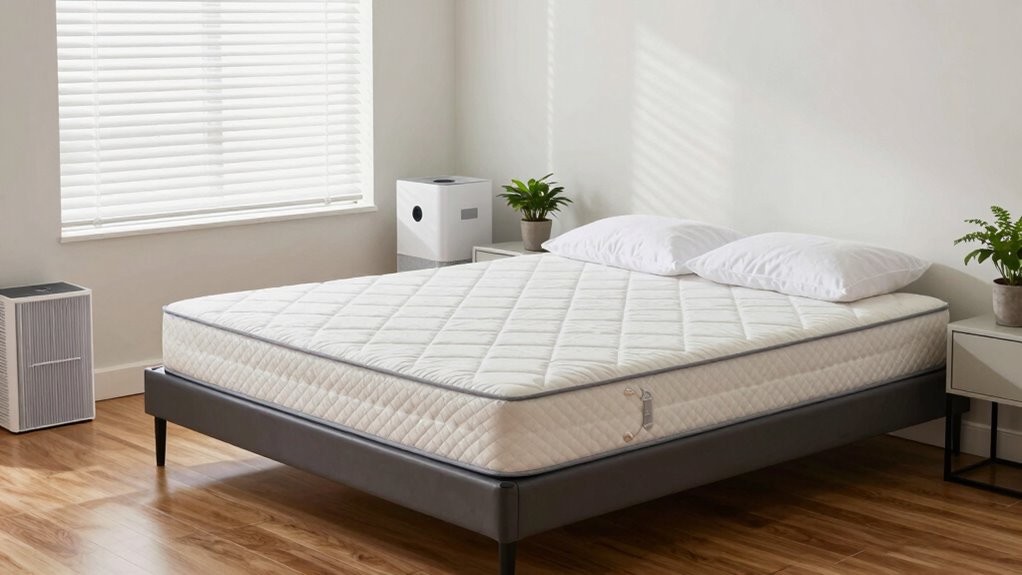
Have allergies been making it hard for you to get a good night’s sleep? If so, you’re not alone. Allergens like dust mites, pet dander, and mold can turn your bedroom into a trigger zone, disrupting your rest and leaving you exhausted. The good news is, simple changes can make a big difference. One effective step is investing in an air purifier. Understanding air purifier benefits can help you see how it filters out airborne particles, reducing allergens in the air you breathe. Look for models with HEPA filters, which trap tiny particles like pollen and dust mites, improving your sleep quality. Pairing that with hypoallergenic bedding creates a double layer of defense against allergens. Hypoallergenic bedding, including pillow covers, mattress encasements, and sheets, minimizes the buildup of dust mites and mold, which are common culprits behind allergy symptoms. These special fabrics are designed to block allergens and are easy to wash regularly, keeping your sleeping environment cleaner.
Combat allergies with HEPA air purifiers and hypoallergenic bedding for better sleep.
When you combine an air purifier with hypoallergenic bedding, you’re actively reducing the allergen load in your bedroom. This means fewer sneezing fits, less nasal congestion, and more restful sleep. Keep in mind that maintaining a clean bedroom is essential. Regularly vacuum your floors with a HEPA filter vacuum, and dust surfaces with a damp cloth. These steps prevent dust and pet dander from settling and becoming airborne again. You should also consider removing clutter and fabric items like heavy curtains or plush toys that trap allergens. Additionally, understanding air filtration systems can help you choose the most effective equipment for your needs.
Temperature and humidity control also matter. Keeping your room cool and dry discourages mold growth and dust mites. Using a dehumidifier can help maintain ideal humidity levels, typically between 30-50%. This creates an environment less hospitable to allergens and makes your hypoallergenic bedding even more effective. Remember, consistency is key. Washing your hypoallergenic bedding weekly and replacing filters on your air purifier regularly ensures you sustain the benefits.
Making these adjustments might seem small, but they have a high-impact on your overall comfort and health. By actively reducing airborne allergens with an air purifier and creating a barrier with hypoallergenic bedding, you give yourself a fighting chance against allergy symptoms. You deserve restful, allergy-free sleep, and these simple yet effective measures can help you achieve just that.

LEVOIT Air Purifier for Home Allergens Pet Hair in Bedroom, Covers Up to 1073 ft² by 56W High Torque Motor, AHAM VERIFIDE, 3-in-1 Filter with HEPA Sleep Mode, Remove Dust Smoke Odor, Core300-P, White
WHY CHOOSE AHAM VERIFIDE AIR PURIFIERS: AHAM (Association of Home Appliance Manufacturers) is an ANSI-accredited organization that sets…
As an affiliate, we earn on qualifying purchases.
As an affiliate, we earn on qualifying purchases.
Frequently Asked Questions
What Are the Best Hypoallergenic Bedding Options?
You should choose hypoallergenic bedding made from natural, breathable materials like tightly woven cotton or microfiber, which resist dust mites and allergens. Look for bed bug prevention features, such as encasements or sealed covers, to keep pests out. Regularly wash your bedding in hot water and use allergen-proof pillows and mattress covers. This combination minimizes allergens and helps prevent bed bugs, creating a healthier sleeping environment.
How Often Should I Replace My Mattress and Pillows?
Your mattress is like a trusty ship that needs regular maintenance to stay afloat. You should replace your mattress every 7-10 years to guarantee ideal comfort and prevent allergen buildup. Pillows have a shorter lifespan, ideally every 1-2 years, because they accumulate dust mites and allergens. Regularly inspect and clean your bedding, and consider mattress maintenance to keep your sleep environment fresh and allergy-free.
Can Plants Help Reduce Indoor Allergens?
Plants can help reduce indoor allergens by improving air quality and increasing humidity, which benefits allergy sufferers. Indoor plant benefits include filtering airborne toxins and encouraging natural allergy relief. Choose low-maintenance, non-flowering plants like snake plants or pothos, which don’t produce pollen. Regularly care for your plants to prevent mold and dust buildup, ensuring they contribute positively to your allergy-proofing efforts and create a healthier, more comfortable bedroom environment.
Are Air Purifiers Effective for Allergy-Proofing?
Air purifiers are effective for allergy-proofing when you choose allergy-friendly devices with HEPA filters. Don’t fall for air purifier myths that suggest they eliminate all allergens; they markedly reduce dust, pet dander, and pollen, improving your indoor air quality. Regular maintenance, like changing filters, is essential. Using an air purifier alongside other allergy-proofing tips creates a healthier, more comfortable bedroom environment for you.
What Cleaning Products Are Safest for Allergy Sufferers?
You’re better off playing it safe with chemical-free cleaners that prioritize dander control, making your bedroom a sanctuary for allergy sufferers. Look for products with natural ingredients like vinegar, baking soda, or plant-based solutions. These cleaners remove allergens without irritating your air or skin, so you can breathe easy. It’s a game changer, turning your space into a haven where allergens take a back seat and comfort takes center stage.

Set of 4 Standard/Queen AllerEase Pillow Protectors – Temperature Balancing, Allergist Recommended – Premium Breathable, Zippered Protectors
ADVANCED ALLERGY PROTECTION: AllerEase pillow protectors have tightly woven, expertly-designed fabric to prevent unhealthy household particles from collecting…
As an affiliate, we earn on qualifying purchases.
As an affiliate, we earn on qualifying purchases.
Conclusion
By allergy-proofing your bedroom, you’re creating a sanctuary where allergens hide in the shadows, not your sanctuary. Think of it as building a fortress that keeps irritants at bay, allowing you to breathe easy and sleep soundly. Small changes like washing bedding regularly and sealing vents can make a world of difference. With these simple steps, you’ll turn your bedroom into a peaceful oasis, free from allergy triggers, where restful nights feel like a gentle breeze on a warm summer night.

HOSPITOLOGY PRODUCTS Mattress Encasement – Zippered Bed Bug Dust Mite Proof Hypoallergenic – Sleep Defense System – Queen – Waterproof – Stretchable – Standard 12" Depth – 60" W x 80" L
Zippered mattress cover stretches to fit any Queen (60” x 80”) standard mattress depth from 12" to 18"
As an affiliate, we earn on qualifying purchases.
As an affiliate, we earn on qualifying purchases.

PSOS Dehumidifier, Dehumidifiers for Home, 98 OZ Water Tank, (1000 sq.ft) Quiet Dehumidifier for Basement Bedroom Bathroom with Humidity Display, Auto Shut Off, Relaxing 7 Color Ambient Light(Gray)
【Upgrade High Efficient Home Dehumidifier】PSOS dehumidifier utilize dual semiconductor condensation technology, ensuring quiet operation while effectively extracting moisture…
As an affiliate, we earn on qualifying purchases.
As an affiliate, we earn on qualifying purchases.