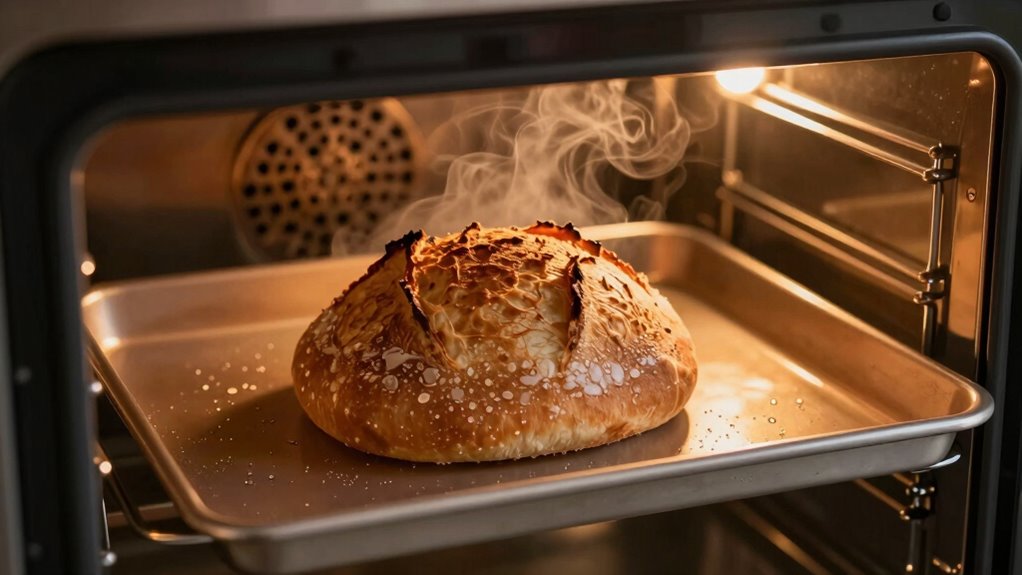
A 10°C difference in baking temperature can considerably impact your baked goods’ texture, appearance, and flavor. Higher temperatures promote quicker rising, crisper crusts, and more intense browning, while lower temps result in softer textures and more even baking. Even minor changes affect chemical reactions like caramelization and gluten development. To get consistent results, you need to monitor and adjust your oven precisely—if you want to optimize your baking, there’s more to explore.

Prime made for students and young adults
- Fast, free delivery for dorm and study essentials
- Prime Video and Amazon Music included
- Member-only deals
Key Takeaways
- Small temperature differences, like 10°C, can significantly alter browning, crust development, and overall doneness of baked goods.
- Variations of 10°C impact chemical reactions such as caramelization, Maillard reactions, and leavening efficiency.
- Even slight temperature shifts affect texture, making baked items crisper or softer than intended.
- Accurate oven temperature control ensures consistent results, as 10°C changes can lead to uneven baking or over/under-baking.
- Precise temperature adjustments optimize flavor development and appearance, highlighting the importance of exact heat management.
Why Baking Temperature Matters for Perfect Results
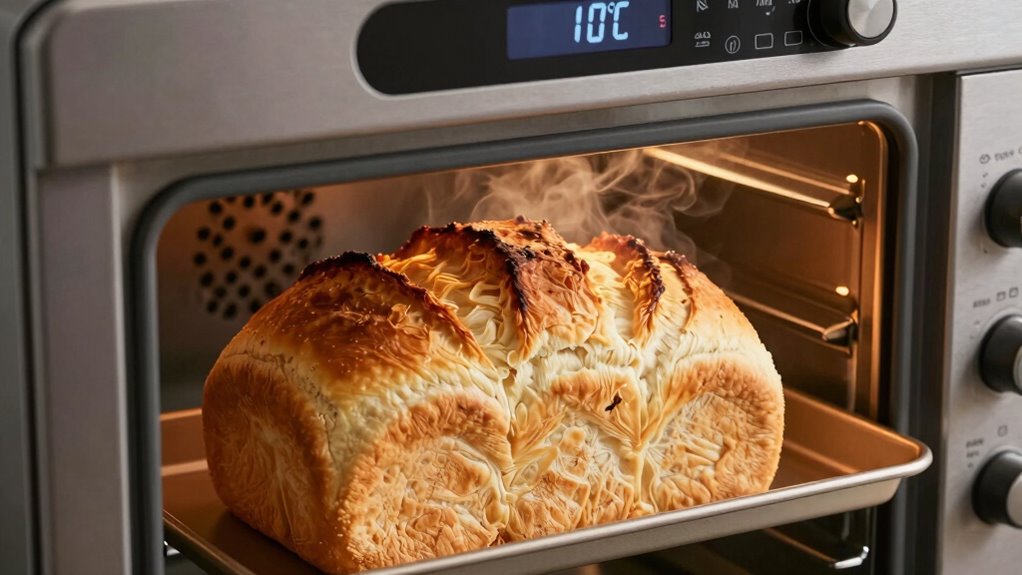
Baking temperature plays a crucial role in achieving perfect results because it directly affects how your baked goods rise, develop texture, and brown. Setting the right temperature ensures your ingredients perform at their best, especially when making ingredient substitutions. Understanding proper firewood handling can help maintain consistent oven heat and improve baking outcomes. For example, swapping sugar for honey or butter for oil can influence how quickly your baked goods cook, impacting flavor development. If you bake at too high a temperature, you might get a burnt exterior while the inside remains undercooked, compromising both appearance and taste. Conversely, too low a temperature can lead to dense textures and dull flavors. Understanding how temperature interacts with your ingredients helps you fine-tune your process, ensuring your baked goods aren’t only visually appealing but also rich in flavor.
How Temperature Affects the Texture, Rise, and Flavor of Baked Goods

Temperature directly influences how your baked goods develop their texture, rise, and flavor. A slight change can lead to noticeable differences, especially when considering ingredient substitution or aiming for specific flavor development. Proper temperature control is essential for consistent results in baking. Higher temperatures often produce a crisper crust and a quicker rise, while lower temperatures can yield a softer texture and more even baking. When you adjust the oven temperature, you’re also impacting how flavors meld and develop. For instance, temperature effects on yeast can significantly influence dough fermentation and final rise. For example, a higher temperature may enhance caramelization, intensifying sweetness and depth. Conversely, a lower temperature allows more delicate flavors to emerge. Additionally, understanding baking temperature science helps bakers optimize results and troubleshoot issues. Keep in mind that temperature variations can alter the effectiveness of ingredients like yeast or baking soda, which directly impacts rise. Proper temperature control ensures your baked goods achieve the desired texture, rise, and flavor profile.
The Science of Baking Temperature and Chemical Reactions
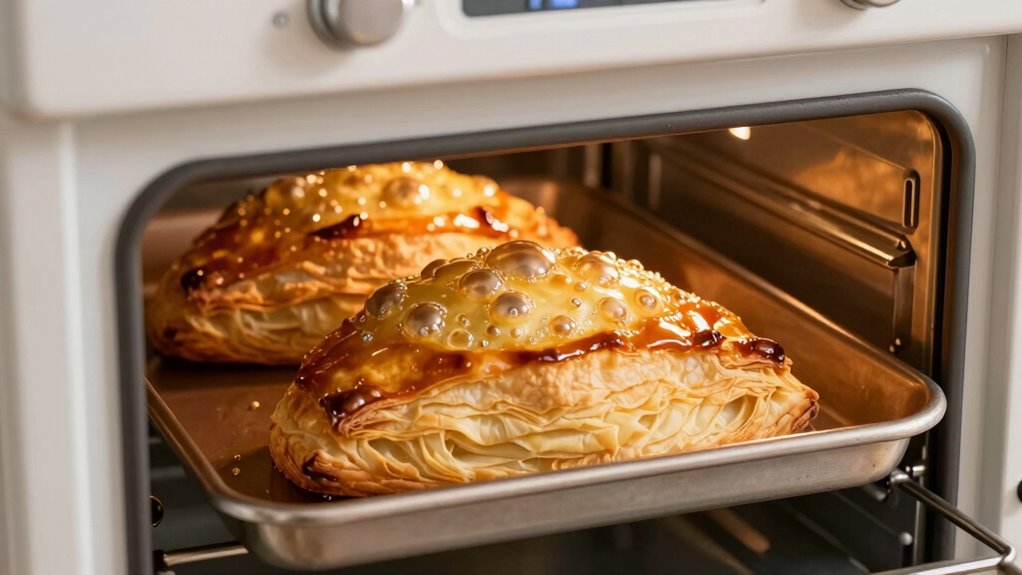
Understanding the chemical reactions that occur during baking helps explain why precise temperature control matters. Baking science reveals how heat triggers essential chemical reactions that shape your baked goods. For example, when you heat batter, proteins denature and coagulate, giving structure. Carbohydrates undergo caramelization, developing flavor and color, while starches gelatinize, providing moisture and texture. Additionally, the contrast ratio in your oven or baking environment can influence how evenly heat is distributed, affecting the final outcome. Proper temperature management also impacts ingredient interactions, ensuring that components like fats, sugars, and leavening agents work harmoniously. Maintaining a consistent temperature can also prevent overbaking, which might dry out or burn your baked items. For instance, understanding how heat transfer occurs in the oven can help you achieve more uniform results. The rate of chemical reactions during baking is highly sensitive to temperature changes, so slight adjustments can significantly affect the final product. Leavening agents like baking powder release gases at specific temperatures, causing your treats to rise. If the temperature’s too low, these reactions slow or don’t happen fully, resulting in dense or flat baked goods. Too high, and you risk burning or uneven textures. Mastering baking science ensures these chemical reactions occur effectively, leading to perfectly risen, flavorful, and well-textured baked items. Precise temperature control is the key to consistent, professional results.
How to Measure and Maintain Accurate Oven Temperatures
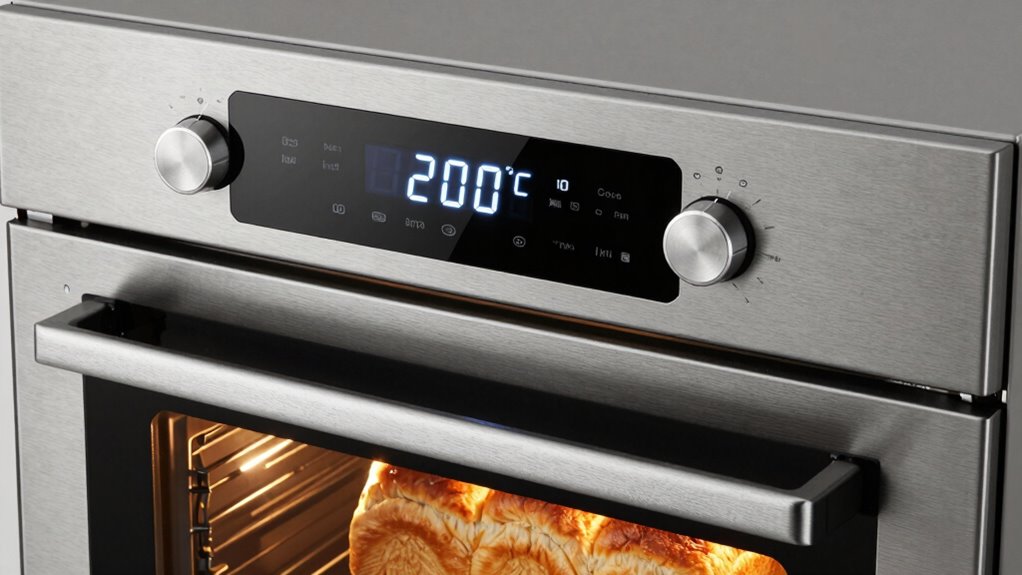
Ensuring your oven heats to the correct temperature starts with using the right tools and techniques. Begin by investing in a reliable oven thermometer to accurately gauge temperature. Regular oven calibration helps guarantee your oven’s settings match actual heat levels. Proper calibration is essential for maintaining consistent baking results. Additionally, understanding oven temperature accuracy can help prevent under- or over-baking your treats. When placing the thermometer, position it in the center of the oven, away from walls and racks, to get an accurate reading. To maintain consistent temperature, check and calibrate your oven periodically. Oven temperature stability is also influenced by how well your oven maintains heat during use. Pay attention to temperature fluctuations to identify irregularities that could affect your baking. Recognizing baking consistency issues can help you troubleshoot and improve your oven’s performance. Keep these tips in mind: – Use a high-quality oven thermometer for precise readings – Place the thermometer in the center for consistent measurements – Calibrate your oven regularly to prevent temperature drift – Avoid opening the oven door frequently during baking Following these steps helps you achieve accurate oven temperatures, leading to better baking results.
Adjusting Recipes for Hot or Cold Ovens
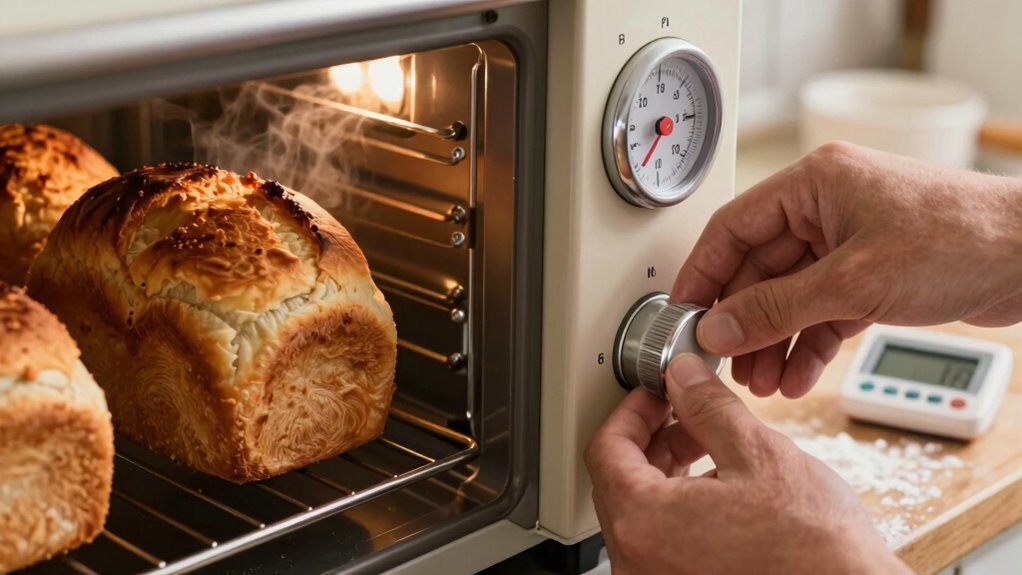
When your oven runs hotter or cooler than expected, you’ll need to adjust your baking process accordingly. Changing the baking time, tweaking ingredient amounts, or using the right equipment can help make sure your treats turn out perfect. These simple steps make it easier to compensate for oven temperature differences and achieve consistent results. Understanding oven calibration can also help you maintain accurate temperatures and improve baking consistency. Regularly monitoring your oven’s actual temperature with an oven thermometer ensures that your necessary cookies and other baked goods are cooked at the intended heat. Familiarity with kitchen tools can further aid in precise temperature adjustments and better baking outcomes, especially when using smart appliances that offer real-time temperature control features. Additionally, being aware of lease terms related to appliance rentals can help avoid unexpected charges if a rented oven requires calibration or repair.
Adjust Baking Time
If your oven runs hotter or cooler than the recipe calls for, you’ll need to adjust the baking time accordingly. Proper oven calibration guarantees accurate temperature readings, which is vital for consistent results. oven calibration ensures your oven heats accurately, reducing the need for guesswork. When your oven isn’t properly calibrated, you may need to tweak the baking time to achieve the desired doneness. Here are some ideas to help with recipe adjustments:
- Increase baking time slightly for cooler ovens to ensure thorough cooking
- Reduce baking time if your oven runs hotter to prevent overbaking
- Use an oven thermometer to monitor actual temperature for precise adjustments
- Keep notes of changes to refine future baking sessions
Additionally, understanding oven performance can help you better adapt your recipes to varying conditions. Being aware of your oven’s temperature consistency allows for more accurate adjustments and better results. Regular oven maintenance can also help preserve your oven’s performance, making your baking outcomes more predictable. Implementing proper oven care can prevent fluctuations in temperature that impact your baking. Adjusting baking time based on oven performance helps you maintain consistency and perfect your baked goods.
Modify Ingredient Ratios
Adjusting ingredient ratios is essential when your oven’s temperature consistently runs hot or cold, as it can affect how your baked goods turn out. When your oven runs hot, you may need to reduce certain ingredients like sugar or fat to prevent over-browning or dryness. Proper calibration of your oven can help you understand its true temperature, enabling more precise adjustments. Conversely, if it’s cold, increasing moisture-rich ingredients such as eggs or liquids can help achieve proper rise and texture. Modifying ingredient proportions ensures that the flavor balance remains intact, preventing overly strong or muted flavors caused by temperature discrepancies. Small tweaks in ratios can make a significant difference in texture, appearance, and taste. Consistent oven performance is key to reliable baking results, so tracking your oven’s behavior over time can help inform necessary ingredient adjustments. Pay close attention to how your baked goods respond, and adapt ingredient amounts accordingly to maintain consistent results, regardless of your oven’s quirks.
Use Proper Equipment
Using the right baking equipment is vital for compensating when your oven runs hot or cold. Proper tools help guarantee accurate heat, so your baked goods turn out perfect.
Start with a reliable baking thermometer to monitor oven temperature precisely.
Regular oven calibration is indispensable to maintain consistent heat, preventing surprises that affect texture and doneness.
Additionally, use oven-safe pans suited for your recipes to promote even heat distribution.
Consider investing in an oven thermometer if your oven doesn’t have a built-in one.
Ultimately, avoid overcrowding your oven, which can cause uneven baking.
- Use a baking thermometer to verify temperature accuracy
- Calibrate your oven regularly for consistent results
- Choose appropriate oven-safe bakeware for even heat
- Avoid overcrowding to promote even baking
Common Baking Mistakes Caused by Temperature Variations
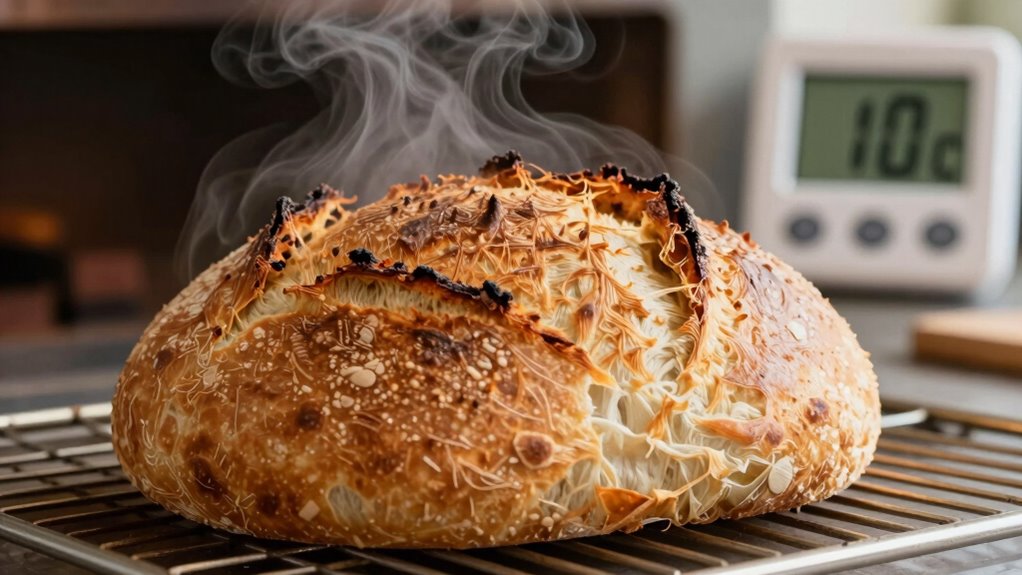
Temperature fluctuations can lead to common baking mistakes that affect your results. Warmth may cause you to overmix batter, while cold spots can leave baked goods underdone. Incorporating precise temperature controls, similar to smart home fitness technology, can help maintain consistent oven conditions and improve baking accuracy. These variations also impact texture, making it essential to monitor your oven carefully. Understanding oven temperature stability can help you achieve more reliable and delicious baked goods.
Overmixing Due To Warmth
Warmth can quickly turn a simple baking mistake into a frustrating mess, especially when it causes you to overmix your batter. When your ingredients warm up, overmixing warmth can develop gluten too much, reducing dough elasticity and resulting in dense baked goods. To avoid this, keep ingredients cool and mix just until combined.
Overmixing can also incorporate excess air, leading to uneven texture. Be mindful of:
- Using warm utensils or bowls
- Overworking batter after adding flour
- Rushing the mixing process in a warm environment
- Ignoring signs of overmixing, like a sticky or tough dough
Staying attentive to temperature helps maintain the right dough elasticity. Properly controlling warmth prevents overmixing, ensuring your baked goods stay tender and light instead of dense and tough.
Underbaking From Cold Spots
Have you ever taken a bite into a baked good only to find it undercooked in the center while the edges are done? That’s often caused by cold spots in your oven, leading to uneven baking.
Cold spots are areas where heat isn’t distributed evenly, so some parts of your baked good won’t reach the necessary temperature. As a result, the outside may be perfectly baked, but the inside remains raw or underdone.
To prevent this, avoid overcrowding your oven and rotate your tray halfway through baking. Using an oven thermometer helps identify temperature inconsistencies, so you can adjust your oven or reposition your baking rack accordingly.
Recognizing cold spots ensures your treats bake evenly, giving you a perfectly cooked result every time.
Texture Changes With Temperature
Ever notice how your cookies turn out too dense or cakes become dry even when you follow the recipe precisely? That’s because temperature influence affects texture evolution during baking. Small temperature changes can cause significant texture shifts, leading to common mistakes.
For example:
- Overheating can make baked goods dry and crumbly.
- Too low temperatures result in dense, undercooked interiors.
- Rapid temperature increases can cause cracks or uneven crumb structure.
- Insufficient heat may prevent proper rising, affecting overall texture.
Understanding how temperature impacts the texture evolution helps you avoid these pitfalls. Controlling your oven temperature ensures a consistent, desirable crumb, moistness, and structure.
Tools and Techniques to Control Baking Temperature at Home
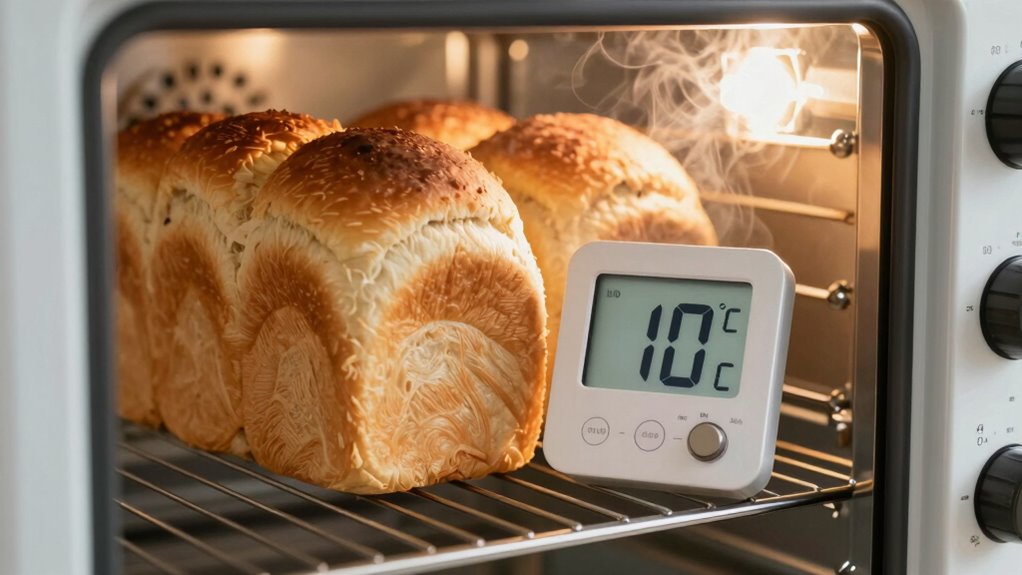
Controlling baking temperature at home is essential for achieving consistent and perfect results, and fortunately, there are several tools and techniques that can help you do just that. A reliable oven thermometer is your best tool, providing accurate readings to prevent temperature fluctuations.
Using an oven with a convection setting can promote even heat distribution, reducing hot spots that affect your bake. Adjusting ingredient substitution, like replacing butter with margarine, can influence how your baked goods respond to temperature, aiding flavor enhancement and texture control.
Additionally, preheating your oven thoroughly ensures stable temperatures from the start. If your oven runs hot or cold, consider an oven calibration to correct inaccuracies.
These methods empower you to fine-tune your baking environment, ensuring your recipes turn out just right every time.
When and Why to Use Different Baking Temperatures
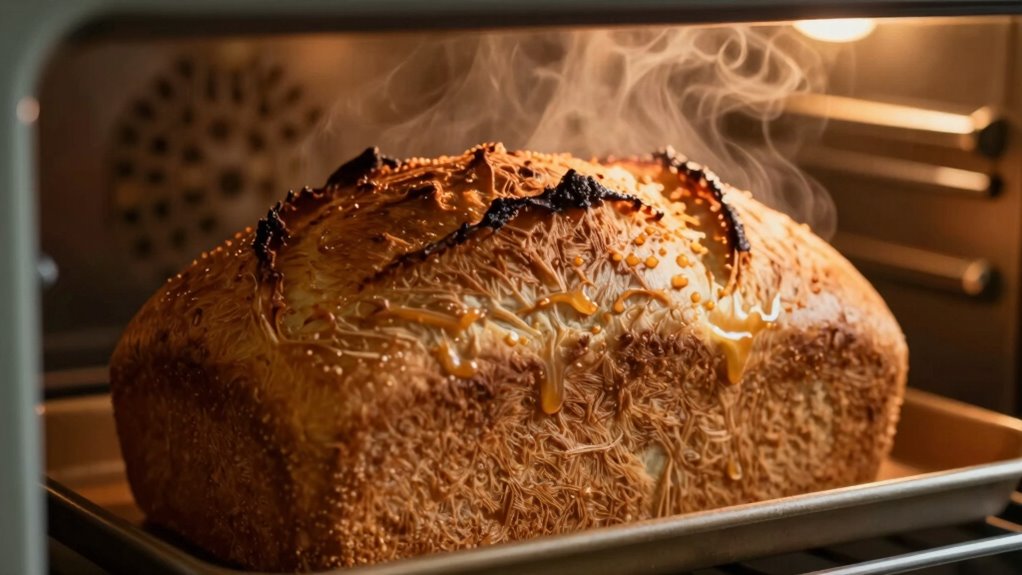
Choosing the right baking temperature is essential because it directly affects the texture, appearance, and flavor of your baked goods. Different recipes and ingredients call for specific temperatures to achieve ideal results.
Choosing the right baking temperature ensures perfect texture, appearance, and flavor in every baked good.
Use higher temperatures for crispy crusts or quick browning, and lower temperatures for even cooking or delicate items. For example:
- Cooling racks prevent overbaking by cooling baked goods evenly.
- Adjusting temperature helps compensate for ingredient substitutions that may alter baking time.
- Higher temps are ideal for bread crusts, while lower temps suit delicate cakes.
- Monitoring temperature ensures consistent results, especially with recipes requiring precise doneness.
Knowing when to tweak your oven’s heat lets you adapt recipes for better texture, flavor, and presentation, regardless of the ingredients or tools you have.
What to Do If Your Oven Runs Hot or Cold
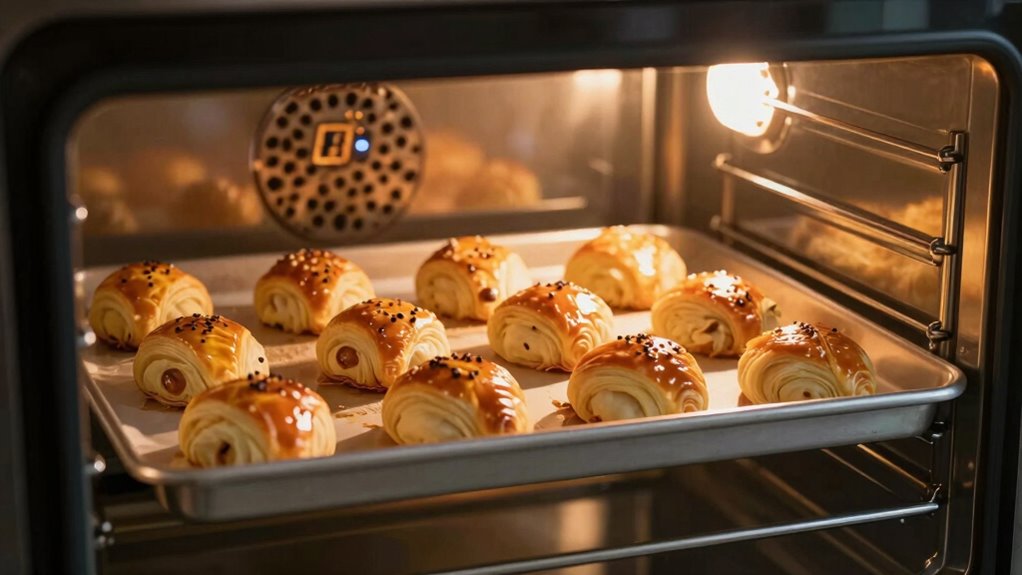
Sometimes, even when you set the perfect baking temperature, your oven may not heat accurately, leading to uneven results. To fix this, start by checking your oven’s calibration and thermometer accuracy. Use an oven thermometer to verify actual temperatures. If your oven runs hot or cold, consider recalibrating it following your manufacturer’s instructions. Regular calibration ensures consistent results and saves frustration.
| Oven Temperature | Actual Temperature |
|---|---|
| Set at 180°C | 170°C (cold) |
| Set at 200°C | 210°C (hot) |
| Adjust accordingly | Recalibrate or replace thermostat |
Frequently Asked Questions
How Does Altitude Affect Baking Temperature Requirements?
Altitude effects mean you need to make temperature adjustments when baking. As you go higher, the air pressure drops, causing liquids to vaporize faster and baked goods to rise more quickly.
To compensate, you should increase your baking temperature slightly, usually by about 10°C for every 1,000 meters above sea level. This helps make sure your baked items cook evenly and maintain their intended texture and structure.
Can Preheating Your Oven Change Baking Outcomes Significantly?
Preheating your oven can greatly improve baking results, as 75% of home ovens are improperly calibrated. Using baking thermometers ensures your oven reaches the correct temperature, preventing uneven baking.
When you preheat properly, it stabilizes the oven temperature, leading to consistent textures and flavors.
Regular oven calibration helps maintain accuracy, so investing in a good baking thermometer makes a big difference in achieving perfect baked goods every time.
What Role Does Rack Position Play in Temperature Accuracy?
Your rack position greatly influences temperature accuracy during baking. Proper rack positioning ensures even heat distribution, preventing hot spots or cold areas.
Keep in mind that your oven’s calibration affects this too; an uncalibrated oven can give false readings regardless of rack placement.
To get consistent results, adjust your rack placement based on your recipes and regularly check your oven’s calibration. This way, you optimize temperature precision for perfect baked goods.
How Do Different Oven Types Vary in Temperature Consistency?
You’ll notice that different oven types vary in temperature consistency due to factors like oven calibration and design. Traditional gas ovens often have more temperature fluctuation, making precise baking tricky.
Electric ovens generally maintain steadier temperatures but can still drift without proper calibration.
Convection ovens tend to be more uniform, but if calibration is off, fluctuations can occur.
Regularly checking and adjusting your oven guarantees consistent, accurate baking results.
Are There Specific Recipes That Require Precise Temperature Control?
Ever wonder if some recipes demand precision? Absolutely. Recipes like soufflés, custards, and delicate pastries rely on exact temperature control because ingredient sensitivity and moisture impact are critical.
Even a slight temperature shift can cause uneven rising or curdling. You must monitor your oven carefully, ensuring consistent heat, to achieve perfect results.
Without precision, the magic of these recipes might just fade into disappointment rather than delight.
Conclusion
Remember, a mere 10°C shift can turn your baking from perfect to disappointing. Think of your oven as a delicate dance partner—when tuned just right, it guides your treats to golden perfection. Keep a close eye on temperature, adjust when needed, and trust your tools. With each precise degree, you’re shaping more than just baked goods—you’re creating moments of warmth and joy that linger long after the last crumb.
Fall Picks
fall essentials
As an affiliate, we earn on qualifying purchases.