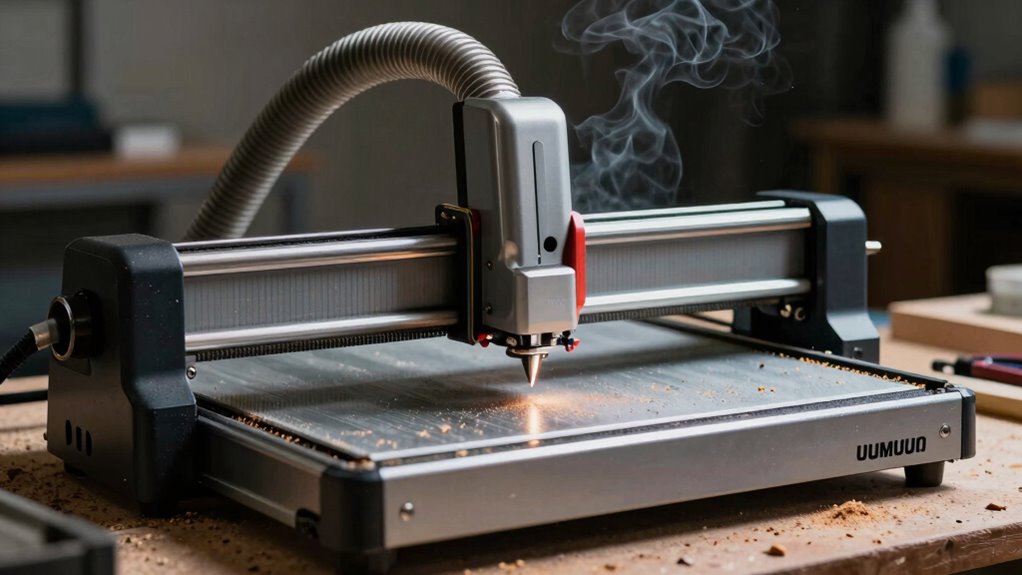

You might not realize how much ventilation your laser engraver needs, but proper planning is essential for safety. Fumes, smoke, and tiny particles can linger if you only open a window or use a small fan. Advanced air filtration systems are often necessary to trap harmful fumes and keep your workspace safe and compliant. If you want to learn more about how to protect yourself and your equipment, there’s more to explore below.

Get school and study supplies delivered free — and shop member deals
- Fast, free delivery on millions of items
- Access to Prime Big Deal Days deals on October 6–7
- Prime Video, Amazon Music and more included
Key Takeaways
- Laser engravers emit fumes, smoke, and tiny particles that require advanced filtration beyond basic ventilation methods.
- Proper ventilation planning ensures health safety and prevents long-term exposure to toxic fumes.
- Inadequate ventilation can lead to equipment damage and fire hazards due to debris and combustible fumes.
- Beginners often underestimate the need for specialized air filtration systems tailored to laser engravers.
- Regular maintenance and safety protocols are essential for effective ventilation and safe operation.
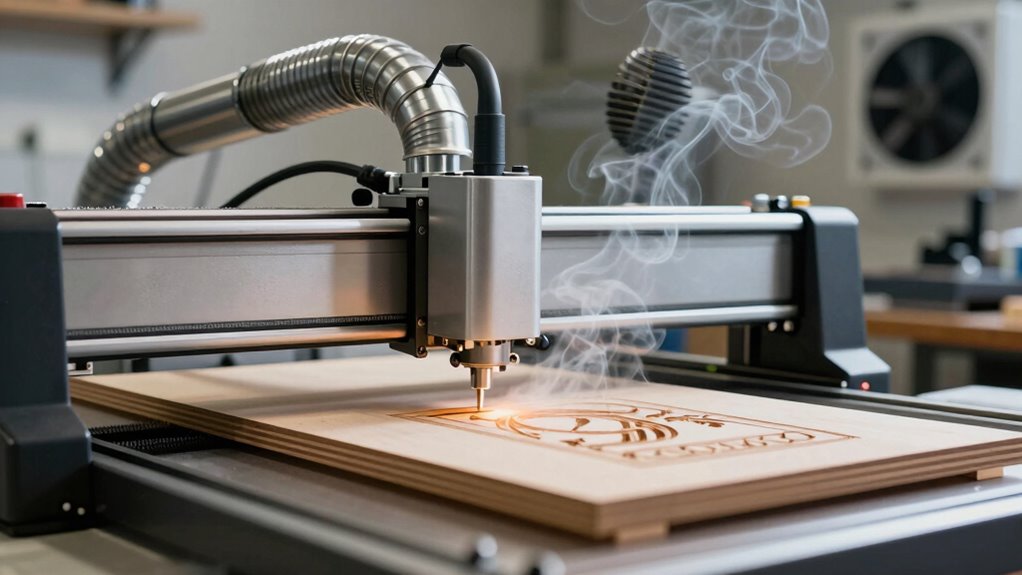
Although laser engravers are powerful tools for creating detailed designs, many users overlook the importance of proper ventilation planning. It’s tempting to focus solely on the machine’s capabilities and design quality, but neglecting ventilation can lead to serious safety issues. Proper air filtration is essential to keep fumes and particulate matter out of your workspace, guaranteeing you breathe clean air and maintain a safe environment. Without effective air filtration, dangerous fumes can accumulate quickly, posing health risks to you and anyone nearby. This makes understanding your ventilation needs a vital step before you start engraving.
Proper ventilation and air filtration are essential for safe, healthy laser engraving.
You might think that opening a window or using a small fan is enough, but in reality, these measures often fall short. Laser engraving produces volatile organic compounds (VOCs), smoke, and tiny particulate matter that can linger in the air unless properly extracted and filtered. Advanced air filtration systems designed specifically for laser engravers can trap these harmful particles, keeping your workspace safe and compliant with health regulations. Investing in a high-quality filtration unit not only protects your lungs but also maintains the quality of your work environment. Clean air promotes better visibility and reduces the risk of buildup that could impact your machine’s performance over time. Additionally, understanding the air filtration process involved can help you select the most effective system for your needs.
In addition to selecting the right air filtration system, establishing safety protocols is equally important. Always operate your laser engraver in a well-ventilated area, and never underestimate the importance of routine maintenance. Regularly inspecting and replacing filters guarantees your air filtration system functions at its best. Proper ventilation setup and adherence to safety procedures are vital in preventing accidents and ensuring consistent operation. You should also wear appropriate protective gear like masks and goggles during operation, especially when working with materials that release toxic fumes. Creating a safety protocol checklist helps keep safety measures at the forefront, reducing the chance of accidental exposure. Proper ventilation can also help prevent the fire risk associated with the accumulation of flammable fumes or debris. Additionally, understanding the air quality standards for your workspace helps ensure you stay compliant with local safety regulations.
Most beginners overlook these aspects because they’re eager to start creating. However, neglecting ventilation planning can lead to health hazards, equipment damage, and even fire risks. Proper ventilation isn’t just about compliance; it’s about safeguarding your health and ensuring your investment lasts. Think of ventilation as an essential part of your laser engraving setup, just like your design software or laser settings. It’s a vital element that, when done correctly, enhances your overall experience and keeps your workspace safe. So, before pressing that start button, take the time to plan your air filtration and safety protocols thoroughly—you’ll thank yourself later.
laser engraver air filtration system
As an affiliate, we earn on qualifying purchases.
As an affiliate, we earn on qualifying purchases.
Frequently Asked Questions
What Types of Fumes Are Produced During Laser Engraving?
During laser engraving, you produce fumes that can include volatile organic compounds, smoke, and tiny particulate matter from materials like plastics, wood, and acrylic. To guarantee safety, you need proper fume filtration systems and follow safety protocols. Ventilation is essential to remove harmful fumes effectively, protecting your health and maintaining a safe workspace. Always plan your ventilation setup carefully to avoid inhaling dangerous fumes during your engraving projects.
How Often Should Ventilation Systems Be Maintained?
Like a trusty steed in a classic film, your ventilation system needs regular care. You should check and maintain filters at least every six months to guarantee air filter effectiveness. If you notice decreased airflow or odors, consider ventilation system upgrades sooner. Regular maintenance keeps fumes at bay, protects your health, and maximizes your engraver’s performance. Don’t wait for problems—stay proactive and keep your workspace safe.
Can DIY Ventilation Solutions Be Effective for Laser Engravers?
DIY ventilation solutions can be effective for laser engravers if you use proper DIY filters and focus on air purification. You need to guarantee your setup captures fumes efficiently and maintains good airflow. While homemade filters might work in small-scale or hobby projects, they often aren’t as reliable as professional systems. Regularly check and replace DIY filters to keep air quality high, ensuring your workspace stays safe and healthy.
What Are the Health Risks of Inadequate Ventilation?
Inadequate ventilation can seriously harm your health by compromising air quality and exposing you to health hazards like fumes, particulate matter, and volatile organic compounds. Breathing these toxins regularly can cause respiratory issues, headaches, and long-term health problems. To protect yourself, make certain proper ventilation, use exhaust systems, and monitor air quality. Prioritizing ventilation is essential to prevent these risks and keep your workspace safe.
How Do I Measure Airflow Efficiency in My Setup?
You can measure airflow efficiency by using an anemometer or smoke test to check airflow in your ventilation system. Don’t assume your setup is efficient without testing—many overlook this step, risking health hazards. Conduct regular airflow measurements to identify weak spots. Proper airflow measurement ensures your ventilation system effectively removes fumes, keeping your workspace safe. Tracking ventilation efficiency helps you make informed adjustments for maximum safety and performance.
As an affiliate, we earn on qualifying purchases.
Conclusion
You might think a simple fan or window will do, but in reality, inadequate ventilation could turn your workspace into a toxic fog chamber faster than you can say “laser burn.” If you underestimate this, your lungs might start plotting a rebellion, and your projects could become smoke-filled nightmares. So, don’t just plan—you must OVER-plan your ventilation to keep your laser adventures safe, clean, and actually enjoyable. Trust me, your lungs will thank you!
As an affiliate, we earn on qualifying purchases.
air purifier for laser engraving workspace
As an affiliate, we earn on qualifying purchases.
As an affiliate, we earn on qualifying purchases.
Halloween Picks
halloween
As an affiliate, we earn on qualifying purchases.