To plan a space-efficient home gym, choose versatile, multi-purpose equipment like adjustable dumbbells and resistance bands, and store them vertically with wall-mounted racks. Arrange larger items against walls to keep the center open for dynamic moves. Maximize natural light with sheer curtains and mirrors, and add layered lighting for energy. Guarantee clear pathways for safety and flow, and create a motivating atmosphere with posters or music. Keep exploring for more tips to optimize your space!
Listen free for 30 days with Audible
Thousands of audiobooks and originals — cancel anytime.
As an affiliate, we earn on qualifying purchases.
Key Takeaways
- Prioritize multi-purpose equipment and store accessories vertically to maximize floor space efficiency.
- Arrange larger items against walls or in corners to keep the central area open for movement.
- Use foldaway or collapsible equipment to reduce clutter when not in use.
- Incorporate layered lighting and mirrors to enhance space perception and create a bright, inviting environment.
- Ensure clear pathways and adequate clearance around equipment for safe, comfortable workouts.
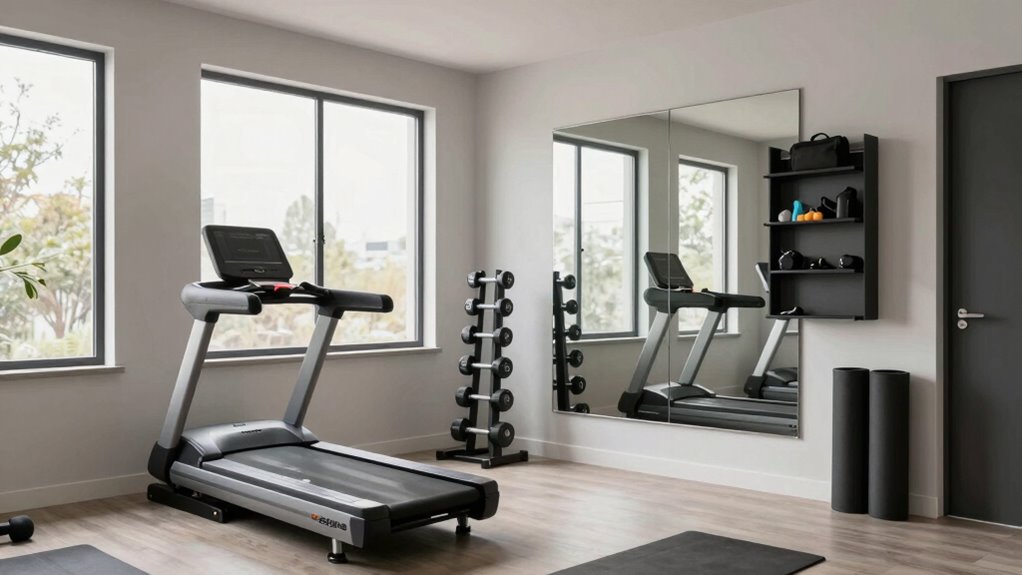
Creating a home gym that’s both functional and space-efficient can be challenging, especially if you’re working with a limited area. The key is to carefully plan your layout by focusing on smart equipment selection and lighting optimization. When choosing equipment, prioritize versatile pieces that can serve multiple purposes, like adjustable dumbbells, resistance bands, or foldable cardio machines. These items save space and provide variety, allowing you to get a full workout without cluttering your room. Avoid bulky equipment that takes up too much room unless you have a dedicated, larger area. Think vertically—wall-mounted racks for weights, hanging storage for accessories, and foldaway benches can keep your space organized and open.
Lighting plays an equally important role in maximizing your gym’s efficiency. Proper lighting not only makes your space more inviting but also enhances safety and motivation. Natural light is ideal, so if your gym has windows, keep them unobstructed and consider sheer curtains that let in light without glare. For areas with limited sunlight, invest in layered lighting solutions: overhead LED fixtures for general illumination and task lighting, like adjustable wall sconces or clip-on lamps, for specific workout zones. Bright, well-placed lighting can make a small room feel larger and more energetic, helping you stay focused during workouts. Use mirrors strategically to reflect light and create the illusion of more space, while also allowing you to check your form. Incorporating lighting optimization techniques can significantly improve your workout environment. Additionally, incorporating spatial planning principles ensures that your equipment arrangement maximizes functionality without sacrificing comfort. Incorporating ergonomic design principles can help prevent injury and improve workout effectiveness by ensuring your equipment and layout support proper movement and posture. Properly planning your layout also involves considering movement flow, so that your space remains open and safe to navigate during various exercises. To enhance the overall atmosphere, consider adding motivational elements, such as posters or a sound system, which can boost your energy levels. Lastly, think about the flow of your layout. Arrange equipment so that you have enough clearance around each piece for safe movement and exercise. Position larger items against walls or in corners to free up central space for dynamic movements or stretching. Keep pathways clear and avoid clutter by using storage solutions that fit your room’s dimensions. Combining thoughtful equipment selection with lighting optimization creates an environment where every inch works for you. You’ll find that a well-planned home gym doesn’t have to be expansive to be effective—just smartly designed. With the right choices, your limited space can become a motivating, functional area where you can work out comfortably and efficiently every day.
adjustable dumbbells space-saving
As an affiliate, we earn on qualifying purchases.
As an affiliate, we earn on qualifying purchases.
Frequently Asked Questions
What Is the Ideal Ceiling Height for a Home Gym?
The ideal ceiling height for a home gym is at least 8 feet, but 10 to 12 feet is preferable for better ceiling height considerations. Higher ceilings give you more space for tall equipment and improve air circulation tips, preventing stuffiness. Guarantee proper ventilation and consider ceiling fans to enhance airflow, making your workout environment more comfortable. Adequate ceiling height and good air circulation are key to a functional, enjoyable home gym.
How Can I Incorporate Storage Without Cluttering the Space?
You can incorporate storage by using built-in shelves and multi-functional furniture to keep clutter at bay. Add decorative lighting to highlight organized areas, making your gym inviting. Use soundproofing solutions like wall panels or mats to reduce noise without sacrificing space. Keep essentials neatly stored in labeled bins or wall-mounted racks, ensuring your workout area remains open and functional while maintaining a clean, stylish look.
Are Foldable or Retractable Equipment Options Worth Considering?
Are foldable or retractable equipment worth considering? Absolutely! Think of portable mats and adjustable weights as your gym’s secret agents—ready to hide away when not in use and spring into action when needed. They save space, keep things tidy, and make your workouts versatile. Plus, you’ll impress friends with your high-tech, space-saving setup—who knew gym equipment could be so sneaky and smart?
How Do I Ensure Proper Ventilation in a Small Gym Area?
To guarantee proper ventilation, focus on good lighting arrangements and strategic airflow. Install windows or vents to promote fresh air, and consider a ceiling fan for constant circulation. Use breathable flooring choices like rubber or foam mats, which help regulate temperature and prevent stuffiness. Keep the space uncluttered for better airflow, and add a portable air purifier if needed. These steps make your small gym comfortable and well-ventilated.
What Safety Measures Should I Implement in My Home Gym?
You should prioritize safety by ensuring proper lighting placement so you can see clearly and avoid accidents. Use durable, non-slip flooring materials like rubber to prevent slips and cushion impacts. Keep equipment well-maintained, and clear walkways to prevent tripping. Install mirrors thoughtfully to monitor form, but avoid overcrowding. Regularly check for hazards, and make sure your space is well-ventilated for fresh air, creating a safe, effective workout environment.
As an affiliate, we earn on qualifying purchases.
Conclusion
By carefully planning your home gym layout, you can maximize every square foot and create an efficient workout space. Remember, a well-designed gym boosts motivation and helps you stay consistent. Did you know that people who set up dedicated workout areas are 30% more likely to stick with their routines? So, invest a little time in your layout, and you’ll enjoy a more functional, inspiring space that encourages you to reach your fitness goals every day.
As an affiliate, we earn on qualifying purchases.
As an affiliate, we earn on qualifying purchases.
NFL season / tailgating Picks
team gear
As an affiliate, we earn on qualifying purchases.