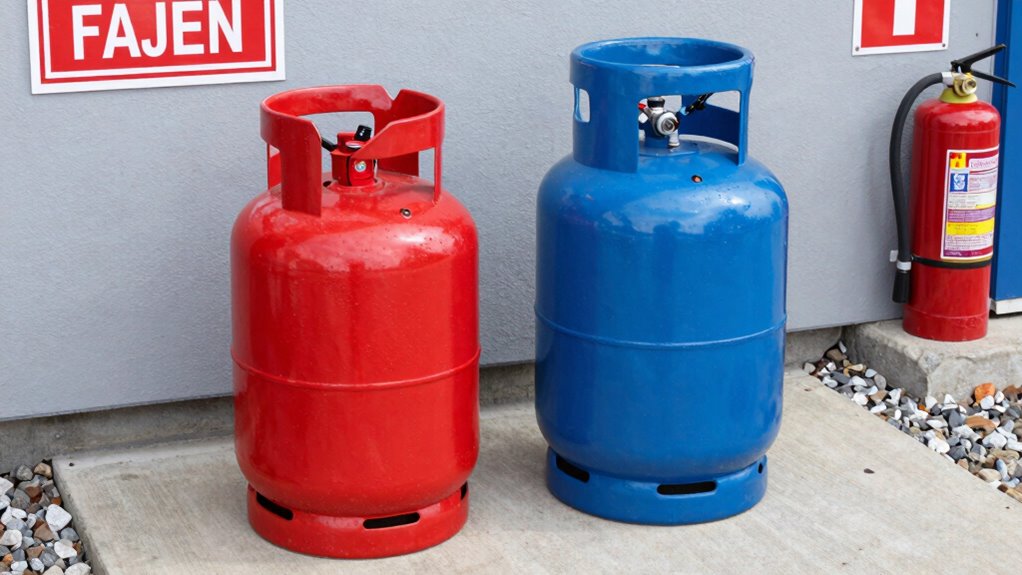

To store gasoline and propane safely, use approved containers made of steel or high-density polyethylene that are clearly labeled and designed for fuel. Store them in a cool, dry, well-ventilated area away from heat sources, direct sunlight, and ignition paths. Make certain containers are tightly sealed when not in use and regularly inspect them for leaks or damage. Proper ventilation prevents vapor buildup, reducing explosion risks. Following these safety tips can protect your property and loved ones—learn more to ensure you’re fully prepared.
Key Takeaways
- Use approved, clearly labeled containers made of steel or high-density polyethylene designed for fuel storage.
- Store fuels in a cool, dry, well-ventilated area away from heat, flames, or direct sunlight.
- Ensure containers are tightly sealed when not in use to prevent vapor escape and leaks.
- Install vents or exhaust fans to direct vapors outside and prevent buildup of flammable fumes.
- Regularly inspect containers for corrosion, leaks, or damage, and replace compromised containers immediately.
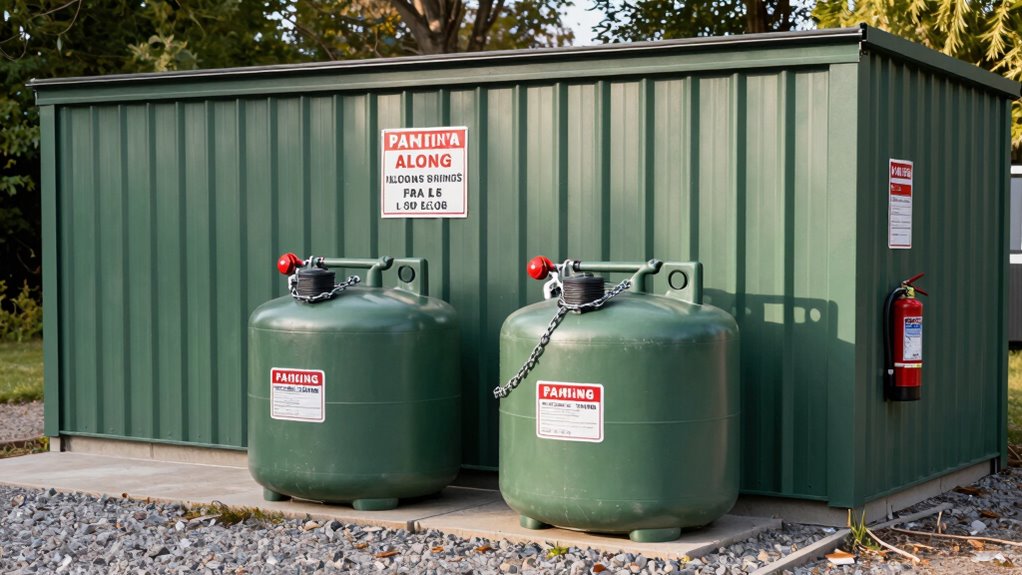
Have you ever wondered how to safely store fuel for your home or business? Proper storage is vital to prevent accidents, fires, or health hazards. The first step is understanding the importance of choosing proper container materials. Not all containers are suitable for storing gasoline or propane. You need containers made specifically for flammable liquids, typically constructed from approved materials like steel or high-density polyethylene. These materials are designed to withstand the corrosive nature of fuels and prevent leaks. Using the right containers also means ensuring they are labeled clearly as approved for fuel storage, which adds an extra layer of safety. Avoid using makeshift or unapproved containers, such as old paint cans or plastic bottles not rated for flammable liquids, as these can crack, leak, or fail unexpectedly.
Once you’ve selected the proper container materials, you must pay close attention to ventilation requirements. Proper ventilation is essential because fuels like gasoline and propane emit vapors that can build up and create explosive atmospheres if trapped. When storing fuels inside a building or enclosed space, ensure there’s adequate airflow to prevent vapor accumulation. This might involve installing vents or exhaust fans that direct fumes outside, reducing the risk of fire or explosion. For outdoor storage, choose a location with good airflow and avoid areas where vapors could be trapped, such as near walls or under eaves. Keeping containers away from sources of ignition, heat, or direct sunlight further minimizes risks.
In addition to container choice and ventilation, you should always store fuels in a cool, dry, well-ventilated area, away from living spaces and sources of heat. Proper container materials combined with good ventilation dramatically lower the chance of dangerous vapors building up or leaks occurring. Regular inspections are also essential; check for corrosion, leaks, or damage to the containers, and replace any compromised ones immediately. Always keep fuel containers tightly sealed when not in use, and never store more fuel than you need for your intended purpose. Proper storage practices not only protect your property but also safeguard your health and that of others around you. By paying attention to these key elements—appropriate container materials and ventilation—you create a safer environment for storing gasoline and propane, giving you peace of mind and reducing the risk of accidents. Additionally, understanding fire safety protocols related to fuel storage can further help prevent potential hazards.

GarveeTech 30 Gallon Fuel Caddy,Fuel Storage Tank with Manual Transfer Pump,Gasoline Diesel Fuel Container for Cars, Lawn Mowers, ATVs, Boats, More, Orange
High-Capacity Fuel Storage:This 30-gallon fuel caddy is designed to handle large refueling tasks with ease. Its durable stainless…
As an affiliate, we earn on qualifying purchases.
As an affiliate, we earn on qualifying purchases.
Frequently Asked Questions
Can I Store Gasoline Indoors Safely?
You shouldn’t store gasoline indoors because it’s highly flammable and produces dangerous fumes. If you must, guarantee proper indoor ventilation to prevent gas buildup and follow strict fire safety measures, like keeping it in approved containers away from heat sources or electrical outlets. Always store gasoline in a well-ventilated, cool, and secure area, and never use or handle it near open flames or sparks.
How Long Can Gasoline Be Stored Without Degradation?
Think of gasoline as a delicate dance partner—its fuel stability can fade over time if not cared for properly. Generally, you can store gasoline for about 3 to 6 months without significant degradation. After that, its quality declines, risking engine issues. To maximize your storage duration, keep it in a sealed, cool, and stable environment, and consider fuel stabilizers to extend its shelf life.
Are There Special Considerations for Storing Propane Outdoors?
When storing propane outdoors, you need to consider ventilation requirements and outdoor security. Make certain the tank is in a well-ventilated area to prevent gas buildup, and keep it upright to avoid leaks. Secure the tank against theft or vandalism, and store it away from heat sources or open flames. Regularly inspect for leaks or damage, and ensure the area remains clear of debris to maintain safety.
What Are the Signs of Fuel Contamination?
You notice strange engine performance or difficulty starting—these are signs of fuel contamination. Conduct a fuel test to check for water, debris, or microbial growth. Contamination symptoms include discoloration, a foul smell, or a gummy residue. Keep an eye on your stored fuel regularly; any change could be a warning. Detecting these signs early helps prevent engine damage and costly repairs, so stay vigilant and test your fuel often.
How Should I Dispose of Old or Unused Fuel?
When you have old or unused fuel, don’t pour it down the drain or onto the ground. Instead, take it to a certified hazardous waste facility for proper disposal. Many communities offer fuel recycling programs or special collection events. Handling fuel as hazardous waste guarantees safety and environmental protection. Never attempt to burn or dump it yourself, as improper disposal can cause fires, pollution, or health hazards.

Rv Propane Regulator 2 Tank Hoses, LP Gas Regulator 2-Stage Auto Changeover Kit, Dual Tank Hoses with Propane Tank Gauge, Two-Cylinder Connection Setup for Camper & Trailer Gas Systems.
Propane Regulator Rv Propane Regulator 2 Tank Hoses: RV propane regulator and propane hose all fitting connectors made…
As an affiliate, we earn on qualifying purchases.
As an affiliate, we earn on qualifying purchases.
Conclusion
Remember, storing gasoline and propane safely keeps your home and loved ones protected. Always use approved containers, keep them in cool, well-ventilated areas, and stay vigilant—think of it as guarding your castle’s treasure. Don’t forget, a little common sense now prevents a fiery dragon later. By following these simple steps, you’re acting like a modern-day knight, safeguarding your kingdom from potential hazards and ensuring peace of mind in your castle of comfort.

VEVOR Flammable Safety Cabinet 43.1 x 18.1 x 50.1, Cold-Rolled Steel Flammable Liquid Storage Cabinet 34 Gal with 2 Adjustable Shelves/2 Manual Closing Doors for Industrial Use, Yellow
Security in Every Detail: Our flammable safety cabinet features ventilation holes that effectively reduce the buildup of volatile…
As an affiliate, we earn on qualifying purchases.
As an affiliate, we earn on qualifying purchases.

VP Racing 3572-CA Motorsport Jug – Orange, 5.5 Gallon Racing Fuel Jug, High Density Polyethylene
NON-FUEL STORAGE USE: Designed for non-fuel applications, this 5.5 gallon jug is ideal for storing and transporting automotive…
As an affiliate, we earn on qualifying purchases.
As an affiliate, we earn on qualifying purchases.