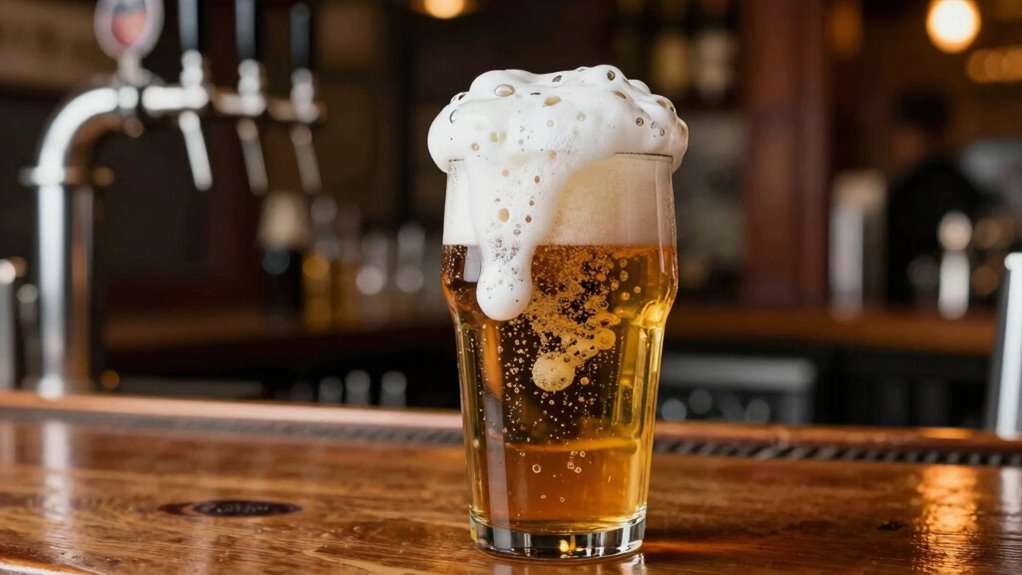

If your beer foams too much, it’s often caused by improper pouring, dirty glasses, or serving it at the wrong temperature. Pour gently at 45°, and make sure your glass is clean and cold to reduce foam. Poor storage and rough handling can also release excess CO2, leading to excessive foam. Knowing these common causes helps you control it better. Keep going, and you’ll discover more ways to perfect your pour and enjoy your beer.
Listen free for 30 days with Audible
Thousands of audiobooks and originals — cancel anytime.
As an affiliate, we earn on qualifying purchases.
Key Takeaways
- Improper pouring technique, such as pouring too quickly or at the wrong angle, causes excess foam formation.
- Dirty glasses with residues or grease promote rapid CO2 release, increasing foam.
- Serving beer too cold destabilizes carbonation, leading to excessive foam.
- Poor storage conditions can alter carbonation levels, causing over-foaming when poured.
- Residual soap or residues on glass surfaces act as nucleation sites, triggering excessive foam.
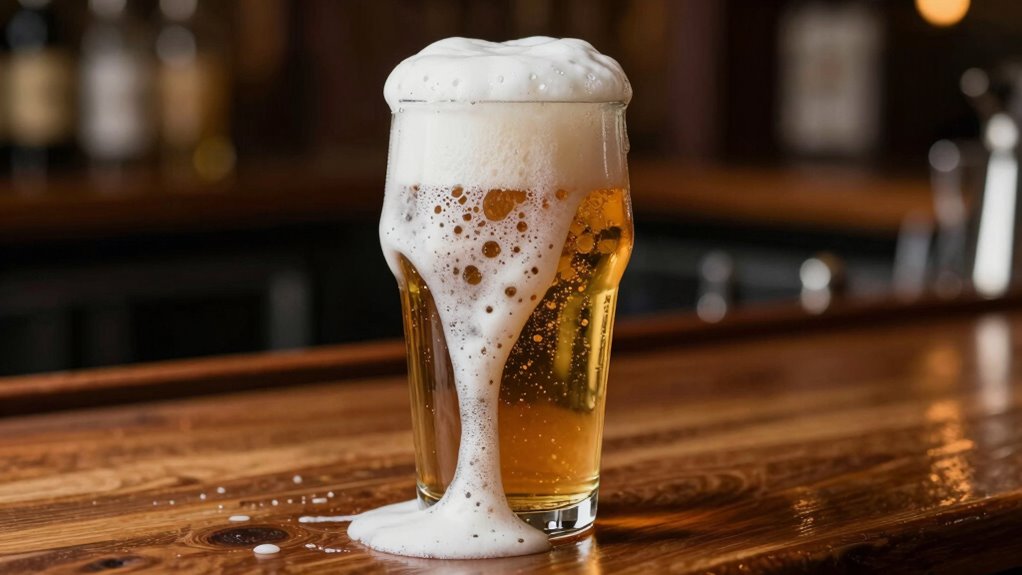
Beer foaming can be caused by a variety of factors, many of which are related to how the beer is poured, stored, or handled. One of the most common issues is your pouring technique. If you pour the beer too quickly or at the wrong angle, it can create excess agitation, which releases more carbon dioxide than necessary. To minimize foam, you should tilt the glass at a 45-degree angle and pour gently down the side. As the glass fills, gradually straighten it to allow a steady flow of beer straight into the center. This method helps control the formation of foam and prevents it from overflowing. Practice makes perfect, and with a bit of patience, you’ll find your pours produce just the right amount of head—enough to enjoy the aroma without creating a mess.
Another essential factor is glass cleanliness. Dirty glasses, especially those with residues of grease, detergent, or dust, can considerably impact how beer foams. Residue on the glass acts as a nucleation site, encouraging rapid CO2 release and resulting in excessive foam. That’s why it’s vital to rinse your glasses thoroughly before pouring. Use cold water and avoid using soap unless it’s specifically meant for glassware, as leftover soap film can also cause unwanted foaming. Properly cleaned glasses are free of oils and particles that disrupt the beer’s natural carbonation, leading to a smoother pour and controlled foam. If you notice persistent foaming, inspect your glass for any spots or residues and give it a good rinse.
Temperature also plays a part here. Serving beer too cold can cause the carbonation to be less stable, leading to more vigorous foaming when poured. Conversely, if the beer is too warm, the CO2 escapes too quickly, creating excessive foam. Ideally, store your beer at the recommended temperature and pour it into a chilled, clean glass. This combination guarantees the beer’s natural carbonation is preserved and released gradually, reducing the chances of a foamy mess. Additionally, proper storage of beer can help maintain its carbonation and reduce foaming issues, ensuring a better pouring experience.
As an affiliate, we earn on qualifying purchases.
Frequently Asked Questions
Can Temperature Affect Beer Foam Levels Significantly?
Yes, temperature substantially affects beer foam levels. When you don’t maintain proper temperature control, warm beer tends to produce excessive foam during pouring. Cooler beer, achieved through effective beverage cooling, results in a smoother pour with less foam. To minimize foaming, guarantee your beer is chilled appropriately before serving, as maintaining ideal temperature helps control foam and enhances the overall drinking experience.
Does the Type of Glass Influence Foam Formation?
Yes, the type of glass influences foam formation. A glass with a proper shape, like a tulip or snifter, promotes better foam retention by encouraging carbonation release and aroma preservation. Additionally, if your glass isn’t clean, residual oils or dirt can prevent foam from forming well, causing it to dissipate quickly. Always use a clean, appropriately shaped glass to enhance beer foam and enjoy a richer drinking experience.
How Does Beer Age Impact Its Foaming Properties?
As beer ages, its foaming properties diminish due to beer oxidation and flavor deterioration. You’ll notice less stable foam because oxidation breaks down proteins and compounds that help create and hold foam. Over time, these changes make the beer less lively and more flat, reducing its ability to produce a thick, lasting head. To maintain *best* foaming, drink your beer fresh and store it properly to slow down aging effects.
Can Carbonation Levels Be Adjusted to Reduce Foam?
You can definitely adjust carbonation levels to reduce foam. Studies show that lowering CO2 pressure by just 1-2 psi can decrease foam formation by up to 30%. Focus on carbonation control to achieve ideal levels for your beer style, helping with foam reduction. By carefully managing carbonation, you prevent excessive foaming, ensuring a smoother pour and better drinking experience. Experiment with your tap settings to find the perfect balance for less foam.
Is Excessive Shaking Before Pouring a Common Cause of Foam?
Yes, excessive shaking before pouring is a common cause of too much foam. When you use the shaking method, you introduce extra air into the beer, which creates more bubbles. Instead, focus on a gentle pouring technique, tilting the glass and pouring slowly down the side. This helps control the release of carbonation and reduces foam, ensuring you enjoy a smoother, less foamy beer experience.
As an affiliate, we earn on qualifying purchases.
Conclusion
Next time your beer foams excessively, remember these common causes. For example, if your glass was too warm, it can create extra foam, just like it did for Sarah during her backyard party. By ensuring your glass is clean and cold, and pouring gently, you can enjoy a smooth pour every time. Don’t let foam ruin your moment—understanding these causes helps you pour the perfect beer, every time. Cheers to better brews!
beer temperature control thermometer
As an affiliate, we earn on qualifying purchases.
As an affiliate, we earn on qualifying purchases.
As an affiliate, we earn on qualifying purchases.
NFL season / tailgating Picks
team gear
As an affiliate, we earn on qualifying purchases.