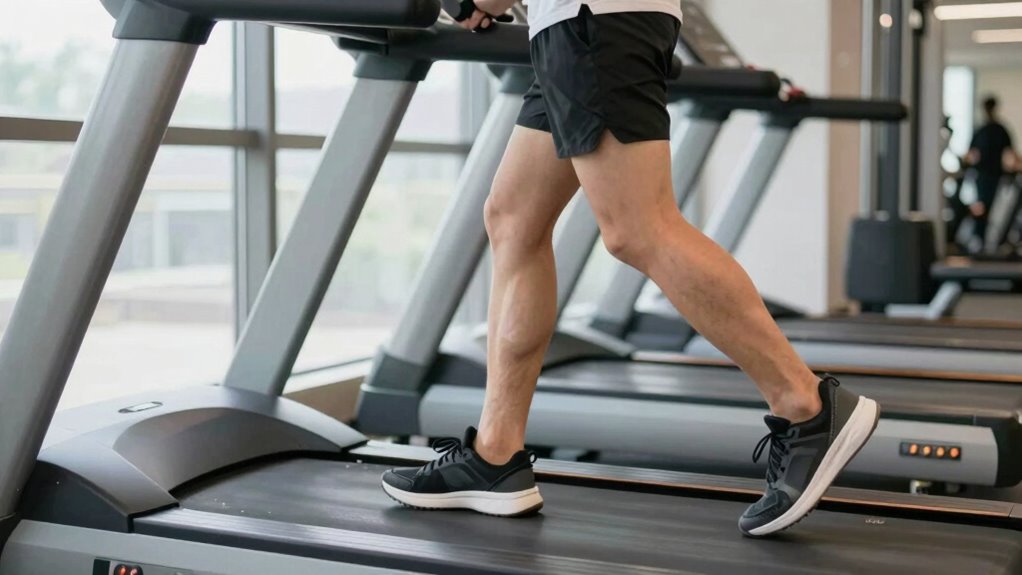

To protect your knees while walking on a treadmill, focus on maintaining proper posture: stand tall with shoulders relaxed, engage your core, and keep your gaze forward. Use natural arm swings with elbows bent at about 90°, and avoid overstriding or long strides. Land softly on your midfoot or forefoot to reduce impact and stay relaxed throughout. Small adjustments make a big difference—keep going to discover more ways to keep your knees safe and comfortable.

Get school and study supplies delivered free — and shop member deals
- Fast, free delivery on millions of items
- Access to Prime Big Deal Days deals on October 6–7
- Prime Video, Amazon Music and more included
Key Takeaways
- Keep your posture upright with shoulders relaxed and gaze forward to maintain proper alignment.
- Land softly on midfoot or forefoot to minimize impact on your knees.
- Shorten your stride and quicken your steps to reduce joint stress and improve efficiency.
- Swing your arms naturally with elbows bent at 90° to support gait stability.
- Wear supportive, well-cushioned athletic shoes with proper fit to protect your knees during treadmill walking.
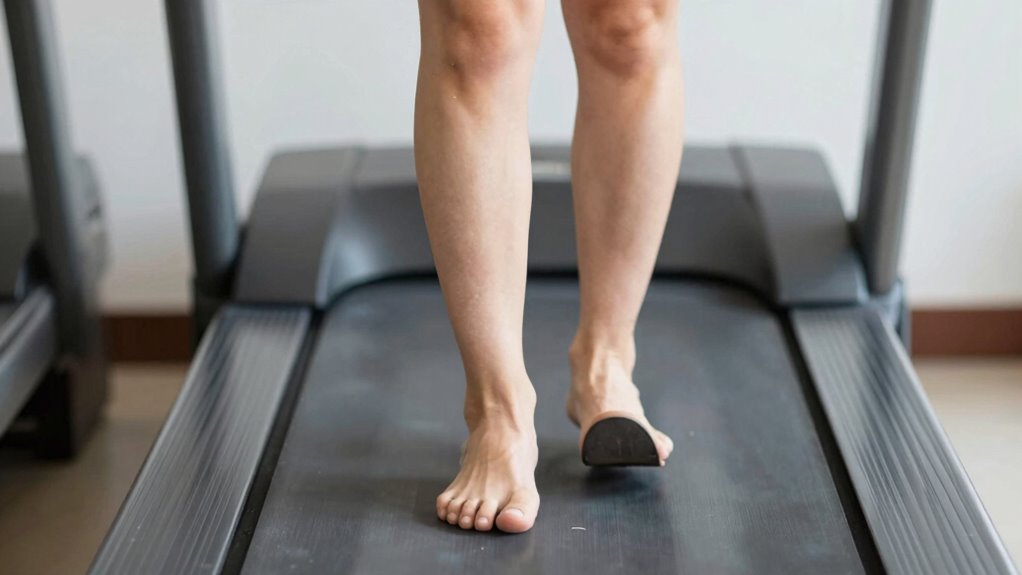
Ever wondered how to walk efficiently on a treadmill? It all starts with your running posture. Maintaining proper alignment can make a huge difference in how your body handles the activity and can prevent unnecessary strain on your knees. Stand tall with your shoulders relaxed and your head aligned over your hips. Keep your gaze forward, not down at your feet, to encourage a natural, upright posture. Avoid leaning forward or backward, as this shifts your center of gravity and can lead to imbalance or overuse injuries. Engage your core muscles to support your spine, and swing your arms naturally at your sides, keeping your elbows bent at about 90 degrees. This helps maintain rhythm and balance, minimizing unnecessary movements that could throw off your gait. Paying attention to your body alignment throughout your walk can help prevent injuries and improve efficiency.
Maintain upright posture, relax shoulders, engage core, and swing arms naturally for efficient treadmill walking.
Your footwear choices are equally essential. Wearing the right shoes can dramatically influence your running posture and overall comfort. Opt for athletic shoes designed specifically for walking or running, with good arch support and cushioning to absorb shock. Worn-out shoes lose their ability to provide proper support, increasing the risk of knee pain or other injuries. Consider shoes with a slight heel-to-toe drop, which encourages a more natural gait and reduces impact on your knees. When fitting shoes, make sure there’s enough room in the toe box to wiggle your toes comfortably—tight shoes can cause misalignment and blisters, which distract you from maintaining good form. Avoid stiff or overly flexible shoes that don’t support your foot’s natural motion.
As you walk, focus on your stride. Keep your steps short and quick rather than long and heavy, which puts more stress on your joints. Land softly on your midfoot or forefoot, rather than your heel, to reduce impact and promote a more efficient gait. Pay attention to your overall posture—if you notice your shoulders creeping up or your back arching excessively, slow down and reset your form. Staying relaxed and upright will help your body move smoothly and protect your knees from unnecessary strain.
Incorporating these small but essential adjustments can drastically improve your treadmill walking experience. Good running posture combined with the right footwear choices helps you walk more efficiently, decrease fatigue, and protect your knees. Remember, consistency is key. By making these habits second nature, you’ll not only enjoy your workouts more but also keep your joints healthier in the long run.
As an affiliate, we earn on qualifying purchases.
Frequently Asked Questions
How Often Should I Check My Treadmill Walking Form?
You should check your treadmill walking form regularly, ideally every few sessions, to guarantee proper alignment and prevent injury. Incorporate a quick gait analysis during these checks to spot any imbalances or unnecessary strain. Making small form adjustments consistently helps maintain good technique, reduces knee stress, and keeps your workout effective. Regularly monitoring your form ensures you’re walking safely and efficiently, so your knees stay protected over time.
Can Improper Form Cause Long-Term Knee Damage?
Improper form can indeed cause long-term knee damage. When you neglect proper knee alignment and stride length, you risk uneven weight distribution, leading to strain and joint deterioration over time. You might develop chronic pain, ligament issues, or cartilage damage. Always focus on maintaining correct knee alignment, a natural stride length, and controlled movements. By doing so, you protect your knees, promote longevity, and enjoy a safer, more effective workout.
Is Treadmill Walking Suitable for All Knee Conditions?
Treadmill walking can be suitable for many knee conditions, but you should always consult your doctor first. Using a knee brace can offer extra support, and adjusting your walking speed helps prevent strain. Start slow, listen to your body, and gradually increase intensity. If you experience pain or discomfort, stop and seek professional advice. Proper form and support make treadmill walking a safer option for your knees.
What Footwear Best Supports Proper Treadmill Walking Form?
You should choose footwear with a proper shoe fit that securely supports your feet without being too tight. Look for shoes with cushioned insoles to absorb impact and reduce strain on your knees during treadmill walking. Confirm the shoes have good arch support and a flexible sole for natural movement. Wearing the right shoes helps maintain proper form, prevents injuries, and makes your workout more comfortable and effective.
How Do I Correct My Form if I Experience Knee Pain?
If you experience knee pain while walking, focus on improving your ankle alignment and hip stability. Keep your ankles aligned with your knees and hips, avoiding inward or outward rolling. Engage your core and tighten your glutes to maintain hip stability. Shorten your stride if needed, and walk with a gentle heel-to-toe motion. Listening to your body helps prevent overstriding and reduces knee strain, making your walk more comfortable.
cushioned athletic shoes for walking
As an affiliate, we earn on qualifying purchases.
As an affiliate, we earn on qualifying purchases.
Conclusion
By adjusting your treadmill walking form, you can protect your knees and enjoy safer, more comfortable workouts. Imagine Sarah, a busy mom, who started noticing knee pain after her runs. After correcting her stride and maintaining proper posture, her pain disappeared within weeks. Small tweaks, like engaging your core and landing softly, make a big difference. So, next time you hit the treadmill, remember: a better form today keeps your knees healthy tomorrow.
treadmill running shoes for knees
As an affiliate, we earn on qualifying purchases.
As an affiliate, we earn on qualifying purchases.
As an affiliate, we earn on qualifying purchases.
Fall Picks
fall essentials
As an affiliate, we earn on qualifying purchases.