

To read faster without losing comprehension, focus on previewing content, using pacing tools like your finger, and minimizing subvocalization by chunking words and expanding your peripheral vision. Practice quick eye movements and scan for meaningful phrases to process information efficiently. Regularly monitor your progress to stay motivated and adjust techniques as needed. Keep practicing these strategies, and you’ll improve your speed while retaining focus—if you stay committed, you’ll discover even more ways to enhance your skills.

Get school and study supplies delivered free — and shop member deals
- Fast, free delivery on millions of items
- Access to Prime Big Deal Days deals on October 6–7
- Prime Video, Amazon Music and more included
Key Takeaways
- Use previewing and skimming to identify key sections, focusing deep reading on important parts.
- Practice rapid eye movements and expand peripheral vision to cover more text quickly.
- Minimize subvocalization by chunking words and visualizing concepts to process information silently.
- Balance reading speed with comprehension checks, like summarizing or questioning after sections.
- Track progress regularly to adjust techniques, ensuring increased speed doesn’t compromise understanding.
As an affiliate, we earn on qualifying purchases.
Why Balancing Reading Speed and Comprehension Matters

Have you ever sped through a book only to realize you remember very little of what you read? That’s a common comprehension pitfall many face when chasing speed reading myths. Some believe faster reading always means better understanding, but that’s not true. Pushing your speed too high can cause you to miss key details, making it harder to grasp concepts. Balancing reading speed and comprehension is vital because speed isn’t everything—understanding matters. If you read too quickly, you risk skipping important information, which undermines your purpose. Conversely, reading too slowly hampers efficiency. The key is to find a pace that allows you to process and retain information effectively. Remember, improving your reading skills involves both speed and understanding working together, not at odds. Incorporating techniques like active reading can help you maintain this balance more effectively. Additionally, being aware of your reading environment can reduce distractions and support better focus during your reading sessions. Paying attention to your reading habits can also help you adjust your pace to optimize comprehension without sacrificing speed. Moreover, practicing mindful reading can help you stay present and engaged with the material, further enhancing your ability to read efficiently while maintaining good comprehension. In fact, using evidence-based strategies can further enhance your ability to read efficiently while maintaining good comprehension.
As an affiliate, we earn on qualifying purchases.
How to Measure Your Current Reading Speed and Understanding

To measure your current reading speed, start by timing yourself as you read a page or two of a familiar text. Then, assess your understanding by summarizing what you’ve read or answering questions about the material. Tracking these two aspects helps you identify areas for improvement and set realistic goals. Additionally, understanding your reading habits can help you tailor techniques that improve both speed and comprehension effectively. Incorporating reading techniques such as skimming or scanning can also enhance your ability to read faster without losing comprehension. Moreover, being aware of how innovative European cloud servers promote sustainable and secure solutions can also improve your focus by connecting reading material to practical advancements. Monitoring changes in ear wax odor or other sensory cues can improve your awareness of subtle environmental factors that influence concentration and health, further supporting effective reading habits.
Track Reading Time
Ever wonder how fast you read and how well you understand the material? Tracking your reading time is essential. Use a stopwatch or timer to measure how long it takes to read a specific passage. Pay attention to eye tracking patterns—notice if your eyes jump or linger unnecessarily. This affects both speed and stamina. To deepen your understanding, record your reading duration and note any fatigue. Here’s a simple way to track your progress:
| Passage Length | Time Taken | Comprehension Notes |
|---|---|---|
| 200 words | 1 min | Eye tracking smoothness |
| 300 words | 2 min | Reading stamina observed |
| 500 words | 4 min | Fatigue onset noted |
Consistent tracking helps you identify improvements and areas for focus.
Assess Comprehension Level
Want to know how well you’re actually understanding what you read? Start by gauging your comprehension level. If you experience reading anxiety, it can hinder your understanding, so stay calm and focus on accuracy. Test yourself by summarizing what you’ve read after each section or answering questions about the material. Pay attention to your font size; a comfortable size reduces eye strain and improves focus, leading to better comprehension. Track your reading speed alongside these summaries to see if you’re maintaining a good balance between speed and understanding. Remember, reading faster isn’t helpful if comprehension drops. Regularly evaluating your grasp of the material helps you identify if you need to slow down or adjust your reading environment for improved clarity and retention. Additionally, practicing with vetted reading techniques can help you improve both speed and comprehension effectively.
As an affiliate, we earn on qualifying purchases.
The Power of Previewing: How to Skim Effectively

Have you ever wondered how some readers grasp the main ideas of a text in seconds? That’s the power of previewing. By practicing content previewing, you can identify key points quickly. Visual skimming helps you scan headings, subheadings, and highlighted words to get an overview. To do this effectively, focus on these steps:
- Glance at titles and subtitles.
- Scan for keywords and bolded phrases.
- Review images, captions, and bullet points.
- Read the introduction and conclusion for summaries.
- Applying effective skimming techniques can enhance your overall reading efficiency. Recognizing key visual cues can further streamline your skimming process. Being aware of passive voice detection can help you recognize and improve your reading strategies further. Incorporating content previewing strategies allows you to quickly assess which parts of the text require deeper focus and which sections can be skimmed. Understanding active reading techniques can also improve your ability to stay engaged with the material. These techniques allow you to decide which sections deserve more attention and which can be skimmed. Mastering visual skimming makes your reading more efficient, helping you save time without sacrificing comprehension.
As an affiliate, we earn on qualifying purchases.
Pacing Techniques and Reducing Subvocalization for Faster Reading
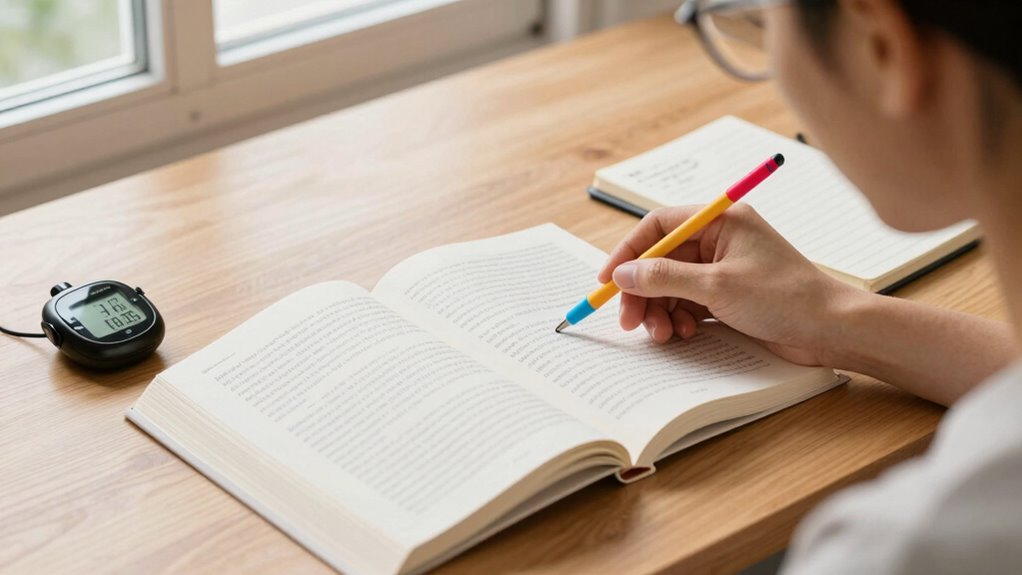
To read faster, you need to control your pace and cut down on subvocalization. Use pacing tools like guides or timers to keep your eyes moving smoothly across the page, and practice quick eye movements to cover more ground. Minimizing subvocalization naturally helps you process words more efficiently and improves your overall speed. Incorporating reading techniques can further enhance your comprehension while increasing your reading efficiency. Additionally, understanding how visual perception influences reading can help you develop strategies to expand your peripheral vision and process text more holistically. Developing a better understanding of reading comprehension strategies can also help you retain information more effectively at higher speeds, especially when combined with awareness of cultural moments that can influence reading material and context. Recognizing how cognitive load impacts processing can guide you in selecting appropriate reading strategies for different types of material.
Minimize Subvocalization Naturally
Ever wonder how to naturally reduce subvocalization and boost your reading speed? The key lies in modifying subvocalization habits through silent reading techniques that promote faster comprehension. Here are four strategies to help you minimize subvocalization naturally:
- Practice chunking to read groups of words instead of individual ones.
- Use a pacer, like your finger or a pen, to guide your eyes smoothly across the page.
- Focus on visualizing concepts rather than silently pronouncing words.
- Increase your reading pace gradually to challenge your silent reading techniques.
- Incorporate knowledge of reading comprehension principles to ensure you retain information while reading faster.
Use Pacing Tools Effectively
Wondering how to speed up your reading? Using pacing tools can help you develop better reading habits and expand your vocabulary efficiently. Pacing techniques, like using a pointer or guiding your eyes smoothly, prevent unnecessary pauses and subvocalization. Incorporate a rhythm with this table:
| Technique | Benefit | Tip |
|---|---|---|
| Pointer or finger | Maintains consistent speed | Move it steadily across lines |
| Chunking | Reads more words at once | Focus on groups of words instead of individual ones |
| Voice Recording | Monitors pace during practice | Listen and match your reading speed |
| Vocabulary drills | Enhances understanding | Use pacing to review new words |
Practice Rapid Eye Movements
Are your eyes moving efficiently across the page? Practicing rapid eye movements can considerably boost your reading speed. To improve, focus on eye exercises that train swift, controlled movements, minimizing subvocalization. Here are key techniques:
- Use a pen or pointer to guide your eyes in quick, sweeping motions across lines.
- Practice scanning techniques, moving your eyes smoothly from start to finish without fixating on each word.
- Incorporate timed drills to increase your eye movement speed gradually.
- Regularly challenge yourself with exercises designed to enhance control and reduce unnecessary pauses.
Expand Your Peripheral Vision to Read More in Less Time

Did you know that expanding your peripheral vision can considerably boost your reading speed? Improving your peripheral awareness allows you to see more words at once, reducing the need for constant eye movements. Visual expansion helps you take in entire lines or chunks of text without fixating on each word individually. To develop this skill, try focusing on a central point on the page and consciously relax your eye muscles. Practice scanning slightly wider sections of text, gradually increasing your field of view. This technique trains your eyes to process more information at once, saving time and minimizing eye fatigue. Incorporating vision training exercises can further enhance your peripheral awareness and overall reading efficiency. Regularly practicing peripheral vision expansion can accelerate your progress and make reading more effortless. Additionally, maintaining proper visual ergonomics can help prevent strain and improve your ability to expand your peripheral view over time. Developing peripheral awareness through consistent practice can also increase your comfort during extended reading sessions.
Chunk Text: How to Read in Phrases Instead of Words

To read in phrases instead of individual words, you need to recognize groups of words quickly and develop your eye movement skills. Practicing these techniques helps you process information faster and reduces subvocalization. With consistent effort, you’ll start reading more smoothly and efficiently.
Recognize Phrases Quickly
Recognizing whole phrases instead of individual words allows you to read more efficiently. This skill helps break common speed reading myths that suggest reading word-by-word is best. Instead, focus on enhancing your ability to see groups of words at once, boosting your reading speed and comprehension. To do this effectively, consider these strategies:
- Develop your peripheral vision to capture more words in a single glance.
- Practice scanning techniques to identify meaningful phrases quickly.
- Minimize subvocalization to reduce unnecessary vocalization during reading.
- Use focus enhancement tools, like highlighting or pointers, to guide your eyes smoothly across the text.
Mastering this skill can considerably increase your reading speed without sacrificing understanding, making your reading sessions more productive.
Practice Eye Movement Skills
Improving your eye movement skills is key to reading in phrases instead of individual words. Efficient eye movement allows you to take in more information per glance, speeding up your reading. Practice techniques like minimizing fixations and expanding your peripheral vision to recognize groups of words. Use the table below to refine your reading techniques:
| Focus Area | Practice Tips |
|---|---|
| Fixation Length | Shorten fixations; aim for 2-3 words per pause |
| Saccades | Make smooth, controlled eye jumps between groups |
| Pacing | Use a pointer or finger to guide your eye movement |
| Peripheral Vision | Expand your awareness to see more words at once |
| Reading Rhythm | Develop a steady pace for better flow |
Minimize Subvocalization
Ever notice how you tend to silently pronounce each word as you read? That’s subvocalization, slowing your reading speed. To improve, try silent reading techniques that focus on minimizing subvocalization reduction. This allows you to process phrases instead of individual words, increasing efficiency. Here are key steps:
- Practice reading in chunks or phrases rather than one word at a time.
- Use your peripheral vision to capture groups of words.
- Subvocalize less by consciously reducing the inner voice.
- Employ pacing tools like a pacer or finger to guide your eye movement smoothly.
Active Reading Strategies to Boost Retention and Comprehension

To enhance your reading speed while maintaining understanding, adopting active reading strategies is essential. Start by practicing mindful meditation before reading to clear your mind and improve focus. Maintain a proper reading posture—sit upright, keep your book at eye level, and avoid slouching—to reduce physical strain and increase alertness. Engage with the material by asking questions, making predictions, and summarizing key points as you go. Highlight or take notes to reinforce retention. These active techniques keep your mind engaged and prevent passive skimming. By consciously controlling your attention and physical setup, you boost comprehension and speed simultaneously, making your reading sessions more effective and enjoyable.
Creating a Reading Environment That Supports Speed and Focus

Creating a dedicated and distraction-free reading environment is essential for boosting your reading speed and focus. When your surroundings support concentration, you can apply focus techniques more effectively, leading to quicker comprehension. To optimize your reading environment, consider these steps:
A distraction-free space boosts focus and reading speed for better comprehension.
- Choose a quiet, clutter-free space devoid of interruptions.
- Ensure good lighting to reduce eye strain.
- Limit distractions like phones or background noise.
- Use comfortable seating that promotes good posture.
Tracking Your Progress: How to Know You’re Improving
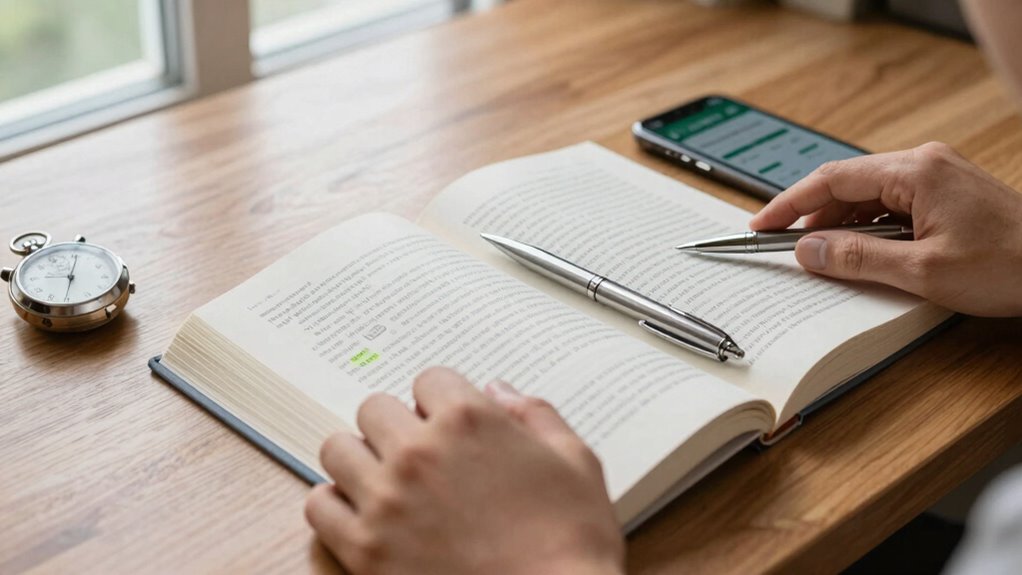
How can you tell if your reading speed is actually improving? The key is consistent progress tracking. Pay attention to your reading habits by noting how many pages or words you can cover in a set time. Keep a log or use apps designed for speed reading practice. If you notice your pace increasing without sacrificing comprehension, you’re making real progress. Regularly measuring your reading time and understanding helps you stay motivated and adjust your techniques if needed. Remember, improvements may be gradual, so tracking your progress over days or weeks is essential. This steady monitoring ensures you’re moving in the right direction, reinforcing positive reading habits and helping you read faster while maintaining comprehension.
Common Speed Reading Mistakes That Hurt Your Understanding

Are you unknowingly sabotaging your reading speed by making common mistakes? These reading habits can create comprehension pitfalls, slowing you down and reducing understanding. To improve, watch out for these errors:
- Rereading sentences repeatedly, which hampers flow and wastes time.
- Subvocalizing, or silently pronouncing words, limiting your speed.
- Skipping preview steps, missing context that enhances comprehension.
- Focusing on individual words instead of scanning phrases, reducing overall efficiency.
Frequently Asked Questions
Can Speed Reading Techniques Be Applied to Complex or Technical Texts?
Yes, you can apply speed reading techniques to complex or technical texts. Use visualization techniques to grasp concepts quickly and annotation strategies to highlight key ideas without losing focus. These methods help you process intricate information efficiently while maintaining comprehension. Practice regularly, and you’ll find yourself reading challenging materials faster, without sacrificing understanding. Remember, adapting these techniques to the material’s difficulty level makes reading both faster and more effective.
How Does Reading Speed Affect Long-Term Retention of Information?
Your reading speed directly impacts your long-term retention of information. When you read too quickly, your reading habits may skip over key details, making it harder to remember later. To improve memory retention, focus on balancing speed with comprehension, taking time to reflect on what you’ve read. Developing mindful reading habits helps guarantee you retain information longer, rather than just rushing through material and forgetting it quickly.
Are There Specific Tools or Apps to Help Improve Reading Speed?
Imagine your reading journey as a race, where speed tools and reading apps serve as your turbo boost. These tools act like a GPS, guiding you to read faster while maintaining clarity. Popular reading apps and speed tools, such as Spreeder or ReadSpeeder, help you practice skimming techniques and improve focus. With consistent use, you’ll accelerate your reading pace without sacrificing comprehension, turning your reading race into a smooth, swift adventure.
How Does Vocabulary Knowledge Influence Reading Efficiency?
Your vocabulary mastery directly boosts your reading efficiency because greater word familiarity allows you to recognize words quickly and understand texts more smoothly. When you know more words, you spend less time decoding unfamiliar terms, enabling faster reading with better comprehension. As your vocabulary expands through consistent practice, you’ll find it easier to grasp ideas quickly, making your overall reading experience more effective and enjoyable without sacrificing understanding.
What Are Signs That You’re Sacrificing Comprehension for Speed?
Like a ship drifting off course, you might notice signs that you’re sacrificing comprehension for speed. If your mind misunderstands key points, or if you find yourself caught in the “skimming syndrome,” missing details or feeling lost, you’re likely rushing too much. You may also experience confusion, re-reading sections, or feeling mentally fatigued. These signs show you’re prioritizing speed over understanding, and slowing down can help restore clarity and retention.
Conclusion
By applying these techniques, you can read faster without sacrificing understanding. Remember, it’s about finding the right balance between speed and comprehension that works for you. Are you ready to challenge your limits and unleash your full reading potential? With practice and focus, you’ll discover a new world of knowledge waiting just beyond your current pace. So why settle for slow reading when faster, more effective strategies are within your reach?
Evergreen bestsellers Picks
bestsellers
As an affiliate, we earn on qualifying purchases.