
TL;DR

Prime made for students and young adults
- Fast, free delivery for dorm and study essentials
- Prime Video and Amazon Music included
- Member-only deals
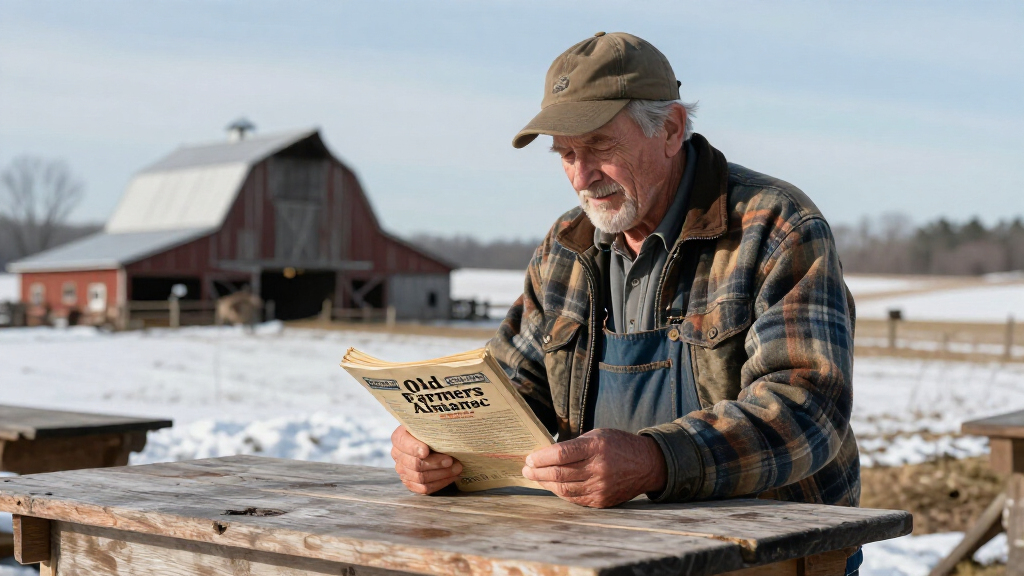
The Old Farmers Almanac has released its 2026 winter forecast, predicting a relatively mild season with less extreme cold and snowfall in most parts of the U.S. This forecast is based on traditional methods and is not confirmed by scientific climate models.
The Old Farmers Almanac has released its 2026 winter forecast, predicting a generally mild season with less severe cold and snowfall across most of the United States. This annual prediction, based on traditional methods, attracts widespread attention as residents and farmers consider how the upcoming months may unfold.
The 2026 edition of the Old Farmers Almanac, published in October 2025, forecasts a winter characterized by less extreme cold and reduced snowfall in many regions, particularly in the Midwest and Northeast. The Almanac’s predictions are based on a combination of historical weather patterns, lunar cycles, and solar activity, rather than modern climate models.
According to the Almanac’s editors, this forecast suggests a winter with milder temperatures and fewer snow events, which could impact agriculture, energy consumption, and daily life. The Almanac’s predictions are not scientifically validated, but they remain popular among the public and some farmers who rely on traditional signs.
Implications of the Almanac’s Mild Winter Prediction
This forecast matters because it influences expectations for winter weather, which can affect agriculture, energy use, and emergency preparedness. While not scientifically confirmed, the Almanac’s predictions hold cultural significance and can shape planning for individuals and businesses. A milder winter could mean less strain on heating resources and fewer weather-related disruptions, but it also raises questions about the accuracy of traditional forecasting methods in the context of climate change.
winter weather gear for mild winter
As an affiliate, we earn on qualifying purchases.
As an affiliate, we earn on qualifying purchases.
Historical Accuracy and Methods of the Old Farmers Almanac
The Old Farmers Almanac has been published since 1792, using a proprietary formula based on historical weather patterns, lunar cycles, and solar activity. While it claims an accuracy rate of about 80%, scientific meteorologists consider its predictions to be more folklore than science. Its forecasts are often contrasted with data-driven climate models, which may or may not align with the Almanac’s predictions.
In recent years, the Almanac has predicted both milder and harsher winters, sometimes matching actual conditions and sometimes not. Its 2025 forecast, for instance, predicted a colder winter, which did not materialize in many regions, highlighting the inherent uncertainty in such traditional methods.
As an affiliate, we earn on qualifying purchases.
Unconfirmed Aspects and Climate Variability
It remains unclear how accurately the 2026 winter forecast will match actual weather conditions. Climate variability, especially with phenomena like El Niño and climate change, can lead to deviations from traditional predictions. Experts caution that the Almanac’s forecast should be viewed as a cultural guide rather than a scientific certainty.
As an affiliate, we earn on qualifying purchases.
Monitoring Winter Conditions and Updated Forecasts
As winter approaches, meteorological agencies will provide ongoing updates based on real-time data. The public and farmers should stay informed through official weather services and consider the Almanac’s forecast as one of many tools for planning. Any significant deviations from the forecast will be analyzed in the coming months.
winter outdoor clothing for mild winter
As an affiliate, we earn on qualifying purchases.
As an affiliate, we earn on qualifying purchases.
Key Questions
How accurate is the Old Farmers Almanac forecast?
The Almanac claims about 80% accuracy based on its traditional methods, but it is not scientifically validated. Its predictions are best viewed as general guides rather than precise forecasts.
Will the 2026 winter be as mild as predicted?
It is uncertain. The forecast is based on historical patterns and traditional signs, but actual weather can vary due to climate change and other factors. Official meteorological forecasts should be consulted for planning.
What factors influence the Almanac’s winter predictions?
The Almanac uses a combination of historical weather data, lunar cycles, and solar activity to make its predictions. It does not incorporate modern climate models or real-time weather data.
How should residents prepare if the forecast is accurate?
Residents should stay updated with official weather alerts, prepare for potential winter disruptions, and consider the forecast as a general indication rather than a certainty.
Source: google-trends
Fall Picks
fall essentials
As an affiliate, we earn on qualifying purchases.