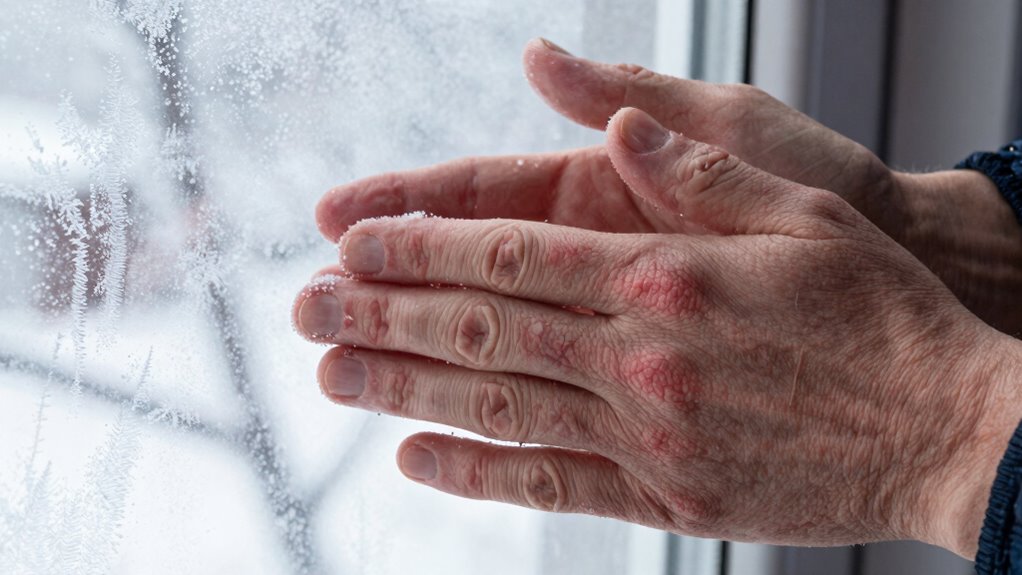

In cold months, your skin loses moisture quickly because cold air strips away natural oils, leaving your hands dry, rough, and prone to cracking. Indoor heating makes it worse by further dehydrating your skin. Constant hand washing with hot water and minimal protection outdoors also contribute to dryness. Wearing gloves and using rich moisturizers can help, but if you stay aware of these causes, you’ll discover more tips to keep your hands healthy and hydrated during winter.

Prime made for students and young adults
- Fast, free delivery for dorm and study essentials
- Prime Video and Amazon Music included
- Member-only deals
Key Takeaways
- Cold air and indoor heating strip moisture from the skin, causing dryness and dehydration.
- Frequent hand washing with hot water removes natural oils, leading to rapid dryness.
- Reduced natural oils weaken the skin barrier, making hands more susceptible to dryness and cracking.
- Lack of protective measures like gloves and humidifiers accelerates moisture loss outdoors and indoors.
- Harsh environmental conditions and inadequate skincare routines hinder skin’s ability to retain moisture.

When the temperature drops and the air becomes colder and drier, your hands often start to feel rough, cracked, and painfully dry. This is a common reaction to winter’s harsh conditions. The cold air strips moisture from your skin, and indoor heating only worsens the problem by further drying it out. Your hands, which are constantly exposed and less protected than other parts of your body, become especially vulnerable. To combat this, you need to pay attention to winter skincare, particularly hand moisturizer tips, to keep your skin healthy and comfortable.
During the winter months, it’s essential to choose a good hand moisturizer that provides deep hydration. Look for products with ingredients like shea butter, glycerin, or hyaluronic acid, which attract and lock in moisture. Applying moisturizer immediately after washing your hands is crucial because water can strip away natural oils, making your skin even drier. Keep a travel-sized hand cream with you so you can reapply throughout the day, especially after contact with water or harsh outdoor elements. Don’t forget to moisturize before bed, as overnight treatments can work wonders in repairing the skin’s barrier.
In addition to moisturizing, consider wearing gloves when you’re outdoors. These not only protect your hands from the cold but also prevent moisture loss. When you’re indoors, using a humidifier can add moisture to the air, helping your skin retain its natural oils. Incorporating proper skincare routines can further shield your hands from harsh environmental factors. Additionally, choosing products with hydrating ingredients can significantly improve skin moisture levels and overall hand health. Limiting the use of hot water when washing your hands; instead, opt for lukewarm water, which is gentler and less likely to strip your skin’s moisture. Pat your hands dry gently with a towel rather than rubbing vigorously, which can irritate already sensitive skin. Taking steps to maintain skin hydration is essential for preventing dryness and irritation during winter. Using moisturizing products regularly can make a noticeable difference in keeping your hands soft and healthy. Including humidifiers in your home can also contribute to a more skin-friendly indoor environment by maintaining optimal humidity levels.
winter hand moisturizer with shea butter
As an affiliate, we earn on qualifying purchases.
As an affiliate, we earn on qualifying purchases.
Frequently Asked Questions
Can Frequent Handwashing Worsen Dry Skin During Winter?
Yes, frequent handwashing can worsen dry skin during winter. Using hand sanitizer often strips away natural oils, making your skin even drier. To protect your hands, apply a good moisturizer afterward—look for cream or ointment types, which provide better hydration than lotions. Regularly moisturizing helps repair the skin barrier, preventing cracks and irritation caused by harsh winter conditions and frequent cleaning.
Are Certain Hand Creams More Effective in Cold Weather?
Did you know that 80% of people see improvements in dry skin with the right moisturizer? In cold weather, you should choose hand creams with effective seasonal skincare ingredients like hyaluronic acid, glycerin, and shea butter. These ingredients lock in moisture and create a barrier against harsh elements. Look for rich, nourishing formulas, especially those labeled for winter, to keep your hands soft and hydrated despite the cold.
How Does Indoor Heating Contribute to Hand Dryness?
Indoor heating reduces humidity levels, leading to drier air that strips moisture from your skin. The heating effects dry out the air inside your home, which accelerates hand dryness. Without enough indoor humidity, your hands lose essential moisture faster, causing cracks and irritation. To combat this, use a humidifier, drink plenty of water, and apply moisturizing hand creams regularly to counteract heating effects and keep your hands hydrated.
Can Diet Influence Skin Hydration in Winter Months?
Yes, your diet can influence skin hydration during winter. Diet deficiencies, especially lacking vitamins like A, C, and E, can weaken your skin’s barrier, making it prone to dryness. Maintaining good hydration habits by drinking plenty of water helps keep your hands moisturized. Incorporate foods rich in omega-3 fatty acids and antioxidants to support skin health, and avoid excess caffeine or alcohol, which can dehydrate your skin further.
Are There Natural Remedies to Prevent Dry Hands?
Yes, you can prevent dry hands naturally with herbal remedies and essential oils. Apply coconut oil or aloe vera gel to keep your skin moisturized. You might also try herbal infusions like chamomile or calendula to soothe your skin. Additionally, essential oils like lavender or tea tree, diluted in a carrier oil, can heal dryness and prevent cracking. Regularly moisturizing and wearing gloves helps protect your hands from harsh weather.
hydrating hand cream with hyaluronic acid
As an affiliate, we earn on qualifying purchases.
As an affiliate, we earn on qualifying purchases.
Conclusion
Think of your skin as a delicate garden. In cold months, the chilly air and harsh winds are like relentless storms that dry out your plants. Without proper care—moisturizing and protecting—your skin struggles to stay lush and healthy. Just as a gardener shields their plants from harsh weather, you must tend to your hands with nourishing creams and gloves. Keep your skin well-guarded, and it’ll thrive despite the winter’s chill.
hand gloves for winter outdoor protection
As an affiliate, we earn on qualifying purchases.
As an affiliate, we earn on qualifying purchases.
As an affiliate, we earn on qualifying purchases.
Columbus Day / Indigenous Peoples' Day Picks
long weekend sales
As an affiliate, we earn on qualifying purchases.