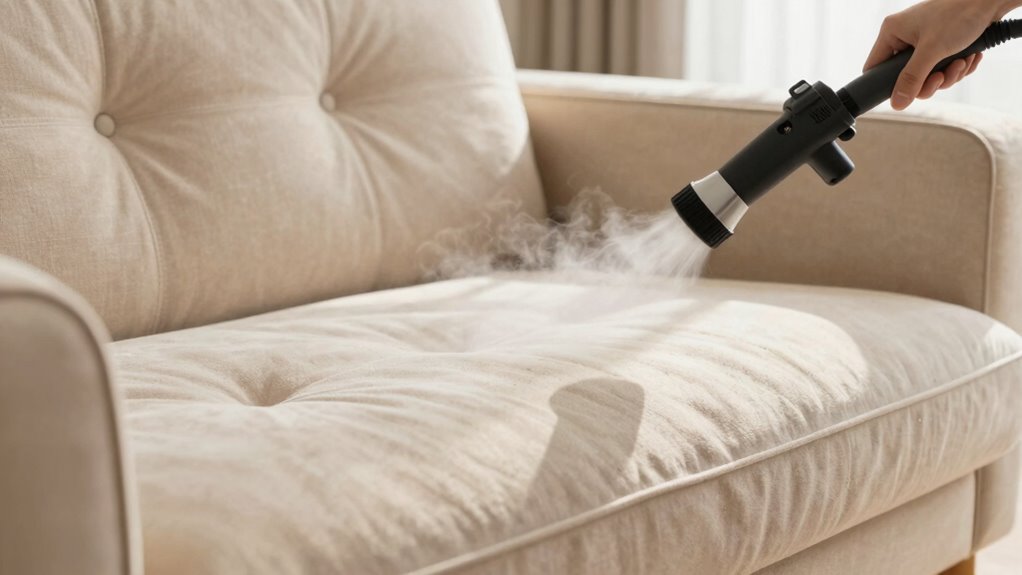
To clean your upholstery safely without ruining the fabric, start by regularly vacuuming with a soft brush attachment to remove dust and debris. When stains occur, blot immediately with a damp cloth, avoiding rubbing, and use a gentle, upholstery-specific cleaner tested on hidden areas. Apply protectant sprays to create a moisture-repelling barrier, and always follow manufacturer instructions. Careful techniques like these help preserve your furniture’s look and longevity—learn more about effective, fabric-friendly cleaning methods.

Prime made for students and young adults
- Fast, free delivery for dorm and study essentials
- Prime Video and Amazon Music included
- Member-only deals
Key Takeaways
- Always test cleaning solutions on hidden fabric areas before full application.
- Use gentle, upholstery-specific cleaners and avoid over-wetting the fabric.
- Blot spills immediately with a damp cloth to prevent stains from setting.
- Apply fabric protectors regularly to create a liquid-repelling barrier and reduce cleaning risks.
- Follow manufacturer guidelines and consider professional cleaning for delicate or natural fabrics.
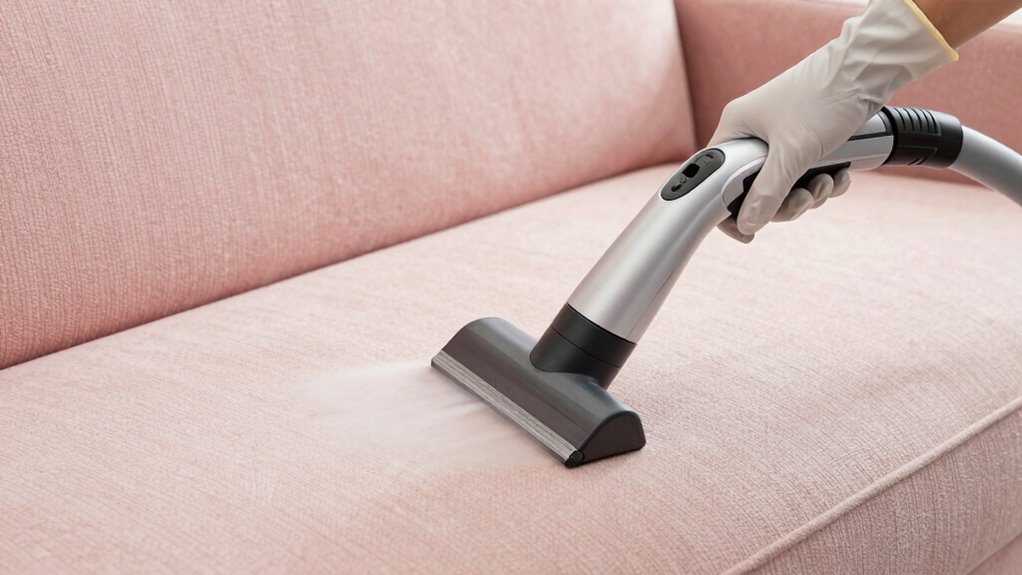
Keeping your upholstery clean is essential, but it’s equally important to do so without damaging the fabric. When you’re mindful of fabric protection, you help extend the life of your furniture and keep it looking fresh. Proper cleaning techniques prioritize stain prevention, ensuring spills or dirt don’t become permanent marks. To achieve this, start by regularly vacuuming your upholstery with a soft brush attachment. This simple step removes dust and debris that can settle into fibers, making deep cleaning less necessary and reducing the risk of wear and tear.
Regular vacuuming with a soft brush extends furniture life and prevents deep stains.
When it comes to stain prevention, acting quickly is key. Keep a clean, damp cloth nearby to blot spills immediately—avoid rubbing, which can push stains deeper into the fabric. For more stubborn stains, use a gentle cleaning solution specifically formulated for upholstery. Always test any cleaner on a hidden area first to ensure it won’t discolor or damage the fabric. Remember, harsh chemicals can strip fibers and compromise fabric protection, so opt for eco-friendly, pH-balanced products whenever possible.
Avoid over-wetting your furniture, as excess moisture can lead to mold or fabric deterioration. Use a spray bottle to lightly mist the surface if you’re applying a cleaning solution, and follow with a clean, dry cloth to blot away excess liquid. This method helps keep the fabric intact and prevents water stains or damage. If your upholstery is delicate or made of natural fibers, consider consulting the manufacturer’s cleaning guidelines or hiring professional cleaners who understand how to treat different fabrics carefully.
In addition to regular cleaning, applying a fabric protector spray can provide an extra layer of stain prevention. These products create a barrier that repels liquids and prevents dirt from settling into fibers. When using a fabric protector, ensure the area is well-ventilated, and follow the instructions carefully for even coverage. This preventive step can save you time and effort, reducing the need for aggressive cleaning later on.
Ultimately, maintaining your upholstery without ruining the fabric involves a combination of gentle cleaning, quick stain response, and protective treatments. By incorporating these practices into your routine, you safeguard your furniture’s appearance and longevity. Regular cleaning can also help prevent fiber damage and preserve the fabric’s integrity over time. Remember, the goal is to keep it looking its best while respecting the delicate nature of the fabric, so patience and care are your best tools in ensuring clean, beautiful upholstery that lasts.
As an affiliate, we earn on qualifying purchases.
Frequently Asked Questions
Can Professional Upholstery Cleaning Be Done at Home Safely?
Yes, you can safely do professional upholstery cleaning at home by following DIY tips. While professional vs. home cleaning varies in equipment and expertise, using proper cleaning solutions and techniques minimizes risks. Always test a small, hidden area first, and avoid over-wetting the fabric. If you’re unsure, consider hiring professionals for delicate fabrics; they have the skills to clean thoroughly without causing damage.
What Are the Signs of Fabric Damage From Cleaning?
Your fabric might be crying out for help if you notice discoloration or fiber weakening after cleaning. These signs indicate damage from harsh chemicals or excessive moisture. If colors fade unevenly or fibers become brittle or frayed, you’re pushing your luck. It’s a red flag that the cleaning process was too aggressive. Always test a small area first and follow manufacturer instructions to avoid turning a quick fix into a costly mistake.
How Often Should Upholstery Be Cleaned to Prevent Damage?
You should clean your upholstery every 6 to 12 months to maintain fabric preservation and prevent damage. Regular cleaning, based on your household’s activity level, helps remove dirt and allergens that can degrade fabric over time. By sticking to this cleaning frequency, you protect your furniture from wear and tear. Remember, frequent but gentle cleaning is key to keeping your upholstery looking fresh and extending its lifespan.
Are There Eco-Friendly Cleaning Options for Delicate Fabrics?
Imagine your delicate fabrics glowing with freshness—eco-friendly cleaning options make this possible. You can opt for eco-friendly detergents and natural cleaning agents that gently lift dirt without harming fibers. These safe, non-toxic solutions are perfect for sensitive materials, ensuring your upholstery stays pristine and vibrant. By choosing environmentally conscious products, you protect both your furniture and the planet, creating a healthier living space for everyone.
What DIY Methods Are Safest for Cleaning Different Fabric Types?
To safely clean different fabric types at home, you should start with gentle brushing to remove surface dirt without damaging fibers. Always spot test a small, hidden area with your cleaning solution to make certain it won’t cause discoloration or damage. Use mild, eco-friendly cleaners and avoid harsh chemicals. This approach helps you maintain your fabric’s integrity while keeping it clean and fresh.
fabric protectant spray for furniture
As an affiliate, we earn on qualifying purchases.
As an affiliate, we earn on qualifying purchases.
Conclusion
By following these safe upholstery cleaning tips, you can keep your fabric looking fresh without damage. Imagine noticing a coffee spill on your sofa; using gentle cleaning methods, you quickly remove the stain without discoloring the fabric. With the right approach, you’ll preserve your furniture’s beauty and extend its life. So, next time you clean, remember to be cautious—your upholstery will thank you for it. Keep your fabrics safe and spotless!
As an affiliate, we earn on qualifying purchases.
vacuum attachment for upholstery
As an affiliate, we earn on qualifying purchases.
As an affiliate, we earn on qualifying purchases.
Halloween Picks
halloween
As an affiliate, we earn on qualifying purchases.