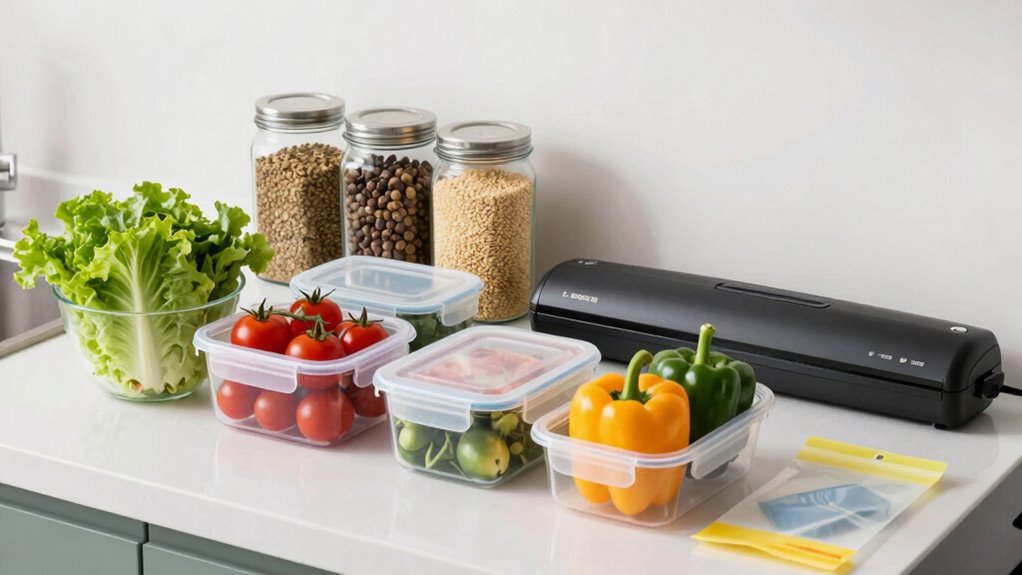

Stop guessing by storing your food in the right containers and environments. Use airtight, BPA-free, or glass containers and keep cold items at 32-40°F to slow bacteria. Label everything with expiration dates, organize your space for easy access, and rotate stock regularly. Maintain proper humidity and temperature levels to prevent mold and spoilage. If you want smart tips to make your food last longer, there’s more to discover below.

Get school and study supplies delivered free — and shop member deals
- Fast, free delivery on millions of items
- Access to Prime Big Deal Days deals on October 6–7
- Prime Video, Amazon Music and more included
Key Takeaways
- Store food in airtight, food-safe containers made from BPA-free plastic, glass, or stainless steel to prevent spoilage.
- Keep perishable items like dairy, meat, and seafood at 32°F–40°F and use a refrigerator thermometer for accuracy.
- Organize your pantry and fridge with labels, clear containers, and proper grouping to facilitate quick access and rotation.
- Maintain consistent temperature and humidity levels, using dehumidifiers or moisture absorbers to prevent mold and bacterial growth.
- Regularly check for spoilage signs such as mold, off-odor, or texture changes, and discard anything unsafe immediately.
airtight food storage containers BPA-free
As an affiliate, we earn on qualifying purchases.
As an affiliate, we earn on qualifying purchases.
Which Foods Last the Longest When Stored Correctly
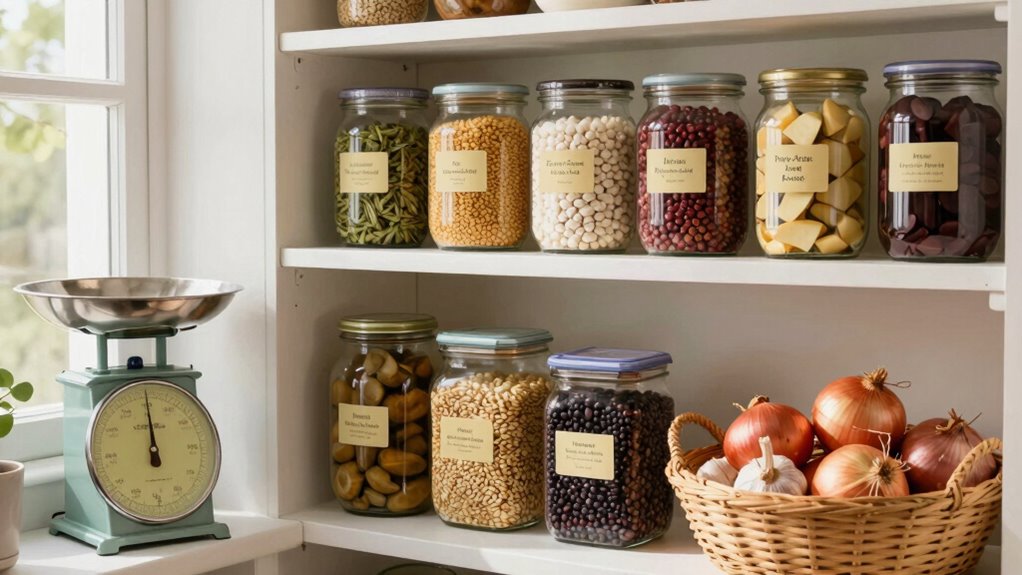
When stored properly, certain foods can last for months or even years without spoiling. This is due to effective food preservation techniques that maximize storage longevity. Dried grains like rice, oats, and pasta are excellent options because they resist spoilage when kept in airtight containers in a cool, dark place. Legumes such as beans and lentils also last for years if stored correctly. Vacuum-sealed dried fruits and nuts can extend their shelf life considerably. Canned goods, especially those with high acidity or low moisture, maintain their quality for many years. Proper storage conditions—cool, dry, and dark environments—are essential for maintaining the freshness and safety of these foods over time, ensuring you always have long-lasting options on hand.
refrigerator thermometer for accurate temperature
As an affiliate, we earn on qualifying purchases.
As an affiliate, we earn on qualifying purchases.
Choosing the Best Food Storage Containers and Materials
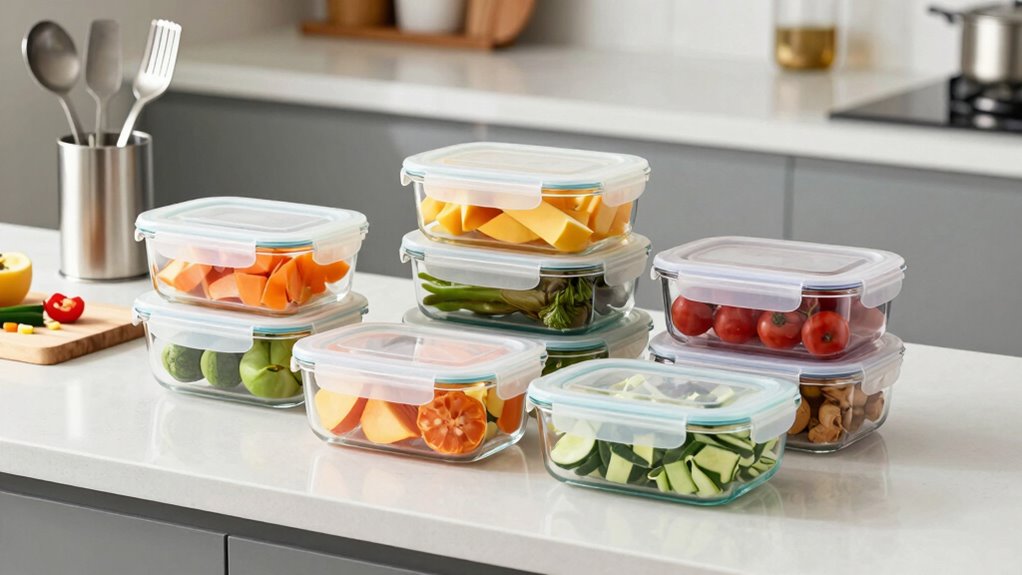
When selecting food storage containers, you want options that are durable and safe for your food. Consider the size and shape that fit your space and help minimize waste. Choosing the right materials guarantees your food stays fresh and prevents any unwanted chemicals from leaching in. Additionally, opting for human-centered design can enhance your overall experience and satisfaction with your storage solutions. Using containers made from food-safe materials ensures your stored items remain uncontaminated and healthy. Incorporating safe material selection can further reduce the risk of chemical exposure and ensure long-term safety. Being aware of material compatibility helps prevent reactions that could compromise your food quality over time. Moreover, understanding contrast ratio in projectors can help you create optimal viewing environments for your home entertainment.
Material Durability and Safety
Choosing the right food storage containers is essential for maintaining safety and freshness, so you should prioritize durability and material safety. Durable containers resist cracking, warping, and staining, ensuring they last through repeated use. Materials like BPA-free plastics, glass, and stainless steel are safe options that won’t leach harmful substances into your food. Always check food labeling to confirm the safety standards of containers. Proper storage hygiene is crucial—clean containers thoroughly and dry them completely before use to prevent bacteria growth. Avoid using damaged or scratched containers, as they can harbor bacteria and compromise food safety. Investing in high-quality, safe materials helps preserve your food longer and reduces the risk of contamination, giving you peace of mind with every meal storage. Additionally, selecting containers with airtight seals prevents air and moisture from entering, further extending the freshness of your stored food.
Container Size and Shape
Selecting the right container size and shape can make a significant difference in keeping your food fresh and organized. Choose containers that match the portion sizes of your meals to minimize waste and spoilage. Opt for stackable containers to maximize storage space and keep your fridge or pantry tidy. Reusable lids are essential—they create a tight seal, preventing air from entering and spoiling your food. Consider rectangular or square shapes, as they fit more efficiently on shelves and in drawers compared to round containers. Avoid overly large containers for small portions, which can lead to wasted space. The right combination of size, shape, and secure lids helps maintain freshness longer and makes meal prep and storage more convenient. Additionally, selecting containers made from durable, food-safe materials ensures long-lasting use and safety for your stored items. Properly storing food in airtight containers also helps prevent contamination and extends shelf life. Using appropriate material types can also prevent chemical leaching and preserve the quality of your food over time.
vacuum-sealed dried fruit and nut storage
As an affiliate, we earn on qualifying purchases.
As an affiliate, we earn on qualifying purchases.
How Temperature and Humidity Impact Food Storage

Temperature and humidity levels play a crucial role in keeping your food fresh and safe. Proper humidity control prevents mold and spoilage, especially for perishable items, by maintaining the right moisture levels. Too much humidity can lead to bacterial growth, while too little can cause foods to dry out or become tough. Maintaining consistent conditions in storage areas helps minimize the risk of spoilage caused by fluctuations in temperature and humidity. Temperature regulation is equally important; storing food at the correct temperature slows bacterial growth and enzymatic reactions that cause decay. Keep your refrigerator at around 40°F (4°C) and your pantry in a cool, dark place. Avoid temperature fluctuations, which can accelerate spoilage. Additionally, air quality in storage areas can influence food preservation, as pollutants and stale air may contribute to spoilage. Proper ventilation helps maintain optimal storage conditions and reduces the risk of mold. Regularly checking humidity levels and adjusting dehumidifiers or moisture absorbers can further protect your food from spoilage. Monitoring storage environment conditions regularly and making adjustments as needed can further extend the shelf life of your food and preserve its quality. By managing both humidity and temperature, you create an ideal environment that extends the shelf life of your food and preserves its quality.
food-safe glass storage containers
As an affiliate, we earn on qualifying purchases.
As an affiliate, we earn on qualifying purchases.
Tips for Storing Fruits and Vegetables to Keep Them Fresh
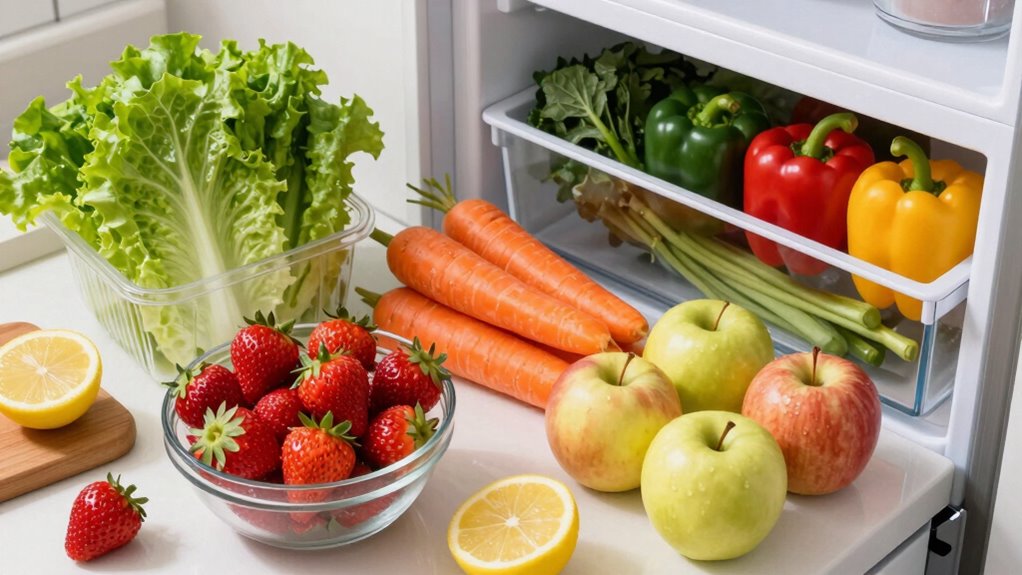
Proper storage methods help fruits and vegetables stay fresh longer, preventing spoilage and waste. To control fruit ripening, keep climacteric fruits like bananas and avocados separate from others until they reach the desired produce ripeness. Store berries and grapes in breathable containers to prevent moisture buildup, which accelerates spoilage. Leafy greens stay fresh longer when wrapped loosely in paper towels and stored in the crisper drawer. Root vegetables such as carrots and potatoes should be kept in a cool, dark place outside the fridge to slow down sprouting and decay. Be mindful of produce ripeness; once fruits and vegetables are ripe, consume or refrigerate them promptly to extend freshness. Properly managing storage conditions guarantees your produce remains flavorful and fresh for as long as possible. Additionally, understanding environmental factors can sometimes influence how quickly certain foods ripen or spoil based on environmental factors.
Smart Ways to Store Dairy, Meat, and Seafood
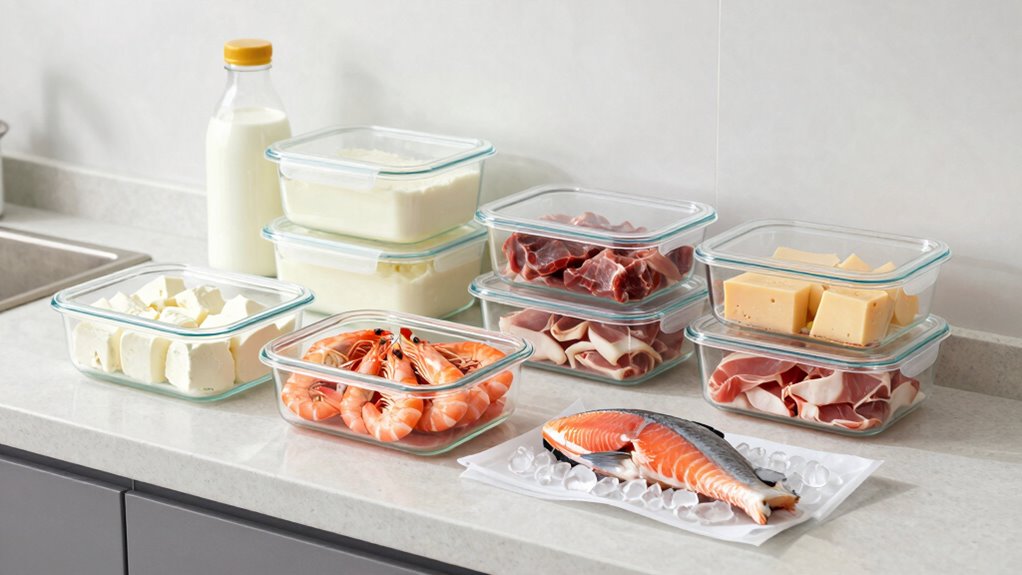
To keep dairy, meat, and seafood fresh, you need to focus on proper temperature settings, like keeping your fridge at or below 40°F. Using airtight containers prevents spoilage and odor transfer, while organized storage makes it easy to find and monitor your items. Implementing these smart techniques helps make certain your perishables stay safe and flavorful. Additionally, understanding seasonal variations can help you adjust your storage practices to maintain freshness throughout the year. For example, adjusting storage methods for seasonal temperature changes can help preserve food quality during different times of the year. Consulting total-cost clarity on storage solutions can also ensure you select the most efficient and cost-effective methods for your needs. Regularly checking the performance metrics of your storage equipment can prevent unexpected spoilage and prolong the lifespan of your appliances. Integrating smart home automation systems can further optimize your refrigerator’s temperature and alert you to potential issues before spoilage occurs.
Proper Temperature Settings
Keeping dairy, meat, and seafood at the right temperatures is vital to prevent spoilage and guarantee food safety. Proper temperature control is key to effective food preservation. Store meat and seafood in the coldest part of your refrigerator, ideally between 32°F and 40°F, to slow bacterial growth. Dairy products should also stay within this range to maintain freshness and prevent spoilage. Use a refrigerator thermometer to ensure your appliance remains at the correct temperature. Avoid overcrowding, which can hinder air circulation and lead to uneven cooling. Remember, maintaining consistent temperatures is essential for prolonging shelf life and reducing waste. Proper storage techniques are increasingly influenced by innovative materials that help keep food fresh longer. Additionally, using proper storage containers can further enhance food preservation by providing airtight seals that prevent contamination and moisture loss. Modern appliances equipped with smart temperature controls can automatically adjust to optimal settings, further improving food safety. By paying attention to proper temperature settings, you considerably improve food preservation and reduce the risk of foodborne illnesses.
Airtight Packaging Methods
Using airtight packaging is one of the most effective ways to preserve the freshness and quality of dairy, meat, and seafood. Vacuum sealing removes air, slowing bacterial growth and preventing freezer burn, which keeps food fresher longer. Invest in a good vacuum sealer to guarantee a tight seal every time. Silicone bags are a versatile option for airtight storage; they’re reusable, durable, and easy to clean. Fill these bags with your meat, seafood, or dairy, and remove excess air before sealing. This method not only extends shelf life but also minimizes odor transfer and freezer burn. Proper airtight packaging is essential for maintaining flavor, texture, and safety, making it a smart choice for any home food storage system.
Organized Storage Techniques
Are you making the most of your fridge and freezer space to keep dairy, meat, and seafood fresh? Organizing these items properly starts with clear food labeling so you know exactly what’s inside and when it expires. Use separate, designated areas for dairy, meat, and seafood to prevent cross-contamination. Maintain good storage hygiene by regularly cleaning shelves and avoiding overcrowding, which helps airflow and keeps food at safe temperatures. Wrap or package items tightly to prevent leaks and spoilage. Always check labels and dates before storing, and discard anything past its prime. Proper organization not only extends the shelf life of your food but also makes it easier to find what you need quickly, reducing waste and ensuring food safety.
Organizing Your Pantry and Fridge to Reduce Waste
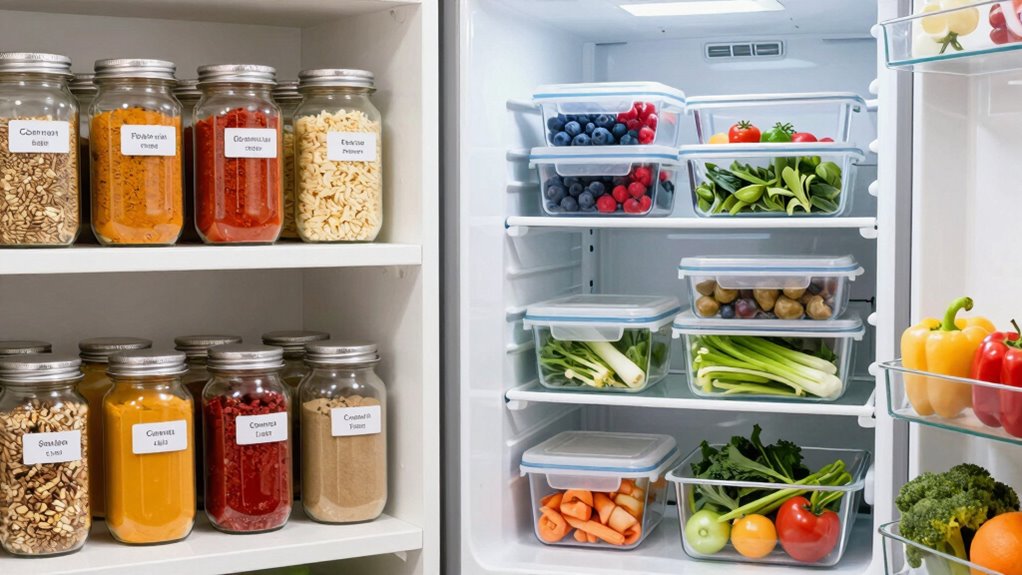
Organizing your pantry and fridge effectively can considerably reduce food waste by making it easier to see what you have and prevent spoilage. When your space is well-arranged, you’ll be better at meal planning and grocery shopping, avoiding duplicate purchases or forgotten items. Keep frequently used items at eye level for quick access, and group similar products together. Use clear containers for dry goods to monitor quantities easily. Label leftovers and storage containers with dates to track freshness. Regularly check for expired items and rotate stock to use older ingredients first. Consider these tips:
- Store perishables in clear, labeled containers
- Keep fresh produce visible and accessible
- Use stackable shelves to maximize space
- Plan meals around what’s already in your fridge and pantry
How to Spot Spoiled Food and When to Toss It
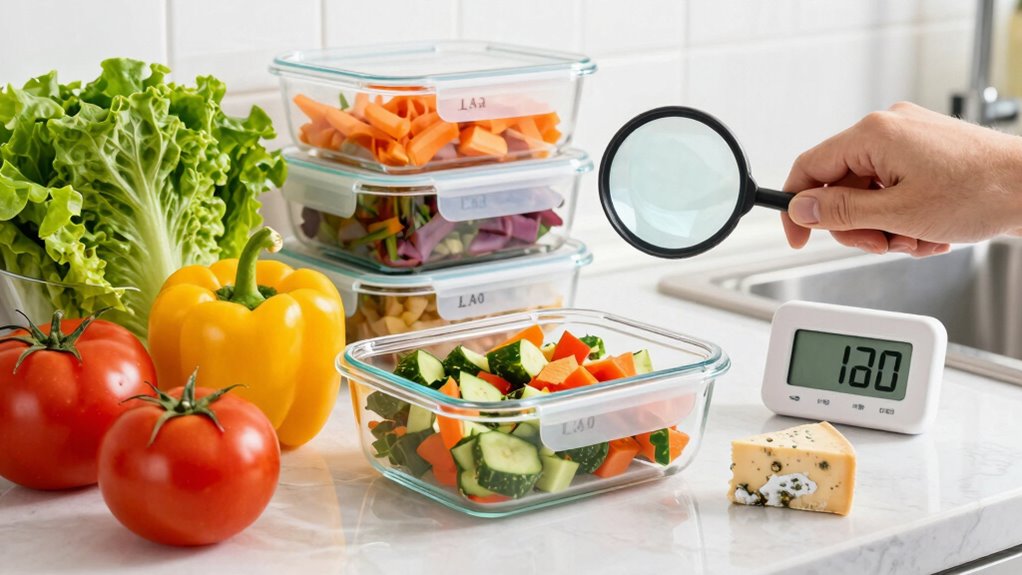
Keeping your food fresh longer depends on how well you can identify signs of spoilage. Look for mold growth, which often appears as fuzzy spots in green, white, or black. Smell your food—offensive odors or gas emission are clear signs it’s time to toss it. Also, check for changes in texture or color.
| Spoiled Food Signs | What to Do |
|---|---|
| Mold growth | Discard immediately |
| Unpleasant smell | Toss even if it looks okay |
| Gas emission | Discard as it indicates fermentation |
Being alert to these signs helps prevent foodborne illnesses. When in doubt, it’s safer to toss questionable items to keep your kitchen safe and your food fresh.
Easy Habits to Keep Your Food Fresh for Longer
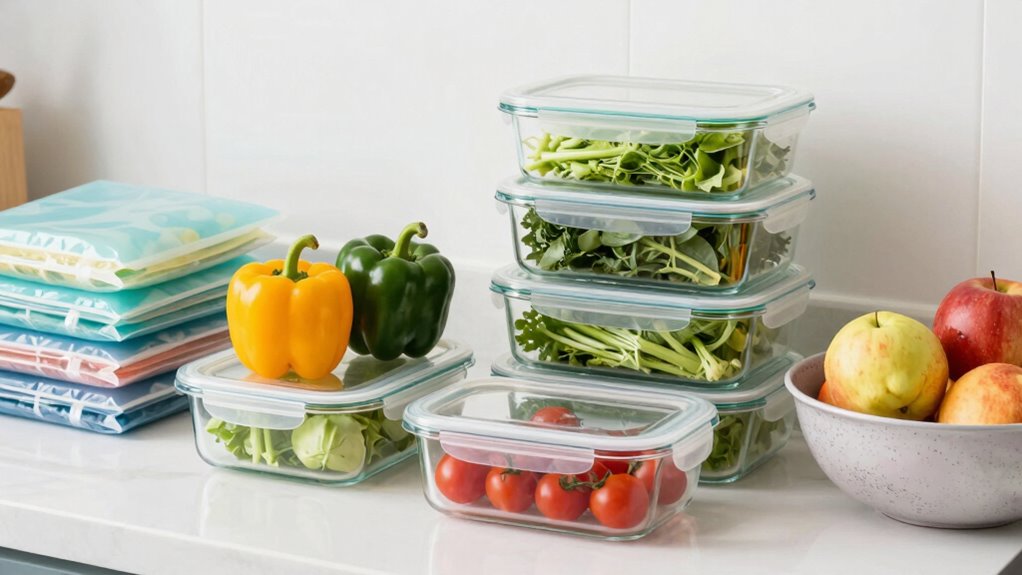
Simple habits can substantially extend the freshness of your food and reduce waste. Starting with a well-organized shopping list helps you buy only what you need, minimizing spoilage. When meal prepping, divide leftovers into small portions and store them in airtight containers to keep food fresh longer. Always wipe produce dry before storing to prevent mold. Use proper storage methods: keep leafy greens in paper towels, and store dairy in the coldest part of your fridge. Incorporate these habits:
- Plan meals ahead based on your shopping list
- Store leftovers in clearly labeled containers
- Keep produce dry and in the right compartments
- Regularly check and rotate food to use older items first
These simple steps can make a significant difference in how long your food stays fresh.
Frequently Asked Questions
How Can I Tell if Stored Food Is Still Safe to Eat?
You can tell if stored food is still safe by checking for food spoilage signs like foul odors, mold, or slimy textures. Always pay attention to the expiration date importance; if it’s past, the food’s riskier. Trust your senses—if something seems off or looks suspicious, it’s best to discard it. Proper storage helps, but your awareness of spoilage signs keeps you safe from eating compromised food.
Are There Specific Storage Tips for Homemade or Bulk Foods?
Did you know that improper storage causes up to 20% of food waste? For homemade or bulk foods, use airtight containers to lock in freshness and prevent pests. Focus on moisture control by keeping foods dry and sealing them tightly. Label everything with dates, so you know when to use it. These simple tips help your homemade and bulk foods stay fresh longer, saving money and reducing waste.
What Are the Best Practices for Freezing Different Types of Food?
To freeze foods effectively, use proper freezing techniques like airtight containers or vacuum sealing to prevent freezer burn. Label everything with dates to guarantee you use older items first, aiding food preservation. Freeze in small portions for quick thawing. Maintain your freezer at 0°F to keep foods fresh longer. Remember, different foods need specific handling—meats, fruits, and baked goods all benefit from tailored freezing methods to maximize shelf life and flavor.
How Does Packaging Affect the Shelf Life of Stored Food?
You can extend your food’s shelf life considerably by using airtight containers or vacuum sealing. Airtight containers prevent air from entering, slowing spoilage and freezer burn. Vacuum sealing removes air entirely, which helps preserve freshness and prevent bacteria growth. Both methods reduce moisture and oxidation, keeping your food fresher longer. So, invest in good packaging options like airtight containers or a vacuum sealer to maximize storage time and reduce waste.
Can Certain Storage Methods Prevent Freezer Burn and Dehydration?
Yes, certain storage methods can prevent freezer burn and dehydration. You should use airtight containers to keep moisture in and prevent air exposure. Wrapping food tightly with plastic wrap or aluminum foil also helps control moisture and reduce dehydration. Additionally, consider using moisture control packs inside your freezer to absorb excess humidity. These techniques work together to preserve your food’s quality, flavor, and texture longer, ensuring it stays fresh and safe to eat.
Conclusion
By applying these simple storage tips, you’ll waste less food and save money. Imagine a busy family who started storing leftovers properly—they reduced grocery bills and avoided last-minute trips to the store. When you organize your fridge, choose the right containers, and keep an eye on freshness, you’re not just extending food life—you’re also making a positive impact on your household and the environment. Start today, and enjoy fresher, longer-lasting food tomorrow.
Halloween Picks
halloween
As an affiliate, we earn on qualifying purchases.