TL;DR

Prime made for students and young adults
- Fast, free delivery for dorm and study essentials
- Prime Video and Amazon Music included
- Member-only deals
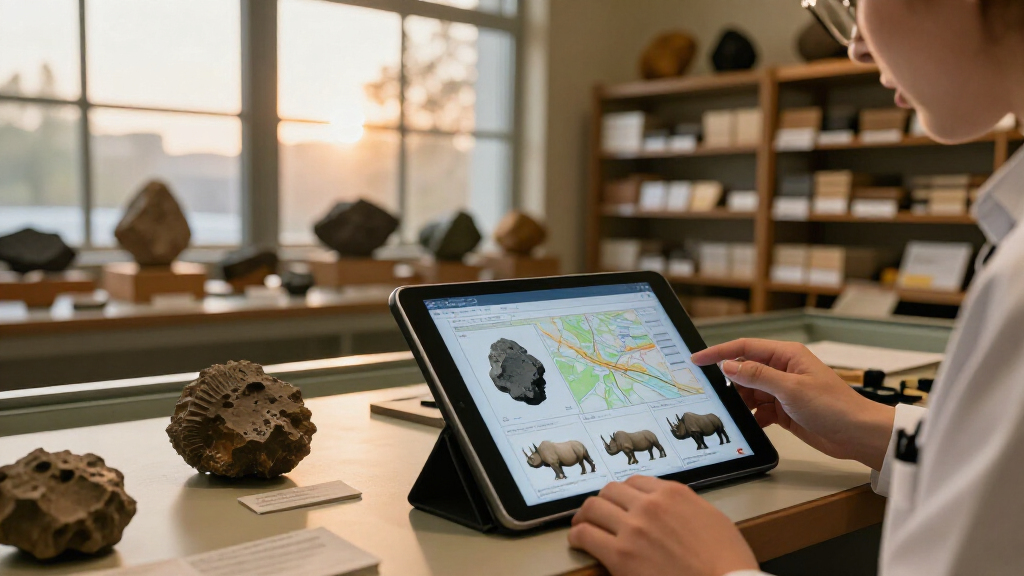
Software engineer Jesse Waites says an AI-assisted search across digitized historical records surfaced a forgotten meteorite report, references to three rhinoceroses, and possible unrecorded volcanic eruptions. He checked promising results against scans of original documents, but the findings are preliminary and the supplied report does not provide full evidence or independent expert assessments for every discovery.
Software engineer Jesse Waites says an AI-assisted search of millions of historical records has surfaced a forgotten meteorite report, references to three rhinoceroses and possible unrecorded volcanic eruptions. The work shows how automated searches can help researchers find leads in vast archives, but each result still needs checking against original documents and specialist records.
Waites said he built a workflow to search 4.35 million pages of Dutch East India Company records, along with digitized Dutch and American newspapers and some ship logbooks. A key dataset came from GLOBALISE, a project that has made transcriptions of the company’s handwritten records searchable. Waites said his system converted 5.7 million passages from the company archive into representations of meaning, allowing it to search beyond exact spellings.
The workflow used several AI tools for different tasks. A small, low-cost model first screened large numbers of passages, then a larger model examined a smaller set, translated selected text and extracted dates and places. Waites said an AI coding agent helped him build the pipeline. He reports that screening 59,000 elephant mentions cost about $3, illustrating how he used an inexpensive first pass to limit the more costly review.
Waites said he examined promising records against scans of the original pages and compared potential findings with catalogues used by specialists before treating them as new. The project was inspired by historian Benjamin Breen’s account of finding a 1615 Dutch East India Company ship’s journal that mentioned sailors catching dodos and tortoises on Mauritius. That record is a separate discovery; Waites used it as a model for searching across multiple historical questions.
AI Can Sort Millions of Archive Pages
The report points to a practical use for AI in historical research: finding likely passages in collections too large for a person to read page by page. Waites estimated that reading the Dutch East India Company pages manually at two minutes each, eight hours a day and five days a week, would take about 70 years. His system searched the collection in an overnight run, according to his account.
That speed does not make the results self-verifying. Historical handwriting and print can be misread by text-recognition software, while spellings vary over time. Waites’s emphasis on original scans addresses one part of that problem: researchers must confirm what a document actually says before treating a machine-generated transcription or summary as evidence. The archive search can point to a source, but historical interpretation and confirmation remain necessary.
The approach may be useful beyond these particular finds because it combines broad semantic searching with staged human and machine review. Its value will depend on whether the candidate records withstand checks by researchers familiar with the relevant collections and specialist catalogues.
As an affiliate, we earn on qualifying purchases.
From a Dodo Record to Wider Searches
Waites began after reading historian Benjamin Breen’s October 1, 2026, post about using AI to find a previously unreported eyewitness account of a dodo. Breen described a 1615 ship’s journal in the Dutch East India Company archive; its transcription says sailors on Mauritius caught “many tortoises, dodos.” The company operated from 1602 until it was dissolved in 1799.
Rather than focus on one question, Waites asked an AI research assistant to suggest historical mysteries that might be investigated using records already available online. The resulting list included animal records, a long-sought location for a major 1808 volcanic eruption, earthquakes reported in old Dutch newspapers, meteorite falls and missing ships. He said candidates were ranked partly by how accessible the source material was and whether a claim could be checked against an original page.
The searchable material included the GLOBALISE transcriptions, digitized newspapers from the Dutch national library, two centuries of American newspapers and selected logbooks. The resulting project generated leads across several topics rather than a single finished study. The source account names a meteorite report, three rhinoceros records and eruptions, but does not give enough detail here to independently evaluate each one.
“Adding even one new data point to a couple of niche fields felt like a small but worthwhile contribution to make.”
— Jesse Waites, describing his research goal
As an affiliate, we earn on qualifying purchases.
Which Leads Are Confirmed Finds?
The supplied account does not identify the meteorite report’s date, location or archive reference, nor does it reproduce the underlying document. It also does not describe the three rhinoceros records in enough detail to assess whether they document distinct animals or encounters. The possible volcanic eruptions are described as unrecorded, but the evidence and criteria for that description are not set out here.
Waites says he checked promising passages against original scans and specialist catalogues, but the source material provided does not include independent assessments by historians, volcanologists or meteorite specialists. It is therefore unclear which leads have been accepted as new findings, published in scholarly work or added to established catalogues. Text-recognition errors, translation choices and the meaning of historical descriptions can all affect how a candidate record should be interpreted.
The figures for passages processed and the time required for manual reading are Waites’s descriptions of his own project, not an independent performance evaluation. The source also does not provide a complete account of the system’s false positives or how many candidate records were rejected.
As an affiliate, we earn on qualifying purchases.
Original Records Need Specialist Review
The next step for each proposed discovery is a close examination of the cited original page, followed by comparison with relevant historical and scientific catalogues. That would establish whether a record is genuinely overlooked, what it can support, and whether it changes an existing account. The source material does not announce a timetable for those reviews or say when full citations for all the findings will be available.
Waites’s account offers a description of a search method and its leads, rather than a completed, independently reviewed study of every subject. Readers should treat the meteorite, rhinoceros and eruption references as reported discoveries or candidate findings until the documents and specialist evaluations are available in enough detail to verify them.
As an affiliate, we earn on qualifying purchases.
Key Questions
What did the AI-assisted search find?
Waites reports finding a forgotten meteorite report, references to three rhinoceroses and possible unrecorded volcanic eruptions in historical records. The supplied account does not provide the full documents or evidence for each result.
Did the AI discover a new eyewitness account of a dodo?
No. That discovery was reported by historian Benjamin Breen in a separate post. Waites said Breen’s account of a 1615 ship’s journal inspired his broader search project.
How did Waites check the AI’s results?
Waites said he used the system to narrow the search, then checked selected passages against scans of the original handwritten pages and compared possible findings with specialist catalogues. Independent expert confirmation is not included for every lead in the source material.
What records did the project search?
The project included 4.35 million pages of Dutch East India Company records transcribed by GLOBALISE, digitized Dutch and American newspapers, and some ship logbooks, according to Waites.
Are all the reported findings confirmed?
Not from the information provided. Waites describes the results and says he checked candidate records, but the source does not supply enough detail or independent specialist assessments to establish the status of each finding.
Source: hn
Fall Picks
fall essentials
As an affiliate, we earn on qualifying purchases.