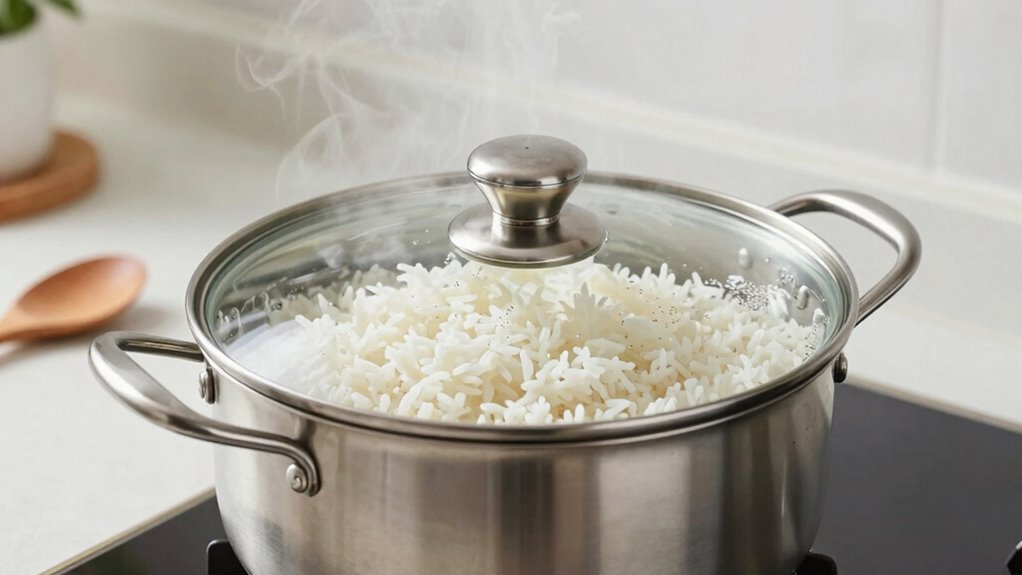

To avoid rice turning into a mess, choose the right type and rinse it thoroughly to remove excess starch. Use the proper water-to-rice ratio—about 1.5 to 2 cups of water per cup of rice—and avoid stirring during cooking. Stick to consistent times and methods, whether on the stove, in a rice cooker, or instant pot. For best results and helpful tips on perfect fluffy rice, continue exploring proven techniques.

Prime made for students and young adults
- Fast, free delivery for dorm and study essentials
- Prime Video and Amazon Music included
- Member-only deals
Key Takeaways
- Rinse rice thoroughly to remove surface starch, reducing stickiness and clumping during cooking.
- Use the correct water-to-rice ratio (1.5–2 cups water per cup rice) for fluffy, non-messy grains.
- Avoid stirring rice during cooking to prevent breaking grains and creating a sticky mess.
- Choose appropriate cooking methods (stove, rice cooker, instant pot) suited to your rice type for better control.
- Let cooked rice rest covered for a few minutes before fluffing to improve texture and prevent sticking.
The Essentials of Cooking Perfect, Fluffy Rice
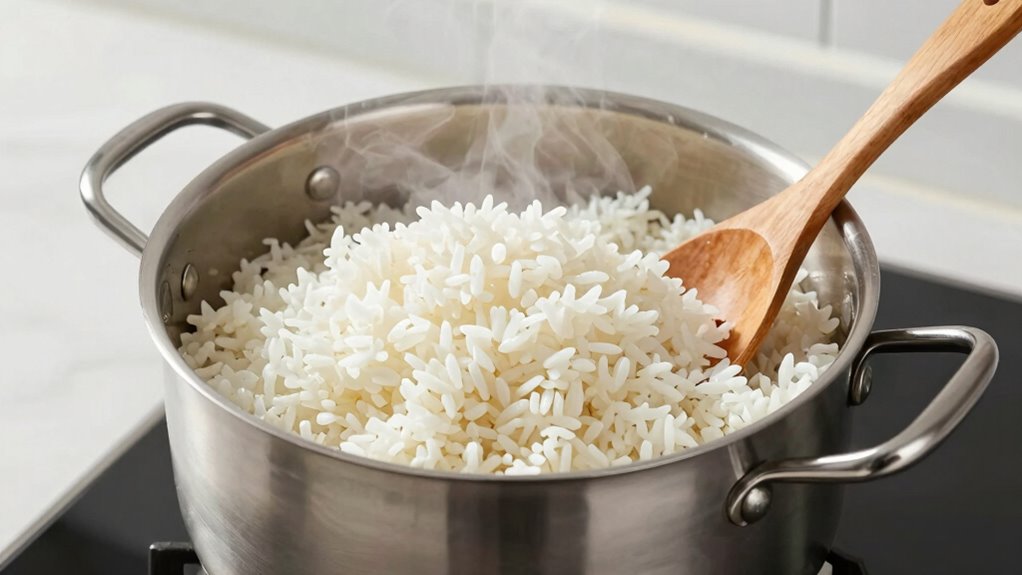
To cook perfect, fluffy rice, you’ll want to start with the right rice and proper measurements. Proper rice storage keeps your grains fresh and prevents spoilage, ensuring each batch cooks evenly. Use a measuring cup to get the right amount—too much rice can result in sticky, overcooked grains, while too little may leave you craving more. Once measured, rinse the rice to remove excess surface starch, which helps achieve that fluffy texture. When it comes to rice seasoning, adding a pinch of salt or a splash of broth can enhance flavor without overpowering the natural taste. Keep your rice covered during cooking and avoid lifting the lid prematurely to trap steam. These simple steps set the foundation for perfectly cooked, fluffy rice every time.
How to Choose the Right Rice and Measure It Properly
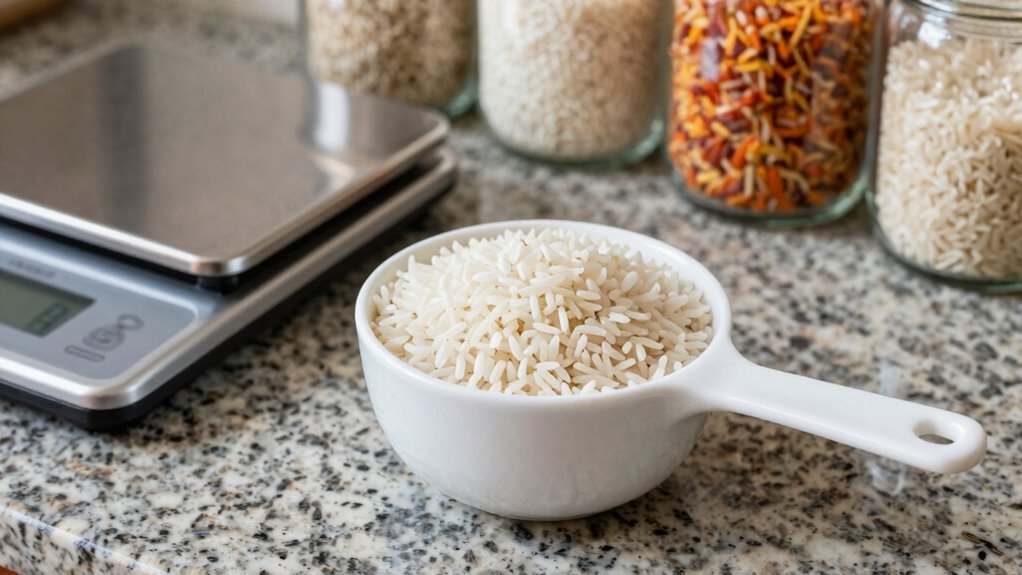
Choosing the right rice is essential for achieving the best results in your dishes, so consider the type and quality before you start cooking. Grain selection impacts texture and flavor—long-grain rice stays fluffy, while short-grain is stickier. Quality matters; opt for fresh, well-stored rice to prevent clumping. When measuring, use proper techniques like a measuring cup or a scale for accuracy. Rinse the rice thoroughly to remove excess starch, which influences stickiness and messiness. Always measure rice and water precisely to ensure consistent results; a common ratio is 1 cup rice to 2 cups water, but it varies by type. Proper measurement and grain choice set the foundation for perfectly cooked rice that won’t turn into a mess. Additionally, understanding the Free Floating nature of rice grains can help in selecting the right cooking method for each type. For example, some rice varieties benefit from soaking before cooking, which can help control sticking and clumping during the process. Recognizing these grain properties can further improve your rice-cooking technique, especially when considering moisture absorption and how it affects texture. Being aware of the grain size and shape can also influence how well the rice cooks evenly and avoids messes.
Cooking Rice on the Stove, in a Rice Cooker, or With an Instant Pot : What You Need to Know
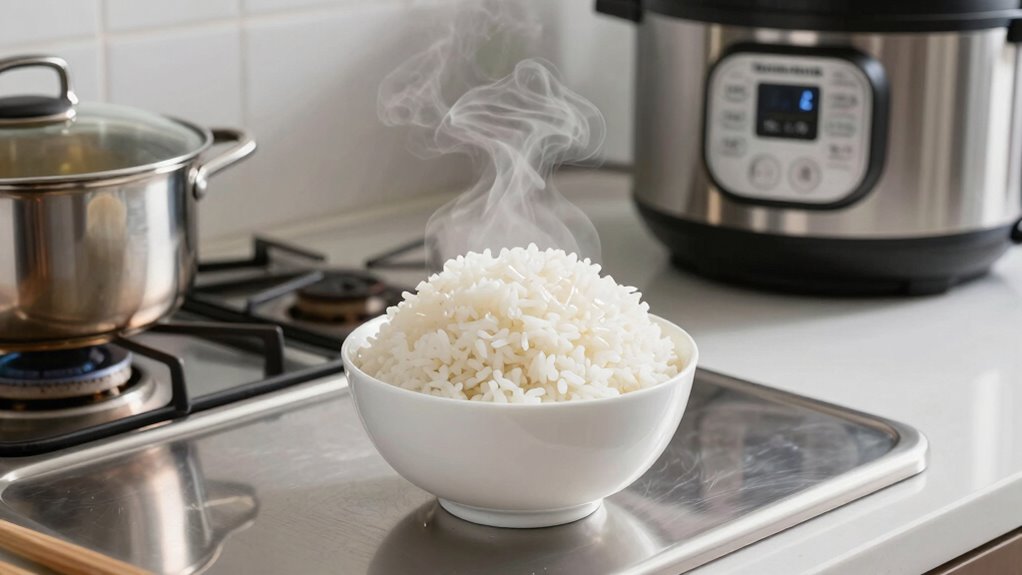
Ever wondered which cooking method best suits your rice and lifestyle? Choosing between stove, rice cooker, or Instant Pot depends on your grain varieties and preferred cooking times. For example, long-grain rice cooks quickly on the stove—about 15-20 minutes—while brown rice needs longer, around 40-45 minutes. Rice cookers simplify the process, adjusting automatically for different grain varieties, ensuring consistent results with minimal effort. Instant Pots are versatile, reducing cooking times for even tough grains like wild rice or multi-grain blends. Consider your schedule and desired texture when selecting a method. Stoves give you control over timing, rice cookers handle variety-specific settings, and Instant Pots offer quick, hands-off cooking. Matching your choice to your rice type and lifestyle for perfect results every time can also be enhanced by understanding contrast ratio and other visual factors that impact your cooking setup.
Common Rice Problems and How to Fix Them (Troubleshooting Tips)
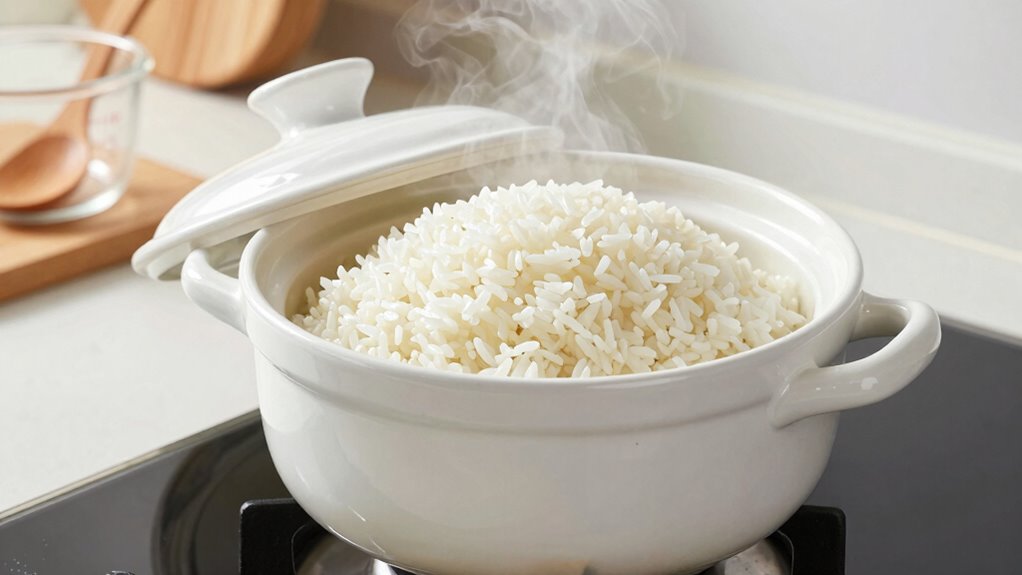
Even with the right cooking method, rice can sometimes turn out less than perfect. Overcooked rice is mushy and sticky, often caused by too much water or cooking it too long. To fix this, try draining excess water immediately after cooking or spreading the rice out to cool and firm up. Underneath, undercooked rice remains hard and crunchy, usually because it didn’t absorb enough water or wasn’t cooked long enough. To salvage it, add a splash of water, cover, and cook on low heat for a few more minutes. Always check your water-to-rice ratio and cooking time to prevent these issues. Adjusting your process based on these problems will help you achieve better results every time. Using energy-efficient cooking techniques can also help improve consistency and save energy during preparation.
Tips and Secrets for Fluffy, Non-Sticky Rice Every Time
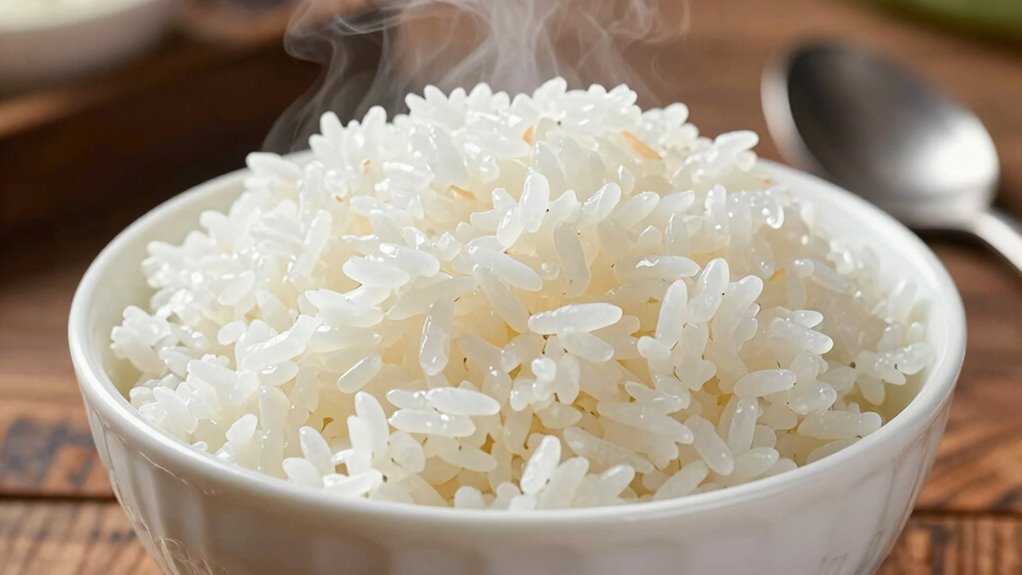
Achieving fluffy, non-sticky rice hinges on a few simple but essential tips that make all the difference. Rinse the rice thoroughly to remove excess starch, which helps prevent clumping. Use the correct water-to-rice ratio—usually about 1.5 to 2 cups of water per cup of rice, depending on the variety. Avoid stirring during cooking to keep grains separate. For added flavor, consider seasoning options like a pinch of salt, a splash of broth, or a bay leaf in the cooking water. Once cooked, let the rice sit covered for a few minutes before fluffing with a fork. Serving suggestions include pairing it with stir-fries, curries, or as a base for grain bowls. Fluffy rice elevates any meal—keep these tips in mind for perfect results every time.
Frequently Asked Questions
Can I Cook Rice Without Rinsing It First?
Yes, you can cook rice without rinsing, but rinsing improves rice texture and removes excess starch, preventing it from becoming sticky. Rinsing benefits include fluffier rice and fewer impurities. If you skip this step, expect a slightly stickier or creamier texture. To achieve the best results without rinsing, use the right water-to-rice ratio, avoid overcooking, and let the rice rest before serving.
Is It Okay to Open the Lid During Cooking?
Ever wonder if opening the lid during cooking ruins your rice? It’s better to resist, but if you must, do it briefly for steam release. Removing the lid too often disrupts the steam, affecting texture and making rice soggy or undercooked. Keep the lid on until the cooking time ends, then let it rest. Trust the process—your rice turns out perfect when you minimize lid removal!
How Do I Store Leftover Cooked Rice Safely?
To store leftover cooked rice safely, you should transfer it to an airtight container within two hours of cooking. Follow food safety guidelines by refrigerating it at 40°F (4°C) or below. Use the rice within 3 to 4 days, and reheat it thoroughly before eating. These storage tips help prevent bacterial growth, ensuring your rice stays safe and fresh for later enjoyment.
Can I Cook Rice Without a Measuring Cup?
You absolutely can cook rice without measuring cups! Just use common household items like a tablespoon or a mug to gauge rice proportions—often, one cup of rice is about three to four tablespoons of rice. Keep an eye on the rice and water ratio, adjusting as needed. Trust your intuition; cooking rice is more about feel than tools, and you’ll get perfect fluffy results every time!
What Are Alternative Liquids I Can Use Instead of Water?
You can use broth, stock, coconut milk, or even flavored water as alternative liquids in your cooking techniques. These options add depth to your rice and influence its texture, making it more flavorful and moist. Just keep in mind that some liquids, like broth, may be salty, so adjust your seasoning accordingly. Experimenting with different liquids can create unique rice dishes and improve your overall cooking experience.
Conclusion
Mastering rice cooking is all about choosing the right rice, measuring accurately, and following proper techniques. For example, Sarah always used too much water, ending up with mushy rice. After adjusting her method, she finally achieved perfectly fluffy grains. Remember, small tweaks make a big difference—whether you’re using a stove, rice cooker, or Instant Pot. With patience and practice, you’ll cook rice that’s consistently delicious and mess-free every time.
Halloween Picks
halloween
As an affiliate, we earn on qualifying purchases.