To prevent off-flavors, you should clean your beer lines regularly using a commercial line cleaner suited for beer systems. Disassemble the tap components, run the cleaning solution through the lines, and then rinse thoroughly with clean water. Cleaning after every use or at least weekly helps eliminate buildup of residues and biofilm that cause off-flavors. Keeping your lines well-maintained guarantees real, fresh-tasting beer and reduces spoilage issues — learn more to perfect your routine.

Prime made for students and young adults
- Fast, free delivery for dorm and study essentials
- Prime Video and Amazon Music included
- Member-only deals
Key Takeaways
- Regularly disassemble and clean all components of the tap system to remove yeast, mold, and bacteria buildup.
- Use commercial, food-grade line cleaners with proper techniques to break down beer stone and organic residues.
- Schedule cleaning at least once a week, adjusting frequency based on usage volume to prevent off-flavors.
- Rinse thoroughly with clean water after cleaning to eliminate residual cleaning agents and biofilm.
- Sanitize all parts before reassembly and maintain detailed cleaning records for consistent maintenance.
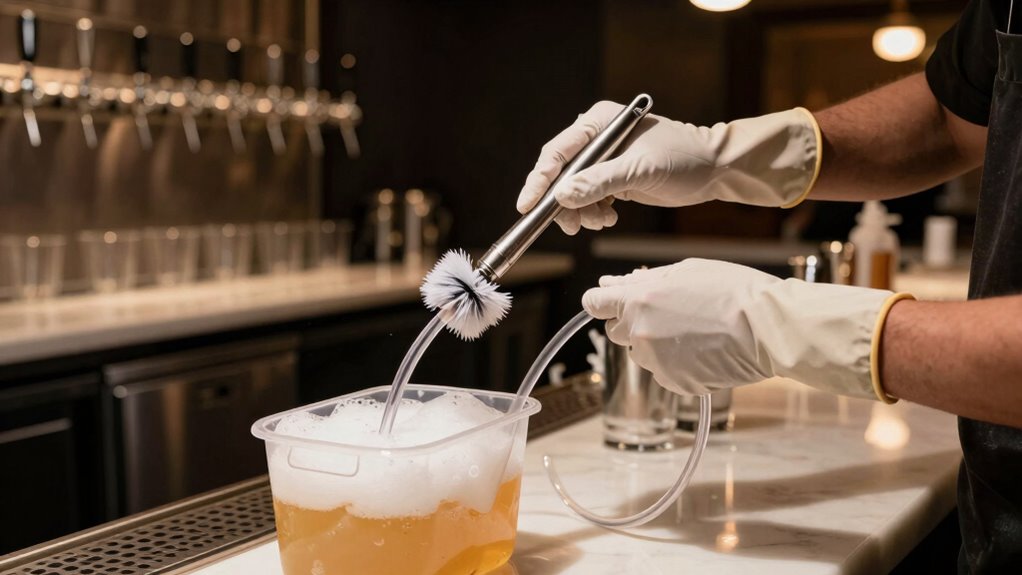
Cleaning beer lines is vital to guarantee your beverages taste fresh and stay safe for consumption. When you neglect this essential step, you risk compromising the draft beer quality, which can lead to off-flavors, spoilage, and customer dissatisfaction. Proper cleaning isn’t just about aesthetics; it’s about maintaining the integrity of every pour. The key is to follow sanitation best practices consistently, ensuring that your beer lines are free from residual yeast, mold, and bacteria that can quickly develop if not cleaned regularly. These contaminants are often invisible but have a significant impact on flavor, aroma, and safety.
Regular cleaning of beer lines ensures fresh-tasting, safe, and high-quality draft beer.
To achieve the best draft beer quality, you need to adopt a routine that includes thorough cleaning after every use and periodic deep cleans. The process begins with disassembling the tap system, removing all components such as faucets, couplers, and lines. Use a suitable cleaning solution—preferably a commercial line cleaner designed specifically for beer systems—and run it through the lines with a cleaning pump or manual flushing. This step helps break down beer stone, organic residues, and biofilm buildup that can harbor bacteria and yeast. Rinsing thoroughly with clean water afterward is equally important to remove any residual cleaning agents, which could otherwise alter the taste or cause foaming issues.
Maintaining sanitation best practices also involves scheduling regular inspections and cleanings. Many establishments find that cleaning lines at least once a week keeps the draft beer quality at a consistently high level. If your volume is higher, more frequent cleanings are necessary. Always use food-grade cleaning agents and follow the manufacturer’s instructions to avoid damage to your equipment. Don’t forget to sanitize all components before reassembling. Proper sanitation prevents off-flavors like sourness or stale taste, which are often caused by bacterial contamination.
Additionally, keeping detailed records of cleaning schedules ensures you don’t forget or neglect routine maintenance. Investing in proper tools, such as line cleaning kits and brushes, can make the process more effective and less time-consuming. Remember, the effort you put into cleaning beer lines directly correlates with the quality of your draft beer and the safety of your customers. By adhering to sanitation best practices, you preserve the pure, crisp flavors that make your beer stand out. Ultimately, a commitment to cleanliness not only enhances your beer’s taste but also extends the lifespan of your equipment, saving you money in the long run. Regular use of proper cleaning techniques can also help prevent buildup of biofilm, which is a common cause of off-flavors.
As an affiliate, we earn on qualifying purchases.
Frequently Asked Questions
How Often Should I Replace My Beer Line Fittings?
You should replace your beer line fittings every 6 to 12 months as part of your beer line maintenance. This fitting replacement schedule helps prevent off flavors caused by buildup or corrosion. Regularly inspecting fittings for wear and leaks ensures your system stays clean and your beer tastes fresh. Don’t wait until you notice issues—sticking to this schedule keeps your beer quality high and your equipment in top shape.
What Are the Signs of Contaminated Beer Lines?
You might notice a sour or off-taste in your beer, which signals contaminated lines. Look for signs like excessive foam, mold growth around fittings or faucet openings, or a cloudy appearance in the beer. Beer line bacteria and mold growth thrive if cleaning routines are neglected. Regular maintenance prevents these issues, keeping your beer fresh and flavors true. Don’t ignore these signs—prompt cleaning stops off-flavors before they start.
Can I Use Household Cleaning Products for Beer Lines?
You shouldn’t use household cleaners on beer lines because they aren’t designed for that purpose and could compromise chemical safety. Household cleaners often contain chemicals that can leave residues, affecting beer flavor and potentially harming you. Always use proper beer line cleaning products specifically formulated for this task. These are safe for your equipment, effective at removing build-up, and ensure your beer tastes fresh and clean every time.
How Does Temperature Affect Beer Line Cleaning Effectiveness?
Temperature impacts cleaning efficiency profoundly; if your beer lines are too cold, cleaning solutions may not work effectively, leaving residues that cause off flavors. Conversely, high temperatures can accelerate bacteria growth, making cleaning less effective over time. Ideally, keep your lines at a consistent, moderate temperature to maximize cleaning impact. Proper temperature control ensures your cleaning routine effectively removes buildup, maintaining fresh beer taste and preventing off flavors.
Is Professional Cleaning Necessary for Small-Scale Operations?
You don’t have to hire professionals for small breweries or home brewing, but it’s often a case of “you get what you pay for.” Regular cleaning keeps your beer tasting fresh and prevents off flavors. While small-scale operations might manage with DIY cleaning, professional services guarantee thorough sanitation, especially if you’re serious about quality. Ultimately, consistent cleaning routines, whether DIY or professional, are key to great-tasting beer.
As an affiliate, we earn on qualifying purchases.
Conclusion
By keeping your beer lines clean, you’re fundamentally nurturing a pristine path for each pour, ensuring every sip sings with freshness. Think of it as tending to a garden—regular care keeps away the weeds of off-flavors and lets your true brews bloom. Don’t let neglect turn your tap into a muddy swamp; instead, stay vigilant and let your beer flow pure, like a crystal-clear stream. Cheers to flawless flavors and happy sipping!
As an affiliate, we earn on qualifying purchases.
As an affiliate, we earn on qualifying purchases.
Fall Picks
fall essentials
As an affiliate, we earn on qualifying purchases.