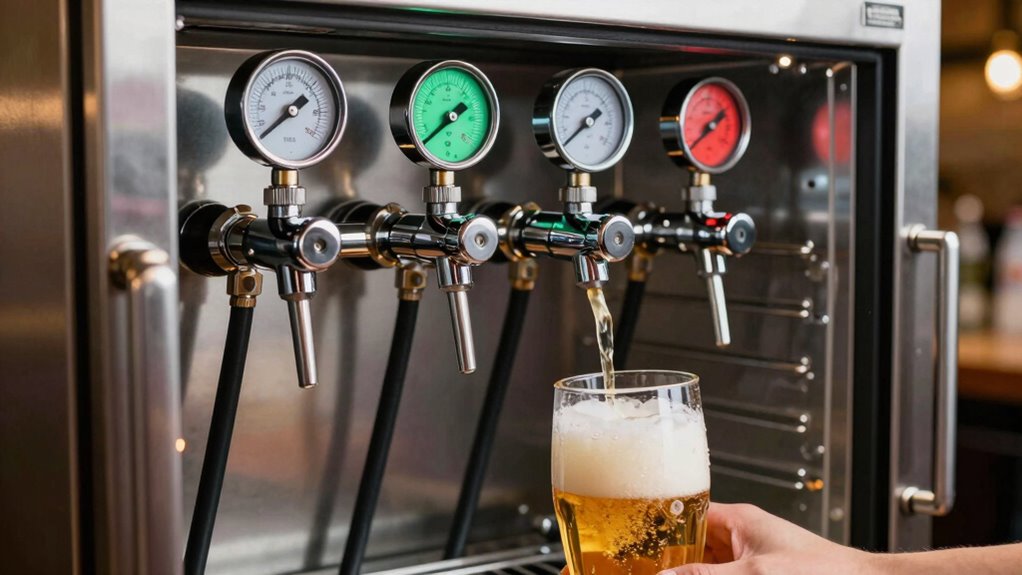

To set up your kegerator for perfect pours, start by properly connecting the CO2 regulator and adjusting it slowly to about 10-12 PSI, based on your beer type and line length. Keep your lines clean and maintained every two weeks to prevent off-flavors and clogs. Pour at a 45-degree angle, reducing turbulence for less foam. Ensuring proper pressure, line setup, and pouring technique helps achieve crisp drafts—continue to explore these tips to master your setup.

Prime made for students and young adults
- Fast, free delivery for dorm and study essentials
- Prime Video and Amazon Music included
- Member-only deals
Key Takeaways
- Adjust CO2 regulator slowly, keeping pressure between 10-12 PSI for optimal carbonation and minimal foam.
- Regularly clean beer lines every two weeks to prevent off-flavors and ensure proper flow.
- Use proper line length and diameter to reduce resistance, foam, and maintain steady carbonation.
- Chill the keg to around 38°F and check for leaks before connecting to ensure fresh, properly carbonated beer.
- Pour at a 45-degree angle, gradually straighten the glass, and maintain proper pressure for smooth, foam-free servings.
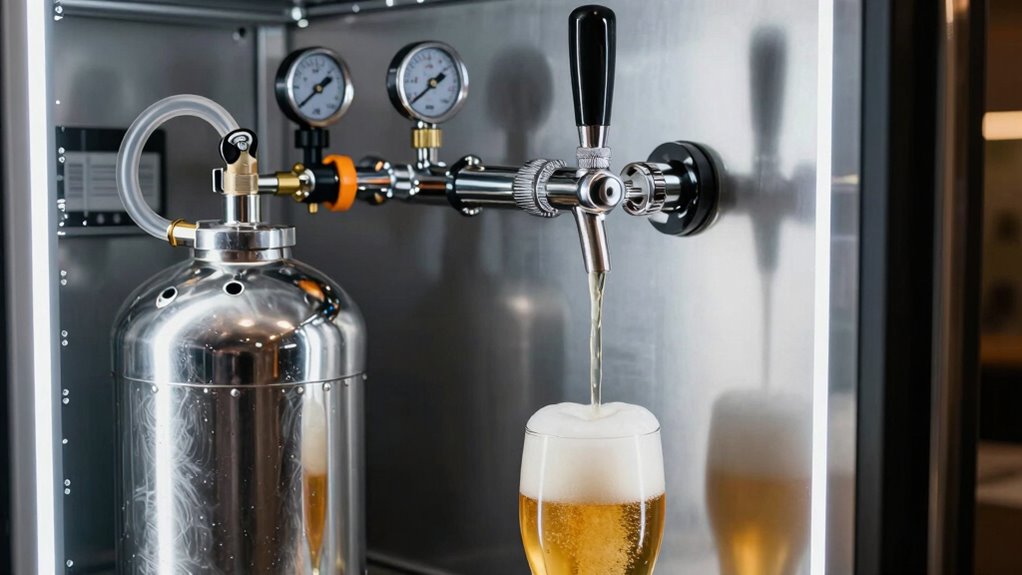
Thinking about setting up a kegerator? You’re about to plunge into a process that requires attention to detail, especially when it comes to CO2 regulation. Properly managing CO2 levels isn’t just about keeping the beer carbonated; it’s also key to guaranteeing you pour perfect, foam-free glasses. Start by understanding your regulator, which controls how much CO2 flows into your keg. Too much pressure can lead to over-carbonation and excessive foam, while too little results in flat beer. Adjust the regulator slowly, and always check the pressure gauge to maintain the ideal PSI—usually between 10 and 12 for most beers. This precise control helps you pour without foaming and keeps your beer tasting fresh.
Manage CO2 carefully for perfect, foam-free pours and fresh-tasting beer.
Equally important is beer line cleaning. Dirty lines can cause off-flavors, clog the flow, and contribute to foam issues. Regular cleaning prevents buildup of yeast, mold, and beer residue, which can all impair the quality of your pour. Use a dedicated line cleaning solution, and follow a routine—at least every two weeks if you’re a frequent user. Disconnect the lines, flush them thoroughly, and ensure all components are dried before reconnecting. Clean lines help maintain the proper flow rate and prevent foaming problems, giving you a smoother pour every time.
When setting up your kegerator, pay close attention to the beer line length and diameter, as these influence pressure and flow. Too long or narrow lines increase resistance, which can cause foaming issues and make it harder to regulate pressure accurately. Shorter, wider lines reduce resistance and help you maintain steady carbonation levels. After hooking up your lines, double-check all connections for leaks and ensure your keg is properly chilled—ideally around 38°F—to keep the beer fresh and carbonated correctly.
Finally, fine-tuning your pouring technique is vital. Once you’ve set the right pressure and cleaned your lines, pour at a 45-degree angle to minimize foam. Gradually straighten the glass as you near the end of the pour, allowing the beer to flow smoothly and reducing turbulence that causes foam. With proper CO2 regulation, regular beer line cleaning, and a steady pouring method, you’ll enjoy crisp, foamy-free drafts every time. Master these basics, and your kegerator setup will deliver consistently excellent beer with minimal hassle.
As an affiliate, we earn on qualifying purchases.
Frequently Asked Questions
How Often Should I Replace the CO2 Tank?
You should replace your CO2 tank when it’s empty or near empty, which typically means every 3 to 5 years depending on usage. The CO2 tank lifespan varies based on how often you pour beer, so keep an eye on the pressure gauge and listen for leaks. Following a regular replacement schedule guarantees consistent pressure and prevents interruptions in pouring your beer without foam.
What Is the Ideal Temperature for My Kegerator?
You should keep your kegerator at around 38°F to 40°F for ideal temperature control. This range maintains beer freshness without over-carbonation or foaming issues. If the temperature gets too warm, your beer can spoil faster; too cold, and it might become flat or frozen. Regularly check your thermostat to guarantee consistent temperature, which keeps your beer tasting fresh and enjoyable every time you pour.
Can I Use a Standard Refrigerator for a Kegerator?
Yes, you can use a standard refrigerator for a kegerator conversion. Just make certain it has a temperature range suitable for beer and enough space for your keg. You might need to do some refrigerator modification, like installing a tap tower and adding an appropriate CO2 system. With these adjustments, your fridge becomes an effective kegerator, providing fresh draft beer right at home.
How Do I Troubleshoot Persistent Foam Issues?
To troubleshoot persistent foam, first check the foam causes like over-carbonation or dirty lines. Adjust gas pressure to the recommended level for your beer type, ensuring it’s not too high, which causes excessive foam. Also, inspect for leaks or blockages in the lines that hinder proper flow. Regularly clean your tap system and ensure the beer is at the right temperature to prevent foaming issues.
Is It Necessary to Clean the Lines Regularly?
Yes, you need to clean the lines regularly to prevent foam and maintain beer quality. Regular line cleaning and line sanitation remove built-up residue, mold, and bacteria that can clog or taint your beer. You should clean the lines at least every two weeks or after every keg to guarantee ideal flow and taste. Proper line maintenance keeps your kegerator functioning smoothly and delivers fresh, foam-free pours every time.
As an affiliate, we earn on qualifying purchases.
Conclusion
Now that you’ve got the essentials down—CO₂, pressure, and pouring techniques—you’re practically a kegerator whisperer. With a little practice, you’ll pour perfect, foam-free pints every time, turning your setup into a well-oiled beer machine. Remember, mastering these basics can feel like taming a wild beast, but once you do, you’ll enjoy flawless pours that impress even the most discerning beer aficionados. Cheers to your newfound expertise—your kegerator is about to become legendary!
As an affiliate, we earn on qualifying purchases.
As an affiliate, we earn on qualifying purchases.
Evergreen bestsellers Picks
bestsellers
As an affiliate, we earn on qualifying purchases.