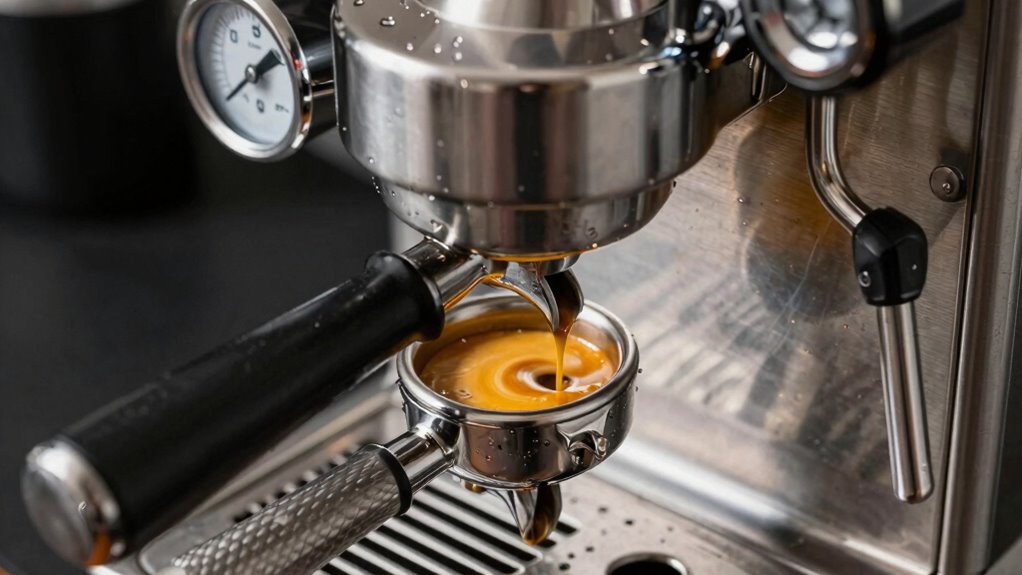

When you see “9 bar” in espresso making, it means the pressure you need for ideal extraction, which balances flavor, aroma, and body. This pressure allows hot water to push through finely packed coffee evenly, pulling out rich oils and compounds. If you don’t reach or maintain 9 bar, your espresso can be weak, sour, or bitter. To master your shot, understanding how pressure works is key—continue exploring to learn how to achieve perfect results every time.

Prime made for students and young adults
- Fast, free delivery for dorm and study essentials
- Prime Video and Amazon Music included
- Member-only deals
Key Takeaways
- “9 bar” indicates the optimal pressure needed to extract rich, balanced espresso flavor and aroma.
- Proper pressure ensures full extraction of coffee oils, resulting in a full-bodied, flavorful shot.
- Achieving 9 bar depends on correct grind size, tamping, and machine maintenance for consistent performance.
- Inconsistent pressure can cause weak, sour, or bitter espresso, highlighting the importance of equipment calibration.
- Maintaining proper pressure is essential for achieving the ideal espresso shot with optimal strength and taste.
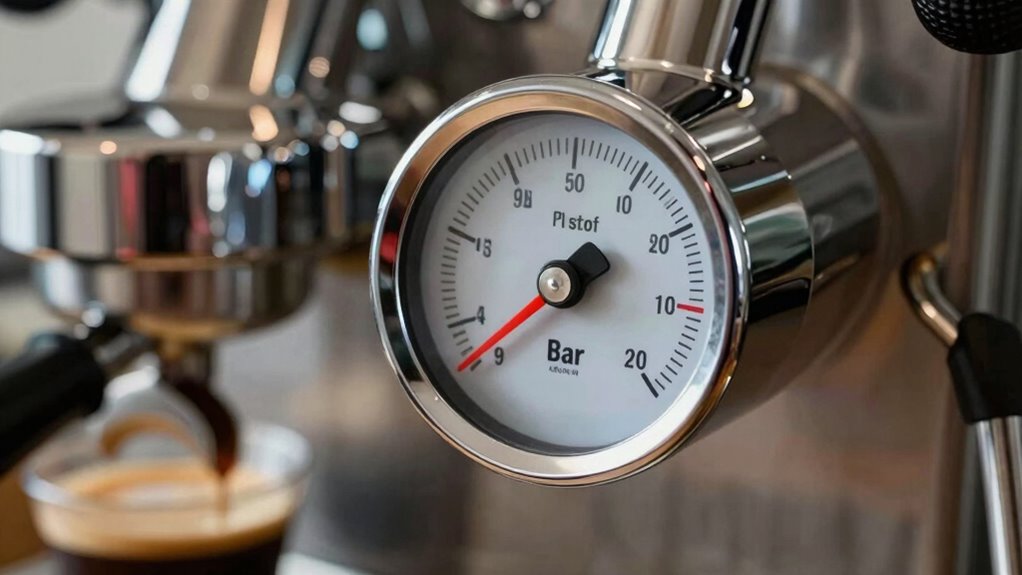
Ever wondered what makes a perfect espresso shot? It all comes down to a combination of factors, but one of the most vital is pressure. When you hear the term “9 bar,” it might seem like just a number, but it actually represents the ideal pressure needed to extract a rich, flavorful espresso. Achieving and maintaining this pressure isn’t accidental; it’s the result of proper brew techniques and diligent machine maintenance. If either of these areas falters, your espresso’s quality can suffer.
First, let’s talk about brew techniques. Using the right technique means controlling variables like grind size, tamping pressure, and water temperature to guarantee consistent pressure during extraction. If your grind is too coarse, water will flow too quickly, and you won’t reach that ideal pressure, resulting in a weak or under-extracted shot. Conversely, a grind that’s too fine can cause excessive resistance, leading to over-extraction and bitter flavors. Tamping pressure also plays a role; applying even, firm pressure helps create a uniform puck, allowing water to pass through evenly at around 9 bars. When you master these methods, your machine can reach and sustain the proper pressure, extracting the full spectrum of flavors. Using consistent brew techniques guarantees that you don’t just rely on raw power but on precision to produce a balanced espresso.
However, even the best technique can be undermined if your machine isn’t properly maintained. Machine maintenance involves regular cleaning and calibration to keep the pressure at the right level. Over time, mineral deposits and coffee oils can clog the machine’s internal components, causing fluctuations in pressure. This makes it harder for your machine to reach and sustain that ideal 9 bar pressure. Routine descaling and cleaning of the portafilter and group head are essential, as is checking the pressure gauge to ensure it reads correctly. Some machines have adjustable pressure regulators; if yours does, make sure it’s properly calibrated. Neglecting maintenance can lead to inconsistent pressure, which directly impacts the quality of your espresso, making it either weak or overly bitter, no matter how perfect your brew techniques are. Additionally, understanding espresso pressure and how it influences extraction can help you troubleshoot issues more effectively.
In essence, hitting that 9 bar mark isn’t just about the machine’s capabilities but also about your ability to use proper brew techniques and keep your equipment in top shape. When you combine precise control over your brewing process with diligent machine maintenance, you set yourself up for success. Your espresso will have the right body, aroma, and flavor, all thanks to that perfect balance of pressure. So, next time you pull a shot, remember that maintaining the right pressure isn’t just a technical detail — it’s the secret to coffee perfection.
espresso machine with pressure gauge
As an affiliate, we earn on qualifying purchases.
As an affiliate, we earn on qualifying purchases.
Frequently Asked Questions
How Does Pressure Affect the Flavor of Espresso?
You’ll notice that pressure directly impacts espresso flavor by influencing flavor extraction and coffee crema. When you apply the right pressure, around 9 bars, it helps extract rich, complex flavors and creates a thick crema. Too little pressure results in weak flavor and thin crema, while too much can cause over-extraction, making the espresso bitter. Proper pressure guarantees you get a balanced, flavorful shot with a satisfying crema.
Can Pressure Variations Improve Espresso Extraction?
Like a master chef adjusting seasoning, you can improve espresso extraction through pressure variations. By maintaining pressure consistency and fine-tuning during extraction timing, you reveal richer flavors and smoother textures. Small adjustments in pressure can enhance extraction, much like the delicate art of balancing flavors in a symphony. Just remember, consistency is key; erratic pressure changes may lead to uneven extraction and compromised taste.
Is 9 Bar the Ideal Pressure for All Espresso Machines?
You might think 9 bar is perfect for all espresso machines, but it’s not always ideal. The key is maintaining pressure stability through proper machine calibration. Some machines may benefit from slightly higher or lower pressure to optimize extraction. Always check your machine’s settings and adjust accordingly, as consistent pressure guarantees better flavor and crema. Remember, the best espresso comes from tailored pressure rather than a one-size-fits-all number.
What Happens if the Pressure Is Too High or Too Low?
Did you know that 80% of espresso enthusiasts say pressure fluctuations affect flavor? If your pressure is too high or too low, it disrupts pressure consistency, leading to over-extraction or under-extraction. This can make your coffee taste bitter or weak. To avoid this, regularly calibrate your machine and monitor pressure levels. Proper calibration guarantees you get the perfect shot every time, maintaining ideal extraction and flavor balance.
How Do I Adjust My Machine’s Pressure Settings?
To adjust your machine’s pressure, start by checking your coffee grind and tamping pressure, as they influence extraction. If your shots are too fast or slow, tweak the grind size or tamping force first. For machines with customizable settings, locate the pressure adjustment knob or menu, and carefully turn it to increase or decrease pressure. Always test and fine-tune to achieve that perfect balance for a rich, flavorful espresso.
As an affiliate, we earn on qualifying purchases.
Conclusion
Now you know that “9 bar” isn’t just a random number—it’s the secret sauce behind that perfect shot. Understanding espresso pressure helps you appreciate the craftsmanship behind every cup, transforming your brewing game from amateur to barista-level. Once you grasp the importance of pressure, you’ll see it’s the magic wand turning simple coffee beans into a rich, velvety elixir. Get ready to impress everyone with your newfound espresso mastery—your taste buds will thank you!
As an affiliate, we earn on qualifying purchases.
As an affiliate, we earn on qualifying purchases.
Fall Picks
fall essentials
As an affiliate, we earn on qualifying purchases.


![Sean Carroll Explains The Biggest Ideas In The Universe – Full Interview [Video] (2025)](https://rottenpanda.com/wp-content/uploads/2026/09/sean-carroll-explains-the-biggest-ideas-in-the-universe-full-interview-video-202-featured-560x300.jpg)