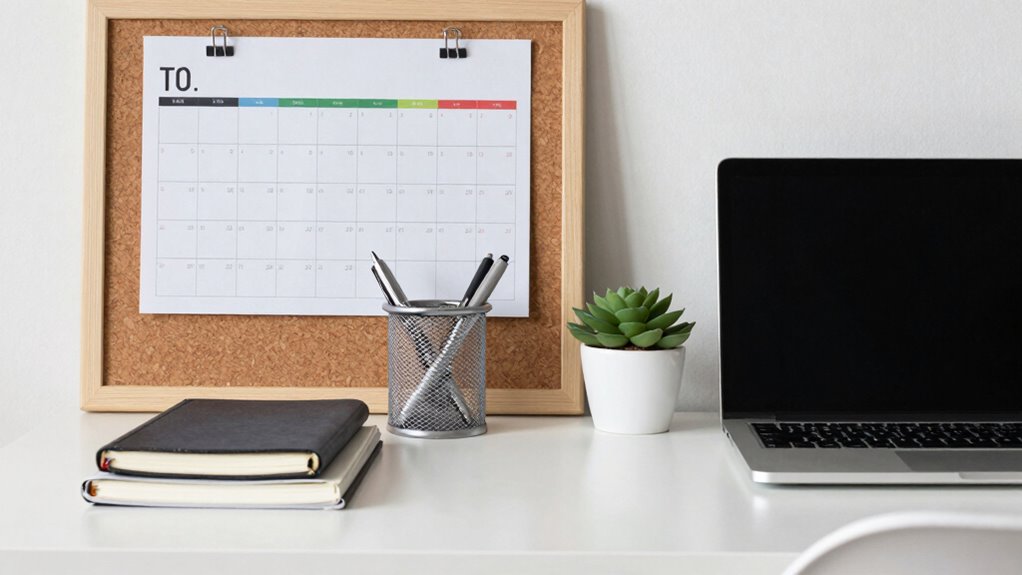

People who always seem organized at work actively prioritize tasks, use helpful tools like calendars and digital reminders, and stick to routines that reinforce good habits. They design their workspace thoughtfully, keeping frequently used items within reach and minimizing clutter. By establishing zones for different tasks and managing their time effectively, they create a clear, focused environment. Keep exploring to uncover more strategies that can help you stay organized and boost your productivity.
Key Takeaways
- They prioritize tasks effectively and allocate specific time blocks to prevent workload buildup.
- They utilize organization tools like digital planners, reminders, and to-do lists consistently.
- They design their workspace with designated zones and minimal clutter for better focus.
- They develop daily routines and habits that reinforce tidiness and efficient work practices.
- They understand and apply ergonomic principles to create a comfortable, organized environment.
Have you ever wondered how some people manage to stay so organized at work while others struggle to keep things in order? The secret often lies in their approach to time management and how they design their workspace layout. When you’re good at managing your time, you can prioritize tasks effectively, avoiding last-minute stress and clutter. This ability is often supported by innovative tech solutions, which help streamline planning and organization. Those who excel at organization don’t just work harder—they work smarter by controlling their time, which naturally leads to a tidier workspace.
Your workspace layout plays a crucial role in maintaining organization. When your environment is thoughtfully arranged, everything has a designated place, and you spend less time searching for documents or supplies. For example, keeping frequently used items within arm’s reach minimizes unnecessary movement, while having a clutter-free desk helps clear your mind and improve focus. Organized workspaces also reflect a structured mindset, making it easier to stay on top of deadlines and responsibilities. When you establish zones for different tasks—like a specific area for paperwork, digital files, or creative work—you streamline your workflow, reduce distractions, and keep your mind clear. Additionally, workspace design can influence your overall efficiency and mental clarity. Incorporating principles from design thinking can help you optimize your workspace for better productivity and comfort. Developing an understanding of workplace ergonomics can further enhance your comfort and efficiency, making it easier to maintain organization over time. Embracing digital organization tools can also significantly improve your ability to keep track of tasks and files in a systematic way.
Time management isn’t just about fitting tasks into your schedule; it’s about creating routines that support consistent productivity. People who seem effortlessly organized often use tools like calendars, to-do lists, or digital reminders to stay on track. They allocate specific blocks of time for different activities, which prevents work from piling up. By doing so, they avoid the chaos that can come with unmanaged workloads. You can adopt similar strategies by planning your day ahead, identifying the most important tasks, and setting boundaries to protect your focus. This not only boosts efficiency but also helps keep your workspace tidy, as you’re less likely to let clutter accumulate when you’re working with a clear plan.
Ultimately, being organized at work is a combination of managing your time effectively and designing an intentional workspace layout. When you control your schedule and create an environment that promotes order, you’re more likely to sustain productivity and reduce stress. It’s about making small, deliberate choices daily—whether that’s setting aside time for cleaning up your desk or blocking out periods for focused work—that reinforce good habits. Over time, these habits become second nature, making organization feel effortless rather than burdensome. So, if you want to be more organized, start by refining your time management skills and rethinking how your workspace is arranged. The results will speak for themselves.
digital planner for task management
As an affiliate, we earn on qualifying purchases.
As an affiliate, we earn on qualifying purchases.
Frequently Asked Questions
Do Organized People Have a Specific Morning Routine?
Yes, organized people often have specific morning routines that boost their productivity habits. They start their day with activities like planning, exercise, or meditation, which set a focused tone. By establishing consistent morning routines, they reduce decision fatigue and streamline their day. This intentional start helps them stay on top of tasks, stay organized, and maintain high productivity levels throughout the workday.
How Do They Handle Unexpected Tasks or Interruptions?
Did you know that 75% of successful professionals adapt quickly to interruptions? When unexpected tasks arise, you handle them through effective time management and flexibility strategies. You prioritize urgent matters, reallocate your schedule, and stay calm. This approach helps you maintain productivity, even when disruptions happen. By staying adaptable, you turn surprises into opportunities to demonstrate your organization skills, ensuring you stay on top of your work despite unforeseen challenges.
Is Organizational Skill Innate or Learned?
Organizational skill isn’t just innate talent; it’s largely a learned behavior you can develop. While some people might have a natural knack for staying organized, most improve through practice and habits. You can enhance your skills by setting routines, prioritizing tasks, and using tools like calendars. With consistent effort, anyone can become more organized at work, regardless of innate talent. It’s about adopting effective strategies and making them part of your daily routine.
What Tools Do Highly Organized People Use Daily?
Highly organized people rely on tools like digital calendars, task management apps, and note-taking software daily. They practice effective time management and prioritization techniques, such as to-do lists and the Eisenhower matrix, to stay on top of tasks. These tools help them allocate time wisely, minimize distractions, and focus on high-priority activities, ensuring they remain efficient and organized throughout their workday.
How Do They Stay Motivated to Maintain Organization?
Did you know that 80% of highly organized people report feeling less stressed? You stay motivated by focusing on effective time management, which helps you avoid last-minute rushes. When you see progress, it boosts your confidence and keeps you moving forward. Plus, maintaining organization reduces stress, making work feel more manageable. This cycle encourages consistent effort, so staying organized becomes a natural part of your routine.
As an affiliate, we earn on qualifying purchases.
Conclusion
So, next time you wonder how others stay so organized, ask yourself—are you truly leveraging your time and resources? It’s not about having everything perfect; it’s about consistency and intentionality. Wouldn’t you agree that developing small, daily habits can transform chaos into clarity? By adopting these strategies, you can also become the organized professional you aspire to be. After all, isn’t the real secret just taking that first step?
As an affiliate, we earn on qualifying purchases.
As an affiliate, we earn on qualifying purchases.