The best science experiment kits for kids balance hands-on variety with activities a child can follow and an adult can support. I rank the National Geographic Earth Science Kit as the best overall for its broad activity mix, while the UNGLINGA 150-Experiment Kit stands out for sheer variety and Doctor Jupiter’s kit is the clearest choice for younger beginners. The main tradeoffs are age fit, how much the kit sticks to one subject, and whether a large experiment count translates into activities your child will actually want to repeat. Some kits favor chemistry, gross-out fun, or science-themed magic rather than a wide survey of science. Read on for the full comparison and help matching a kit to your child’s interests.

Prime made for students and young adults
- Fast, free delivery for dorm and study essentials
- Prime Video and Amazon Music included
- Member-only deals
Key Takeaways
- Earth science offers the broadest starting point: National Geographic’s kit combines a focused subject area with more than 100 activities, making it my best overall pick for kids who like variety without a chemistry-only focus.
- The largest experiment count is not automatically the best fit: UNGLINGA lists 150 experiments, but parents should weigh activity variety against the child’s age, attention span, and willingness to follow directions.
- Age fit changes the shortlist: Doctor Jupiter is labeled for ages 4+, while many National Geographic kits target ages 8–12 or 8+, so younger children may need a more adult-led experience with older-child kits.
- Several kits have a clear subject or presentation style: Earth science, chemistry, gross science, and magic-themed options serve different interests; a focused theme can hold attention better than a broad kit when it matches the child.
- Experiment counts vary widely, but the activity experience matters more: The Junior Chemistry Set has 50 experiments, the Mega Science Lab has 75, and the Science Magic Kit has 100+; those numbers are useful for comparison, but do not alone indicate ease, depth, or repeat value.
| National Geographic Earth Science Kit with 100+ Activities for Kids Ages 8-12 | 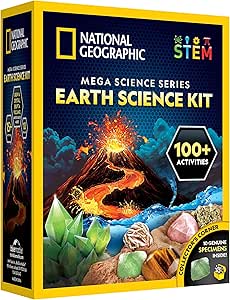 | Best for Earth Science Variety | Brand: Blue Marble | Sub-brand: National Geographic | Age range: 8 years and up | VIEW LATEST PRICE | See Our Full Breakdown |
| National Geographic Amazing Chemistry Set with 100+ Experiments |  | Best for Chemistry Tool Practice | Brand: Blue Marble (National Geographic) | Age range: 8 years and up | Experiments: 100+ total: 15 with included materials and 85 using household items | VIEW LATEST PRICE | See Our Full Breakdown |
| National Geographic Junior Chemistry Set with 50 Experiments |  | Best for Young Chemistry Beginners | Brand: Blue Marble | Age range: 4 years and up | Experiments: 50 | VIEW LATEST PRICE | See Our Full Breakdown |
| UNGLINGA 150-Experiment Science Kit for Kids | 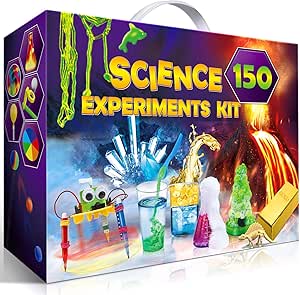 | Best for Broad Science Coverage | Brand: UNGLINGA | Set name: 150 Experiments | Age range: 8 years and up | VIEW LATEST PRICE | See Our Full Breakdown |
| National Geographic Gross Science Kit, 45 Experiments for Kids Ages 8+ |  | Best for Gross-Out Chemistry | Brand: Blue Marble | Age range: 8 years and up | Experiments: 45 | VIEW LATEST PRICE | See Our Full Breakdown |
| National Geographic Mega Science Lab, 75 Experiments for Kids Ages 8–12 |  | Best for Broad Science Variety | Brand: Blue Marble | Recommended age: 8 years and up | Experiment count: 75 total: 45 hands-on activities and 30 using household items | VIEW LATEST PRICE | See Our Full Breakdown |
| Doctor Jupiter My First Science Experiments Kit for Kids Ages 4+ |  | Best for Young Beginners | Brand: Doctor Jupiter | Recommended age: 4–8 years | Experiment count: 50+ | VIEW LATEST PRICE | See Our Full Breakdown |
| Kuovei Science Kit for Kids – 80 Lab Experiments & Scientist Role Play Set |  | Best for Lab-Style Variety | Brand: Kuovei | Recommended age: 6 years and up | Experiment count: 80 | VIEW LATEST PRICE | See Our Full Breakdown |
| National Geographic Magic Chemistry Set with 10 Tricks for Kids Ages 8-12 |  | Best for a Focused Magic Demonstration | Brand: National Geographic | Manufacturer: Blue Marble | Recommended age: 8 years and up | VIEW LATEST PRICE | See Our Full Breakdown |
| National Geographic Science Magic Kit with 100+ Experiments for Kids Ages 8-12 |  | Best for the Largest Activity Library | Brand: National Geographic | Manufacturer: Blue Marble | Recommended age: 8–12 years | VIEW LATEST PRICE | See Our Full Breakdown |
| science experiment kits for kid | Brand | Included components | Educational objective | Model number |
|---|---|---|---|---|
| National Geographic Earth Scie | Blue Marble | 100+ science experiments and activities; learning guide | STEM | — |
| National Geographic Amazing Ch | Blue Marble (National Geographic) | — | — | NGMEGACHEMAR |
| National Geographic Junior Che | Blue Marble | Test tubes, goggles, and other lab tools | STEM | — |
| UNGLINGA 150-Experiment Scienc | UNGLINGA | Science experiment tools and materials | Creative skills | — |
| National Geographic Gross Scie | Blue Marble | Gross Science Kit | STEM | NGMEGAGRS |
| National Geographic Mega Scien | Blue Marble | — | — | NGMEGASCIKIT |
| Doctor Jupiter My First Scienc | Doctor Jupiter | Cups, stirring sticks, spatula, beaker, test tube, mini volcano, tray, spray bottle, funnel, dinosaur mould, dropper, food essences, food colours, ingredients, and instruction manual | — | DJ MFSK Starter |
| Kuovei Science Kit for Kids | Kuovei | Goggles, 6 chemical materials, petri dishes, ping pong ball, pigments, effervescent tablets, measuring cups, test tubes, gloves, rubber bands, droppers, straws, toothpicks, rotary needles, measuring spoons, balloons, twisting rods, rainbow candy, and color-changing flower | — | — |
| National Geographic Magic Chem | National Geographic | Magic wand, white gloves, experiment guide, and chemistry supplies | STEM | NGSCIMAGIC |
| National Geographic Science Ma | National Geographic | 20 Magic Experiments kit, bonus booklet, magic wand, and white gloves | STEM | NGMEGAMAGIC |
More Details on Our Top Picks
National Geographic Earth Science Kit with 100+ Activities for Kids Ages 8-12
For kids drawn to rocks, volcanoes, and crystals, this kit offers a more focused Earth science path than the broad-topic UNGLINGA 150-Experiment Science Kit. Its 100+ activities span volcano experiments, crystal growing, and geologic digs, giving families several kinds of projects to rotate through rather than concentrating on one branch of science. The full-color learning guide explains the ideas behind each activity, which helps turn a dramatic result into a lesson instead of a one-off spectacle. It is designed for ages 8 and up and can suit siblings or friends working together. The tradeoff is that its subject range is narrower than UNGLINGA’s chemistry, physics, and Earth science mix, and some consumables may need replenishing. Younger children may also need adult help.
Pros:- Offers 100+ activities across volcanoes, crystals, and geologic digs.
- Full-color guide explains the scientific principles behind experiments.
- Variety supports repeat sessions and shared projects with family or friends.
- Clear instructions can help school-age beginners follow activities.
Cons:- Earth science focus is narrower than UNGLINGA’s mix of science topics.
- Some consumable materials may need replenishment after initial use.
- The age range starts at 8, so younger children may need close adult support.
Best for: Families with children ages 8–12 who are especially interested in rocks, crystals, volcanoes, and geology-themed projects.
Not ideal for: Buyers seeking balanced coverage across chemistry and physics, or families with younger children who need activities suited to independent use.
- Brand:Blue Marble
- Sub-brand:National Geographic
- Age range:8 years and up
- Activities:100+
- Educational objective:STEM
- Included components:100+ science experiments and activities; learning guide
- Item weight:2.6 pounds
- Item dimensions:8.66 x 3.15 x 12 inches
Our verdict“Choose this for an 8–12-year-old who wants a geology-centered activity collection with explanations, not a kit that spreads its projects across many science subjects.”
National Geographic Amazing Chemistry Set with 100+ Experiments
This is the chemistry-focused choice for kids ready to work with test tubes, beakers, and pipettes, rather than move between subjects as they would with the UNGLINGA 150-Experiment Science Kit. It includes supplies for 15 guided experiments, including crystal growing and color-changing reactions, while its guide adds 85 activities using common household items. That split gives children a proper starter set of lab tools but also means the full activity count is not a box of ready-to-run projects. Compared with the National Geographic Junior Chemistry Set, this model starts at age 8 and offers a larger mix of guided and household-material activities; the Junior set is better suited to younger learners. Families should be comfortable sourcing materials for the bonus experiments.
Pros:- Includes test tubes, beakers, and pipettes for hands-on lab-style work.
- Provides materials for 15 guided experiments.
- Adds 85 activities that use common household items.
- Chemistry activities include crystal growing and color-changing reactions.
Cons:- Only 15 experiments include materials in the kit.
- The additional 85 activities require families to source household items.
- Its age recommendation makes it less suitable for younger children than the Junior Chemistry Set.
Best for: Families with children ages 8–12 who want chemistry projects with recognizable lab tools and are willing to gather household supplies for additional activities.
Not ideal for: Buyers who want every experiment fully supplied in the box, or children younger than 8 who need a younger-age chemistry kit.
- Brand:Blue Marble (National Geographic)
- Age range:8 years and up
- Experiments:100+ total: 15 with included materials and 85 using household items
- Included tools:Test tubes, beakers, and pipettes
- Theme:Chemistry
- Item weight:1.8 pounds
- Item dimensions:8.78 x 3.19 x 11.93 inches
- Model number:NGMEGACHEMAR
Our verdict“Pick this for an age-8-plus beginner who wants chemistry lab tools and accepts that many of the listed activities need supplies from home.”
National Geographic Junior Chemistry Set with 50 Experiments
Among these five kits, this is the clearest fit for younger children starting chemistry: its age range begins at 4, unlike the other National Geographic options here, which are aimed at ages 8 and up. The set pairs 50 experiments with more than 20 lab tools, and illustrated, step-by-step instructions make the activities more approachable for early learners. Many projects use household staples such as baking soda and vinegar, so the kit can introduce experimentation without relying only on specialty materials. Compared with the National Geographic Amazing Chemistry Set, it trades a larger activity count for a lower stated starting age and a more junior presentation. Adult guidance is still a sensible part of use, and families wanting projects that stay fully supplied in the box may find the household-item requirement limiting.
Pros:- Designed for ages 4 and up, younger than the other National Geographic kits in this group.
- Includes 50 hands-on experiments.
- More than 20 lab tools support varied activities.
- Illustrated instructions and common ingredients can make projects more accessible to beginners.
Cons:- Many activities require household items such as baking soda and vinegar.
- Its junior focus may not hold the interest of older children seeking more advanced projects.
- Young users will likely need adult help with setup and handling.
Best for: Families introducing chemistry to children ages 4 and up who benefit from illustrated directions, child-oriented tools, and familiar household ingredients.
Not ideal for: Older children seeking more advanced chemistry activities or buyers who want all experiment materials included rather than using household items.
- Brand:Blue Marble
- Age range:4 years and up
- Experiments:50
- Lab tools:20+
- Included components:Test tubes, goggles, and other lab tools
- Educational objective:STEM
- Dimensions:11 x 4.22 x 9.64 inches
- Weight:0.72 kg
- Batteries:Not required
Our verdict“Choose this as a first chemistry kit for a young child who can work with an adult and is ready to use simple lab tools.”
UNGLINGA 150-Experiment Science Kit for Kids
UNGLINGA earns its place for families who want one kit to move across chemistry, physics, and Earth science, rather than stay with one theme. Its 150 experiments give it the broadest stated activity count in this group, while the National Geographic Earth Science Kit offers a more concentrated set of geology projects with a guide explaining the science behind them. The illustrated, step-by-step manual gives children ages 8 and up a route through the projects, and included tools and materials make it a hands-on option rather than just an activity book. The breadth comes with a practical tradeoff: some experiments still need household items, so the stated count does not mean every activity is ready to start from the box. Its listed educational objective is creative skills, not a specific science subject.
Pros:- Covers chemistry, physics, Earth science, and other topics.
- Includes tools and materials for hands-on experiments.
- Illustrated, step-by-step manual supports following project directions.
- Offers 150 listed experiments for families seeking broad activity variety.
Cons:- Some projects require household items beyond the included materials.
- Its broad subject mix is less focused than the National Geographic Earth Science Kit.
- The listed educational objective is creative skills, rather than a specific science learning area.
Best for: Families with children ages 8 and up who want to sample several science topics and are comfortable supplying household items for some projects.
Not ideal for: Buyers seeking a focused, subject-specific kit with detailed explanations of each concept or a fully self-contained set of experiments.
- Brand:UNGLINGA
- Set name:150 Experiments
- Age range:8 years and up
- Number of experiments:150
- Educational objective:Creative skills
- Included components:Science experiment tools and materials
- Material type:Plastic
- Item dimensions:11.42 x 8.67 x 3.94 inches
Our verdict“Choose UNGLINGA for an age-8-plus child who wants variety across science subjects and does not mind gathering supplies for some experiments.”
National Geographic Gross Science Kit, 45 Experiments for Kids Ages 8+
This kit uses gross-out appeal to draw children into polymers, chemical reactions, and pH science, making it a more theme-led choice than the National Geographic Amazing Chemistry Set. It lists 45 activities, but only 15 come with kit materials; the remaining 30 use common household items. That makes it a better match for families who value a playful presentation and can gather supplies, rather than buyers expecting 45 ready-to-run experiments. Illustrated instructions help explain what is happening, while the gross theme may give reluctant learners a reason to try chemistry concepts. Compared with the Junior Chemistry Set, it targets older children and a narrower, more novelty-driven subject experience. Its age recommendation starts at 8, and the limited number of supplied experiments is a clear constraint.
Pros:- Uses gross-themed activities to make chemistry concepts more approachable.
- Includes materials for 15 experiments.
- Adds 30 activities using common household items.
- Illustrated directions introduce polymers, chemical reactions, and pH science.
Cons:- Only 15 of the 45 listed experiments include kit materials.
- The remaining activities require household products.
- Its narrow gross-science theme offers less subject variety than UNGLINGA’s kit.
Best for: Families with children ages 8 and up who are motivated by gross-themed activities and enjoy learning chemistry through playful demonstrations.
Not ideal for: Buyers who want a broad science curriculum, an age-appropriate kit for preschoolers, or materials supplied for every listed experiment.
- Brand:Blue Marble
- Age range:8 years and up
- Experiments:45
- Experiments with included materials:15
- Additional household-item experiments:30
- Educational objective:STEM
- Included components:Gross Science Kit
- Batteries:Not required
- Model number:NGMEGAGRS
Our verdict“Choose this for an age-8-plus child who likes messy, silly themes and whose family is prepared to source supplies for many activities.”
National Geographic Mega Science Lab, 75 Experiments for Kids Ages 8–12
Three science themes in one kit make this a flexible pick for children who like switching between topics. Its 45 included hands-on activities cover Earth science, chemistry, and science magic, while another 30 ideas use common household items. Compared with the National Geographic Amazing Chemistry Set, this lab gives up chemistry-only depth for a wider mix of subjects; the rocks, minerals, and crystal specimens add a tactile element the chemistry-focused option does not emphasize. That range can keep a curious child engaged, but the household-item activities mean the listed experiment count does not equal 75 fully supplied projects. It is aimed at ages 8 and up, so younger children may need a different starting point, such as Doctor Jupiter’s kit for ages 4–8. Best for variety, not one subject in depth.
Pros:- Combines Earth science, chemistry, and science magic activities.
- Includes 45 hands-on experiments and 30 additional household-item activities.
- Rock, mineral, and crystal specimens add tangible Earth science exploration.
- Activities support critical thinking, observation, and STEM learning.
Cons:- Some of the 30 additional activities require materials from home.
- The recommended age of 8 and up excludes younger children from independent use.
- Its broad subject mix offers less focus than a dedicated chemistry set.
Best for: Families with children 8 and older who want a mix of Earth science, chemistry, and science-themed tricks in one kit.
Not ideal for: Caregivers seeking a kit for preschoolers or one that supplies materials for every activity.
- Brand:Blue Marble
- Recommended age:8 years and up
- Experiment count:75 total: 45 hands-on activities and 30 using household items
- Kit themes:Earth science, chemistry, and science magic
- Included specimens:Rocks, minerals, and crystals
- Educational objectives:Critical thinking, observation skills, and STEM
- Model number:NGMEGASCIKIT
Our verdict“Choose this kit for an 8+ child who wants several kinds of science activities, rather than a deep focus on chemistry alone.”
Doctor Jupiter My First Science Experiments Kit for Kids Ages 4+
Ages 4–8 are the clear focus here, setting this kit apart from the older-child National Geographic options in this roundup. Its illustrated, step-by-step instructions and included tools give adults and young children a more guided way to try activities such as oobleck, volcanoes, and dinosaur squishies. The supplied cups, beaker, dropper, and tray help make those projects feel like hands-on experiments rather than demonstrations alone. With more than 50 activities, it offers plenty of variety, though the National Geographic Mega Science Lab spreads its activities across Earth science, chemistry, and magic for children ready for a wider subject mix. Younger users may still need adult help, so this is not a drop-off activity kit. It favors accessible starts over independent experimentation.
Pros:- Designed for children ages 4–8, younger than the National Geographic kits aimed at ages 8 and up.
- Includes materials and tools for more than 50 experiments.
- Illustrated, step-by-step directions support guided activities.
- Meets the ASTM F963-17 toy safety standard.
Cons:- Younger children may need adult assistance during experiments.
- Its age-focused activities may feel basic to older elementary-school children.
- The supplied components are varied, but the product data does not specify that every activity has all materials included.
Best for: Families introducing science activities to children ages 4–8 who benefit from illustrated instructions and included experiment tools.
Not ideal for: Older children seeking more advanced experiments or a kit they can use without adult assistance.
- Brand:Doctor Jupiter
- Recommended age:4–8 years
- Experiment count:50+
- Example activities:Oobleck, volcanoes, and dinosaur squishies
- Included components:Cups, stirring sticks, spatula, beaker, test tube, mini volcano, tray, spray bottle, funnel, dinosaur mould, dropper, food essences, food colours, ingredients, and instruction manual
- Educational skills:Concentration, concept development, critical thinking, exploration, logical thinking, observation, problem solving, and STEM
- Safety standard:ASTM F963-17
- Model number:DJ MFSK Starter
Our verdict“Pick Doctor Jupiter for a young child’s first guided science activities, and choose an older-age kit for more independent or advanced projects.”
Kuovei Science Kit for Kids – 80 Lab Experiments & Scientist Role Play Set
Lab tools and 80 experiment ideas give Kuovei a more equipment-led feel than the performance-focused National Geographic Magic Chemistry Set. Goggles, measuring cups, test tubes, droppers, and individually sealed chemical materials help children take on a scientist role while trying activities such as rainbow rain and bottle-powered balloons. Its guidance cards also aim to explain the steps and science, giving the kit more of a laboratory format than Doctor Jupiter’s younger-child activity set. That breadth comes with a supervision tradeoff: handling chemical materials and small components calls for adult oversight, and some activities may need household supplies. The broad age-range listing should not obscure the stated recommendation of 6 and up; parts present a choking hazard for children under 3. More kit-like than a household-project collection, but not hands-off.
Pros:- Lists 80 experiments, including activities with different levels of challenge.
- Includes goggles, measuring tools, test tubes, droppers, and other lab-style components.
- Chemical materials are individually sealed and described as reusable.
- Guidance cards explain experiment steps and scientific principles.
Cons:- Adult supervision is needed for chemical materials and small components.
- Some activities may require household items not included in the kit.
- Small parts present a choking hazard for children under 3, despite the broad age-range listing.
Best for: Families with children 6 and older who want lab-style tools, a large activity selection, and adult-guided experimentation.
Not ideal for: Caregivers seeking a low-supervision activity, a kit with every project material included, or something suitable for children under 3.
- Brand:Kuovei
- Recommended age:6 years and up
- Experiment count:80
- Material:Plastic
- Item weight:0.75 kg
- Included components:Goggles, 6 chemical materials, petri dishes, ping pong ball, pigments, effervescent tablets, measuring cups, test tubes, gloves, rubber bands, droppers, straws, toothpicks, rotary needles, measuring spoons, balloons, twisting rods, rainbow candy, and color-changing flower
- Guidance:Step-by-step experiment guidance cards
- Manufacturer part number:MYJ886-A
Our verdict“Choose Kuovei for a supervised, lab-style activity collection for children 6 and older, not for independent play or toddlers.”
National Geographic Magic Chemistry Set with 10 Tricks for Kids Ages 8-12
Ten chemistry tricks with performance props make this the most focused choice for children who want to show science as a magic act. The wand, gloves, and illustrated guide give activities such as floating coins and instant snow a clear presentation angle, while the guide connects each illusion to its scientific explanation. Compared with the National Geographic Science Magic Kit with 100+ Experiments, this set is simpler and more tightly centered on its supplied tricks; it does not offer that kit’s bonus booklet of more than 85 household-item activities. The included tools and chemistry supplies support getting started without sourcing extra experiment equipment, but careful storage and adult supervision still matter. Its 8+ age recommendation also makes Doctor Jupiter a better fit for younger children. Choose it for a compact magic theme, not a long activity catalogue.
Pros:- Pairs chemistry activities with a wand and gloves for performance play.
- Includes tools and chemistry supplies for the listed tricks.
- Illustrated guide explains the science behind the illusions.
- A focused set of 10 tricks is less sprawling than the 100+ activity Science Magic Kit.
Cons:- Offers fewer activities than the National Geographic Science Magic Kit with 100+ Experiments.
- Recommended for ages 8 and up, so it is not aimed at preschool or early-primary beginners.
- Chemistry supplies require careful storage and supervision.
Best for: Children ages 8–12 who enjoy performing short chemistry demonstrations for friends or family.
Not ideal for: Families seeking a large library of experiments, or younger children who need age-appropriate activities and close adult guidance.
- Brand:National Geographic
- Manufacturer:Blue Marble
- Recommended age:8 years and up
- Experiment count:10
- Included components:Magic wand, white gloves, experiment guide, and chemistry supplies
- Educational objective:STEM
- Model number:NGSCIMAGIC
Our verdict“Choose this set for a child who wants a small, ready-to-perform collection of science magic tricks rather than a large experiment library.”
National Geographic Science Magic Kit with 100+ Experiments for Kids Ages 8-12
A performance kit plus an extended activity booklet gives this option the widest stated selection among the two National Geographic science-magic sets here. It includes 20 supplied magic experiments with a wand, gloves, and an illustrated guide, then adds a booklet with more than 85 activities using household items. Compared with the 10-trick National Geographic Magic Chemistry Set, this one offers more variety and a longer path beyond the core kit, but the extra ideas depend on materials from home and are not all supplied experiments. The show-ready props help make the main activities social, while the 8–12 target age narrows its fit. It suits families who value a deep idea bank more than a fully equipped kit for every listed activity.
Pros:- Includes 20 magic experiments and a bonus booklet with more than 85 additional activities.
- Wand and white gloves support role-play and performing experiments for others.
- Illustrated guide explains the science behind the illusions.
- Offers a much larger activity library than the 10-trick National Geographic Magic Chemistry Set.
Cons:- Many bonus activities use household items not included in the kit.
- The stated age range of 8–12 may not suit younger children or older students.
- The bonus activity count can overstate how many experiments are ready to perform straight from the box.
Best for: Families with children ages 8–12 who want science-magic performances plus many follow-up activities using household supplies.
Not ideal for: Buyers who want every activity fully equipped in the box, or children outside the stated age range.
- Brand:National Geographic
- Manufacturer:Blue Marble
- Recommended age:8–12 years
- Core magic experiments:20
- Bonus activities:85+ additional experiments using household items
- Included components:20 Magic Experiments kit, bonus booklet, magic wand, and white gloves
- Educational objective:STEM
- Model number:NGMEGAMAGIC
Our verdict“Pick this kit for an 8–12-year-old who wants performance props and a long list of follow-up ideas, with household supplies available for the bonus activities.”

How We Picked
I compared these kits on age fit, subject range, activity count, and the kind of hands-on play they encourage. I also looked at how clearly each product serves a buyer need: a first introduction to experiments, a focused chemistry project, a broad activity collection, or a theme-led experience such as gross science or magic. Since the listed products span different ages and formats, I treated suitability and purpose as more important than raw experiment totals.
The ranking favors kits that appear to offer a strong balance of variety and a clear use case, then places more specialized or age-specific choices where they make the most sense. A high activity count can make a kit appealing, but it does not tell a parent whether the subject will hold a child’s interest or whether the child can participate independently. I also considered practical tradeoffs buyers should verify before ordering, such as age guidance, adult involvement, and whether the kit’s theme matches the child’s interests.
| science experiment kits for kid | Brand | Educational objective | Model number |
|---|---|---|---|
| National Geographic Earth Scie | Blue Marble | STEM | — |
| National Geographic Amazing Ch | Blue Marble (National Geographic) | — | NGMEGACHEMAR |
| National Geographic Junior Che | Blue Marble | STEM | — |
| UNGLINGA 150-Experiment Scienc | UNGLINGA | Creative skills | — |
| National Geographic Gross Scie | Blue Marble | STEM | NGMEGAGRS |
| National Geographic Mega Scien | Blue Marble | — | NGMEGASCIKIT |
| Doctor Jupiter My First Scienc | Doctor Jupiter | — | DJ MFSK Starter |
| Kuovei Science Kit for Kids | Kuovei | — | — |
| National Geographic Magic Chem | National Geographic | STEM | NGSCIMAGIC |
| National Geographic Science Ma | National Geographic | STEM | NGMEGAMAGIC |
Factors to Consider When Choosing Science Experiment Kits For Kids
Before choosing a kit, I’d start with the child’s age and the kind of activity they enjoy—not the biggest number printed on the box. These broader checks can help prevent a kit from feeling too simple, too demanding, or too narrowly themed once it arrives.
Match the kit to the child’s actual age and independence
Age labels are a useful starting point, but they do not tell the whole story about how much help a child may need. A younger child may enjoy observing a demonstration and helping with simple steps, while an older child may want to read directions and carry out more of the process. Check whether the kit is intended for the child’s age or simply includes activities an adult can adapt. A common mistake is buying for the age the child will reach soon rather than the skills they have now. If you expect to supervise closely, a kit outside the stated age band may still work, but plan for shared activity time. For more independent play, favor clear age guidance over a high activity count.
Choose a subject the child will return to
A broad kit gives a child more topics to sample, while a focused kit can provide a stronger hook for a particular interest. Think about whether your child prefers rocks and earth science, mixing and reactions, silly or gross-out demonstrations, or performance-style magic. A theme can make an experiment feel more inviting, but it can also narrow the kit’s appeal if interest fades. Avoid assuming that a general science label means every major branch of science is covered. If the child is unsure, a varied kit may be a safer introduction; if they already have a favorite topic, a subject-specific set may get more use. The best choice is the one that fits how the child likes to learn and play.
Treat experiment counts as a starting point, not a quality score
Activity totals help distinguish a compact set from a large collection, but they do not show how long each activity takes or whether several experiments rely on similar steps. Some children enjoy moving quickly from one short activity to the next; others prefer a smaller number of projects they can revisit and discuss. Check product details for the kinds of activities included and whether the count refers to distinct experiments or variations. A common buying mistake is choosing the largest number without asking whether the child has the patience for setup and cleanup. If the kit is a gift, a clear theme and age fit may matter more than the headline total. Look for a balance of variety and usable directions.
Plan for adult help, setup, and cleanup
Hands-on science is more enjoyable when the work area, supervision, and cleanup are realistic for your household. Before buying, check the product information for safety guidance, required household materials, and any instructions about adult participation. Even a child-friendly kit may involve steps that call for an adult to read directions, prepare materials, or manage the workspace. If you want an activity for a busy afternoon, complicated preparation can become a barrier no matter how many experiments are included. Keep a tray or washable surface nearby and set expectations about putting materials away after each activity. A little planning helps distinguish a kit that suits your routine from one that may stay on the shelf.
Decide whether breadth or depth is the better value
A larger mixed kit can suit families with several children or a child who likes sampling different topics. A more focused set may be a better match when the goal is to build interest in one subject rather than provide a wide sampler. “Value” is not just the number of listed experiments; it also depends on how many activities fit the child’s age and interests. Consider whether siblings can take part together, whether the kit offers enough variety for repeat sessions, and whether the child is likely to outgrow the theme quickly. Paying more for a larger set makes sense only when the added range will get used. For a first kit, a smaller, well-matched experience may be a smarter choice than a broad collection.
Frequently Asked Questions
Is a kit labeled for ages 8–12 suitable for a child who is younger?
It may work as a supervised activity, but the age label should guide expectations about reading, following steps, and handling materials. A younger child may be able to participate in parts of an experiment while an adult manages instructions and setup. Doctor Jupiter’s kit is specifically labeled for ages 4+, making it the most directly age-targeted option in this lineup for younger children. Before choosing an older-age kit, read the product’s safety and supervision guidance rather than relying on the experiment count. If you want the child to work independently, stay closer to the stated age range.
Should I choose a kit with the most experiments?
Not automatically. The UNGLINGA kit lists 150 experiments, while several other options offer fewer activities with a more defined subject or presentation style. A large count can be attractive for a child who enjoys trying many different activities, but the number does not reveal how distinct, involved, or age-appropriate those activities are. Compare the theme, age guidance, and expected adult role as well. If a child is especially interested in chemistry, a chemistry-focused set may get more use than a larger general collection.
Which type of kit is a better first science gift: broad or subject-specific?
A broad kit is often a good fit when the child has not settled on a favorite topic, since it lets them sample different kinds of science. A subject-specific kit can be the better gift when you already know the child enjoys a particular area, such as earth science or chemistry. This roundup includes both approaches, so the decision is less about one format being universally better and more about matching the child’s interests. For a first-time experimenter, also check the age guidance and how much adult support is expected. A well-matched theme can matter more than having the widest possible range.
Are science magic kits a good substitute for a traditional experiment kit?
They can be a good choice for a child drawn to demonstrations and performance, but their emphasis differs from a conventional science set. The National Geographic Magic Chemistry Set focuses on 10 tricks, while the Science Magic Kit lists 100+ experiments, so the two also differ in stated activity volume. A magic theme may make science feel playful and encourage a child to explain what they see, but it may not suit someone looking for a broad subject survey. Check the product details to understand the balance of tricks, experiments, and learning activities. Choose this style when presentation is part of the appeal.
What should I check before buying a kit for siblings to share?
Check the age range against both children, then look at whether the activities can be done together or require one child to lead while the other watches. A younger sibling may need an adult to adapt directions or handle parts of the setup, even when the older child can follow them independently. Consider whether the kit’s subject and style appeal to both children; a strong single-theme preference can make sharing harder. Also review the product information for supervision and safety guidance before planning a joint activity. If the children have different interests, a broad kit may be easier to share than a narrowly focused one.
Conclusion
For the strongest all-around match, I’d choose the National Geographic Earth Science Kit: its 100+ activities and defined earth-science focus make it my best overall pick. The UNGLINGA 150-Experiment Kit is my best value-style choice for families prioritizing a large activity collection, while the National Geographic Mega Science Lab is the best premium-style option for buyers drawn to a substantial, multi-activity set. For younger first-time experimenters, I’d start with Doctor Jupiter My First Science Experiments Kit, which is labeled for ages 4+. Choose the Junior Chemistry Set for a younger chemistry-focused direction, or the Gross Science Kit and magic-themed sets when a strong theme is more likely to hold attention. Match the kit to age, interest, and adult-help expectations before letting the experiment count make the decision.