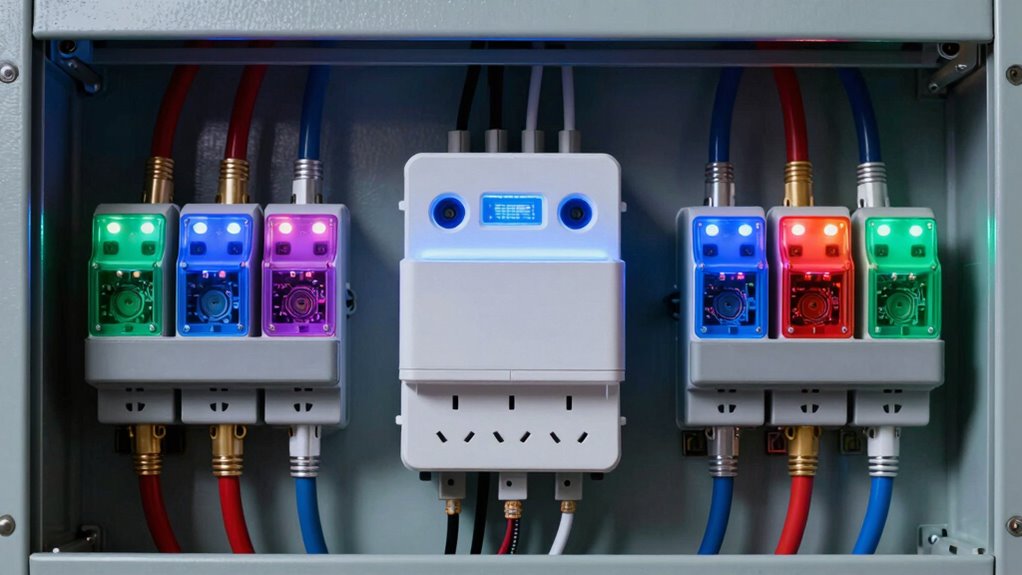

Whole-home surge protection is installed at your main electrical panel and intercepts large voltage spikes before they reach your wiring and appliances. Point-of-use devices are plugged directly into outlets near your sensitive electronics and handle residual or localized surges. Both layers work together to provide thorough protection, with proper grounding boosting their effectiveness. Understanding how these layers complement each other helps you better safeguard your devices—keep exploring to learn how to optimize your surge defenses effectively.

Prime made for students and young adults
- Fast, free delivery for dorm and study essentials
- Prime Video and Amazon Music included
- Member-only deals
Key Takeaways
- Whole-home protection is installed at the main panel to block large surges before they reach your wiring and devices.
- Point-of-use devices are installed at specific outlets to safeguard individual electronics from residual and localized surges.
- Whole-home systems handle major external surges, while point-of-use devices provide additional defense for sensitive equipment.
- Proper grounding enhances the effectiveness of both surge protection layers, ensuring safe diversion of excess voltage.
- Regular maintenance and inspection of both systems ensure ongoing reliable protection and optimal performance.
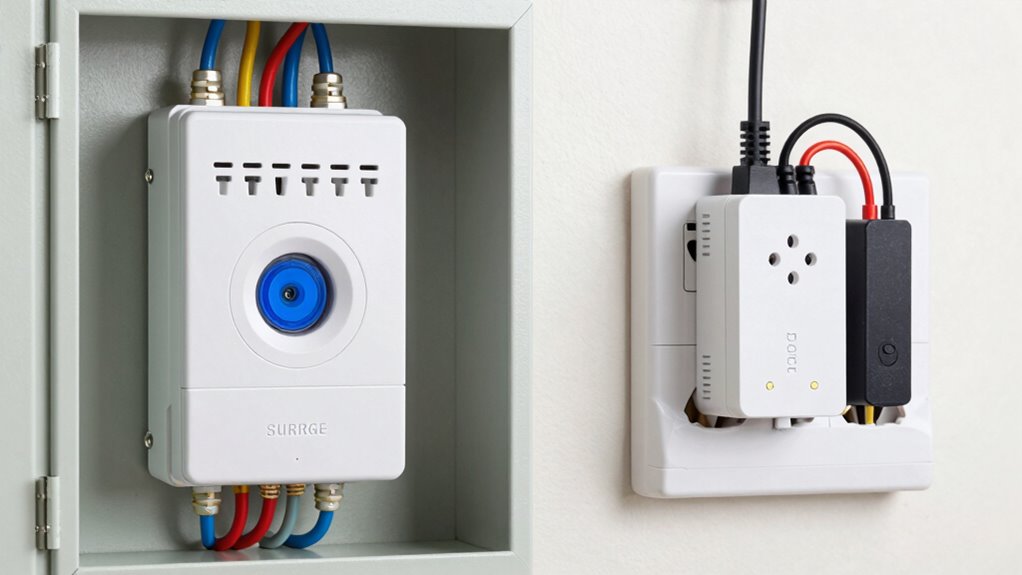
Surge protection layers are essential defenses that shield your electronic devices from sudden voltage spikes caused by lightning strikes, power outages, or electrical faults. These layers work together to guarantee your home’s electrical system remains safe, preventing damage and minimizing data loss. When considering whole-home versus point-of-use surge protection, understanding how each plays a role can help you make smarter choices for your setup.
Whole-home surge protection acts as the first line of defense. Installed at your main electrical panel, these surge protection devices (SPDs) are designed to intercept large voltage surges before they reach your wiring and connected devices. By doing so, they protect everything downstream, including your appliances, electronics, and sensitive equipment. To maximize their effectiveness, grounding techniques are vital. Proper grounding ensures that excess voltage is safely diverted into the earth, preventing it from traveling through your wiring and damaging your devices. When installing a whole-home SPD, make sure it’s properly grounded and compliant with electrical codes. This setup creates a reliable barrier, reducing the risk of damage from external surges like lightning strikes or utility grid fluctuations. Proper grounding techniques are crucial for ensuring these protections work effectively and safely.
Whole-home surge protection intercepts large surges at the main panel, safeguarding your appliances and electronics through proper grounding.
On the other hand, point-of-use surge protection devices are installed directly at specific outlets, typically near computers, entertainment systems, or high-value electronics. These devices provide an additional layer of defense, especially for sensitive equipment that’s more vulnerable to smaller, frequent surges. They’re designed to clamp voltage spikes to safe levels, protecting your devices from the residual surges that might slip past the main system. While they’re generally not meant to replace whole-home protection, they complement it by offering localized safety. When choosing point-of-use surge protectors, consider their joule ratings and whether they include features like indicator lights that show their protection status.
Both layers of protection work best when integrated. The whole-home system handles major surges, while point-of-use devices take care of residual or localized spikes. By combining these, and ensuring your grounding techniques are sound, you create a complete defense. Proper grounding not only helps surge protection devices operate effectively but also reduces the risk of electrical shock and fire hazards. Remember, surge protection isn’t a one-time setup; it requires regular inspection to guarantee devices remain functional and grounding connections are intact.
Ultimately, understanding the roles of whole-home versus point-of-use surge protection, along with proper grounding techniques, empowers you to safeguard your valuable electronics. You want a system that’s reliable, responsive, and easy to maintain, giving you peace of mind knowing your home’s electrical system is well-protected against unexpected surges.
As an affiliate, we earn on qualifying purchases.
Frequently Asked Questions
How Do Surge Protection Layers Impact Energy Efficiency?
Surge protection layers help improve energy efficiency by preventing power surges that can damage appliances and cause energy waste. When you use whole-home or point-of-use surge protectors, you reduce the risk of equipment malfunction, leading to fewer energy losses and repairs. This not only enhances overall efficiency but also contributes to energy savings over time, ensuring your system runs smoothly and cost-effectively.
Can Surge Protectors Be Recycled or Reused?
You can recycle or reuse surge protectors, but it depends on their condition. Recycling surge protectors involves properly disposing of them at e-waste facilities to prevent environmental harm. Reuse is possible if they still function properly; check for signs of wear or damage before plugging them back in. Keep in mind that many surge protectors have limited lifespans, so replacing them might be the best option for safety and performance.
What Are the Costs Associated With Different Surge Protection Options?
The cost comparison varies between surge protection options. Whole-home systems typically have higher upfront expenses but offer broader coverage and long-term savings. Point-of-use protectors are cheaper initially but may require multiple units for complete protection, increasing expenses over time. Expense factors include installation costs, device quality, and maintenance. You should weigh initial costs against long-term protection needs to choose the most cost-effective solution for your home.
How Long Do Surge Protection Devices Typically Last?
Your surge protection device typically lasts between 3 to 5 years, depending on its device lifespan and how often it encounters power surges. You should check the manufacturer’s recommended replacement frequency, as devices can deteriorate over time, especially after a strong surge. Regular inspections and testing help guarantee your surge protector remains effective, so plan to replace it within the suggested timeframe to keep your electronics safe.
Are There Any Legal Standards for Surge Protection Layers?
You might think there are strict legal standards for surge protection layers, but in reality, legal regulations are limited. Industry standards like UL 1449 guarantee devices meet safety and performance benchmarks, yet these aren’t legally mandated in all areas. It’s wise to look for UL listings or similar certifications, as they indicate compliance with recognized safety protocols, even if strict legal regulations aren’t in place.
As an affiliate, we earn on qualifying purchases.
Conclusion
So, don’t worry if it feels overwhelming choosing between whole-home and point-of-use surge protectors. Remember, combining both offers the best defense against power surges, protecting your devices and peace of mind. Some might think it’s unnecessary or costly, but investing in the right protection now can save you money and hassle later. Trust me, safeguarding your home is worth it—you’ll thank yourself when a surge strikes and your gear stays safe.
surge protection device for electronics
As an affiliate, we earn on qualifying purchases.
As an affiliate, we earn on qualifying purchases.
electrical surge protector outlet
As an affiliate, we earn on qualifying purchases.
As an affiliate, we earn on qualifying purchases.
Halloween Picks
halloween
As an affiliate, we earn on qualifying purchases.