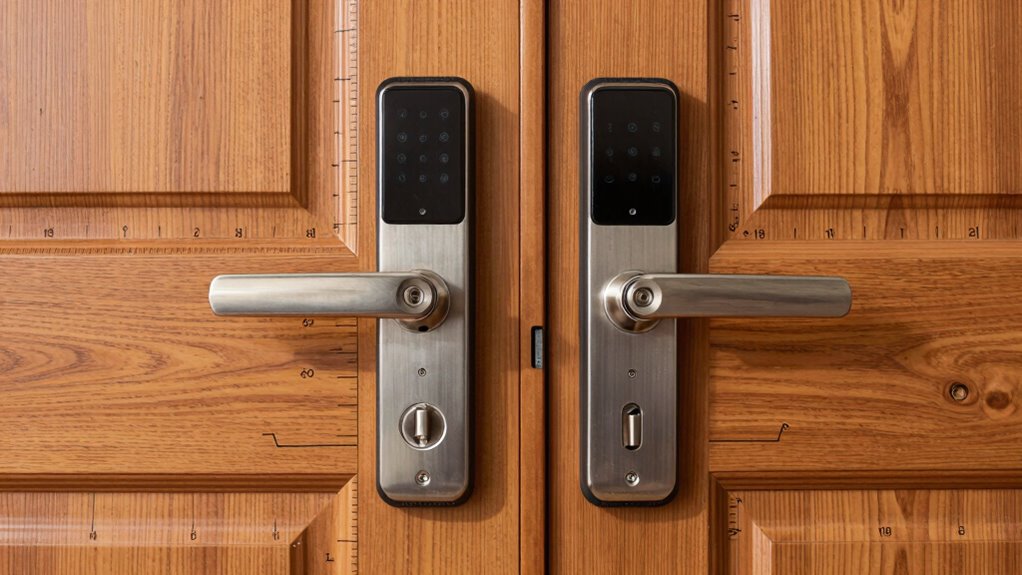

To guarantee your smart lock fits and works properly, you need to match it to your door’s deadbolt type, like single or double cylinder. Measure your existing deadbolt to confirm compatibility, and check if the lock suits your door thickness and material. Most smart locks are designed for standard doors, but some may require adapters. Understanding your door’s specifics helps prevent installation issues. Keep exploring to get detailed tips on choosing the right smart lock for your setup.
Key Takeaways
- Confirm your door’s deadbolt type (single, double, thumbturn) matches the lock’s compatibility specifications.
- Measure door thickness and clearances to ensure the smart lock fits securely without obstruction.
- Check if the smart lock supports your door’s material and existing hardware for seamless installation.
- Verify compatibility with your preferred connectivity protocol (Wi-Fi, Bluetooth, Z-Wave) and smart home system.
- Review manufacturer guidelines for specific deadbolt models and door types to avoid installation issues.
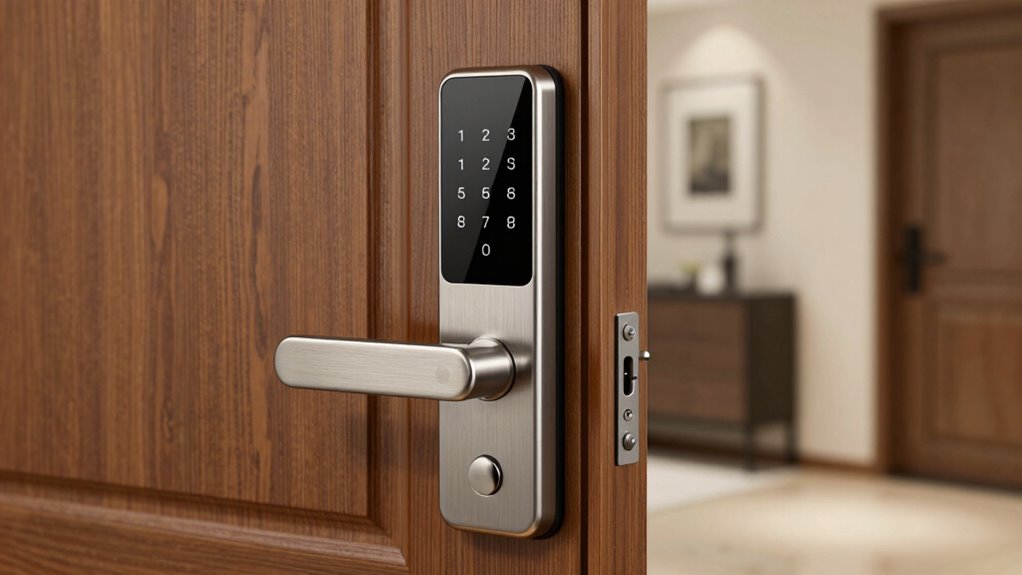
When choosing a smart lock, compatibility is essential to ensuring it works seamlessly with your existing devices and smart home ecosystem. You want a lock that integrates smoothly without requiring complicated adjustments or additional equipment. One of the most critical factors to consider is battery life. A smart lock with a long-lasting battery ensures you’ll avoid frequent replacements or unexpected lockouts, especially if you rely on your device daily. Many models now feature rechargeable batteries or notifications when power is low, so you’re never caught off guard. The battery life can vary considerably between brands and models, so it’s worth checking reviews and specifications before making your decision. Longer battery life means less maintenance and more reliable security, giving you peace of mind.
Equally important is the installation process. A smart lock should be straightforward to install, especially if you want to do it yourself. Most modern locks are designed for easy DIY installation, typically fitting standard deadbolts or latch mechanisms without needing professional help. However, some models may require specific door preparations or additional adapters. Confirm that your door type is compatible with the lock you choose—whether it’s a standard deadbolt, a thumbturn lock, or another type. Proper installation is vital because an ill-fitting lock can compromise security and functionality. Look for models that come with detailed instructions, video tutorials, or customer support options to help you through the process. A smooth installation process saves time and frustration and ensures your smart lock operates correctly from the start.
Compatibility also extends to the lock’s connectivity options. Many smart locks work via Wi-Fi, Bluetooth, or Z-Wave, so you need to verify that your existing smart home devices support the same protocols. For example, if your home uses a hub or control system like Samsung SmartThings or Ring, make sure your chosen lock is compatible with that platform. This integration allows you to control your lock remotely, set up automation routines, or receive alerts. Double-checking these compatibility details prevents headaches down the line and ensures your smart lock functions as part of your broader smart home network. Additionally, understanding smart lock compatibility with various deadbolt types and door fit basics can help you choose a model that ensures a secure and proper fit, avoiding potential issues with door security or operation.
Frequently Asked Questions
Can Smart Locks Fit on All Exterior Doors?
Smart locks can’t fit on all exterior doors because door material and lock size matter. You need a compatible door material like wood, metal, or composite. Check if your door’s thickness and deadbolt size align with the lock’s specifications. If the door is too thick or made from incompatible material, the smart lock may not work properly or fit securely. Always measure your door and deadbolt to guarantee compatibility before installation.
Do Smart Locks Require Professional Installation?
You don’t always need a professional for smart lock installation, but it depends on your door’s setup. If you’re comfortable with basic installation concerns, like aligning the lock properly and guaranteeing it fits your deadbolt, you might do it yourself. Just keep in mind that battery life varies based on usage and model. If your door has unique features or complex wiring, professional installation can save you time and ensure ideal performance.
Are Smart Locks Compatible With All Home Automation Systems?
You might wonder if your smart lock will seamlessly integrate with your home automation system. The truth is, compatibility varies—some systems sync effortlessly, while others require specific security protocols. Keep in mind, battery life plays an essential role in ongoing performance. Before purchasing, verify that your smart lock supports your system’s protocols to avoid surprises and guarantee smooth operation, giving you peace of mind and enhanced security.
How Do Smart Locks Perform During Power Outages?
During power outages, smart locks often keep working thanks to battery backups, ensuring you can still access your home. If the batteries die, most models offer a manual override with a physical key for emergency entry. You should regularly check and replace batteries to avoid lockouts. This way, your smart lock remains reliable even when the power’s out, giving you peace of mind and continuous security.
Can Smart Locks Be Used on Sliding or Glass Doors?
Imagine your sliding or glass doors as open invitations to the world; smart locks can be your silent guardians here. You can install smart locks on sliding doors and glass doors with the right adapters or special mounts. These locks work seamlessly, giving you remote access and peace of mind. Just make certain your lock is compatible with the door type, and you’re set to secure your stylish entryways effortlessly.
Conclusion
Now that you know the ins and outs of deadbolt types and door fits, selecting the right smart lock becomes a breeze. Remember, even the most advanced technology can’t make up for poor installation or incompatible hardware. So, measure twice and choose wisely—after all, a smart lock is only as good as its fit. As they say, “A stitch in time saves nine,” and in this case, it ensures your home stays secure and connected.