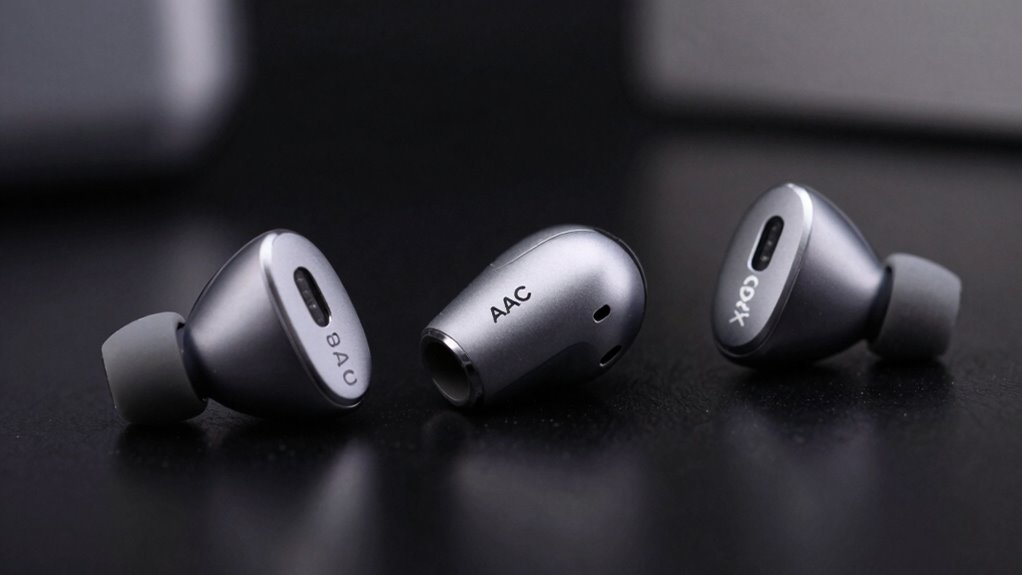

Bluetooth codecs determine how audio is compressed and transmitted wirelessly, which affects sound quality, latency, and device compatibility. SBC, the default option, offers reliable connections but basic sound, while AAC provides better quality and is popular with Apple devices. aptX delivers high-resolution sound with minimal delay, perfect for gaming and video. Understanding these options can help you optimize your wireless listening experience—keep exploring to learn more about tailoring your sound setup.
Key Takeaways
- SBC is the default Bluetooth codec, offering reliable connection but lower audio quality and higher compression artifacts.
- AAC provides better sound fidelity with efficient compression, popular on Apple devices and streaming platforms.
- aptX delivers high-resolution audio with minimal latency, ideal for immersive listening and gaming.
- Compatibility varies: SBC works with all devices, while AAC and aptX depend on device support.
- Choosing the right codec depends on your device and listening priorities—stability, sound quality, or low latency.
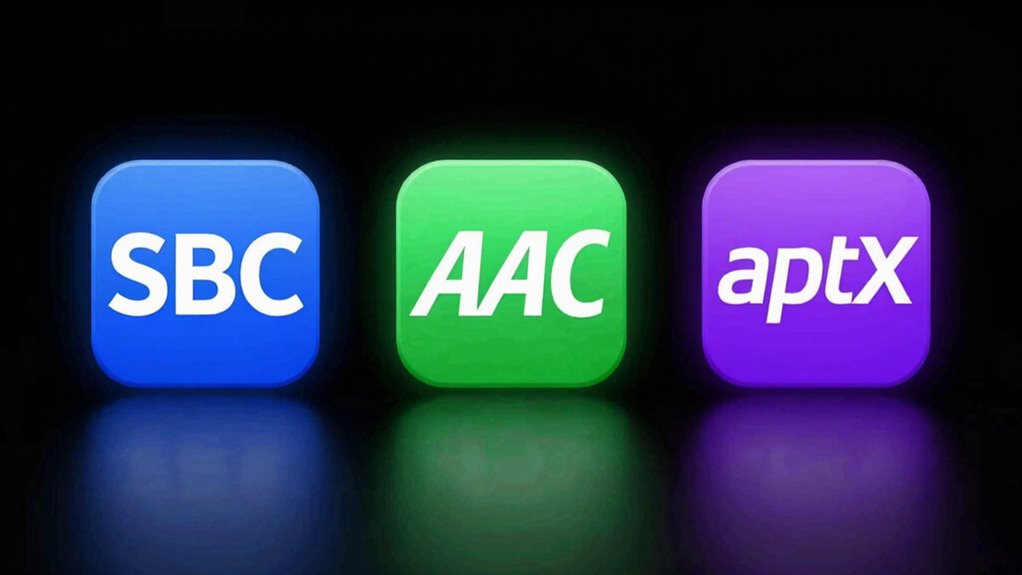
Bluetooth codecs are essential for transmitting high-quality audio wirelessly, enabling your devices to deliver better sound with less lag. When you stream music or make calls, the quality of that sound depends heavily on how your devices handle wireless transmission and audio compression. These codecs are algorithms that encode and decode audio signals during wireless transmission, directly impacting sound clarity, latency, and overall listening experience.
Bluetooth codecs are key to high-quality wireless audio, affecting sound clarity, latency, and overall listening experience.
The SBC codec, which stands for Sub-band Coding, is the default Bluetooth codec and is supported by nearly all devices. It provides a reliable connection, but its audio compression is relatively basic, often resulting in lower sound quality compared to more advanced codecs. SBC transmits audio efficiently, but it tends to prioritize stability over fidelity, making it suitable for everyday use where high-fidelity sound isn’t *indispensable*. Its compression can lead to a loss of detail, especially with complex or high-resolution audio, meaning you might notice a duller or more compressed sound.
AAC, or Advanced Audio Codec, offers a noticeable upgrade in wireless transmission quality. Used extensively by Apple devices, AAC provides better audio compression algorithms that preserve more detail and deliver richer sound. This codec balances efficient compression with high fidelity, making it ideal if you’re listening on Apple products or other devices that support AAC. The improved audio quality comes with slightly higher latency than SBC but generally offers a more satisfying listening experience, especially with streaming services that optimize AAC playback.
Then there’s aptX, a codec developed by Qualcomm, which aims to bridge the gap between high-quality sound and efficient wireless transmission. It uses advanced audio compression techniques to transmit high-resolution audio with minimal delay, making it suitable for audiophiles and gamers alike. Variants like aptX HD push this even further, supporting high-definition audio with better detail and clarity. When your devices support aptX, you’re likely to notice more natural sound, less compression artifacts, and a more immersive experience. Its ability to reduce latency is particularly beneficial for watching videos or gaming, where sync between audio and visuals is critical.
Choosing the right Bluetooth codec depends on your priorities. If you want reliable, universally compatible wireless transmission, SBC might suffice. For richer sound on Apple devices or streaming services optimized for AAC, that’s a good choice. If you’re after the best possible audio quality with minimal delay, especially for high-resolution audio or gaming, then aptX is your best bet. Understanding these codecs helps you make smarter choices for your wireless listening setup, ensuring you enjoy clear, high-quality sound with minimal hassle. Additionally, the presence of ear wax odor or other unexpected scents can sometimes indicate health issues that might affect your overall well-being, emphasizing the importance of awareness in various sensory experiences.
Frequently Asked Questions
Can I Upgrade Bluetooth Codecs on My Existing Device?
You can’t typically upgrade Bluetooth codecs on your existing device through hardware upgrades, as these are built into the device’s hardware and firmware. However, you can check for firmware updates from the manufacturer, as some updates might improve codec support or compatibility. To get better codec performance, consider upgrading to a newer device that supports advanced codecs like aptX or AAC, which are designed to deliver higher quality audio.
How Do Codecs Affect Bluetooth Device Battery Life?
Did you know that using the aptX codec can extend your device’s battery life by up to 10% compared to SBC? Codecs markedly impact battery drain because more efficient ones like AAC or aptX reduce the workload on your device’s processor. When you choose a more efficient codec, your Bluetooth device conserves energy, resulting in longer listening sessions and less frequent charging. So, codec efficiency directly affects your device’s battery longevity.
Are Some Codecs Better for Gaming or Voice Calls?
Yes, some codecs are better for gaming or voice calls. For clearer voice calls, AAC and aptX typically offer better audio quality and connection stability, reducing lag and improving clarity. If you’re gaming, aptX Low Latency is ideal, as it minimizes audio delays, providing a smoother experience. Choosing the right codec enhances your overall audio quality and guarantees a more stable connection during calls or gaming sessions.
Do All Smartphones Support All Bluetooth Codecs?
Not all smartphones support every Bluetooth codec, so device compatibility varies. You need to check your phone’s specifications to see which codecs it supports, like SBC, AAC, or aptX. If your device supports a specific codec, you’ll get better audio quality and performance with compatible headphones or speakers. Keep in mind that using a device with limited codec support may restrict your audio experience, especially for high-resolution sound.
How Does Codec Compatibility Impact Audio Latency?
Codec compatibility directly impacts your audio latency, affecting how synchronized sound feels during calls or gaming. When your device supports high-quality codecs like aptX or AAC, you experience lower audio latency, making audio and video sync better. Conversely, if your device only supports SBC, you’ll notice increased latency, causing delays between video and sound. Ensuring your device and headphones share compatible codecs minimizes this issue, giving you a smoother audio experience.
Conclusion
As you navigate the world of Bluetooth codecs, remember that choosing the right one is like selecting the perfect instrument for a symphony. Whether it’s SBC, AAC, or aptX, each has its own tune to offer. Think of it as finding your own musical harmony—enhancing your listening experience just as a maestro brings music to life. So, pick what resonates best with you and let your sound journey begin.