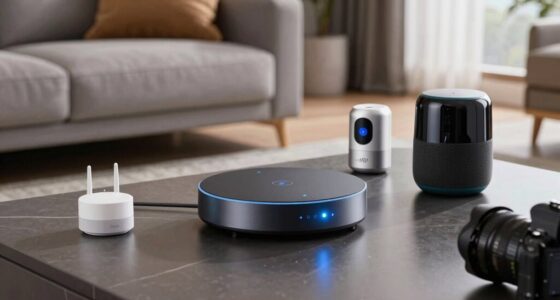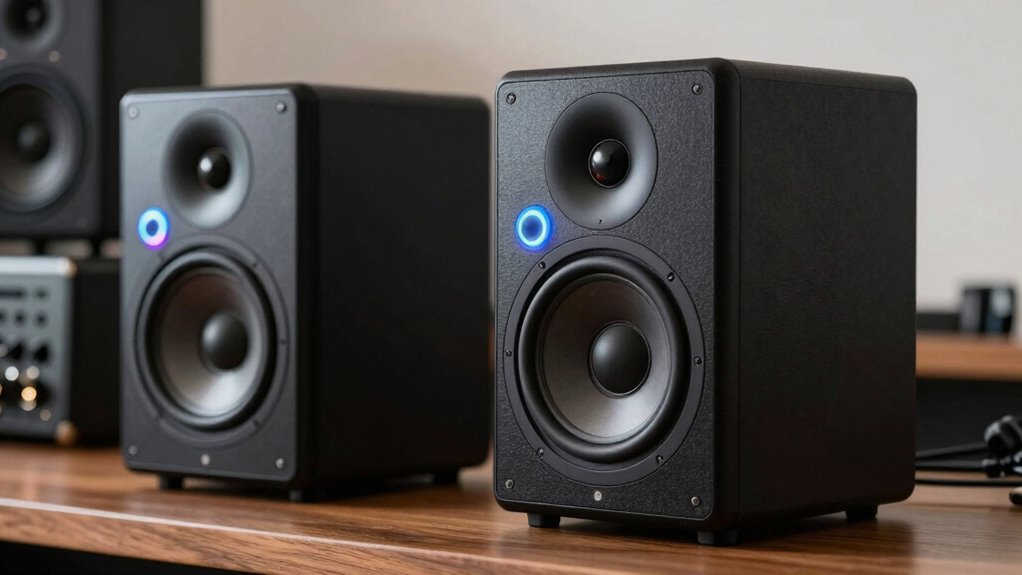
When choosing between powered and passive speakers, you should know that powered speakers have built-in amplifiers and are ready to connect directly to your devices, making setup quick and simple. Passive speakers, on the other hand, need external amplifiers and offer more customization options but require more effort to set up. Each type has its advantages depending on your needs. Keep exploring for a deeper understanding of which setup suits your environment best.
Prime for Young Adults — start your free trial
Fast free delivery, streaming and member deals for eligible 18–24 year olds.
As an affiliate, we earn on qualifying purchases.
Key Takeaways
- Powered speakers have built-in amplifiers, making them ready to connect directly to audio sources, while passive speakers require external amplification.
- Powered speakers often include wireless connectivity options like Bluetooth or Wi-Fi for easier setup and placement.
- Internal amplification in powered speakers is optimized for sound quality, providing clearer highs, richer mids, and deeper bass.
- Passive speakers offer flexibility to customize sound by choosing and upgrading external amplifiers, but require more complex setup.
- Powered speakers are generally more convenient and simpler to use, whereas passive speakers allow for more system customization.
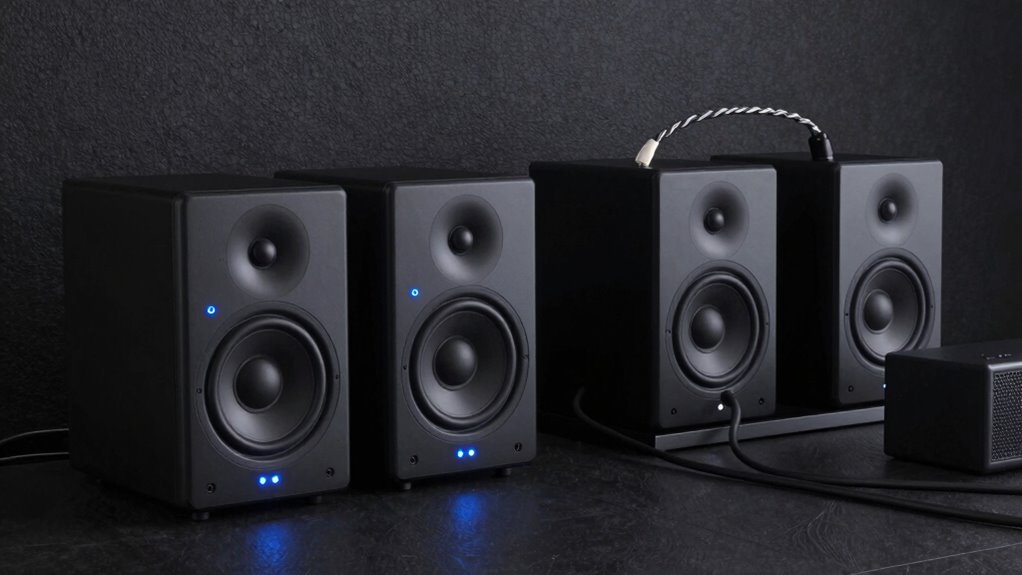
Are powered and passive speakers fundamentally different, or just variations of the same? This question often comes up when you’re trying to figure out which type suits your setup best. The key difference lies in how they handle power and amplification. Powered speakers, also called active speakers, have built-in amplifiers. That means they’re ready to connect directly to your audio source and deliver sound without needing an external amp. Passive speakers, on the other hand, require an external amplifier or receiver to boost the audio signal before it reaches the speaker. This fundamental distinction influences not only your setup but also the overall sound quality and convenience. Additionally, powered speakers often incorporate audio processing features that optimize sound performance and adapt to different environments.
Powered speakers have built-in amps; passive speakers need external amplification—fundamental differences shaping setup and sound quality.
When it comes to wireless connectivity, powered speakers usually have an edge. Many come equipped with Bluetooth, Wi-Fi, or other wireless features that make streaming music effortless. You can connect your device directly to a powered speaker without worrying about extra cables or external equipment. This ease of use often results in better sound quality because the built-in amplifier is optimized for the speaker’s drivers. Plus, with wireless connectivity, you get more flexibility in placement, allowing you to position your speakers for the best sound experience without cluttering your space with wires. This convenience is particularly appealing if you’re setting up in a living room, office, or outdoor area.
Sound quality is another critical factor when comparing the two. Powered speakers tend to deliver a more consistent and controlled sound because their internal amplifiers are designed specifically for that speaker. They often provide clearer highs, richer mids, and deeper bass, especially at higher volumes. Passive speakers can also sound excellent, but their performance depends heavily on the external amplifier’s quality and how well it matches the speakers. If you’re an audiophile or someone who wants precise control over your audio system, powered speakers might give you an edge due to their integrated design and optimized sound circuitry.
However, passive speakers offer flexibility for those who enjoy customizing their audio setups. You can pick and upgrade amplifiers separately, tailoring your system over time. This approach might be more cost-effective initially but could become more complex to manage, especially when considering the need for compatible components and wiring.
As an affiliate, we earn on qualifying purchases.
Frequently Asked Questions
Can Powered Speakers Be Used With Passive Speaker Setups?
Yes, you can use powered speakers with passive speaker setups, but you’ll need to take into account amplifier compatibility and speaker wiring. Powered speakers have built-in amplifiers, so they don’t require an external amp. When integrating with passive speakers, verify your amplifier can handle the combined load and match the impedance. Proper speaker wiring is essential to prevent damage and guarantee ideal sound quality, so double-check connections and power requirements before mixing powered and passive speakers.
Which Speakers Are Better for Outdoor Use?
For outdoor use, wireless speakers are your best choice because they offer easy connectivity and portability. Look for models with strong wireless connectivity options like Bluetooth or Wi-Fi to avoid tangled cords. Prioritize sound quality to make certain your music sounds clear and powerful even in open spaces. Durable, weather-resistant designs also matter, so pick speakers specifically built for outdoor environments to withstand elements and deliver reliable performance.
How Do I Upgrade My Existing Audio System?
To upgrade your existing audio system, start by adding powered speakers with Bluetooth connectivity for easy wireless streaming. Consider upgrading to speakers that support wireless integration, allowing seamless connection with your devices. You can also replace your current speakers with newer models that offer better sound quality and compatibility with modern technology. Make sure the new system matches your space and listening needs, ensuring a significant upgrade in both convenience and audio performance.
Are Powered Speakers More Durable Than Passive Ones?
Think of powered speakers as the sturdy oak trees in your audio forest; they’re built to last. Usually, they’re more durable because their speaker weight and power handling are optimized for longevity, reducing wear and tear. Passive speakers rely on external amps, which can add strain over time. So, powered speakers tend to be more resilient, making them a reliable choice for long-term use.
What Maintenance Is Required for Each Type?
You need to regularly check your powered speakers’ amplifier compatibility to prevent overheating and guarantee peak performance. For passive speakers, focus on inspecting and tightening connections, and avoid placing them in areas with excessive dust or humidity. Proper speaker placement helps both types avoid damage and maintain sound quality. Keep vents clean and ensure proper ventilation for powered speakers, while for passive ones, regularly check wiring and connections to keep them functioning smoothly.
passive bookshelf speakers with external amplifier
As an affiliate, we earn on qualifying purchases.
As an affiliate, we earn on qualifying purchases.
Conclusion
Choosing between powered and passive speakers can feel like deciding between a rocketship and a bicycle—both get you there, but one launches your sound to stratospheric heights! Powered speakers pack everything you need for jaw-dropping volume and clarity in a single package, while passive speakers give you endless customization. So, pick the right one, and prepare to experience sound so amazing, it’ll blow your mind and leave everyone else in the dust! Your perfect sound adventure starts now!
As an affiliate, we earn on qualifying purchases.
high quality external amplifiers for passive speakers
As an affiliate, we earn on qualifying purchases.
As an affiliate, we earn on qualifying purchases.
NFL season / tailgating Picks
team gear
As an affiliate, we earn on qualifying purchases.