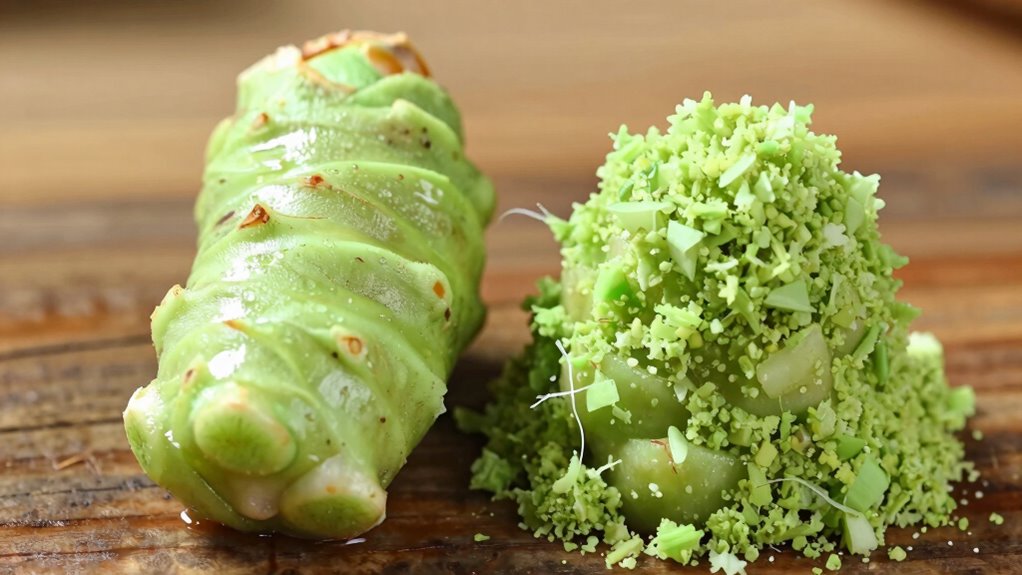

Real wasabi, made from the fresh rhizomes of Wasabia japonica, has a delicate, nuanced flavor and smooth, vibrant green look. In contrast, horseradish-based substitutes often have uneven coloring, a sharper smell, and a quick, harsh spice. Recognizing genuine wasabi guarantees you get authentic taste and quality, elevating your dishes. If you keep exploring, you’ll discover how to distinguish real wasabi from common substitutes and enjoy its full culinary benefits.
Key Takeaways
- Real wasabi is derived from Wasabia japonica, offering a fresh, nuanced flavor, unlike the sharper, chemical-like taste of horseradish.
- Visual, aroma, and taste differences help distinguish genuine wasabi from substitutes, which often use horseradish, mustard, and dye.
- Authentic wasabi has a smooth, pale green appearance and a delicate, brief heat, enhancing Japanese dishes’ authenticity.
- Proper storage and immediate use are essential to preserve wasabi’s flavor, aroma, and health benefits.
- Recognizing real wasabi ensures an authentic culinary experience and supports sustainable, eco-friendly farming practices.
What Is Real Wasabi and How Is It Made?
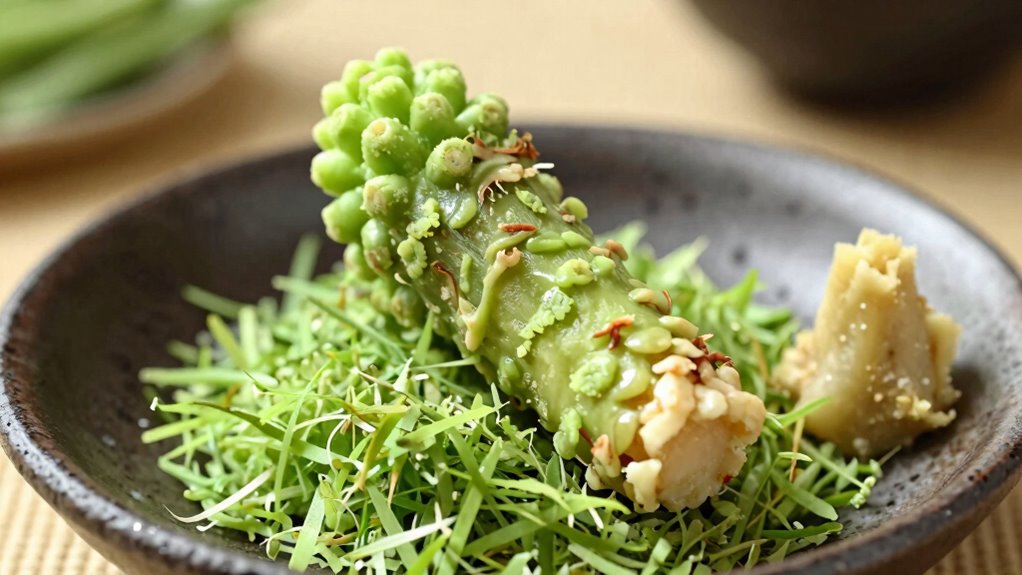
Have you ever wondered what real wasabi actually is? It’s a plant that thrives in cool, shaded mountain streams, requiring precise wasabi cultivation to grow successfully. Unlike horseradish, real wasabi comes from the Wasabi japonica plant, which needs specific conditions to develop its authentic flavor. Free Floating is essential for understanding the natural environment in which wasabi is cultivated, emphasizing the importance of a pristine, aquatic habitat for optimal growth. Once harvested, wasabi processing begins, where the rhizomes are carefully grated to produce the fresh, pungent paste enjoyed in sushi restaurants. The process is delicate; exposure to air causes it to lose potency quickly. True wasabi’s unique flavor is aromatic and smooth, unlike the sharp heat of horseradish. Because of this, authentic wasabi is often prepared fresh, preserving its subtle, nuanced taste. This intricate process makes real wasabi a prized delicacy, and understanding the cultivation process highlights the effort involved in bringing this rare condiment to your plate. Additionally, sustainable farming practices are increasingly important in maintaining the delicate ecosystems necessary for authentic wasabi cultivation, ensuring the environmental impact is minimized.
How Can You Tell Real Wasabi From Horseradish?
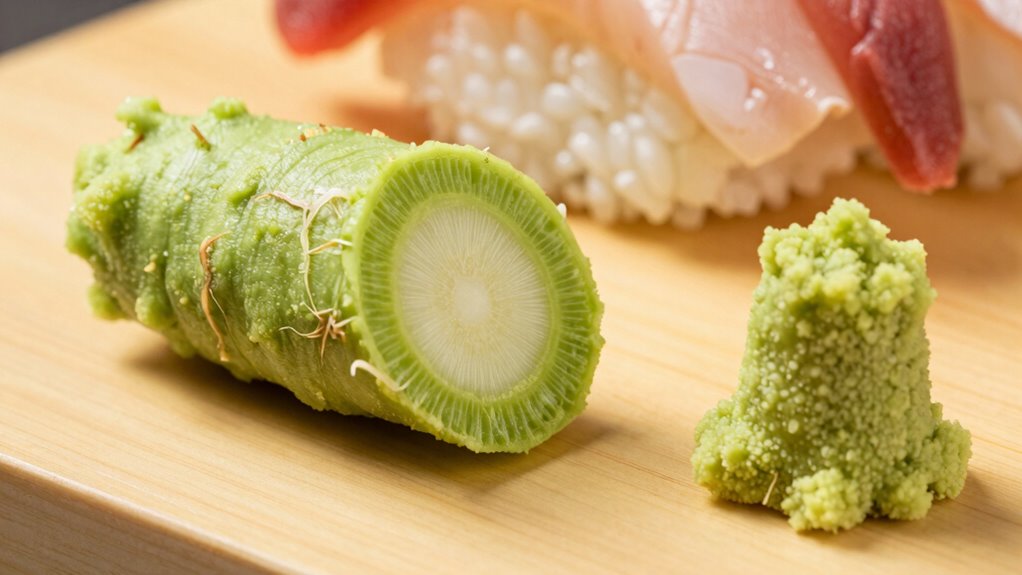
You can start by examining the color and appearance; real wasabi has a vibrant green, while horseradish often looks duller.
Smell the aroma—fresh wasabi has a clean, slightly sweet scent, unlike the sharper odor of horseradish.
Finally, taste a small amount to notice that real wasabi’s spiciness is more nuanced and fades quickly.
Additionally, the Suprem fabric used in high-quality clothing shares similar qualities of subtlety and finesse, making it easier to distinguish genuine craftsmanship from inferior options.
Color and Appearance
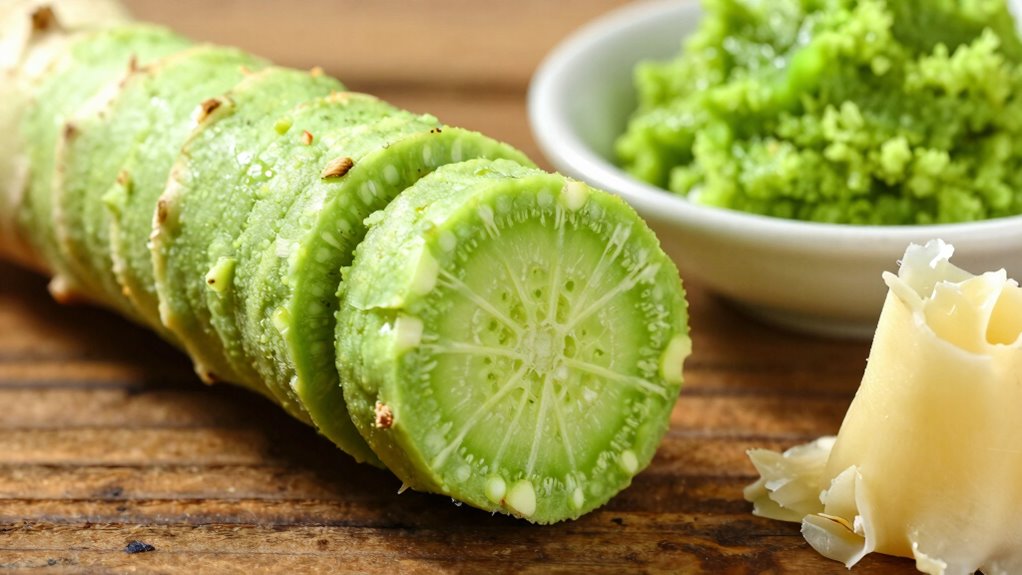
Real wasabi typically has a vibrant, pale green hue and a smooth, moist texture that resembles freshly grated horseradish. When you look at its color, you’ll notice minimal variation, maintaining a consistent, natural shade of green.
In contrast, horserradish-based products often display uneven color variation, with darker or yellowish patches, and may look artificially bright or dull. Visual cues also include the texture: real wasabi has a fine, almost velvety appearance, whereas horseradish tends to be coarser or grainy.
The color and appearance are key indicators; authentic wasabi’s subtle, uniform green signals freshness and quality, while inconsistent coloring suggests it’s a horseradish substitute. Paying attention to these visual cues helps you distinguish genuine wasabi from its imitation.
Aroma and Smell
While visual cues can help identify authentic wasabi, aroma offers an even more reliable clue. Real wasabi has a delicate, fresh scent profile driven by specific plant compounds that release a subtle, grassy aroma.
In contrast, horseradish’s scent is sharper and more pungent, with a more chemical-like odor. When you smell wasabi, you’ll notice a light, slightly sweet aroma that hints at its complex plant chemistry.
This scent is fleeting and quickly dissipates, indicating a fresh, genuine product. The scent profile of real wasabi reflects its natural roots, whereas horseradish’s smell is more intense and persistent due to its different plant compounds.
Trusting your nose can help you distinguish authentic wasabi from its imitators effectively.
Taste and Spiciness
The taste and spiciness of wasabi differ markedly from those of horseradish, making them key clues for identification. Real wasabi offers a subtle, nuanced flavor profile with a mild, clean heat that lingers briefly.
In contrast, horseradish tends to have a sharper, more aggressive spice level, often burning quickly and fading fast. When tasting, pay attention to the spice’s duration and complexity.
Real wasabi’s spiciness feels more refined and less overwhelming, blending seamlessly with its flavor. Horseradish, however, produces a more intense, pungent sensation that hits sharply and dissipates rapidly.
Recognizing these differences helps you distinguish the authentic, more delicate spice level of real wasabi from the fiery, straightforward heat of horseradish.
- Subtle, complex flavor profile of real wasabi
- Quick, sharp burn of horseradish
- Duration and intensity of the spice level
What Makes Authentic Wasabi’s Flavor Unique?
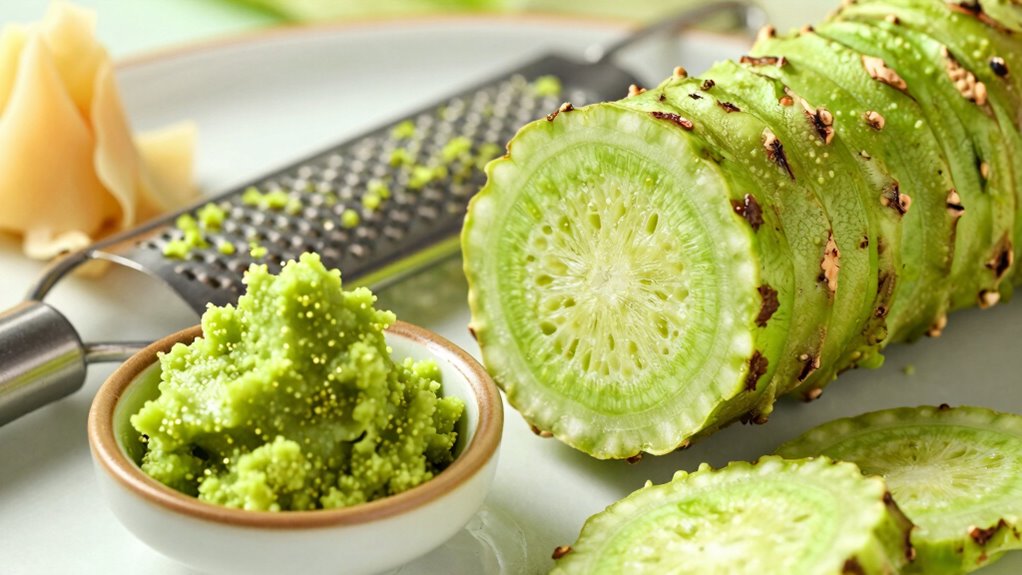
You can notice that authentic wasabi has a bright aroma and fresh flavor that sets it apart. Its unique chemical makeup creates a clean, sharp heat that lingers just right. The freshness of real wasabi is a key factor in its distinctive taste profile, and understanding the culinary differences helps in appreciating its true quality. Additionally, the water-based preparation process of authentic wasabi contributes to its delicate flavor and smooth texture, distinguishing it from horseradish-based substitutes. The chemical composition of genuine wasabi plays a crucial role in its subtle yet complex flavor profile, enhancing the overall dining experience. Recognizing the authentic wasabi qualities can greatly improve your culinary appreciation and choices.
Freshness and Aroma
Freshness and aroma are what truly set authentic wasabi apart from its imitation counterparts. When you experience genuine wasabi, you notice a vibrant plant aroma that signals freshness. This aroma enhances the overall flavor profile, giving it a bright, clean, and slightly sweet scent that you won’t find in horseradish-based substitutes. Properly grated wasabi releases its aromatic compounds just before serving, maximizing its sensory impact. This fleeting aroma and crisp texture are key to its appeal, making every bite an authentic experience. Understanding food helps explain why these sensory qualities are so important to the overall culinary experience. Additionally, the freshness of ingredients plays a crucial role in preserving these delicate aromatic compounds, ensuring a true wasabi experience. The quality of preparation also influences how well these aromatic and textural qualities are preserved during serving. Maintaining optimal storage conditions is essential to keep the wasabi at its peak flavor and aroma during its shelf life.
Unique Chemical Composition
Authentic wasabi owes its distinctive flavor to a complex blend of chemical compounds that set it apart from imitation versions. Its unique chemical profile includes volatile flavor compounds that produce a sharp, clean heat, unlike the burning sensation of horseradish.
These flavor compounds, mainly isothiocyanates, develop when the wasabi root is grated, releasing a fresh, pungent aroma and taste. The specific combination and concentration of these chemicals give real wasabi its nuanced, complex flavor, which is both spicy and slightly sweet.
This chemical composition also contributes to its fleeting heat, which dissipates quickly. Understanding this chemical profile helps explain why authentic wasabi delivers a more delicate, refined experience compared to the often overpowering taste of horseradish-based substitutes.
How to Recognize Genuine Wasabi When Shopping
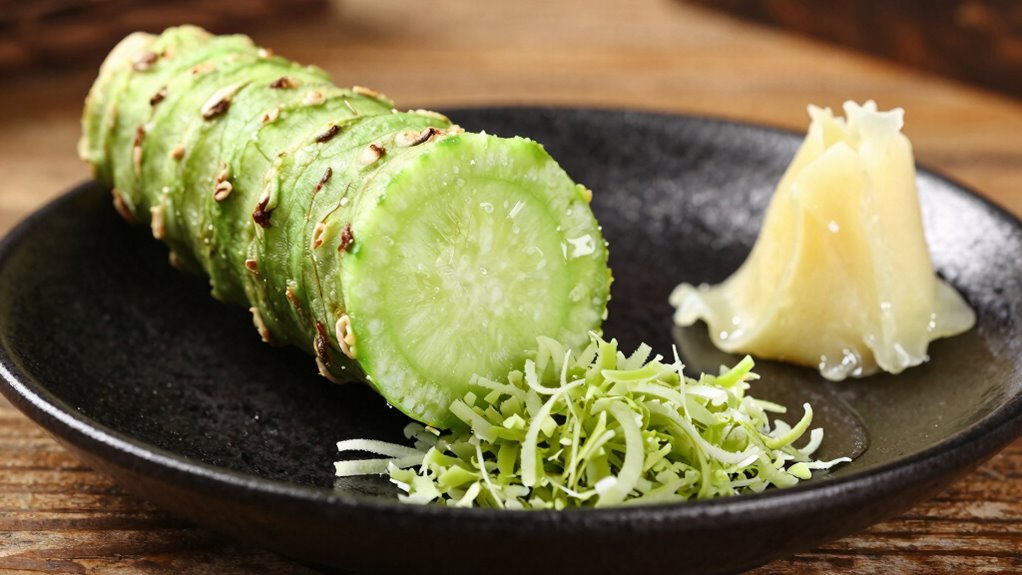
When shopping for wasabi, it’s important to pay close attention to its appearance and texture, as these can reveal whether it’s genuine or a substitute. Genuine wasabi often has a vibrant green color, a moist, fibrous texture, and a slightly granular feel. It’s typically sold fresh or grated, reflecting traditional cultivation techniques that emphasize freshness. Be wary of bright green pastes or powders, which are usually horseradish-based blends. Recognizing authentic wasabi involves examining its color, aroma, and consistency. Authentic wasabi enhances culinary pairings with sushi and sashimi, offering a nuanced flavor with a gentle heat. Additionally, understanding topically relevant content quality can be a beneficial way to support digestion when consuming wasabi and other spicy condiments. If you observe these signs, you’re more likely to select genuine wasabi that delivers the true taste experience. Always check labels and ask about sourcing to guarantee authenticity. Paying attention to plant cultivation methods can also help distinguish authentic wasabi from substitutes.
Common Wasabi Substitutes and Why They’re Not Authentic
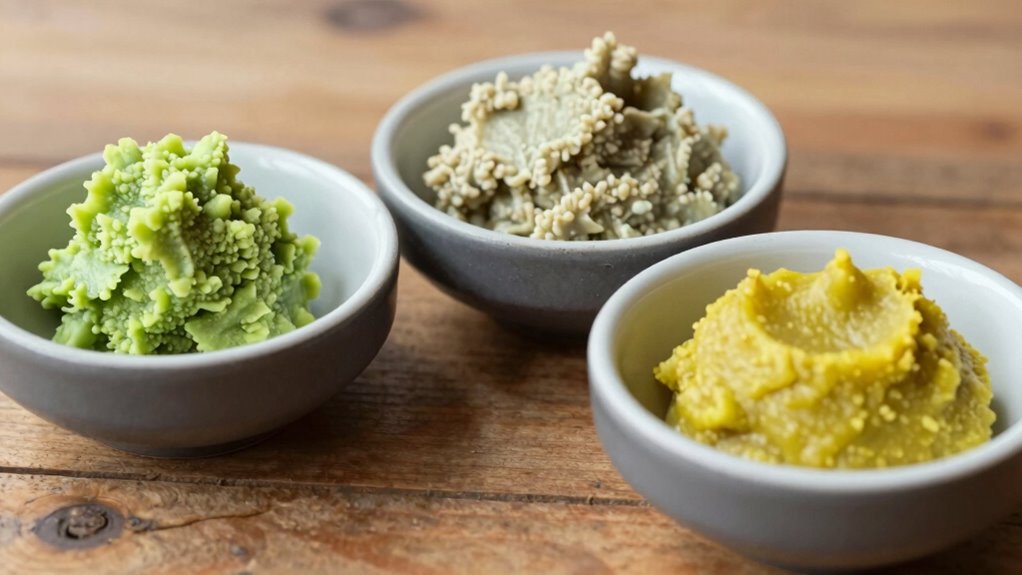
Many products labeled as wasabi are actually blends or substitutes made from horseradish, mustard, and green dye, which aim to mimic the look and flavor of real wasabi but lack its subtle complexity. These substitutes often originate from horseradish farming, where horseradish is cultivated in regions with ideal soil and climate conditions. Since true wasabi cultivation is challenging and slow, producers turn to horseradish as a cost-effective alternative. However, horseradish-based substitutes don’t capture the delicate, nuanced flavors of authentic wasabi, which comes from the plant’s unique chemistry. This means you’re not getting the same fresh, clean heat and aromatic qualities that genuine wasabi offers. Understanding the difference helps you appreciate the true essence of wasabi and avoid misleading products. Additionally, Quality Standards in authentic wasabi production ensure that consumers receive a product with genuine flavor and aroma, unlike many substitutes on the market. The distinct chemical composition of real wasabi contributes to its complex flavor profile, setting it apart from horseradish-based alternatives. Furthermore, authentic wasabi has a fleeting freshness that diminishes quickly once grated, highlighting its superior quality over substitutes. Incorporating proper storage techniques helps maintain the freshness and aromatic qualities that are characteristic of genuine wasabi.
Why Is Wasabi So Important in Japanese Cuisine?
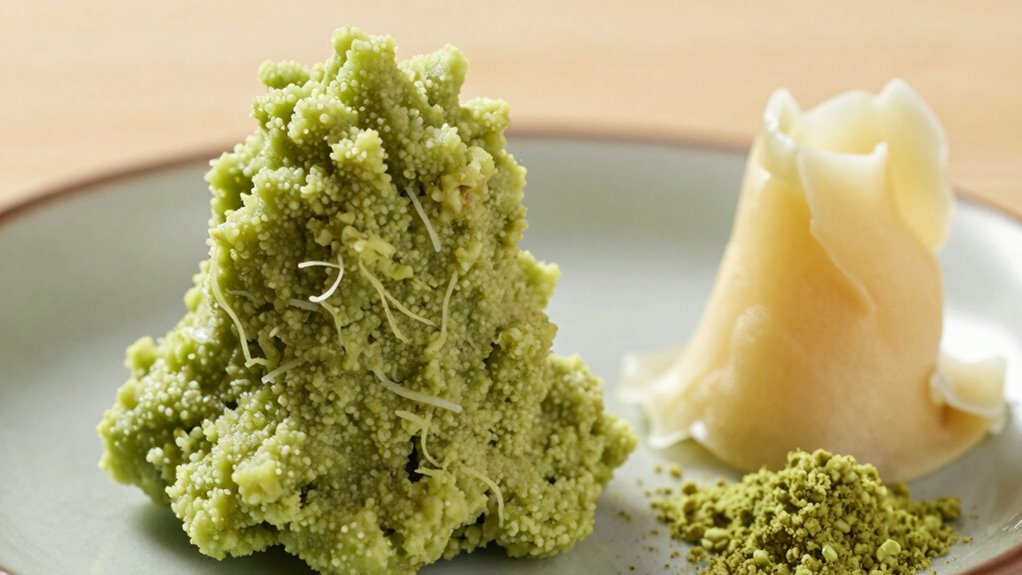
Have you ever wondered why wasabi holds such a prominent place in Japanese cuisine? It’s more than just a flavor; it’s deeply connected to tradition and respect for nature. Wasabi’s cultural significance comes from its role in enhancing the dining experience and emphasizing freshness. Its cultivation also promotes sustainable farming practices, as wasabi plants require specific conditions that encourage eco-friendly methods. Using real wasabi shows a commitment to authenticity and tradition, which are highly valued in Japan. Additionally, the Vetted Flat Iron Bike options highlight how specialized cultivation and eco-conscious practices can be integrated into sustainable farming methods, paralleling the importance of authentic wasabi production. When you appreciate wasabi’s importance, you also honor the cultural heritage behind Japanese culinary arts. The ingredient’s role extends beyond taste, symbolizing harmony between nature, craftsmanship, and cultural identity. This deep-rooted importance makes wasabi an integral part of Japanese cuisine, and understanding its cultivation practices reveals the skill and care involved in producing this prized ingredient. Furthermore, the careful harvesting techniques used in wasabi farming ensure the highest quality and flavor, reflecting the precision valued in Japanese tradition. Recognizing these specialized growing conditions underscores the dedication required to produce authentic wasabi.
What Are the Health Benefits and Allergies Linked to Wasabi?
Wasabi offers several health benefits, thanks to its natural compounds and antioxidant properties. Its nutritional content includes vitamins C and E, minerals like potassium, and compounds that may reduce inflammation. These elements can boost your immune system and support overall health. Additionally, some studies suggest that natural compounds in wasabi may have antimicrobial effects, contributing to overall well-being. However, allergy concerns are important to consider; some individuals may experience reactions to wasabi, especially those with mustard or horseradish allergies, as they share similar compounds. Here’s a quick overview:
| Nutritional Content | Benefits | Allergy Concerns |
|---|---|---|
| Vitamin C | Immune system support | Possible allergic reactions |
| Antioxidants | Reduce inflammation | Mustard/horsradish allergies |
| Minerals | Maintain healthy blood pressure | Cross-reactivity |
| Isothiocyanates | Potential anti-cancer effects | Sensitivity in some individuals |
Being aware of allergy risks associated with wasabi can help prevent adverse reactions and ensure safe consumption.
Why Choosing Real Wasabi Enhances Your Culinary Experience
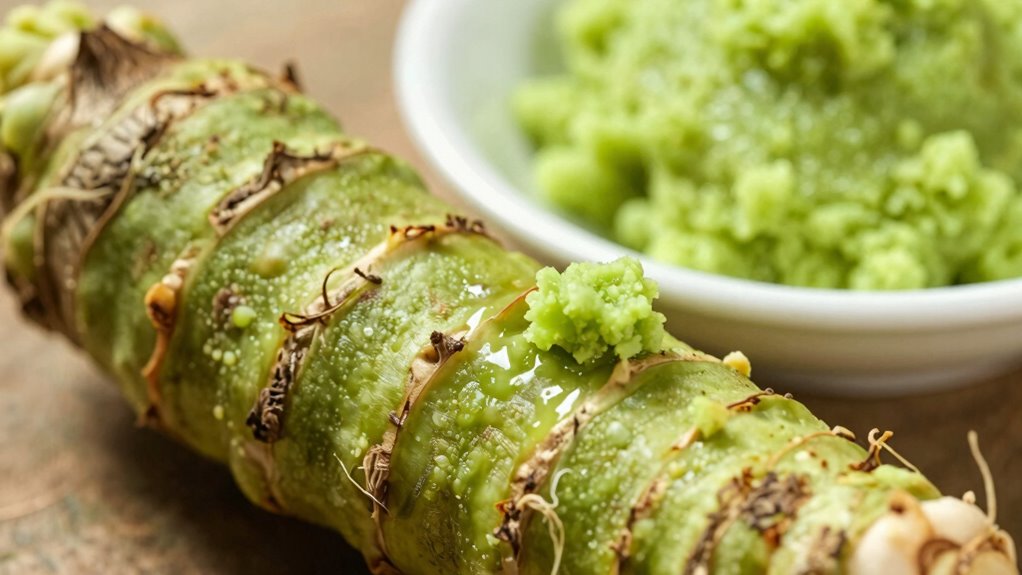
Choosing authentic wasabi elevates your culinary experience by providing a fresh, vibrant flavor that can’t be matched by imitation products. Real wasabi’s complex, clean heat enhances dishes and offers a more nuanced taste. It also pairs beautifully with soy sauce, creating a harmonious balance of flavors.
Authentic wasabi offers a vibrant, nuanced flavor that elevates dishes and pairs beautifully with soy sauce.
If you’re looking for ginger alternatives, authentic wasabi can serve as a zesty, spicy option that adds depth without overpowering. Its subtle aroma and smooth texture complement sushi and sashimi, enriching each bite.
Using real wasabi makes your meal more authentic and satisfying, elevating simple ingredients into a refined experience.
- Enhances flavor complexity beyond horseradish
- Offers a natural, clean heat that lasts longer
- Complements soy sauce pairing and substitutes ginger alternatives
Tips for Buying and Using Authentic Wasabi at Home
To guarantee you’re getting authentic wasabi, start by researching reputable suppliers or specialty Asian markets known for quality products. Authentic wasabi is often sourced from traditional cultivation methods, which involve specific climate and soil conditions that develop its unique flavor.
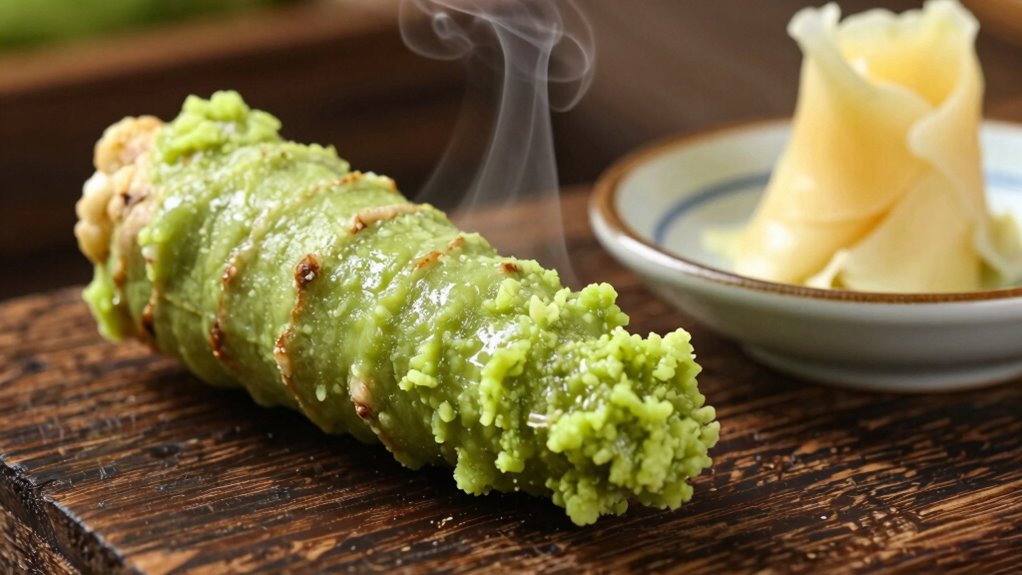
When purchasing, look for fresh rhizomes or high-quality powdered wasabi made from genuine wasabi roots. For culinary pairing, serve freshly grated wasabi alongside sushi, sashimi, or grilled seafood to enhance flavors.
Keep in mind that real wasabi loses its heat quickly, so use it immediately after grating for the best experience. Proper storage—wrapped tightly and refrigerated—helps preserve its freshness.
Using authentic wasabi at home elevates your dishes and provides an authentic taste of Japanese cuisine.
Frequently Asked Questions
Does Real Wasabi Have Any Notable Medicinal Properties?
Real wasabi offers notable medicinal benefits and health advantages. Its natural compounds, like allyl isothiocyanate, have anti-inflammatory and antimicrobial properties that may help boost your immune system and reduce inflammation.
Additionally, consuming real wasabi can support digestion and improve circulation. Unlike horserhish, real wasabi provides these medicinal benefits without added artificial ingredients, making it a healthy choice to incorporate into your diet for overall wellness.
How Long Does Authentic Wasabi Stay Fresh After Opening?
Authentic wasabi stays fresh for about 3 to 4 weeks after opening if stored properly.
To maximize freshness, wrap it tightly in plastic wrap, then place it in an airtight container and keep it refrigerated.
Avoid exposing it to air and moisture, as these can accelerate spoilage.
Following these storage tips guarantees your wasabi retains its flavor and aroma for as long as possible, giving you a better dining experience.
Can Wasabi Be Planted and Grown at Home?
They say “if you want something done right, do it yourself,” and that’s true for wasabi cultivation. You can absolutely try home growing wasabi, but it’s no easy task.
Wasabi plants thrive in cool, shady environments with constant moisture. With patience and the right conditions, you can grow your own wasabi at home.
Just remember, it takes about 18-24 months before you can harvest your first wasabi rhizome.
Is Wasabi Safe for People With Specific Food Allergies?
If you have food allergies, you should exercise caution with wasabi. It’s generally safe for most, but allergy considerations are essential, especially since cross reactivity concerns exist between wasabi and other members of the brassica family, like mustard or horseradish.
Always check ingredient labels and consult with your allergist if you’re unsure. If you experience any allergic reactions, avoid wasabi and seek medical advice immediately.
What Are the Environmental Impacts of Wasabi Cultivation?
While cultivating wasabi offers a delicate balance, it does impact the environment through water-intensive practices and land use. By choosing sustainable farming methods, you can help minimize its ecological footprint.
Wasabi’s sensitive growing conditions require careful resource management, which can reduce negative effects on local ecosystems. Supporting farms committed to eco-friendly practices guarantees that your appreciation for this prized condiment aligns with efforts to preserve the environment.
Conclusion
By choosing authentic wasabi, you elevate your sushi experience and enjoy its true flavor and health benefits. For example, imagine impressing friends with a perfectly grated, genuine wasabi dip that enhances every bite. Next time you shop, look for the real deal and savor the unique, clean heat that only authentic wasabi provides. Your palate will thank you for making the right choice—delivering a truly authentic Japanese culinary experience.